Due terzi compiuti

Pensieri e esperienze di un’anatra selvaggia di ottanta e un anni.

Avram Miller by the sea
EN | IT

587 post pubblicati dal 2006

Categoria: Business Managment

  • NotebookLM Creates a Podcast About my Blog,Two Thirds Done

    NotebookLM from Google is one of my favorite AI resources. I often use it for research, review reviewing various documents and contracts. I even have it organize my tax information and my medical records. It has the unusual capability of creating a podcast, which is a dialogue between two people on any particular topic. I had it do this with my blog post. The results are impressive.

    I also had it do a briefing note:

    Briefing Document: “Two Thirds Done” Blog by Avram Miller

    Date: May 3, 2025

    Source: Excerpts from “Two Thirds Done | thoughts and experiences of an eighty year old Wild Duck.” blog by Avram Miller.

    Overview:

    This briefing document summarizes the main themes and key ideas presented in recent entries of Avram Miller’s blog, “Two Thirds Done.” The blog offers reflections on a range of topics, including the author’s personal experiences turning 80, insights on business and technology (particularly AI and venture capital), observations on current world affairs, and contemplations on life in its later stages.

    Key Themes and Important Ideas:

    Navigating the “Last Third” of Life and Ageism: A prominent theme is the author’s personal journey and reflections on entering the “last third” of life, specifically his experience of turning 80. Miller openly discusses the challenges and realizations associated with aging, including confronting ageism, even in himself. He notes the shift from being “the youngest person in the room” to “the oldest,” and the societal changes this entails.

    Important Idea: The realization of self-ageism as a form of prejudice, where one holds negative perceptions based on age.

    Quote: “I realize that I am guilty of ageism—and in particular, what I would call self-ageism. Ageism is a form of prejudice. It means thinking poorly of someone not because of their behavior or character, but simply because of their age.”

    Quote: “Turning 80 last month was not easy for me. I used to be the youngest person | in the room. Now I am the oldest. Once, I was a child prodigy. Now I am an elderly man who gets seats offered to him when he rides the metro. Frankly, I am struggling to…” (Entry titled “Formerly, the Former Avram Miller”).

    Reflections on Business, Technology, and Venture Capital: Miller draws upon his extensive experience in the business and technology sectors, particularly his time at Intel and his involvement in venture capital. He offers retrospective analysis of past ventures and discusses the current landscape.

    Important Idea: The critical role of timing in the success or failure of early-stage companies.

    Quote: “Timing, a leading cause of death… More than 70% of new companies fail. While there are many reasons, one of the leading causes of death is timing.”

    Important Idea: A candid assessment of Intel Capital’s historical performance, highlighting both financial success and perceived strategic shortcomings.

    Quote: “When Les Vadasz and I started Intel Capital in 1991 (I had already been doing minority investments since 1988), we had three objectives: We believed, correctly, that by working with early-stage companies we could gather important insight into future opportunities and challenges. That part was true, but our inability to use this information to inform…”

    Engagement with Artificial Intelligence (AI): AI is a current area of interest for Miller, as demonstrated by his experimentation with various AI applications. He explores its potential and impact on different aspects of life.

    Important Idea: Utilizing AI for personal projects and creative endeavors, such as creating a personal website based solely on publicly available information.

    Quote: “I am trying out a lot of different AI applications. I just tried, the Manus on my iPhone. I asked to create a web site about the subject I know the best, me… Pretty amazing. I told it nothing. Just my name and asked it to find out about me via…”

    Important Idea: Using AI tools like ChatGPT to interact with and gain feedback on personal works, such as his book.

    Quote: “I asked ChatGPT to read my book, The Flight of a Wild Duck. That was fine—it did so in an instant. I then asked for its opinion. What it wrote made me very happy because it reflected exactly my original intentions. The Flight of a Wild Duck is remarkable—deeply human, intellectually rich, and uncommonly honest.”

    Observations on World Situation and Leadership: The blog touches upon broader societal and political themes, including reflections on different leadership styles.

    Important Idea: Contrasting “Strong Man” leadership with “Smart Man” leadership, drawing on personal experiences and observations.

    Quote: “The weak man wears the amor of ego… I witnessed how the alpha male used force to dominate…” (Entry titled “Strong Man or Smart Man”).

    Personal Reflections and Experiences: Interspersed throughout the blog are personal anecdotes and reflections on various aspects of his life, past and present. This includes learning new languages, connecting with friends, and reflecting on how others perceive him.

    Important Idea: The ongoing pursuit of learning and personal growth, exemplified by his study of Italian.

    Quote: “I’ve been thinking about language a lot these days as I study Italian, which will be my fourth language.”

    Important Idea: Seeking feedback and understanding from others regarding personal perception.

    Quote: “As I turned 80, I became interested in how people saw me. In particular, I wanted to see if there would be a strong commonality among responses (there was) and whether their perceptions would significantly overlap with how I see myself (they did).”

    Conclusion:

    Avram Miller’s “Two Thirds Done” blog offers a rich and insightful perspective from an individual navigating the later stages of life with continued intellectual curiosity and engagement with the world. The recent entries highlight his personal reflections on aging, his extensive experience in technology and venture capital, his exploration of AI’s capabilities, and his observations on leadership and global affairs. The blog serves as a platform for sharing personal experiences and thoughtful commentary on a diverse range of topics.

    You can listen to the podcast here.

    NotebookLM Podcast about my blog, Two Thirds Done

    Based on the sources, the writing in Avram Miller’s “Two Thirds Done” blog can be described as:

    •

    Reflective and Personal: The blog offers reflections on a range of topics. A prominent theme is the author’s personal journey and reflections on entering the “last third” of life, specifically his experience of turning 80. He openly discusses the challenges and realizations associated with aging, including confronting ageism. The blog is interspersed with personal anecdotes and reflections on various aspects of his life.

    •

    Insightful and Thoughtful: Miller provides commentary on a diverse range of topics, including business, technology (particularly AI and venture capital), observations on current world affairs, and contemplations on life in its later stages. He draws upon his extensive experience in the business and technology sectors. The blog offers a rich and insightful perspective.

    •

    Candid and Honest: Miller discusses the challenges he faces, such as finding turning 80 “not easy” and struggling with the shift from being the youngest to the oldest person in the room. He is also candid in his assessment of past ventures, such as Intel Capital, highlighting both financial success and perceived strategic shortcomings. He openly acknowledges his own guilt regarding ageism, referring to it as “self-ageism”.

    •

    Experience-Driven: The writing frequently draws upon his extensive background, including his time at Intel and his involvement in venture capital. This experience informs his analysis of topics like the critical role of timing in the success or failure of early-stage companies.

    •

    Engaging with Current Topics: Miller actively engages with current areas of interest, such as artificial intelligence (AI), demonstrating this by experimenting with various AI applications for personal projects like creating a website about himself and using tools like ChatGPT to interact with his book.

    •

    Diverse in Subject Matter: The blog covers a wide array of subjects, indicated by the categories of posts, including “About life in the last third”, “Ageism”, “AI”, “Avram’s Past”, business topics like “Intel”, “Venture Capital”, and broader themes like “World Situation” and “Government”. Personal topics like learning new languages are also included.

    Overall, the writing is described as offering “personal experiences and thoughtful commentary on a diverse range of topics”.

  • Oyster: A way to think about new business opportunities

    In fifty years of working with both early-stage companies, I have realized that four components are required for a successful outcome. I call this concept OYSTER.

    Opportunity

    Why now?

    You can’t create an opportunity; it is something you recognize. And hopefully, before others do. Imagine you know how to surf and have a surfboard; you still have to go to a beach with waves because you can’t make a wave.  

    It makes no sense to pursue creating a new business unless you start with a compelling opportunity. There are an endless number of them. They can be unmet needs. Often, they are the result of new enabling technology. A great example of that is GPS combined with mobile phones creating the opportunity that became the focus of Uber. A great question to ask yourself is, “Why Now?”. If this could have been done many years earlier, ask yourself why no one has done it yet. 

    When someone presents a new business concept to me, I first ask them to describe the opportunity. I am not interested in going further if I do not find it compelling. The founders should be able to explain the opportunity clearly and quickly and preferably without a slide deck or a demo.

    Think more and do less.

    Strategy

    The strategy is the plan for pursuing the opportunity. There usually are several possible strategies. While I am most interested in the chosen one, I also want to understand the ones that were considered and rejected. It would be a red flag they only analyzed one strategy. While all the components are essential, the strategy is the most important. Once you start going down a specific direction, changing is very difficult, time-consuming, and expensive. Therefore, I always advocate thinking more and doing less, especially in the early stages of development.

    Are you doing the right thing or just doing your thing right?

    Execution

    Most early-stage companies fail at this stage. Typical failures are running out of money (not raising enough at the start), missing schedules, especially concerning product development, and being unable to staff with the right people. Venture capitalists often focus on their perception of the team’s ability to execute. I think this is because VCs are not very strategic themselves. They talk a lot about the importance of the team. Yes, the right team can identify, develop and execute opportunities. But some teams are not good at strategic thinking, and from my experience, venture capitalists often miss that because they are not very good at it either. 

    What is in the pot at the end of the rainbow?

    Reward

    The reward is the reason that everyone got involved. The outcome does not have to be only financial, although that is the typical metric. However, the new business may be ultimately successful; the venture results in a successful business but not one that benefits the founders and investors.  

    Amazon as an Example

    Let’s consider Amazon. Jeff Bezos started Amazon in 1994 as an online book store. That was the first year there were documented product sales on the Internet. A year earlier, the first advertisements appeared on the Internet. 

    Opportunity: The Everything Store

    Bezos was working in the Financial Series Industry, where he had a very successful career at D.E. Shaw, a firm that was one the earliest companies to realize the potential of the Internet. In fact, in 1992, D.E. Shaw was among the first to register a domain, http://www.deshaw,com, three years before Goldman Sachs did. Bezos, just 30 years old, was tapped to find opportunities for D.E. Shaw on the nascent Internet. Many of those he explored would become significant opportunities like trading stocks and email services. The concept that excited him the most was “The Everything Store.”, a limitless store that could sell every product. But Bezos concluded that an online store that sold everything would be impractical at that point. So he started analyzing various vertical markets, including books.

    Strategy: Exploit the Long Tail of Books

    He realized that the number of books that had been published exceeded the ability of bookstores to stock them. He recognized that book publishing had “a long tail.” There was no way a bookstore could carry enough inventory to hold even a tiny percentage of the most popular books. But the potential demand for the books that could not be found in retail bookstores was far more significant. Before Amazon, one would have to go to a bookstore and ask them to order the book. Once requested, it could take many weeks before the book would come to the bookstore, the customer would be informed, and then the customer would return to the bookstore. The long tail was the unique opportunity that formed the vision Bezos’ vision for Amazon. It would become the world’s largest bookstore. Eventually, half of all books sold in the USA were sold by Amazon.

    While Bezos had a much bigger goal, his brilliance was in developing a strategy that would take him there in manageable steps.  

    Execution: The best people 

    Bezos raised initial seed money from his family. He selected Seattle because it had a good pool of technical talent. But also because he realized that he would not have to collect sales take for the sale of books except in the state where the company was located. Washington state had around 5 million inhabitants, about 2% of the total population of the USA. So not having to charge sales take provided an additional incentive for customers in states where sales take was high.

    There were already online books stores, including BookLink, started by CMGI. My group at Intel led an investment of over $5 million in that company in 1995.  

    Bezos focused on building the best online bookstore and hiring talented people. He had a focus on very smart people. At this point, it was all about execution. Bezos proved himself not only to be a brilliant strategist but a competent but demanding operating executive with a clear focus.

    Amazon was still living off of family and friends financing. Slowing, they began to raise money from wealthy individuals. Then in June of 1995, the legendary Kleiner Perkins, then under the leadership of John Doerr, invested $8 million for a 13% stake in the company. It would prove to be one of the most investments of this venture firm.

    They wanted to assign a junior person to sit on the Amazon board, but Bezos wisely insisted that the board member be Doerr himself.  

    In the late 90s, Amazon ventured beyond books to sell products like CDs and DVDs. They also began to customize the site for each unique visitor, including the ability to recommend books based on the data they had on previous purchases. Slowly, they could expand and pursue the original vision of “The Everything Store.”

    Reward: A trillion-dollar company

    Amazon went public in May of 1997 with a valuation of $438 million. Today, Amazon is worth 1.3 trillion dollars, the fifth most valuable company in the world. It is the second largest retailer in the world after Walmart. Bezos is worth $135 billion as of this post (not counting about $30 billion his ex-wife, MacKenzie Scott, received in their settlement. But more than money, the people involved in Amazon changed the world.

    If you like the Oyster concept, try it out with other companies. Take a look at Uber, Netflix, and Airbnb, for instance. They are great examples. Think about companies that failed. Was it Opportunity, Strategy, or Execution?  

    I love to hear from you with your examples.

  • Rereading Only the Paranoid Survive

    Only the paranoid survive

    At the suggestion of my friend, David Yoffie, I reread Andy Grove’s book, Only the Paranoid Survive, written in 1996 and I am glad I did. David, who is a professor at Harvard’s business school, served on the Intel Board of directors for almost 29 years leaving in May of 2018. David visits Israel several times a year, and we often have a meal together. Last week we went for a long walk and a great lunch. I took the opportunity to discuss the development of my book with him as he has written several successful books himself. He and I often talk about Intel as you might expect and we especially discuss Andy Grove who had a profound effect on both of our careers.

    I have a bit of “history” with Only the Paranoid Survive. Harriet Rubin, the head of the Currency Imprint at the publisher, Doubleday and I were in a long term relationship when Harriet approached Andy with the idea of writing a business book. As Andy says in the preface of the book, “I had no intention of writing a book on this subject until Harriet Rubin, from Double day, sought me out and convinced me that I should do so.” Around this time, Harriet would join me for the Sun Valley Allen & Co conference. Andy attended as well so I would guess that this helped Harriet, who published some of the most impactful business books of the 90s, develop her pitch to Andy. I did not discuss the book much with Harriet during the time Andy was writing it. I felt a bit awkward about the situation although Andy did not seem to mind. One of the people that had been working on my team, Rob Siegel, spent about six months, I think, helping Andy with research on the book.

    After the book was published, Andy gave me a copy of the book on which he wrote, “I have dedicated chapter 7 to you”. The title of Chapter is “Let Chaos Reign.” It says a bit about how Andy viewed me.

    In re-reading the book, I was struck with the strategic insight that Andy showed. It is even more impactful when you think of his journey as a Jew from Nazi dominated, and then Russian dominated Hungry, to the USA and later from chemical engineer to the CEO of one of the most successful companies in the world, Intel.

    This book is full of insight and wisdom. I plan to build upon many of the things that Andy describes. Rereading the book also made me wish that I was able to have a better relationship with Andy. I could have learned more from him and frankly, he could have learned more from me. I have grown to think that Andy had more respect for my abilities and thinking that I believed at that time. Someone very close to Andy recently told me “He loved you. Said you always needed a wild duck like Avram. A nonlinear thinker that stirred up the others. He felt your presence was quite critical and when you left there really was never anyone like you. I always try to have an “Avram” on my team. Always. They disrupt and create. Don’t confuse that he didn’t always listen with how he felt”.

    I invite you to read Only the Paranoid Survive.

  • My book in the making

    Below is a description of sorts about I book I am working on. It is actually a great deal of work as I have to conduct a lot of research and assure its accuracy.  Now, I need some feedback. I am concerned that the companies, people and events may not be relevant to today’s readers. Any suggestions about how to make the book more appealing to readers that are under 40 would be appreciated.
    This book is primarily about my experiences in the computer industry from 1979-2004. This includes my time at Digital Equipment Corporation (1979-1983), Franklin Computer (1983-1984), Intel Corp (1984-1999) and as an investor, board member and advisor (1999-2004).

    While the book will have some autobiographical elements including how someone who never attended university and barely graduated from High School ended up as an Associate Professor at the age of 29 and then went on to be a corporative office at Intel at a time when it was one of the most successful companies in the world.

    My book will be a combination of history, antidotes, and stories but importantly, it will also contain lessons that I believe can be helpful to those creating and/or investing in high tech businesses. I have been fortunate to have known many of the leaders of the computer industry during my times, this includes Bill Gates, Steve Jobs, Ken Olson and of course Andy Grove and “being in the room” when important decisions were made.

    The book will explore topics like the transition from the Mini Computer/Vertical industry to the PC/horizontal industry. It will tell stories like how Intel tried to kill the microprocessor that eventually became the fuel for its success. It will cover Microsoft’s achievements and its many failures as well as covering the relationship between Intel and Microsoft which I witness closely.

    Since I played a principal part in the development of high-speed residential broadband, a significant portion of the book will deal with this in depth.  I think it is a really interesting story and much of it has not yet been told.
    As one of the founders of Intel Capital, I will discuss its history and accomplishments and discuss the role of corporate venture investing.

    The book will touch on my failures which were many as well as my successes. This will help guide some of the discussions on lessons. In doing research for the book, I have learned that I did a lot more and accomplished a lot less than I thought. It has been a humbling experience. I have also learned about the failures of others and how elusive and random success really can be. I have come to believe that not only does luck play an important role but it may be the most substantial factor in determining success.

    The book in a sense will be a collection of stories and wisdom told entertainingly that should give insight and perspective not only on the past what also on the future of the computer industry.

    Please send your comments to avram@avrammiller.com

    Thanks.

  • Do VC’s Add Value in Addition to Money

    Not a Fan of Venture Capitalist

    While I am a fan of venture capital, I don’t think much of Venture Capitalists.  This may sound strange from the person that was a co-founder of what was one of the largest and most successful venture capital organizations – Intel Capital. 

    I never thought of myself as a venture capitalist.  Rather, I considered myself as an Activist Strategist.  Investing in early stage companies was a means and not the end.  The return on investment was a great benefit but growing and expanding Intel’s business was the objective.  Recently, Intel announced that it was selling off a large portion of its portfolio because their current investments were not considered strategic.  I think they are making the correct choice. 

    In my role as Vice President of Business Development and leader of the largest segment of Intel Capital, I often dealt with the venture capital industry and, in particular, many of the most prominent VC firms.  Frankly, I did not find them very strategic. Of course, there were exceptions, and some VCs were very smart, creative and even nice. Most prominent in this group was Jim Breyer, who led Accel. 

    Do VC’s Add Value in Addition to Capital

    For many years, I have pondered the question of whether VCs add value in addition to money or perhaps could they have the opposite effect.  There is no good way to answer this question. I don’t know what kind of experiment would provide the proof one way or the other.  So I have to go on my intuition and my knowledge of venture capital.  I am about to make some enemies, but frankly, my opinions no longer have an impact, and most of the today’s VCs don’t even know who I am. 

    In previous posts, I have tried to explain that the VCs are not aligned with the entrepreneur, although they love to give that impression. Now I want to take on the question of whether they provide added value. 

    Passing the ten times test

    Imagine that you are starting a new company and you need to raise money from VCs.  To get funded, they will have to think that your business has a potential to make a significant return to the investors.  In general, they will be looking at the expected value.  That means that if the there is a 10% chance that the company will return 200 times the investment, then the expected value is 20 times the investment. It is a bit more complicated than that because we also have to take into consideration to the time to get that return.  Most VCs are looking for investments that will realize a minimum of 10 times their investment. They hope that at least 20% of their investment have this kind of return.  Then they hope that they will, at least, get their money back on another 50% of investments. However, this does not mean that the founders of those new companies got a cent. 

    Based on this, they define “Investable” as companies that have the potential to return more than ten times the investment.  There is a good chance that if the company’s plan does not convince the VCs that this potential exists, they will not invest.

    Four Quadrant Model (Only one winner)

    4QuadChart.pngMost early stage companies are not worthy of investment.  For instance, the idea may not be compelling, and/or the team may not be strong enough.  So it makes sense that a good portion of the companies seeking to fund will be in the quadrant “Not investable” and “Not a Good business”.  Notice I am separating the two concepts.  Then there the companies that are “Investable” and are a “Good Business”.  There are also businesses that are “Not investable” but are a “Good Business”.  If they are not able to get funding, those companies will not happen.  Lastly, we have companies that are “Investable” but not a “Good Business”.  They will end up failing or, at least, doing poorly and will certainly not give a return on effort to the founders. 

    There are many of ways that a business can get funded but end up failing

    The company could start out with a bad business and have bad execution, but a VC still invested. This situation just results from a poor selection by the VC and is not that unusual.

    However, I think many of the companies that fail, start out as a “Not Investable” but “Good Business”, but in the process of getting funded, the VC influenced the business strategy in a way that reduces instead of improves the probably of success.  I know this is a strange concept that I am sure many will disagree with, but what I am saying is that most VCs are bad at doing their jobs. 

    As an entrepreneur, the only quadrant to be in, is clearly a company that has been a  “Good Business” and “Investable” therefore, will successful.  That is the only quadrant with a payoff.  The next best two quadrants are the two where there is no funding provided. In this case, the founders get to do something else with their lives.  The worst place is to be is in the quadrant where funding is secured, but the company fails. In this case,  the many years of hard work by the founders results in no payoff.

  • 34 years of not Becoming Steve Jobs

    Here I go again, writing about Steve Jobs.  For the last 34 years, Steve Jobs played a role in my life, although not one of which  he was particularly aware. This post is not really a review of the book “Becoming Steve Jobs”. Rather it is a discussion of my interaction/reaction with Jobs either directly or indirectly. However, I did write a mini-review of the book which you can read next before going on to the real post.

    becomeing steve jobs

    First the Mini Review:

    I read Walter Isaacson’s book “Steve Jobs” and I was disappointed.  I felt that Walter, whom I have known for more than 30 years, just regurgitated much of what was already known about Steve. He failed to explain how he became not only the most influential leader in the world of technology, but the one of the greatest CEOs of all time.  I was trying to rationalize what Steve accomplished with the person I thought him to be.  Walter’s book did not help much in that regard.  Then I read “Inside Apple” by Adam Lashinsky which gave me some insight into the management techniques that Steve used.  So when a book came out with the title  “Becoming Steve Jobs,” I had to read it.

    “Becoming Steve Jobs”  by Brent Schlender and Rick Tetzeli, is 90% focused on Steve Jobs the business person.  There is little about his personal life.  So if you are interested in Steve Jobs the man, this is not really the book for you but it can be easily augmented with other books, articles, and movies.  However, if you are interested in Jobs’ career, and the history of Apple Computer, you should definitely read this book. It provides not only a lot of historical details but most importantly explains the influences on Jobs and the process he used to create the most successful consumer products of all time.

    Why I am writing about Jobs once again

    The most difficult part of writing this post for me was trying to figure out why I was writing it in the first place  and what I was really trying to say.  It required a bit of introspection. 

    I never liked Steve Jobs.  In my brief personal encounters with him, I found him off-putting. The things I heard from others created an image of the kind of person I would not want to be around.  He was, in my view, self-centered, egotistical, unkind, rude and ruthless.  You have all heard these descriptions.  When I learned about how he denied being the father of his daughter, Lisa and refused to pay child support, I could only think of him not as a spoiled brat, but as someone that was sick or even evil. 

    It would take more than thirty years for me to recognize how my own predacious shortcomings affected my views of Jobs. It is so hard to imagine now that the person that will go down as one of the greatest business leaders of our time was thought by many including me as a failure for so long. But to be honest and as I write about here, I think part of my focus on Jobs is that he became what I always wanted to become but never did.  He had visions and he was capable executing it.  While I won’t claim that I was as visionary as Jobs, I was the senior executive at Intel and failed to influence the company in any meaningful way.  To be fair, this is not just because Jobs was Jobs and I am me.  I have thought for some time that only a founder that still is in charge of a company can radically change the vision and strategy of a company.   Otherwise, strategy becomes a process done by a committee. 

    It is clear from reading Becoming Steve Jobs, that Steve was able to grow as a leader, manager and human being.  The love that so many that worked for him had is, clearly, a reflection of that.

    Overlapping Friendships

    As you will read, I did not have that much personal contact with Jobs, but there are important people in my life that did. There is Larry Brilliant who, in a sense, was with Steve from the beginning to the end.  Steve Mayer, who was one of the founders of Atari and knew Jobs from the time he was a technician at that company.  Bob Cringely, a journalist that that had a lot of contact with Jobs over the years and did an extensive video interview when Jobs was NeXT which is worth watching. Andy Grove, who was CEO at Intel for most of my time there, was evidently a mentor to Jobs.  David Agus, MD, is a close friend who was one of my oncologists when I had prostate cancer was involved in Jobs treatment in the last years of his life.   Over the years, I had discussions with these people and others about Steve.  I am not going to related the stories told to me in private but only say that they all had the influence on my views.  I had particular  difficulty accepting the wonderful things that some of my friends (not all) said about Jobs the man.  It did not make sense to me then and frankly, it still does not.  I still think he was a person I would not want as a friend or a boss.

    Larry Brilliant: there at the beginning and in the end.

    The first chapter of the book starts with a description of the initial meeting, in 1979, of the Seva Foundation which was created by dear friend Larry Brilliant and his wife Girija.  Seva was formed to eliminate blindness for millions of people in India. The meeting was held, ironically, at a place called “The Garden of Allah.” At that time, Steve did not know that his biological father was a Syrian Muslim. At the meeting was Ram Dass, a Jewish-born Hindu Yogi, Bob Weir of the Grateful Dead. Larry, who is an MD, was close to the Grateful Dead including Jerry Garcia, whom he treated.  Dr. Venkataswamy was there as well. He was the founder of the Aravind Eye Hospital which was the primary beneficiary of the Seva Foundation. Steve and Larry had met in India five years earlier. Steve was an early backer of Seva. Larry, together wish Steward Brand would found The Well in 1985 which was the prototype for online communities.  Brand himself had a significant influence on Steve when he created and publish The Whole Earth Catalog. 

    Steve participated at in the meeting but grew impatient with the slow pace, lack of focus.  He became obnoxious and Larry eventually had to kick him out of the meeting.  I would have loved to have seen that.  Larry is such a sweet man, it’s hard for me to imagine.  According to the book and probably this information came from Larry, he eventually went out to the parking lot to find Steve crying.  Larry, probably gave him a big bear hug (I have received these as well) and brought him back into the meeting.

    Larry stayed close to Steve from that time on until Steve died.  Larry was there in the final days to give Steve a hug.  In the end, I am sure it was Larry that cried this time.

    Jobs 1982

            The conference where I meet Steve Jobs

    Meeting Steve for the first time

    It was 1982 when I meet Steve for the first time.  I was 37 and he was 26 years old and working at Apple, the company he and Steve Wozniak started, but he was not the CEO.   We were at the PC Forum which was organized by Ben Rosen who later became initial investor and Chair of Compaq Computer Board.

    At that time, I was working at Digital Equipment Corp which was the second largest computer company in the world.  My role as Group Manager was the development of the Professional Series Computers.  This was at a point when it was not clear at all that the desktop and eventually the notebook computer would be dominated by Microsoft and Intel.  We were worried about IBM who was the number one computer company.  Later, Don Estridge who ran the IBM PC group would tell me that they were worried about us.  Neither Don or I  was worried about the two 26-year-olds we were having dinner with, Steve Jobs, and Bill Gates.  Andy Grove was also at the conference  around wearing a gold chain and sporting  a big mustache.

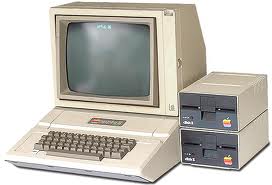
    I knew about Apple but not much.  At that time, there was only the Apple II, which was not a real computer in my mind.  It had only a 40 character display for instance. 

    A year earlier,  Apple’s CEO, Michael Scott, paid a call on Ken Olsen, the CEO of DEC (that is what we called the company back then) after he had sent a wreath to Ken. I don’t know what Ken did with it. The idea  spread that somehow Apple thought it would kill DEC.  Of course, it was not Apple that did this but the combination of forces lead by Microsoft and Intel that did.

    In reality, Scott came to complain that they were not getting delivery of the computers they needed to run his companies administrative function.  The interchange did create an opportunity for Ken to learn about Apple a bit. He totally dismissed their product.  It was also around this time that a 25-year-old Bill Gates came for a meeting with Ken organized by Barry James Folsom.  Barry  was developing a desktop computer based on MS-DOS, and Intel’s 8086 microprocessor called Rainbow. Barry and I were internal competitors inside DEC.   That was the first time I met Bill Gates but not the last time.  I had a lot of interactions with Bill during my Intel years.    We met in a conference room in the Mill, a historic civil war mill where DEC had its headquarters at the time.   Ken dropped by for a while.  Bill was trying to explain the idea of compatible systems to the CEO of the largest minicomputer company. At that time, lack of compatibility was a strategy for companies like DEC.

    In 1982, Digital announced not one but three personal computers the day of the PC Forum meeting in Phoenix in one of the most disastrous business strategies ever. My product, the Professional was the flagship product.  I was selected to speak at the most important conference of the emerging desktop marketplace, PC Forum. I flew directly after the announcement to Phoenix to attend.  A limo picked me up (I was not really use to that) and took me to a speakers dinner where I meet Jobs for the first time, Bill Gates again, as well as people like Don Estridge who was in charge of the IBM PC operation. Many people that played very important roles in the creation of the PC industry were in attendance. 

    The next day I sat down to listen to some of the presentation and Jobs sat down next to me.  We chatted a bit.  I could see he was checking me out in some way.  I guessed that he was trying to figure out if I was someone he would want to have in his organization.  He must have concluded that he did not and lost interest in our conversation.   Even if he had asked I would not have joined Apple at that time.  I was at a much more important company, or so I thought.  I also could not have imagined working for someone so much younger than me.  Surely, it would not have worked out well for me if I had gone to work for Steve Jobs. 

    Apple v. Franklin

    Digital failed miserably in the “PC” market.  There were many reasons for this, which I have discussed several times in my blog and others have written about.  Within a year of meeting Steve Jobs, I would find myself being the President of Franklin Computers, selling an Apple II Clone and immeshed in a law suite with Apple that would eventually bankrupt Franklin. I could never have imagined all this when I had meet Jobs less than two years earlier.  Franklin tried to reach a reasonable settlement with Apple.  John Sculley was the CEO at the time and it appeared he was all for it, but not Steve Jobs.  While the PC industry grew because of the success of clone companies like Compaq, Dell, and HP,  Apple was about to introduce the Mac and still wanted to keep the Apple II proprietary.  We argued that we would pay a license fee and Apple would make as much profit from our sales as they made from their own sales. We said that we could create a standard.  It did not matter. Jobs just wanted us dead and he eventually accomplished that.  We had been all set for an IPO.  We were growing faster than Compaq and did $80 million in our first year of operations.  For years after that, I thought Steve Jobs had made one of the stupidest decisions ever.  Apple could have been Microsoft, which was much more valuable than Apple until recently.  What I did not realize was that Apple under Steve could never be Microsoft, just as Microsoft under Gates could never be Apple.  These two men were so very different.  It was not that they just had different strategies. They would have been personally incapable of executing the others strategy.  I could write chapters on the differences.  Bill is most well know for being the world’s richest man.  Steve Jobs is known for being Steve Jobs.

    Apple destroyed Franklin. My family and I were collateral damage.  I no longer had a job.  Jim Simons, now one of the most successful hedge fund managers and the key investor in Franklin, took me out to dinner and suggested I might be happier somewhere else.  He was right.  Although Franklin never lost the lawsuit with Apple, the world thought we did.  Our IPO was canceled and our bank called their loan.  The company was still floating, but there was a big leak and eventually Franklin went bankrupt and turned itself into an electric bible company, amongst other things.

    Apple, Steve Mayer, and Digital F/X

    After I left Franklin in April 1984, I found myself without a job having moved my family from the Boston area where we lived while I worked at Digital, to the Philadelphia area. My close friend, Steve Mayer was living in NYC.  Steve was the co-founder of Cyan Research which was purchased by Atari in 1975, early after that company was founded by Nolan Bushnell. Mayer played a principle role in the development of Atari’s products and should be considered a co- founder.  Atari was sold to Time Warner towards the end of 1976 and Mayer eventually moved to New York and joined Time Warner as President of Warner Labs, a central research lab for all the Time Warner Divisions.  The day that I resigned from Franklin, Mayer asked me to become his advisor and help him figure out how to start a company by spinning out one or more of the technologies that he was developing in the Lab. 

    We settled on some video post production technology with the idea that we could develop add-on products to the PC that would allow them to be used by professionals and eventually by consumers to do video editing. The company would be called Digital F/X.  We figured out the best way to get Time Warner to agree to the spin out, but we needed financing.  Mayer contacted Jobs.

    Jobs agreed to have Apple fund Digital F/X but did so with a loan.  He required that the company move to Silicon Valley.  Soon after, Steve and his wife moved back to the bay area. Jobs lost interest after a while.  By this time, I was looking for a job in earnest.  That happened a few months later when I accepted a position at Intel as Director of Business Development and later was made a Corporate Vice President.  By the way, in 1988 Intel, along with Kleiner Perkins, invested in Digital F/X.  By then there was no longer a connection with Apple.

    Jobs was forced out of Apple by John Sculley in 1985 and went to start NeXT Computer.  He tried to hire Mayer to be one of the founding ten employees, but Mayer withstood the seduction (Jobs would take him on long walks and try to inspire him with his vision for the company).  In 1986, Jobs also acquired the graphic division of Lucasfilms which was then renamed Pixar.  It would have been hard to realize at the time, but this was probably the most important decision that Jobs ever made professionally.  Not only did it make him a very rich man but it was there that he learned the management skills that would be the foundation for his future success  back at Apple.

    At that time, I was managing amongst other things, the business aspect of a chip that Intel thought at the time would replace the X86 architecture.  It was called the i960.  At this point in time there was a big debate going on in the computer industry about the merits of RISC (reduced instructions set computers) like the Spark from Sun Computer, and CISC (complex instruction set computers) of which the X86 architecture (think Pentium) was a member.  The i960 was RISC, but it was also Object Oriented.  It was actually a 33 bit computer. Forgive me for not going on to explain this.  Bud Tribble and a few other from NeXT Computer came to meet with the i960 team to evaluate our microprocessor for their company.  I think Andy Grove asked me to meet with them.  Frankly, I could have cared less. I thought that Jobs was a loser and did not want to be involved in anything he was doing.  While there was some serious interest on their part in using our chip, we could not meet their schedule. NeXT went with the Motorola processor that Apple was using which turned out to be lucky for them.

    Coffee at Chez Jobs and a visit to Pixar

    One day in 1994, Andy Grove asked my boss, Les Vadasz and I to join him for a visit to Pixar, hosted by Steve Jobs. We all met at Jobs house in Palo Alto, the town where I also lived.  We had coffee in the kitchen. Laurene, Steve’s wife was also there. It was kind of surreal for me to be sitting in Jobs kitchen, the very man that brought down Franklin Computer and along with it, my ambitions.  I had warned Andy that Jobs might not be happy to see me because of the lawsuit and asked that he be told in advance.  Not sure that Andy did that, but Jobs was very gracious to me.  I was brought along because, by that time, I was thought by Intel to be user-friendly when it came to media people. Jobs

    Jobs drove us to the east bay in his Mercedes.  I don’t really remember much of about the conversation coming or going.  Jobs wanted to get us to understand how much computing power Pixar needed to render animation.  We met Ed Catmull, the CEO and John Lassiter, the creative director. John showed us the storyboards for Toy Story.  They then showed us the process of rendering animation. It was easy to understand how processing intensive this was.  John Lassiter was a graduate of the California Institute of the Arts (CalArts) where I was a Trustee. It was a good meeting, although I don’t think anything really came out of it.  I did not realize at that time that Andy and Jobs were close and Jobs considered Andy a mentor.   Strangely, John Lassiter lives just five minutes from my Sonoma home.  I don’t socialize with him, but I do run into him from time to time.

    My only visit to the Apple Campus

    Around this time, Steve Mayer invited me to visit Apple.  He was advising them in a number of areas and wanted me to share my thoughts with them.  I would guess this might have been 1999.  Jobs was not at the meeting. Sina Tamadon, the head of Strategy, was the highest level person in attendance.   My mission was to convince them that there was an opportunity for Apple in the Consumer Electronics Market.  They did not appear very interested and there were no follow-up discussions.

    Conversion to the Mac

    I met my wife in 2000.  She was a graphic artist and had used a Mac since 1984.  When we started living together, I told her she would need to get a PC since I could not provide Technical Support on a Mac.  She said that a Mac did not need technical support and maybe what I needed was a PC girlfriend. A few years later I made the change and became Microsoft free.  Now I am totally in the Apple Eco System with several Macs, an iPad, iPhone, Apple TV and soon the Apple Watch. 

    Cancer

    I was shocked as many to learn that Steve Jobs had cancer.  Having personally had cancer twice (Prostate and Melanoma) I was aware of how difficult the process of dealing with it from detection to treatment and recovery would be.  I was amazed to see how he continued to work so hard and how he accomplished so much.  After I was diagnosed with cancer, I decided I didn’t want to spend whatever days I might have left working. Steve obviously decided to take the opposite course.

    Many of the doctors that were involved in his treatment are people I know and in one case, know well.  I did not pry, nor did they volunteer information, but I could sense that things would not end well.

    Thinking back 34 years later

    I often think back to that dinner in 1982 with Steve Jobs, Bill Gates (both 26) and me (at 37) and our three different approaches to the revolution that would be desktop computing. I was confident about my strategy and fully expected that Digital would dominate the desktop.  It was at this same meeting that Ben Rosen introduced me to a start up, Compaq Computer, the company that would eventually acquire Digital.

    I was still stuck with the mini computer model of vertical integration and proprietary hardware and software, but I was way ahead of Steve and Bill on a number of concepts.  The first was the use of bitmap graphics.  At that time, most computers used hardware character generators.  The Pro series  however used regular memory to store bits that corresponded to the pixels on the screen, and could be modified easily allowing for different fonts and sizes.  This had already been done by the folks at Xerox Parc which is where  Jobs got the idea and then used it in the ill-fated Lisa computer and the successful Macintosh.  By the way, I may have been the first to have done this in 1970 but that is another story.  The Pro series also had built in ethernet and was designed for networking. 

    Microsoft and Intel had a new model of the computer industry, a horizontal model where different companies would compete with others for various layers (microprocessors, storage, software etc).   Apple’s vision would become very much aligned with the vertical  proprietary strategy that I was advocating but would take more than 25 years for that to pay off.  The difference between Apple and Digital was not in the architecture.  It was in the market.  We were targeting  business and they were targeting individuals and they knew how to market.  I once had a major argument with Ken Olsen about this.   I said, that we would only succeed if  we had a good product and great marketing.  He said, I was wrong and that we had to have a great product with good marketing.  We went back and forth and then he finally raised his voice and said “You don’t understand! We are not capable of having great marketing”.  He was so right.

    Andy Grove, the Mentor

    Evidently, Steve Jobs thought of Andy Grove, the CEO of Intel, as a mentor.  I was not aware of that.  During my tenure at Intel (1984-1999), Intel had very few dealings with Apple.  Apple was using microprocessors from Motorola (68000).  At one time in the in the late 90s, Apple indicated an interest in using Intel Microprocessors.  Intel put together a team to port over the Macintosh OS to the x86 processors and demonstrated that to Apple, but Apple decided not to change.  Mostly likely, Jobs was just using Intel to get a better price at Motorola.  In 2005, Apple did move to Intel which was by that time pretty much the only game in town. 

    Frankly, Intel would be better off today if instead of Andy being a mentor to Steve, Steve had been a mentor to Andy.  Intel totally missed the movement to mobile devices for instance.    

    Just one more thing

    When my wife and I married, we had two couples at our side.  One was Larry and Girija Brilliant and the other was Steve Lavine and his wife Janet Sternberg.  Steve is the President of CalArts where John Lassiter got his education.  In the room, was one of the doctors that would treat Steve near the end of his life, David Agus.  Below you will find the  acknowledgment from his very successful book, The End of Illness.

    I want to especially thank Marc Benioff, Amy DuRoss, Melissa Floren, Steve Jobs, Avram Miller, Amy Povich, Maury Povich, Dov Seidman, Greg Simon, Bonnie Solow, Elle Stephens, and David N. Weissman. 

    Now I am done

    So I am still trying to figure out how this man I hardly knew and who probably would not have known who I was, played this shadowy role in my life.  In closing this long post, I have to say that I still do not fully understand my fixation with Jobs.  Is it because he is the person I wanted to become but did not?  I hope there is more to it than that.

    If you got this far, I have to thank you for indulging me in the cathartic post.

  • Previewing Avram TV: various interviews and more

    I have decided to create a website where some various video and audio interviews, I have done, can be seen/heard. I am very lucky to have some of these interviews to share.

    Below is a preview of one such video.  It was done by my good friend Bob Cringely author of I, Cringley, one of my favorite blogs. Parts of this interview are likely to appear on a TV show that Bob is producing.  I think he does a great job as an interviewer.  I think I am not so bad either.  Hope you enjoy this.  Please let me know.  You can also check out http://www.avram.tv if you like, but it is a work in progress.  I will give a decent launch when it is ready,

    Intervista a Cringley con Avram del 2014 from Avram Miller on Vimeo.

  • Steve Jobs Bio: A review sort

    I just finished Walter Isaacson’s bio of Steve Jobs.  I would say it is informative but not insightful.  For tech junkies,  especially of the Apple genre, the book has  detailed information about the history of Apple and especially how product and business decisions were made.  This history  is  presented in a clear and factual manor.  Steve Jobs controlled the flow of information out of Apple with a tight grip, until he could no longer close his hand. Isaacson was able to get this history from Jobs in a comprehensive  way and from those at Apple that Jobs allowed to speak with Isaacson (I am sure they all checked in with Steve).  Jobs wanted to control how history would see him.  That is why he sought out Isaacson to do his bio. Jobs said he was doing this for his children, so that they could know him better.  I don’t think this was sincere .  Of course, he  knew that the bio would have to deal his dark side  and the awful way he had treated people including members of his own family. He  knew that he could work with Isaacson in such away that the sting of his behavior  could be minimized and that his accomplishments would dominate the book.  Isaacson was  afraid to fall into the Jobs  reality distortion field and fought hard with himself to maintain his objectivity.  But in the process, I think he may have lost the essence of what made Steve Jobs be Steve Jobs.  Isaacson might of gotten close in discussing how Jobs felt both abandoned by his biological parents and at the same time felt special because he was chosen by his adoptive parents.  But I don’t think this was really what drove Steve Jobs. I think this was just something he fed to Isaacson and was an example of Jobs manipulation.  It had a profound effect on the book with Isaacson coming back to this theme time and time again.  Jobs may not have known what made him the person that he was but if he did he would surely not have shared it.

    Steve Jobs was a remarkable man with great gifts.  He was driven by his product visions.  He wanted to leave a mark on the world and he did.  Apple and Steve Jobs were the same in his mind.  The more he realized that he would die the more he wanted to make sure  Apple would live.  As he was dying he put much, if not almost all, of his energy in to making sure that Apple would not only survive but dominate.  Because Apple was Steve Jobs.  He probably saw his wife and children much as he saw his own dying body – as something that had to be left  behind.

  • Steve Jobs and me

    This is not so much about Steve Jobs but about how Steve effected me.

    Like so many, the death of Steve Jobs has played a  big role in my thinking since hearing the news on Wednesday.    Steve played an important role in my life although he hardly knew me.  The first time I met Steve was at the PC Forum in 1982 which was started by Ben Rosen and later taken over by Ester Dyson.  There are some great photos of the PC Forum over the years,  but unfortunately, they start at 1984. I remember setting next to  Steve in the audience  and having some discussion. He was 26 years old and I was 36 years old.  I wish I could remember what we discussed.  At that time Apple was selling the  Apple II.  I had come to announce the Pro 300 series (I was responsible for that product line at Digital Equipment Company which was the number two computer company in the world  then).  It is probably hard for those that know me now to imagine that  I was probably as passionate tabout product design then as Steve was to become later.  Here is the Pro 350:

    Here is the Apple II

    I will come back to this a bit later because it really  has the most to do with what I am trying to express in this blog.  It is easy to imagine  during my  conversation with  Steve that he could have asked me to join Apple Maybe I would have but probably not.  I doubt that could have seen myself working for someone so much younger than me (ego) and I probably would not have been willing to take the financial  risk.  At that point, my career at Digital was ascending.  I had the strong sponsorship of the CEO (Ken Olsen) and I really thought my efforts with the Pro would change the world of computing.  I could hardly have guess that just two years later, I would be the president of an Apple II Clone company, Franklin Computer, and locked in a legal battle with Apple and Steve Jobs.

    The evening before the forum,  I attended the speakers dinner. It was an amazing dinner and really my first real introduction to the world of PC entrepreneurs.  Amongst the attendees were Steve Jobs, Bill Gates (also 26), Don Estridge who lead the development of the IBM PC,   and Adam Osborne.  Adam I recall said the key to wining in the personal computer market place was building and adequate but low cost product (similar to the net book argument). Steve eventually took the opposite approach.  Of these, only Bill is still alive and is no longer active in the computer industry.   Don died a few years later at the age of 48.  Adam died in 2003 at the age of 64. Steve died just now at the age of 56.  These and some of the others attending were really the founders of the PC era.   My own contribution(not to be compared to Bill and Steve of course)  to creating the computer industry we now know would have to wait a decade more,  when I as Vice President of Corp Development at Intel, drove much of the early development of today’s residential broadband networks.

    I left Digital Equipment in early in 1983.  It was clear to me that my work there was not going to be successful.  The Professional 300 series computer that I had developed with so much love and passion was incomplete and two expensive albeit way ahead of their time with the first 5 inch winchester disk, bit map graphics and Ethernet connectivity (all this in 1983).   Digital did not have the desire or ability to really market in the developing PC world.  So for a while, I considered leaving with a few of my most talented staff and to start a local area networking company (by that time I was in love with networking technology).   However, I was too scared to do a start up and when I got the offer to join Franklin Computer, I took it.  You can read a pretty funny article about me and Franklin qui. Franklin had a clone of the Apple II just as Compaq had  clone of the IBM PC.  But there were lots of legal differences and Apple sued Franklin in a landmark case.  Apple never actually won but the destroyed Franklin’s ability to raise capital.   We were growing very quickly and approaching 100 million dollars in sales in a first full year of operations.  But without the ability to raise additional cash and with our bank canceling our line of credit the company was headed for disaster.  I had joined  Franklin to use its  momentum  and the money we expected to raise in an IPO (were in registration when the appeal court decided to re hear the case)  to build a real computer company to fully compete in the market.  We tried to work things out with Apple.  We offered to pay them a big licensing fee and help develop the market.    John Sculley who was then CEO of Apple seemed interested in some possible arrangement and settlement but evidently Steve Jobs would hear nothing of it and wanted us dead.  He got his wish.  I left  a few months before Franklin went into bankruptcy for a brief period in order to wipe out the common shareholders.

    A few months later, I joined Intel in 1984.   About ten years later, Andy Grove asked me and Les Vadasz  to join him  and visit Pixar with Steve Job.  We went to Steve’s house in Palo Alto. The same house where he died.  We sat in the kitchen with Steve and talked for a while.  His wife Laurene was there and maybe one or two of the kids I seem to remember.  Steve then drove us to Pixar and introduced us to John Lasseter. We learned about the computer automation process they were using.  The purpose of the visit was to expose Intel to the high end needs of graphic rendering and the idea of using multiple PCs to do it.  I was a bit nervous that Steve would remember me and my role at Franklin.  Either he did not remember or he did not care because he was very  civil to me.  That was probably the last time I actually interacted with Steve.  And while that meeting was a good experience, I was no fan of Steve Jobs at the time.  And later when he rejoined Apple,   I felt his closed business strategy was mistake and I was a strong proponent of the Microsoft/Intel approach which was a very open architecture (as long as it was based on Intel and Microsoft).

    The amazing transformation of Apple in the last ten years has been and will  continue to be discussed  by so many.  Frankly, I still do not understand  how it could have happened. The combination of insight, marketing and execution under Jobs leadership was exceptional.    About three years ago, I became a convert to all things Apple.  I am writing this post on a Macbook Air.  I read about Steve’s death on my iPhone and later in more detail on my iPad.  My email is housed at http://www.me.com.  I can’t wait for iCloud.

    I am left feeling sad for his death, admiration for his accomplishment and frankly, disappointment that I was no Steve Jobs. And grateful  that I am still alive to love my wife, children and friends.

    Steve contributions will stay with us but  his greatest gift  may yet  to come; the book he allowed and helped Water Isaacson to write,”Steve Jobs”.  Maybe, we will finally understand.  We need to understand.


  • Leadership, Vision and Steve Jobs

    Many of us our thinking about Steve Jobs these days.  I know I am.  As readers of this blog and and my friends, know that I have mixed feels for Steve,  a man that I first meet in 1981when he was 25 years old.  And while, I have not appreciated how he has treated some people over the years, I have  reluctantly grownt o have great admiration for his leadership and vision.  And of course I am sad to think of any person suffering from cancer. My heart goes out to his wife, Laurene and  to their three children.
    So like a number of you, I have been thinking about what will happen to Apple when Steve can no longer lead the company.  That caused me to ponder the relationship between leading a company  and having vision.  Many companies are founded by entrepenuers that have a vision they are trying to impliment.  They are driven by this vision.  Most do not have the manegment skills to lead their companies as they grow and are forced out in some form.  But when they do have these skils, it can prove to be a powerful force.  We  have great examples of this in the technology industry.  Microsoft, Intel, Oricale and more recently Google (which is a bit of an exception since the founders brought in a professional manager early to work side by side with them).  But eventually the founders are either replaced because they can not manage the growth (Yahoo) or the founders retire (Microsoft  and Intel).
    While a founder that is both the companies visionary and also its CEO is a powerful force, a CEO that is not a visonary leads typically by committee.  This kind of CEO asks a bunch of people he/she respects to provide ideas and then he/she tries to reach a concensus.  What normally comes out of this is a compromise. Risk taking is avoided as the CEO is not able to internalize the vision and moves to what is more comfortable.  And sometimes the CEO/founder can hold onto  power but the world changes and the CEO is no longer capable of having a vision for the future. In my opinion that is what happend with Andy Grove when I was still at Intel and Andy could not really graps that the heart and profit of the internet was moving from the client to the the cloud.  But somehow, Jobs has not only to continue to comprehend but was also able to shape the future.
    There is an interesting discussion of the future of Apple without Jobs qui.