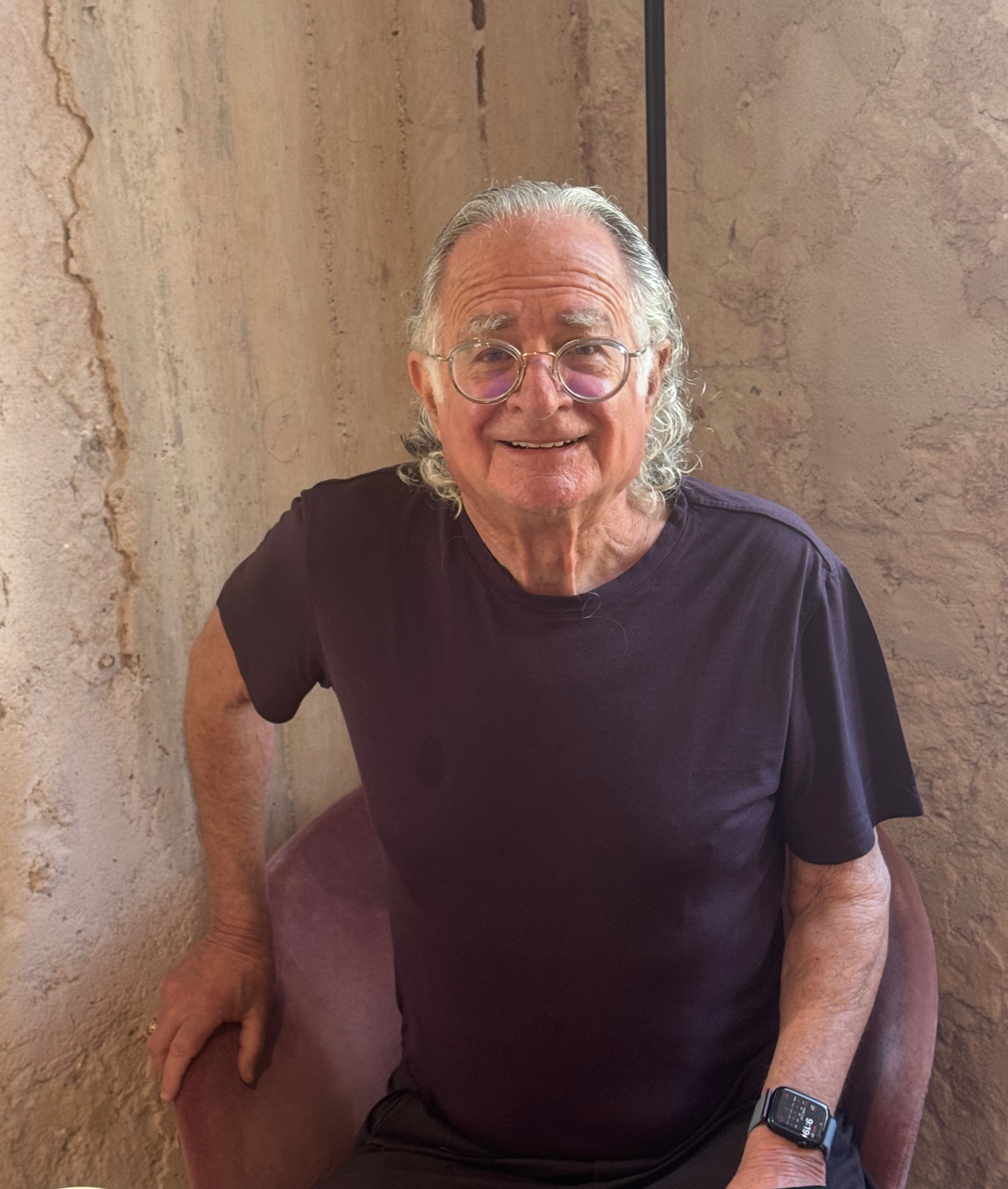
Come sapranno i lettori di questo blog, lavoro nel campo della scienza della longevità da oltre dieci anni, contribuendo anche alla fondazione del Longevity Center presso l’Università di Tel Aviv e il Sheba Hospital. Il mio principale interesse è e rimane la relazione tra il sonno e la salute. Spero di poter dire molto di più a riguardo nei prossimi mesi.
Lavorando nel campo della longevità, sono giunto a una conclusione piuttosto deludente. È evidente che lo stile di vita ha un impatto significativo sulla longevità; le persone hanno grandi difficoltà a cambiare.
Ecco la mia lista:
I principali fattori di stile di vita che influenzano la longevità
Allenamento
Un sonno di qualità
Salute metabolica
Connessione sociale
Prevenzione cardiovascolare
Evitare di fumare
Impegno cognitivo
Finalità/significato
Qualità della nutrizione
Gestione dello stress
Lo stile di vita contribuisce probabilmente al 50% alla longevità, mentre gli altri 50% sono dovuti alla genetica. Inoltre, ci sono interazioni tra i due fattori. Non possiamo fare molto per la nostra genetica, quindi ci concentriamo sullo stile di vita.
Quando abbiamo iniziato a lavorare sulla creazione del Longevity Center presso Sheba circa cinque anni fa, ho realizzato una matrice a forma di 2 x 2 durante un’interlocuzione con Tzipi Strauss, direttrice dell’istituto. Le ho chiesto di inserire nella matrice diverse attività che le persone potevano svolgere, come l’esercizio fisico e il controllo del peso. Il punto che volevo sottolineare era che la maggior parte delle attività che apportano un alto beneficio si trovano nel quadrante delle attività ad alto beneficio ma con un’adesione bassa. In quel momento ho iniziato a pensare che il problema riguardasse più la commercializzazione che la scienza. Come potremmo convincere le persone a fare le attività che le manterrebbero in salute? Nonostante i benefici derivanti dallo studio della longevità non mancano. Per esempio, non credo nell’approccio “one size fits all”, dove la genetica gioca un ruolo. Sarebbe meglio sapere quali fattori sono più importanti per ogni persona. È qui che la medicina di precisione entra in gioco.
Ci sono persone in grado di apportare cambiamenti nel proprio stile di vita, ma sono una minoranza. La maggior parte delle persone avrà bisogno di un tipo diverso di aiuto.
Questo aspetto è importante anche per gli interventi medici come i farmaci. Ad esempio, assumere statine per il colesterolo alto può essere molto importante per alcuni e non importante per altri. Lo stesso vale per la pressione sanguigna.
Sono giunto alla conclusione che i veri progressi nella longevità e, in particolare, nella durata della vita sarebbero stati ottenuti grazie ai miglioramenti nei farmaci e non attraverso cambiamenti nello stile di vita. Ricordate che tutto ciò avveniva prima che l’intelligenza artificiale entrasse in scena. E anche prima che i farmaci a base di GLP-1 diventassero popolari.
I live in terror of getting a potentially terminal disease that requires constant monitoring and different therapies, most of which fail with great disappointment. I imagine spending hours in hospital waiting rooms and doctors’ offices, dreading the results that will ultimately be delivered to me.
I don’t know the best way to die. It is a very individual thing. Some people would like to die in their sleep. I don’t want that. I would like to say goodbye, but I don’t want it to be a long goodbye. Maybe a few weeks with just enough time to take my leave and tell those around me how much I love them. It would not be enough time to get my affairs in order, which is why I try to keep everything organized in advance. I don’t want to be dealing with those kinds of logistics in the last weeks of my life.
A new friend in Lecce recently asked me for advice about longevity. He was surprised by what he perceived as my relative youth. Others who know that I’ve worked in the field of longevity for years sometimes ask for my “secret.”
I usually joke that the secret was choosing the right parents.
Genetics Set the Ceiling but how You Live Determines the Outcome
I believe genetics determines your maximum potential lifespan. In that respect, I did win the lottery.
My father lived to 97 and remained in excellent physical condition, working out six days a week until he was 95. Had he treated his brain like a muscle as well, he might have avoided the dementia that appeared late in life. My mother, sadly, died young at 67 by taking her own life but her mother lived to 94 and her mother’s mother to 98.
So while genetics may define the ceiling, everything you do during your life subtracts from it.
Smoking at 20 may shave a decade off your lifespan. Chronic sleep deprivation quietly steals years. Poor metabolic health doesn’t announce itself early—it slowly gnaws away at your longevity. Longevity is less about adding years than about not losing them unnecessarily.
A while back, I was invited to speak at an event connected to the World Business Forum conference in Milan which was sponsored by the Italian Institute of Technology. At the time, I was beginning a relationship with the organization. Having recently moved to Italy, I was looking for a way to stay connected to technology and to contribute to the country that had welcomed Deborah and me. I also wanted an identity here that wasn’t simply “some old wealthy retired American.” IIT offered a path toward that. Recently, IIT appointed me as the first Fellow, giving me an official role at this amazing institute.
When I was asked to speak, I immediately said yes. I thought, mistakenly, that I would be speaking on the main World Business Forum stage. I didn’t realize the talk was for a special IIT event with only about a hundred participants. But honestly, I would have accepted even if I’d known.
Still, when I later stood inside the enormous main hall, which seats 3,000 people, I felt a pang. That was the kind of room I used to speak in regularly, many times a year. I remember finishing talks and being swarmed by people offering business cards like I was some kind of rock star.
As I wrote earlier, I am in the process of replacing some of the older parts used for eating, hearing, and vision.
First: A Bit of Extraction and a Lot of Pain
The extraction of three molars was not easy—it took three hours. I’ve been in pain for about ten days, but it’s getting better. I won’t be able to have the implants placed for six months, and then it will take another three months for the crowns. After that, however, my mouth will be very strong.
Hearing Like a Baby
The hearing aids have been a very interesting and positive experience. I can definitely hear well in noisy environments, and I understand Italian (which I am studying) much better. My inability to hear consonants clearly had been making it very difficult to learn Italian and was probably also a handicap in learning Hebrew.
My AirPods Pro are much better at streaming than the hearing aids, and—crazy as it sounds—I can actually wear both at the same time. This is important because soon Apple will provide translation capabilities using AirPods.
What’s strange is that when I’m streaming a podcast, no one knows. The AirPods Pro have a feature called Conversation Awareness: if someone starts speaking to me (or if I start speaking), the sound of the stream lowers automatically, letting me hear the environment. Hearing aids don’t offer anything like this. Normally, if I had my AirPods in, my wife would realize I was listening to something. I’m thinking of creating an accessory like a little “recording light.”
I can adjust the mix between outside sound and streaming. This works well inside the house, though less so in noisy environments. My Phonak hearing aids have an app that lets me set up different configurations and switch between them easily—I’ve been experimenting with this.
I’m happy to say my hearing aids are practically invisible, which for a vain person like me is important.
Advances are coming, driven by AI. Soon, hearing aids will not only separate voices from background noise but will also target the voices you want to hear while reducing those you don’t.
A new feature called Auracast is being rolled out. It’s essentially a Bluetooth LE Audio stream you can tune into, much like selecting a radio station. You can mix it with the ambient sound around you. It’s a one-to-many capability: in a theater, you could tune into the actors’ speech or singing—or even a live translation. In an airport, you could hear announcements clearly, and on an airplane, instead of asking what the pilot said, others may be asking you.
The feature I’m most looking forward to is simultaneous translation. Apple will soon bring this out for the AirPods Pro. While this won’t work the same way with hearing aids, the good news is that you can use AirPods Pro at the same time as your hearing aids. I’ve already tested this.
I put on my hearing aids after I shave in the morning and take them off just before bed. They charge during the night, giving me about 18 hours of use per day.
New Eyes
After much consideration, I decided to get cataract surgery. I had my first eye done three days ago. The process was amazing. Many eye surgeons use the same operating facility—mine was in Beverly Hills, close to where I’m staying. It’s like a factory with seven operating rooms. They do about 60 operations a day. The whole process takes about two hours from check-in to check-out.
The first hour is paperwork and preparation. Then comes the operation, done in two parts. First, a laser performs the incision and separates your lens. Then the laser breaks up the cataract. (This can also be done by hand, but the laser is more precise and results in fewer complications.) You’re fully awake during this part. Your eye is dilated and numbed—you feel nothing. A device holds your eyelid open. You communicate with the surgeon while watching a big “light show.” It isn’t unpleasant.
Next comes the implant of the new lens. You’re given a very light sedative (I just felt relaxed). Once my natural lens was removed but before the new one was placed, I could see—though not focused. As soon as the new lens was in, I started to see again, though very blurry at first. Because of dilation, the light was intense, so I was given dark glasses.
Recovery took about 30 minutes, and then I was free to go. By the end of the day, I was already seeing better with that eye than I ever remember. Colors and contrast were amazing—everything vivid. However, I could only see well at a distance. Intermediate and near vision were poor. The kind of lens I received, an Extended Depth of Focus (EDOF) intraocular lens, is designed for distance and intermediate vision. But it can take weeks for the brain to adapt, so for now I’m using drugstore reading glasses.
The hardest part so far is having one corrected eye and one bad eye. I tried using glasses with a clear lens for the corrected eye and my old prescription for the uncorrected eye, but it made me dizzy. So for now I’m using no glasses at all. I can see and get around, but my depth perception is a bit off. In five days, I’ll have the second eye done. I can’t tell you how happy I am with my new vision.
But old habits remain: I keep reaching for my glasses when I wake up—only to realize I hadn’t worn them to bed, so they aren’t on the nightstand.
Yesterday, I got a haircut. It was the first time I could actually watch the barber cut my hair.
GLP-1 (Mounjaro)
I should also mention that I’ve been taking a GLP-1 drug called Mounjaro for about a year, initially to lose about 15 pounds. I’ve continued because I think it’s a miracle drug. All my labs improved. My glucose levels were about 30% lower on average, and I had no spikes.
However, I stopped taking it two weeks ago in preparation for surgery. Now I can see my glucose rising again, with spikes after meals. The first thing I’ll do after my next surgery on Friday is give myself a jab.
We came to Los Angeles on July 27, 2025, from Europe and will be here for a month. I did not expect that I would be spending a lot of my time dealing with my teeth, eyes, and ears.
I have been asking myself, “Are we as old as our oldest parts?” The answer is a combination, I think, of both the average and the specific. If you have a bad back or knees and cannot walk, you will end up aging quickly. We need exercise.
In general, I am in excellent shape, but that does not mean that everything is working well. So I am deciding to replace the old parts when they are no longer working well, to the extent possible.
Below you will read about my journey. I will report back on how successful I am in doing this.
New Eyes
I decided to have a cataract consultation at the Maloney-Shamie-Hura Vision Institute in Westwood, Los Angeles. My consultation took 2 1/2 hours and was covered by Medicare. I was so impressed. I saw three specialists and had seven precision tests.
Over the last several months, I have been studying the options for lenses. There are many choices, and they all involve some kind of trade-off. That means getting really in touch with what is important. Selecting a lens is a lifelong decision. For me, that meant not only thinking about my life now but also trying to think about my life in the future.
I could just have a single-focal-point lens, which would mean having just one focal point. If that was far, I would need glasses for intermediate (like looking at my computer monitor) or reading. Right now I have progressive glasses which allow me to see far, intermediate, and near, but frankly this does not work so well. I have separate glasses for working with my computer, and I take off my glasses to read.
There are multifocal lenses that allow you to see far, intermediate, and near, but they have some issues. I decided to use extended-depth-of-focus (EDOF) lenses. EDOF lenses extend the range of clear vision, especially for far and intermediate distances. They can be set for far and intermediate or for intermediate and near. You can also mix the two eyes. I am going for far and intermediate, hoping that I will still be able to read my iPad and phone. I will probably have to use reading glasses to read a book, but I have not read a physical book in years. I use my iPad and will be able to increase the font size.
I have heard that in addition to being able to see better (I can no longer see well out of my right eye), colors are supposed to be much more vivid.
At age 80, about half of people either need cataract surgery or have already had it.
I know from my work in longevity science that most people should be using hearing aids after they reach their mid-50s. Certainly by 65, most people struggle with hearing words in a noisy environment. I know that I have this problem. The reason this is relevant for longevity is that, because of problems in hearing, people become less socially active as they age. Social activity is essential for a long, healthy life and, in particular, cognitive function.
Hearing loss → communication difficulty → withdrawal → isolation → emotional & cognitive effects.
I am pretty extroverted, as any of you who know me will attest, but I have found myself reluctant to go to restaurants with friends because so many of them are very noisy. Now I will not have to be concerned with that. The hearing aid that I have chosen, the Phonak Audéo Infinio Sphere (Infinio family), features the DEEPSONIC™ chip — a dedicated deep neural network (DNN) used for AI speech-vs-noise separation, active only when there is a lot of background noise. It creates a cone of silence around the conversation area. I once wanted to design something like this, and I called it the conversation peace. It processes 7.7 billion operations per second, analyzing about 22 million sound samples every second. There is a second chip that does the normal work of a hearing aid.
This hearing aid can handle streaming audio (like from the phone or computer) as well as spoken audio. It is really expensive (more than $7,000 for my setup), but I think it is a great investment.
When I was learning Hebrew, I found the most difficult part was hearing spoken speech. I could read and write pretty well, but when I tried to speak Hebrew to someone, I found that I did not understand them. I thought it was because of my lack of knowledge (vocabulary and grammar), but it was likely because many consonants (s, sh, t, f, ch) live in the frequency domain where I hear poorly. I am finding the same thing as I try to learn Italian. This, in fact, is one of the main motivators for my decision. The other came from using the AirPods Pro, which have a hearing-aid feature. I found that when I use it in that mode, all the sound seems richer to me. That is because I am hearing the higher frequencies and therefore hear the harmonics and overtones.
I get my unit next week, and I am excited to try it out. There is a pretty comprehensive app, and I can select different modes. For instance, I will want a mode that is perfect for my piano playing.
New Teeth
I had a major surprise last week. I went in to have a routine teeth cleaning only to discover that I had three molars that were extremely infected. I was put on antibiotics right away because two of these were close to my sinuses, and if the infection moved into my sinuses it could end up in my brain. I had no symptoms, which evidently is the downside of having a very robust immune system.
The process of extracting them was pretty interesting. It took three hours. I received bone grafts. My blood was used in a machine (a centrifuge) that separated the blood into red blood cells, a platelet-rich layer, and plasma. It is the middle layer that is important for this treatment — often called platelet-rich fibrin (PRF). A membrane was placed over the gum (where the tooth had been), and this material and bone are mixed. Somehow my natural stem cells will be stimulated by this mixture to turn into bone.
This will allow me to have dental implants that will be very strong. It is also expensive, but I figure I have nothing to lose and everything to gain. If I don’t, I won’t have needed the money; if I do, I’ll be glad I invested in a strong mouth
The Rebuilding Avram Miller
No matter how much I exercise, how well I eat, and sleep, I will age. Our objective should be to live better and longer. Science will certainly help us live longer but it is up to us to a large extent to increase our health span by our actions.
As readers of my blog know, I’m deeply interested in longevity. I helped establish the Longevity Center at Sheba Hospital (Tel Aviv University) in Israel, which I continue to advise. My interest spans both the biological science of aging and the economic implications of a world where more people live longer—potentially requiring support from a shrinking working-age population.
At 80, my curiosity about aging is also very personal.
I believe I’d be considered a super-ager, both mentally and physically. I’ve worked hard at this—regular exercise (physical and cognitive), a healthy diet, weight control, strong social engagement, and good sleep habits. I also closely monitor my body through regular lab tests and scans.
Am I losing my senses
While my mind and body remain strong, my senses are showing signs of age.
My hearing and vision have both diminished. I’ve resisted hearing aids (yes, vanity), though AirPods help in certain settings. My eyesight can no longer be corrected to 20/20. My right eye in particular is weak; I can’t read with it alone. Tests confirmed a cataract is to blame. I’ve had OCT imaging and other diagnostics—everything looks stable, but my eyes are simply getting old.
I’ve chosen to delay cataract surgery for now. I still see well with both eyes, and glasses have been part of my life since age 7—they’re part of my image. I’ve spoken to several people who regret their lens replacements. The risks feel unnecessary for now.
Maybe I’ll wait for AI glasses that help both hearing and sight.
That’s the big question I keep coming back to: Are we as old as our oldest part?
I see vibrant people struggling with hips, knees, or memory. Dementia becomes a real concern after 80—about 25–30% of people in their 80s have it, and that number climbs to almost 50% in their 90s. My father, incredibly fit and sharp into his 80s, developed dementia in his 90s. He passed away at 97.
We may conquer cancer, heart disease, and neurodegeneration, but the slow decay of joints or senses can still gut our quality of life.
What the Billionaire Longevity Boys Club Is Doing
Many wealthy entrepreneurs are investing in longevity. If I had billions, I might do the same. They’re chasing breakthroughs—some realistic, some radical.
Here are the key figures and what they’re doing:
Name
Longevity Goal
Approach / Methods
Companies / Projects
Jeff Bezos
Reverse aging, extend lifespan
Biotech R&D on cellular reprogramming
Altos Labs, Unity Biotechnology
Bryan Johnson
Achieve biologically younger body & brain
Intensive self-tracking and data-driven protocol
Blueprint (his own project)
Peter Thiel
Radical life extension, possible immortality
Senolytics, parabiosis, cryonics
Unity Biotechnology, Alcor, Methuselah Foundation
Larry Ellison
Defeat aging as a disease
Large-scale research funding
Ellison Medical Foundation
Sergey Brin
Delay aging, prevent age-related disease
AI + biology, deep science R&D
Calico Labs
Larry Page
Add decades of healthy life
Biotech moonshots
Calico Labs
Elon Musk
Extend brain and human potential
Brain-machine interface (not focused on aging per se)
Neuralink
Sam Altman
Add 10+ years of healthy life for all
Reprogramming, immune rejuvenation
Retro Biosciences
Christian Angermayer
Extend life, enhance mental and physical health
Psychedelics, cellular therapy, biotech investing
Rejuveron, Cambrian Biopharma, Atai
Tony Robbins
Stay youthful and energetic as he ages
Supplements, stem cells, wellness advocacy
Life Force (book), various investments
I admire their ambition. I hope they succeed. But even if we conquer the “big three”—heart disease, dementia, and cancer—we may still be limited by the parts that wear out first.
In the end, maybe we are just as old as our oldest part. I hope not.
When I was diagnosed and treated for prostate cancer in 1996, I made a decision that changed my life forever. Prostate cancer is slow growing, and if the treatment did not work, I would still have at least ten more years to live. In my case, it appeared that the cancer had metastasized (it had not). So I decided to live my life as if I only had ten more years. This happened at a time when my friend, Dave Roux—who was then responsible for Corporate Development and M&A at Oracle and I were working together to create a leveraged buyout firm.
Having made the decision to live as if I only had ten years, I realized I did not want to spend those years running a private equity firm, and I told that to Dave. He went on to create Silverlake, which became a very successful firm. In the process, he became a billionaire. I assume I would have as well. By the way, Dave is a really good person. His family foundation supports many important projects.
I took a different path—one that I do not regret. It was no longer tied to any organization and not driven by financial concerns.
I thought at the time that ten years was long enough to accomplish something like learning a new language, developing new skills, or having a deep and meaningful relationship—but short enough to feel some urgency. Thinking that you only have ten years to live could be considered pessimistic. But now, at the age of 80, I think it is an optimistic way to consider the future.
I struggle with my age, and I have written about that in this blog. Sometimes I wake up in shock when I realize how old I have become. While about 60% of men live to 80, only about 10% are in excellent health (I appear to be one of those). Ten years later, only about 5% of men are still alive—and those who are, are overwhelmingly in poor health.
While I have a good chance of making it to 90, it is not just a question of life span. Health span is the critical question. While I wrote that I am in excellent health, I am starting to notice a decline in my hearing and sight. I wonder, are we as old as our oldest part? I hope not.
We had left Israel just before October 7, 2023, on a combination vacation and business trip. Having already decided to move from Israel in 2025, we accelerated that decision. I loved living in Israel, but the Israel I had loved was no more. We needed to create a new life.
We ended up moving to Amsterdam, where I was engaged in work related to AI and cancer diagnosis. It felt like a rest stop in what had become a very confusing world—still in motion, but catching our breath. Eventually, we chose Italy. I had always said jokingly that in my next life, I’d come back as an Italian—and then I thought, why wait?
But my 80th birthday weighed heavily on me. I struggled to imagine my future. We desperately wanted to settle into our own home. I missed my piano, which was still sitting in storage in San Francisco. The piano I had in Tel Aviv was sold with that house. We missed our art and the small things that my wife and I had collected over our years together.
The question of how to use the ten years—likely the last ten years—came into sharper focus recently, as we made a major life decision: we would put down our roots in Italy.
My anxiety about the future came to a head when we decided to buy a home in Lecce, Italy. I tried to imagine my life living in this city at this age and over the next ten years. It was then that I realized the decision to live as if I only had ten years was no longer a pessimistic view but an optimistic one, and I decided to embrace that optimism. We will live in Lecce in a beautiful palazzo in the heart of the historic center. Lecce is called the Florence of the South. It is a Baroque city located less than 30 minutes from amazing beaches on both the Adriatic and Ionian seas.
It will be almost essential for me to learn Italian. I am struggling with that. This is the third language I’ve had to learn after English but I am committed to doing it.
One reason to remain optimistic is the progress I expect we will see in health care because of AI. I am watching this closely and am personally involved in the field as an advisor to the Longevity Center at Sheba Hospital in Israel. I have started to get involved in longevity research in Italy as well. I still want to engage in creating the future and believe I have much to offer. I want not only to live longer and better—but to help others do that as well.
So whether I am winding down, winding up, or just winding my way through this next chapter, I know one thing for certain: I’m still moving forward—with curiosity, with purpose, hope and a song in my soul.
You’re looking at an 80-year-old man born in 1945, on the day Auschwitz was liberated. Realizing how old I am is often a shock. It’s difficult to come to terms with this. For most of my life, I saw myself as the youngest person in the room—even when that was no longer true. I still feel that way sometimes, though I doubt others see me like that now.
Less than 4% of the U.S. population is my age or older. Half of those born in 1945 are no longer alive. Less than a third will survive another ten years. Hopefully, I’ll be one of them.
If you asked someone “Would you like to know how long you have to live?” Some people would say yes; others would prefer not to know. I would very much like to know, because it would surely influence the decisions I make now.
It’s not just about how long we live—but how well. There’s a vast difference between healthspan (the years we’re healthy) andlife-span. (total years lived). Simply knowing how many years remain isn’t enough.
Life Span and Health Span
At 80, the average man has 8–9 years ahead, and the average woman has 10–11. But those are averages. What matters to each of us is not the general number, but how long we personally have—and how long we will remain well during that time. While someone might have eight years remaining, they could be sick for half that time. For instance, about 25% of men and 33% of women will develop dementia. It is not just about living longer. It is about living better longer.
The good news is: there’s a lot we can do to extend not just life-span but health-span. Exercise, quality sleep, a healthy diet, weight management, low stress, and strong social connections all make a difference. It also helps to have chosen your parents well—though genetics are estimated to account for only about 25% of longevity outcomes.
Lifespan in the developed world has increased significantly over the past century, although gains have slowed in recent years (COVID played a role). Life expectancy has risen by about 20% over the last five decades. However, healthy lifespan has increased only about 17%. This widening gap raises real social and economic questions, especially as population growth slows and societies age—leading to an inversion of the population pyramid. I’ll write more about that in another post.
None of these projections account for potential breakthroughs—especially from disruptive technologies like AI—which could radically change the landscape of aging and disease.
Those who are middle-aged today may live well into their 100s. Some believe they may become biologically immortal. I don’t think that opportunity applies to me. And then there’s the question: how long would we want to live, and in what kind of world?
Back to me
I realize this post may seem self-absorbed. But I want to share my thoughts and feelings. I can’t be alone in this. Many of my friends are my age and surely experience these same reflections.
If we knew we had 20 healthy years left at 80, what would we do with them? The economic implications—both personal and societal—are worth serious consideration as well. I’m in a better position than most, but I still ask myself these questions.
When I was diagnosed with prostate cancer in my early 50s—and was told it hade likely metastasized (it hadn’t, though I endured a few scary years)—I decided to live as if I only had ten years left. Now, at 80, I live as if I have just five years ahead. But that’s probably not true.
Recently, I had my biological age assessed by TruDiagnostic. They estimate I’m 15 years younger biologically than my chronological age. I’m not a full believer in this technology, but with such a large gap, I do feel confident that I’m aging well. I also had my brain MRI analyzed by a remarkable company I advise, BrainKey. And I underwent a CT angiogram—my coronary arteries are clear.
Where does this leave me and where does it leave you?
I’m caught between feeling like my life is winding down and believing I might have 20 more years. If I knew how long I had, my choices would probably be different. I am thinking that I should live like I have 20 years more. Perhaps believing that will play a role in making it true. What about you?
NotebookLM from Google is one of my favorite AI resources. I often use it for research, review reviewing various documents and contracts. I even have it organize my tax information and my medical records. It has the unusual capability of creating a podcast, which is a dialogue between two people on any particular topic. I had it do this with my blog post. The results are impressive.
I also had it do a briefing note:
Briefing Document: “Two Thirds Done” Blog by Avram Miller
Date: May 3, 2025
Source: Excerpts from “Two Thirds Done | thoughts and experiences of an eighty year old Wild Duck.” blog by Avram Miller.
Overview:
This briefing document summarizes the main themes and key ideas presented in recent entries of Avram Miller’s blog, “Two Thirds Done.” The blog offers reflections on a range of topics, including the author’s personal experiences turning 80, insights on business and technology (particularly AI and venture capital), observations on current world affairs, and contemplations on life in its later stages.
Key Themes and Important Ideas:
Navigating the “Last Third” of Life and Ageism: A prominent theme is the author’s personal journey and reflections on entering the “last third” of life, specifically his experience of turning 80. Miller openly discusses the challenges and realizations associated with aging, including confronting ageism, even in himself. He notes the shift from being “the youngest person in the room” to “the oldest,” and the societal changes this entails.
Important Idea: The realization of self-ageism as a form of prejudice, where one holds negative perceptions based on age.
Quote: “I realize that I am guilty of ageism—and in particular, what I would call self-ageism. Ageism is a form of prejudice. It means thinking poorly of someone not because of their behavior or character, but simply because of their age.”
Quote: “Turning 80 last month was not easy for me. I used to be the youngest person | in the room. Now I am the oldest. Once, I was a child prodigy. Now I am an elderly man who gets seats offered to him when he rides the metro. Frankly, I am struggling to…” (Entry titled “Formerly, the Former Avram Miller”).
Reflections on Business, Technology, and Venture Capital: Miller draws upon his extensive experience in the business and technology sectors, particularly his time at Intel and his involvement in venture capital. He offers retrospective analysis of past ventures and discusses the current landscape.
Important Idea: The critical role of timing in the success or failure of early-stage companies.
Quote: “Timing, a leading cause of death… More than 70% of new companies fail. While there are many reasons, one of the leading causes of death is timing.”
Important Idea: A candid assessment of Intel Capital’s historical performance, highlighting both financial success and perceived strategic shortcomings.
Quote: “When Les Vadasz and I started Intel Capital in 1991 (I had already been doing minority investments since 1988), we had three objectives: We believed, correctly, that by working with early-stage companies we could gather important insight into future opportunities and challenges. That part was true, but our inability to use this information to inform…”
Engagement with Artificial Intelligence (AI): AI is a current area of interest for Miller, as demonstrated by his experimentation with various AI applications. He explores its potential and impact on different aspects of life.
Important Idea: Utilizing AI for personal projects and creative endeavors, such as creating a personal website based solely on publicly available information.
Quote: “I am trying out a lot of different AI applications. I just tried, the Manus on my iPhone. I asked to create a web site about the subject I know the best, me… Pretty amazing. I told it nothing. Just my name and asked it to find out about me via…”
Important Idea: Using AI tools like ChatGPT to interact with and gain feedback on personal works, such as his book.
Quote: “I asked ChatGPT to read my book, The Flight of a Wild Duck. That was fine—it did so in an instant. I then asked for its opinion. What it wrote made me very happy because it reflected exactly my original intentions. The Flight of a Wild Duck is remarkable—deeply human, intellectually rich, and uncommonly honest.”
Observations on World Situation and Leadership: The blog touches upon broader societal and political themes, including reflections on different leadership styles.
Important Idea: Contrasting “Strong Man” leadership with “Smart Man” leadership, drawing on personal experiences and observations.
Quote: “The weak man wears the amor of ego… I witnessed how the alpha male used force to dominate…” (Entry titled “Strong Man or Smart Man”).
Personal Reflections and Experiences: Interspersed throughout the blog are personal anecdotes and reflections on various aspects of his life, past and present. This includes learning new languages, connecting with friends, and reflecting on how others perceive him.
Important Idea: The ongoing pursuit of learning and personal growth, exemplified by his study of Italian.
Quote: “I’ve been thinking about language a lot these days as I study Italian, which will be my fourth language.”
Important Idea: Seeking feedback and understanding from others regarding personal perception.
Quote: “As I turned 80, I became interested in how people saw me. In particular, I wanted to see if there would be a strong commonality among responses (there was) and whether their perceptions would significantly overlap with how I see myself (they did).”
Conclusion:
Avram Miller’s “Two Thirds Done” blog offers a rich and insightful perspective from an individual navigating the later stages of life with continued intellectual curiosity and engagement with the world. The recent entries highlight his personal reflections on aging, his extensive experience in technology and venture capital, his exploration of AI’s capabilities, and his observations on leadership and global affairs. The blog serves as a platform for sharing personal experiences and thoughtful commentary on a diverse range of topics.
You can listen to the podcast here.
NotebookLM Podcast about my blog, Two Thirds Done
Based on the sources, the writing in Avram Miller’s “Two Thirds Done” blog can be described as:
•
Reflective and Personal: The blog offers reflections on a range of topics. A prominent theme is the author’s personal journey and reflections on entering the “last third” of life, specifically his experience of turning 80. He openly discusses the challenges and realizations associated with aging, including confronting ageism. The blog is interspersed with personal anecdotes and reflections on various aspects of his life.
•
Insightful and Thoughtful: Miller provides commentary on a diverse range of topics, including business, technology (particularly AI and venture capital), observations on current world affairs, and contemplations on life in its later stages. He draws upon his extensive experience in the business and technology sectors. The blog offers a rich and insightful perspective.
•
Candid and Honest: Miller discusses the challenges he faces, such as finding turning 80 “not easy” and struggling with the shift from being the youngest to the oldest person in the room. He is also candid in his assessment of past ventures, such as Intel Capital, highlighting both financial success and perceived strategic shortcomings. He openly acknowledges his own guilt regarding ageism, referring to it as “self-ageism”.
•
Experience-Driven: The writing frequently draws upon his extensive background, including his time at Intel and his involvement in venture capital. This experience informs his analysis of topics like the critical role of timing in the success or failure of early-stage companies.
•
Engaging with Current Topics: Miller actively engages with current areas of interest, such as artificial intelligence (AI), demonstrating this by experimenting with various AI applications for personal projects like creating a website about himself and using tools like ChatGPT to interact with his book.
•
Diverse in Subject Matter: The blog covers a wide array of subjects, indicated by the categories of posts, including “About life in the last third”, “Ageism”, “AI”, “Avram’s Past”, business topics like “Intel”, “Venture Capital”, and broader themes like “World Situation” and “Government”. Personal topics like learning new languages are also included.
Overall, the writing is described as offering “personal experiences and thoughtful commentary on a diverse range of topics”.