Due terzi compiuti

Pensieri e esperienze di un’anatra selvaggia di ottanta e un anni.

Avram Miller by the sea
EN | IT

587 post pubblicati dal 2006

Tag: Tecnologia

  • Vuoi parlare con il mio gemello digitale?

    I moderni modelli di intelligenza artificiale mi ricordano gli annunci pubblicitari dei primi tempi di Internet. Sono impressionanti, utili e spesso sorprendenti, ma non credo che rappresentino l’obiettivo finale dell’intelligenza artificiale.

    Prima ho scritto di forme di IA che ci colpiranno in modo molto più personale. Una IA che non sembri più un’utilità, un dipendente o un assistente, ma più una compagna o un collaboratore. Sono particolarmente interessato all’uso dell’IA per potenziare l’intelligenza umana anziché sostituirla. Lo chiamo Intelligenza ibrida. 

    Nell’ambito delle mie ricerche su quel futuro, mi sono imbattuto in una società chiamata Onix. Per essere completamente onesti: sono un investitore indiretto tramite un fondo di venture capital in cui sono socio limitato.

    I fondatori di Onix hanno iniziato con un’osservazione interessante. La maggior parte delle conoscenze dell’umanità non si trova su Internet pubblico. Essa esiste nella testa delle persone. È l’esperienza accumulata di medici, avvocati, contabili, imprenditori, investitori, scienziati, insegnanti e innumerevoli altri esperti. Molte di queste conoscenze non sono mai state scritte, e anche quando lo sono, molti esperti non hanno alcun desiderio di consegnarle a Google, OpenAI o a chiunque altro.

    Così Onix ha costruito una piattaforma per creare gemelli digitali degli esperti.

    La piattaforma non raccoglie semplicemente informazioni disponibili pubblicamente. Permette anche agli esperti di contribuire con le proprie conoscenze private, mantenendo però il controllo su esse. Questa è una distinzione fondamentale. Un avvocato fiscale, un consulente finanziario o un consulente di gestione potrebbe essere felice di condividere decenni di esperienza con i clienti, ma non concedendolo gratuitamente al pubblico.

    Onix ha anche creato un modello di business che permette agli esperti di monetizzare la loro competenza. Ciò è importante per i professionisti il cui reddito è in ultima analisi limitato dal numero di ore di lavoro che possono dedicare.

    Penso che questo approccio abbia dei reali vantaggi.

    Quando Onix stava sviluppando la propria piattaforma, io fui una delle prime persone a creare un digital twin. Oggi l’azienda si concentra principalmente sulla salute e il benessere, il suo mercato iniziale e una area che ritengo abbia un grande potenziale, ma il mio digital twin è stato formato su qualcosa di molto diverso: l’imprenditorialità, gli investimenti in venture capital, la tecnologia, l’innovazione e le lezioni apprese negli ultimi sessant’anni.

    Se siete curiosi, mi piacerebbe che lo provaste.

    Scarica l'app per iOS: https://onix.life/app

    Codice invito: AvramVIP

    Ecco due esempi dei tipi di conversazioni che abbiamo avuto.

    Perché avete fondato Intel Capital?

    Ah, Intel Capital. Questa è una storia che risale al 1991, anche se da ormai dal 1988 stavo effettuando investimenti minoritari, riportando le mie attività a Les Vadasz. Lui e io abbiamo davvero co-fondato l’azienda.

    Abbiamo avuto tre obiettivi:

    • Ottieni informazioni strategiche sulle tecnologie emergenti.
    • Incrementare l’attività esistente di Intel rafforzando il proprio ecosistema.
    • Generare un rendimento finanziario attraente.

    Inizialmente mi concentrai tanto sulle acquisizioni quanto sugli investimenti. Esplorammo l’acquisto di aziende come Cisco e 3Com, ma queste opportunità non si materializzarono mai. Alla fine mi resi conto che la cultura di Intel era così forte che le acquisizioni spesso venivano rifiutate dall’organizzazione quasi come degli anticorpi che attaccano un oggetto estraneo.

    Questo insight ci ha portato a privilegiare invece gli investimenti nelle società di minoranza. Intel Capital è diventata in definitiva enormemente redditizia, ma il mio più grande rimpianto è che, sebbene spesso avessimo anticipato il futuro rispetto agli altri, non siamo sempre riusciti a convincere Intel a cambiare la sua direzione a lungo termine. Avremmo avuto una finestra di opportunità straordinaria su ciò che stava per accadere, ma la nave madre non sempre ha seguito la nostra direzione.

    Qual è la competenza più importante per il futuro?

    La competenza più importante non è accumulare conoscenze. L’IA può farlo meglio e più velocemente di chiunque di noi.

    La capacità davvero preziosa è quella dell’immaginazione: la capacità di vedere ciò che ancora non esiste, di collegare idee non correlate, di porre domande che nessun altro pone e di immaginare possibilità completamente nuove.

    Nell’era dell’Intelligenza ibrida, in cui gli esseri umani e l’IA lavoreranno sempre più in sinergia, l’immaginazione diventa il nostro maggiore vantaggio competitivo.

    Al fianco dell'immaginazione c'è l'adattabilità. La tecnologia cambia così rapidamente che tutti noi dobbiamo essere studenti per tutta la vita. I migliori riusciranno a rimanere curiosi, ad accettare il cambiamento e a reinventarsi continuamente.

    Immagina. Adatta. Rimani curioso. Questo è il manuale di Wild Duck per il futuro.

    Spero che trascorrerete qualche minuto a parlare con il mio gemello digitale. Ancora più importante, vorrei sapere cosa ne pensate, non solo riguardo quanto bene mi interpreta, ma anche riguardo l’idea più generale di preservare e condividere la competenza umana attraverso l’intelligenza artificiale.

  • Video di Avram Goes

    My blog posts are now available as short videos on my new YouTube channel. You can subscribe here. I will also put a link on blog posts for which I have created videos. I hope you enjoy the new format. Here is an example:

    My primary form of communication has been writing blog posts, along with posts on social media such as Facebook and LinkedIn. Yet I myself consume a lot of video from YouTube, TikTok, and Instagram.

    It is a bit strange, because during the majority of my career I often gave speeches, sometimes to audiences of over a thousand people. Most of those were never recorded, although a few were, such as my testimony to Congress regarding the development of HDTV and interviews on news shows.

    Over the last 20 years, I have done a number of video interviews, especially around the time of the publishing of my book, Il volo di un’anatra selvaggia.

    I still give talks, but not often. For instance, I gave a speech at the World Business Forum, which was held in Milan in November 2025.

    I am really comfortable speaking and love having an audience, especially one that can ask me questions. But when I have tried to make videos on my own, they are really awful. I am stilted and have no energy. I need a live audience — but perhaps one of the AIs can simulate this for me.

    However, I have now found an easy way to create videos from my blog posts using NotebookLM’s video generation capability.

    Next, I intend to create a clone of my voice to replace the voice that NotebookLM uses.

    I would be grateful for your comments. Do you think the videos do a good job of capturing what I wrote on my blog? Do you prefer the video or the written blog? Do you think using a clone of my own voice would make this more interesting?

  • Una richiesta di favore

    Scrivo questo blog dal 2007. Sono presenti circa 570 post con 430.000 parole, che equivalgono a circa cinque libri.

    Non ho mai fatto molto sforzo per far leggere il libro a qualcuno. E questo è una cosa strana da ammettere, perché chiaramente voglio che la gente lo legga. Altrimenti, avrei semplicemente tenuto un diario.

    Questa settimana finalmente mi sono seduto e ho guardato i numeri con attenzione.

    Cosa ho trovato

    Per anni ho creduto di avere circa quindicicento iscritti. Invece non era così. 640 di voi ricevono questi post via e-mail. Altri 500 o così seguono il blog tramite un'app per WordPress e non ricevono affatto alcuna e-mail. E altre 700 si sono iscritte e hanno ricevuto un link di conferma che non hanno mai cliccato e da allora sono rimaste in un limbo, alcune per anni, probabilmente chiedendosi perché abbia smesso di scrivere.

    Molti di voi mi hanno detto esattamente questo. Vi sono iscritto e non ho mai ricevuto alcuna risposta da parte vostra. Mi dispiace. Non sapevo e il pannello di controllo mi diceva sempre che tutto andava bene.

    (altro…)
  • Apple ha raggiunto l'era dei suoi aerei a coda?

    Nei primi anni dell’industria automobilistica, la concorrenza era guidata dalla tecnologia. Motori più veloci, sospensioni migliori e auto più affidabili conquistarono i clienti. Ma già negli anni ’50 qualcosa era cambiato. Il sistema autostradale americano era maturo e la maggior parte delle auto era già abbastanza veloci per le strade su cui la gente effettivamente percorreva la strada. La concorrenza si stava spostando dal focus sulla performance verso il design: alette sul cofano, cromature, modifiche stilistiche annuali, carrozzerie più ampie e interni più lussuosi. L’industria si stava spostando dalla performance alla moda.

    Osservando le recenti dichiarazioni di Apple, mi sono chiesto se l’azienda stia entrando nella sua epoca della coda di drago.

    Sono profondamente inserito nell’ecosistema Apple. Ho un Mac mini, un MacBook Air, un iPad, un iPhone, un Apple TV, diversi HomePod, un Apple Watch, AirPods e una dozzina di AirTags. C’era un tempo in cui sarei stato il primo in fila per acquistare ogni nuovo prodotto Apple. Non più. Ancora uso un iPhone 15, un MacBook Air più vecchio e una generazione precedente di AirPods. Le upgrade non mi sembrano più così irresistibili.

    Ciononostante, mi piaceva aspettare con impazienza gli annunci dei prodotti Apple. Solitamente rappresentavano uno spaccato del futuro. L’evento di quest’anno è stato diverso. Mi sono ritrovato a perdere interesse e alla fine l’ho cancellato. Le ripetute promesse che nuove funzionalità sarebbero state “deliziose” per gli utenti mi hanno ricordato qualcosa che avevo visto quasi quarant’anni fa presso Intel.

    Il cigno selvatico di Intel

    Nel 1988 ho tenuto la mia prima presentazione presso il Consiglio di Amministrazione di Intel. Il mio ruolo presso Intel era quello di essere un agente del cambiamento. Come avrebbe poi detto Andy Grove, “Avram era la volpe selvaggia di Intel”. Questa frase è poi diventata il titolo del mio libro, The Flight of a Wild Duck.

    All’epoca, Intel era concentrata quasi esclusivamente sui microprocessori e sull’industria dei PC. Credevo che la rete sarebbe diventata altrettanto importante dell’informatica stessa. La rete non si limitava più a collegare i computer; stava diventando il computer stesso.

    Per spiegare la mia preoccupazione al consiglio di amministrazione, ho usato la stessa analogia automobilistica. Intel, sostenevo, era come un produttore di motori, concentrato sulla realizzazione di processori sempre più veloci, ignorando il sistema autostradale emergente che li avrebbe collegati tra loro. Mi chiedevo cosa sarebbe accaduto all’industria automobilistica se i costruttori di auto avessero assunto un ruolo più proattivo nella costruzione stessa dell’autostrada. Credevo che Intel dovesse affermarsi in modo significativo nel settore delle reti di comunicazione, proprio come aveva fatto con i microprocessori.

    Per fare questo, propose di esplorare possibili acquisizioni importanti. Uno dei candidati più ovvi era Cisco. Non era ancora quotata in borsa e aveva recentemente ottenuto finanziamenti per investimenti con un valore di circa 10 milioni di dollari. Intel, invece, valeva circa 5 miliardi di dollari. Cisco rappresentava un errore di arrotondamento rispetto al valore di Intel. Un'altra possibilità era 3Com, che già era quotata in borsa.

    Il consiglio di amministrazione approvò la strategia di ricerca di opportunità di acquisizione. Ma le acquisizioni non ebbero mai luogo. Andy Grove riteneva che Cisco fosse troppo costosa e che 3Com avesse troppi problemi. Non gli piaceva nulla di quello che proposi. In seguito, altri dirigenti, come Frank Gill, tentarono di portare Intel nel settore delle reti, ma furono fermati da Andy.

    Così, nel corso del decennio successivo, Intel non riuscì più di una volta a conquistare una posizione significativa nel settore delle reti. La storia ha seguito un percorso diverso. Oggi, Cisco vale approssimativamente la stessa cifra dell’Intel.

    Ho pubblicato gratuitamente il mio libro, The Flight of the Wild Duck, su Substack. Il capitolo che tratta della strategia di acquisizione di reti può essere trovato qui. qui.

    Un senso sgradevole di déjà vu

    (altro…)
  • La prossima era dell'intelligenza artificiale è personale

    Like many of you, I’m deeply immersed in learning and using AI. It’s not an exaggeration to say it has been life-changing for me.

    Right now, AI is largely synonymous with Large Language Models — ChatGPT, Gemini, Perplexity, Claude (my current favorite), and even Grok. But I suspect that in the not-so-distant future, we’ll look back on these models the way we now look back on the first search engines and portals: Yahoo, Lycos, AltaVista, and AOL. Useful in their day, but just the opening chapter.

    The LLM companies are on an extraordinary roll. Yet it’s easy to forget that most of the data on the internet isn’t actually available to them likely less than 10%. LLMs are aggregators of knowledge scraped from publicly available information, supplemented by what they learn from our interactions. Powerful, but inherently limited.

    I’ve been thinking for some time about how AI will evolve, and especially how it will become more personalized. So I was excited when my good friend Nick Grouf — one of the founders and managing directors of the Alpha Edison Fund, where I’m a limited partner told me about https://onix.life/

    Onix is taking a very different approach to AI — one that focuses less on scale and more on trust. Their newly launched platform, Personal Intelligence®, flips the typical AI model on its head. Instead of relying on large, generalized systems trained on the entire internet, Onix builds individualized AI systems trained on the proprietary knowledge of specific experts. The idea is simple but powerful: rather than an “average answer,” users get guidance rooted in the thinking of an expert they actually trust.

    (altro…)
  • Brain Tech 60 anni dopo


    There is a growing interest in coupling technology with the human brain, from devices that monitor brain activity and help relax or stimulate the mind, to the more ambitious goal of creating high‑speed connections between brains and computers.

    This year, CES in Las Vegas made it clear that brain technology is becoming one of the next major frontiers in health tech. Several companies demonstrated devices aimed at measuring, training, and enhancing mental states. CES is a show I used to attend regularly in my years as a corporate vice president at Intel, back when residential broadband was just beginning to reshape the world. Seeing this new wave of brain technology brought back memories .  

    While I helped drive the creation of today’s residential broadband, few people know that I was also a pioneer in EEG biofeedback. In 1966 I joined Professor Joe Kamiya at the University of California, San Francisco. I was twenty‑one, a hippie and jazz pianist with an unusual talent for designing electronics, and I was making ends meet as the night manager of a pizza parlor. Through a friend, Mel, who was a medical resident working with Joe, I was introduced to this scientist who had a radical idea: if people could see and hear their own brainwaves in real time, they could learn to change them.

    Joe believed that with feedback, people could learn to control their own brain states. He was right. Mel told Joe I might be able to build the equipment he needed to test this theory. Joe explained his vision and asked if I could make it work. I told him I didn’t know, but I would try and that if I succeeded, I wanted a job. He agreed.

    For the next two weeks I worked in Joe’s lab during the day and made pizzas at night. In less than a week I completed the first task, and Joe kept his promise and changed my life.  I quit the pizza parlor and joined the lab, first as a technician and later as a research assistant. Joe became my mentor, teacher, and friend. He turned a wandering musician into a scientist. Why he took that chance on me is something I still don’t fully understand.

    The equipment I built would look crude today. Brainwaves are extraordinarily faint electrical signal, only about 10 to 100 microvolts when measured at the scalp, roughly 100,000 times weaker than a AAA battery. We used around twenty electrodes attached to the head, which was messy and uncomfortable, especially with hair. I designed ultra‑low‑noise analog amplifiers using the first generation of operational amplifiers, filtered the signals to isolate different frequencies, and then digitized them with a custom‑built computer i designed and built, all in real time.

    (altro…)
  • La mia recente intervista a un giornalista italiano 

    L’INTERVISTA

    Avram Miller: “Da Intel Capital all’AI, la mia vita da agente del cambiamento”

    I had the pleasure of being interview recently by Luciana Maci of EconomyUP which is an Italian digital media outlet focused on innovation, startups, technology, and the transformation of business and society.

    The actual article in Italian can be found qui.  

    When I said “pleasure” I really mean it.  I felt that Luciana actual got me in the way most business journalist do not.  This is what she so generously wrote on LinkedIn. 

    I am grateful for my work (which is also a bit of my passion) because sometimes it leads me to meet extraordinary people. It happened with Avram Miller, known in the world of large companies because, in the late 1980s, he gave life to the corporate venture capital of Intel Corporation. Said that way, it seems like something for insiders, but, believe me, Miller is much, much more: an American Jew who experienced firsthand the period of counterculture, met Janis Joplin and corresponded with Allen Ginsberg, never graduated but taught at a university. And again: a businessman, an investor, a scientist, a technology enthusiast. And again: a jazz pianist (this would have been enough to win all my esteem).

    Miller now lives in Lecce, he is 80 years old and yet he has the intellect, the enthusiasm and the desire to act like he is still a boy, so much so that he has a project to counter the demographic winter with the Italian Institute of Technology.

    What else to say? Read the interview, if you want, it’s my Christmas present for all those who have the kindness to follow me. Avram gave me the gift by giving me this interview.

    Avram Miller: “From Intel Capital to AI, My Life as a Change Agent”

    Interview by Luciana Maci – EconomyUp

    Complete verbatim English translation of the Italian article

    (altro…)
  • Avram Miller Appointed Fellow at the Italian Institute of Technology

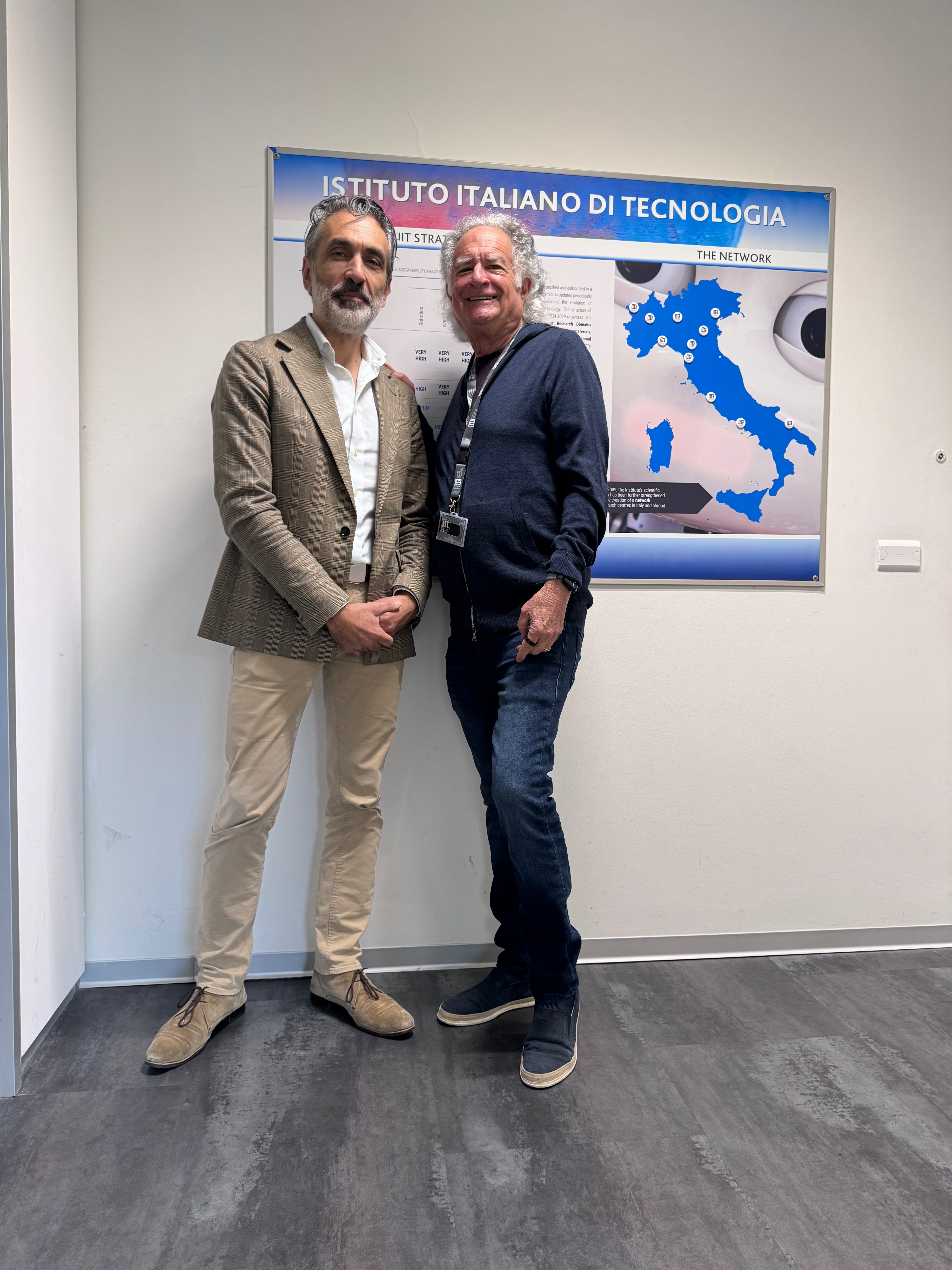
    Giorgio Metta, Science Director and Avram Miller

    I am thrilled that I have been appointed as a Fellow at the Italian Institute of Technology (www.iit.it). It is an incredible honor to work alongside the remarkable Giorgio Metta, the Science Director and his team to embracing the future. Exploring their projects promises to be both enlightening and enjoyable, with the exciting possibility of spending time with some of their fascinating robots.


    The Italian Institute of Technology (IIT) is a leading research center based in Genoa, with 15 locations throughout Italy and a community of more than 2,000 people, including scientists, engineers, and technical staff from around the world. It drives innovation through over 80 active research projects spanning robotics, neuroscience, materials science, and artificial intelligence. IIT’s mission is to advance knowledge and technology, transforming scientific discoveries into real-world solutions that foster sustainability, progress, and improved quality of life.

    (altro…)
  • My first speech in 27 years

    I am working on my keynote address at the World Business Forum in November. I use to give many such speeches but the last one I gave was in 1998 when I shared the stage with Steve Jobs. Hard to imagine.

    I didn’t think I had a lot to say after I left Intel in 1999 so I stopped. What I set out to accomplish, the creation of residential high speed networks coupled to the Internet had happened. I no longer had much of an agenda. But AI has fired me up, I guess. So when I was asked to give this talk, I said yes because I now have a lot to say.

    (altro…)
  • John Malone – The Master of Sub-Optimization


    I just finished John Malone’s 400-plus page account of his long and accomplished career. Whenever I read a memoir by someone I knew well earlier in my life, I admit I first search to see if my name is mentioned. Usually, it’s not. In my mind, I played an important role in their careers. They apparently thought otherwise.

    (altro…)