Two Thirds Done

Thoughts and experiences of an eighty one year old Wild Duck.

Avram Miller by the sea
EN | IT

587 posts since 2006

Category: Intel

  • The Resurrection of Wintel Part 2

    Unfortunately, I have to announce that this blog post will have more than two parts.  This part will deal with some important concepts that will inform some of the conclusions I will make later.

    First a recap of Part 1.

    Part 1 mostly dealt with the departure of Paul Otellini, the former CEO. I thought my post on this topic would be my last post about Intel but then I got the idea for the Resurrection of Intel and wrote a bit about the death of Wintel.  Wintel was the very successful informal alliance between Intel and Microsoft that was the driving force of the PC era.

    Computer Technology 101

    The first concept is Moore’s law which was first described by Gordon Moore, one of the founders of Intel, in a paper in 1965.  He said the number of components in integrated circuits would double every  year. He altered that in 1975 to a doubling every two years.  Most people think that Moorse’s law refers to the power/performance of such things as microprocessors and computer memory.  Clearly there is a strong correlation.

    When I was at Intel (1984-1999), we use to say we could either double the performance for the same dollars or offer the same performance for half the dollars.  Both are exponential functions.  If we are very conservative about the rate of doubling, we can say that the performance will increase by 20 times in ten years for the same dollars and will cost about about a 1/20th for the same performance.  Of course, there can be all kinds of combinations of cost/performance in between.   The actual  improvements have been greater than this for more than the last twenty years.  Moore’s law is expected to continue for at least another decade. It is really the fuel of the engine of change, not only in the computer industry, but any activity which is sensitive to the cost of computing.

    Not all factors that effect computers follow Moore’s Law.  For instance, the speed of our access to the Internet has improved very slowly over time.  This is partly due to the nature of communication technology which often requires human beings to dig up streets or erect towers.  It also has to do with the objectives of the industries that control our access to the Internet.  Some have referred to this as Moron’s law.  Just look at the size of your desk top monitor, laptop, tablet or phone and number of pixels they contain.  Clearly  monitors have not and cannot follow Moore’s law. Otherwise we would go from a 27 inch monitor on our desk to one that was 22 feet with the same number of pixels per inch square or the same size as now with 100 times the number of pixels per inch (something we could not see) or have the same product sold at a ten dollar price.

    One of the key factors that results from Moore’s law is the increase in device density, i.e. the amount of components in a given amount of space. This comes from the reduction in size to create elements like transistors.  This is often referred to as miniaturization.   This is most evident when we see devices like the iPhone.  Things that have to fit in our pockets and purses have limited size.  So the choice is really to provide more capabilities for the same price or the same capabilities for a high price. Companies like Apple choose the former strategy to keep their revenues and profits up.  Newer entrants like Samsung will choose to offer a product at a lower price to target customers that cannot  afford the Apple product or who would be attracted by price to change vendors.  Apple’s strategy can only work as long as they can keep adding capabilities to justify their higher price (there are also non performance considerations like brand, integration and service).  But eventually, it will become harder and harder to add capabilities to take advantage of the additional power.  For instance, given the form factor of a phone, it is hard to add more pixels once you have as many pixels as the eye can see. Companies like Apple can end up being primarily in a replacement business as customers replace their products with something only slightly better in order to avoid switching out costs.

    The Art of Partition

    Another very important factor in the design of computing devices is what I will call partitioning.  The engineers put different things together to create a product.  For instance, a processor, communications chips, battery, power supply, and display.  The architecture may not take into consideration the rate of change of all these different elements.  I think it is easiest to understand if we reference a desktop computer.  I think that an all in one approach is not good value.  Take an iMac.  The processor technology will follow Moore’s law but the display will not.  So two years later you are buying a new system even though you have a perfectly fine display.  That is why I have a mac mini, wireless keyboard, mouse and a Cinema Display.  I actually upgrade my mac mini every year.  I upgrade my display maybe every three years.

    We can also observe this phenomena when looking at flat panel displays.  Many consumer electronics companies are offering Flat Panel Displays with Internet abilities.  You can get youtube, Netflix, Hulu etc.  But the display is something you might keep 5-8 years.  Clearly, the internet function of the Display will not keep up with the changes and new options of the rapidly advancing Internet. I have an AppleTV connected to my big Display.  It is the third generation of Apple TV that I have bought  for under $100 but I have had the same display the whole time.

    Computing moves to the Cloud 

    Ok, why am I going through all this?  It is because of the change from client-based computing to cloud-based computing which as been enabled by broadband internet access that has reached a critical point in speed, responsiveness and reliability.  At the same time we are going from one device  such as a desk top computer, to multiple devices including our phone, TV, and even our appliances greatly increasing the complexity of our personal computing environment.   Since computing in the cloud is not constrained by form factor it can follow Moore’s law.  Voice on mobile devices is a great demonstration of this.  The voice recognition for  Apple’s Siri and Google’s Now happen in the cloud.  Voice is a very computational and data driven process.  It would be hard to achieve a high degree of accuracy in today’s smart phone, so the Smart Phone just collects the voice and sends it to the Cloud.  That means that as the software in the cloud processes my voice it will learn and improve.  Now when I go to another device such as my TV, I can use my voice.  I believe over time more and more of computing will happen in the cloud.

    What will that mean to our devices?  Form factor will be dictated by their use.  A phone has to fit into our pocket (or at least what we think is a phone today).  A electronic book, game device and tablet have certain constraints.  Our TV’s have others.  But if the computing moves to the cloud, the capabilities of the devices will not be able to increase fast enough to follow Moore’s Law.  That means they will be come cheaper.  They will become so cheap that every form factor from a watch to a refrigerator will become intelligent gateway to the cloud. Also the size of devices will reduce.  Phones will be come thinner, TV’s will become flatter, and new devices like smart watches will appear.  This results from  the increased density of components. We are seeing a major movement on mobile devices to Apps.  I think that we will continue to see Apps but in reality they will just be simple front ends to Cloud based applications.

    But it is Cloudy 

    But there is not just one cloud.  Google has their cloud as does Apple, Microsoft and even Facebook.

    Apple understands that truly open systems collapse from complexity.  Apple is trying to create an ecosystem where all the devices can connect to their cloud and live in harmony.  They problem is that Apple has no idea about what to do in the cloud.  Siri is their only example of Cloud computing that I know of.  Steve Jobs thought of the cloud as a place where data lives.  He apparently did not understand that the cloud is where computing will take place.  Since his death, there has been no indication that his successor, Tim Cook, understands this any better.

    Google, gets the cloud much better and has a good chance to be the leader in the next generation of computing  but their implementations are often poor and mediocre (although I have just started using Google Hangout and it is pretty impressive). Google is not really in charge of the design of most  devices using their Android OS which results is a very fragmented market.  Google will most likely extend their direct presence in hardware but if GoogleTV is any indication, they will not do very well. The Google Glass thing is a big fake out in my opinion although it was probably the best way for Larry to get Sergy our of his hair. Googles deployment of fiber optic broadband networks could create a major disruption but it would take a decade to build out national fiber network in the USA for instance.

    Part 3 

    In Part 3 I will discuss what Microsoft and Intel can do to Resurrect Wintel and dominate the next phase of computing.

  • The Resurrection of Wintel Part 1.

    I never imagined I would be writing this post.  I was planing on writing what I thought would be my last post about Intel. It was to deal with the departure of Paul Otellini the former CEO  and a recent article about him published by the Atlantic.  I will do an abbreviated comment on that and then begin to get into the meat  of the Wintel Resurrection.

    Paul Otellini Regrets
    The Atlantic Monthly had a major article on the retirement of Paul Otellini the former CEO of Intel. Frankly, I think the article was very kind to Paul. Paul probably did a very good job of being the caretaker of the strategy that his predecessors Barrett and Grove had established.  We called that, The PC is iT strategy.  But the world changed from the 90s when we realized the power of the PC and Intel did not change.  While  Intel’s business grew significantly, it stock price pretty much stayed flat during Paul’s eight years as CEO.  Wall street evidently felt that Intel was not in a position to take advantage of the growth of the Internet and especially of new devices such as the iPhone and they have been largely correct in that assessment.  Paul showed no leadership in this area which is a bit strange since he served on the board of Google since 2004.  He of course profited from the options he received as a board member.  Too bad he did not influence Google to consider quality control as an important attribute of a successful company.
    I should probably say that for many years, I considered Paul a friend.  We first met up when he was the Technical Assistant to Andy Grove.  This was a very important position in terms of advancement in the company because it provided the opportunity to learn how the CEO actually operated. But most of the work really had to do with creating presentations.  Paul would refer to himself as “Andy’s foil slave” (this was before powerpoint and we used overhead projectors).  Paul and I would often have lunch together.  My personal experience with Paul until I left Intel was very good. He is really a nice person, fair and dedicated. But was not a risk taker at a time when risks were needed.  I still like him and feel bit bad about making a few negative comments about Pau over the years.  I hope now that he has left Intel he will use his skills and significant wealth to make the world a better place.
    So in the article, Paul laments about not getting the design win for the iPhone.  According to the article Intel lost the order because of price.  Frankly, while price may have something to do with it, power requirements may have also played a role.  Paul says that his gut told him that Intel should do what ever it took to get the design win but the data argued the opposite.  Intel believed that  the market for smart phones was about 1/1,000th of its current size.  Had they gotten the “Design Win”, they would have been able to ramp up their manufacturing capability to the point that they could have made money on the chips but maybe not “PC money” which continues to be Intel’s problem in pursuing  new markets.
    I know first hand what Paul is saying. In my early years at Intel, I would get beaten down with “data”.  I learned never to say “my gut tells me we should do this” even though it was my intuition that drove me.  After a while, I would make up data and/or get reports at major newspapers to say what I could not say at Intel and then I could reference their reports.  Paul’s background was in Finance and Sales. My background was more in technology, marketing and science.  During Paul’s tenure, the few intuitive people left or were driven out.  Now they have a CEO who came from manufacturing.  Paul was worked for Intel for 40 years.  The new CEO Brian Krzanich joined Intel in 1982 and worked in manufacturing until he became COO in 2012. His first job at Intel was in Process Control. In that position he was responsible for making sure nothing changed.  How about that for a visionary CEO?  This last remark may not be fair since I never meet Kranich even though he was at the company the whole time I worked there.
    I spoke about the importance of intuition to FastCompany Magazine in 1999.  Here is some of the things I said that might have changed Intel had Paul read and acted on the article.

    “Today, when Intel builds a new factory, it’s investing $2 billion in products it hasn’t yet designed for markets that don’t yet exist. This is hard for American businessmen, and I say “men” because in order to do this, you have to give up control — and giving up control makes guys really miserable. Control is an illusion. I don’t think that it ever existed, but now even the illusion is gone. As a result, we’re experiencing the rebirth of intuition.

    In our society, we often don’t want to admit that we know something if we don’t know why we know it. At Intel, I used to have a horrible problem. I’d go into a meeting, and I’d be very convinced about something, and people would say, “What evidence do you have for it?” And I’d say, “I don’t have any evidence.” They’d expect me to be analytical about it, and I wouldn’t be. Over the years, I learned to make up some bullshit story to convince them, but it had nothing to do with why I thought it would work. I just knew.

    In Hollywood, you’re expected to be intuitive. In the entertainment industry, you have people who have intuition and people who imitate. Nobody there analyzes. But for the most part, in our society, if you know and you don’t know why you know, then obviously whatever you know doesn’t matter — which is stupid. If you have been right about things for 20 years, then you should be able to say, “I don’t know why I know, but I know.” If I’m hiring people, I don’t want to know how they know, I just want to know that they have a good record of being right.

    So I had pretty much written off Intel until yesterday.  Yesterday, I went for a walk with a former colleague at Intel who is both a mentor and friend to me.  We spoke of Intel, Apple, Google and Microsoft.  Out that conversation came the rest of this blog post.

    The resurrection of Wintel
    The death of Wintel
    For over ten years, Intel and Microsoft have been drifting.  While their revenues increase, their stock prices stayed flat.  It seemed that both companies had missed the next generation of the internet.  With the exception of the Xbox, both companies revenues came from the PC industry.  The  Informal”  alliance that Microsoft and Intel had  which the Industry called by the somewhat derisive term, “Wintel”  was no more.  It had become irreverent and especially after Intel embraced  Apple and went from being Microsoft bitch to being Apple’s bitch.  But both companies are still incredibly strong.   Both have significant cash, Microsoft way more than Intel, and technical resources.  What they have been missing is a strategy.
    For Wintel to resurrect, the world of computing has to change once again and in ways that create disadvantages for companies such as Apple and Google and advantages for Intel and Microsoft.  I will explore that next.
    I should also say that I am not impressed with Larry/ Sergy or Mark (does using their first name make me hip?).  Google may be more mediocre than Microsoft ever was.  Facebook is the DOS of social networks.  But these are the guys who got started on the new cycle while the old guys tried to keep the old cycle going (always a losing strategy).  Jeff Bezos is the only one that has made the transition.  I think he is brilliant, but thankfully I never had to work with him.
    Multiple Devices meet Multiple Clouds
    We are going through a major transition in personal computing (I did not say personal computers).  Many of us have multiple devices- a smart phone, a tablet, desktops or notebooks, game machines, and DVRs etc.  We are also begining to see what is called the internet of things which really means special purpose devices like lights, appliances, autos, etc that communicate with us and other systems via the internet  This has necessitated the movement to the cloud which in a way creates a hierarchical architecture.  It is just too hard for each device to communicate directly with each device so rather, we have devices communicating with the cloud and an synchronizing with data that way.  But there is not just one cloud there is a storm.  Apple has one, Google has one, Microsoft has one just to name a few.
    Capabilities are increasing dramatically but so is complexity.   Application development is also increasing in complexity to deal with multiple eco systems.  The power of “The PC is It” was that there was a homogenious environment for developers and users.  It also had it inherent problems. Microsoft tried to develop an operating system that could scale from the smallest device to the largest computer.  It was a very difficult task and they failed at it a number of times.  The only thing that is harder is to try to support multiple operating systems. Apple is struggling with that with OSX and iOS.
    This model of computing has a very limited life span.  In my next blog, I will discuss what I think might be the next generation of computing and why it is even possible that it will be lead by Wintel.
    To be Continued
  • Rejected by Wikipedia

    Screen Shot 2013-04-10 at 1.17.08 PM Screen Shot 2013-04-10 at 3.10.26 PM
    If you are a regular reader of this blog you will realized that  at the age of 68, I am beginning to be concerned about legacy issues.   It was been concerning to me that I have  no Wikipedia entry about me because Wikipedia will have a long self live (certainly longer than I will have).  So I asked a friend who is also a write to submit an entry for me on Wikipedia.  We worked on a draft which he actually toned down.  My first draft was actually in my opinion the most interesting because it was written more like a story then an encyclopedia.    I wanted the entry to focus on what I think are my three major achievements, playing a principle role in laying the foundation for today’s consumer internet, founding Intel Capital which became the most successful Corp. Venture group and one of the must successful venture activities in the world and having accomplished this an more without ever having gone to University.

    The first submission was rejected.  See above.  My friend took out all the “peacock terms?  The second pass was accepted.   I liked my draft more so I thought I would share it with you my friends, family and readers.

    Avram Miller (born 27 January 1945) is an American businessperson, venture capitalist, scientist and technologist. He is best known for his work at Intel Corporation (1984-1999), where he served as Vice President, Business Development. Together with Leslie Vadász, he co-founded Intel Capital. Miller led Intel’s successful initiative to create residential broadband Internet access.

    Miller’s leadership in developing both the technology and business infrastructure for residential broadband laid one of the most important foundations for the construction of the modern Internet. In a 1996 profile, USA Todaycalled Miller “A one-man think tank.” In the same article, Brian Roberts, CEO of Comcast, gave Miller “much of the credit” for the development of the cable modem.  While at Intel, Miller managed a multi-billion dollar portfolio that included early investments in many seminal Internet technology companies, including Broadcast.com, CNET, Covad and Verisign.

    After leaving Intel in 1999, he founded The Avram Miller Company, which focuses on providing strategic advice to technology companies throughout the world. Miller has served as a senior advisor to Lazard, and has sat on the boards of many public and private Internet companies, including CMGI, World Online and PCCW.

    Over the years, Miller has also served on the boards of entertainment companies such as Maxis and King World Productions.   Recognized as a leader in venture capital, Miller occupied the number eight position in the 2003 Forbes Midas List of top venture investors.

    Miller has long been active in non-profit work. He was the founding chair of Plugged In, a computer literacy program for underserved urban youth  (1992-1999), a senior advisor to Equal Access (1999-2012) and a trustee of the California Institute of the Arts (CalArts) 1998-2002.

    Early Life and Education

    Avram Miller is a fourth-generation San Franciscan born into a middle class Jewish family on 27 January 1945. After graduating from Drew School, a private high school in San Francisco, in 1963, Miller joined the United States Merchant Marine as a steward. He sailed on the luxury liner President Cleveland between San Francisco, Hawaii, Japan, Hong Kong and Manila during much of 1963. Upon his return to San Francisco, Miller got involved in the civil rights movement and the anti-Vietnam war movement. In 1966, he worked in a government-sponsored tutorial program to help economicly disadvantaged youth in East Palo Alto, CA, prepare for university education.

    Miller did not attend university and does not have a college degree. Primarily self-educated after high school, Miller began working with computers in 1966, and by the time he turned 30, had held academic appointments at two universities.

    Miller began studying music composition at age 15. He continues to pursue his commitment to music, including composing and playing jazz piano.

    Career

    Langley Porter (1966-1969)

    Toward the end of 1966, Miller began work at the Langley Porter Institute, University of California San Francisco Medical School, under the direction of Joseph Kamiya, PhD. Kamiya was a pioneer in the study of biofeedback and the first scientist to demonstrate that human beings could learn to control their brainwaves (EEG) using biofeedback. Miller employed his lifelong interest in electronics in developing much of the equipment that was used in this research. This work gave Miller the opportunity to learn all aspects of electronic design, from microvolt amplifiers to special purpose digital computers.

    About a year after Miller joined Kamiya, Langley Porter got its first computer, a PDP-7 from Digital Equipment Corp. Though he lacked any prior computer experience, Miller quickly became an expert programmer. During his time with Kamiya, Miller learned scientific methods, statistics and advanced mathematics. By 1969, at the age of 24, Miller proved expert in all aspects of real-time physiological signal processing.

    Thoraxcenter (1969-1974)

    In early 1969, Miller was recruited by world-renowned cardiologist Paul Hugenholtz. Hugenholtz had decided to return to his native Netherlands, from Boston, to start a new cardiovascular institute at Erasmus University in Rotterdam, called The Thoraxcenter. While in Boston, Hugenholtz had collaborated with computer scientists at MIT and sought to deeply integrate computing technology in both patient care and research at The Thoraxcenter. Miller was given an appointment to the academic staff at Erasmus University and he began to build the computer department. Early in his time at The Thoraxcenter, Miller transitioned from an individual contributor to a manager.During his five years at The Thoraxcenter, Miller and his team developed one of the world’s first on-line Intensive Care monitoring systems, catheterization laboratory systems, and the first system to manage echocardiograms. Miller also co-authored many academic papers for both medical and computer publications.

    Mennen-Greatbatch (1974-1979)

    Moving with his family to Israel in 1974, Miller joined medical technology manufacturer Mennen-Greatbatch (now Mennen Medical) as founder and director of their computer division. Responsible for product development, sales, marketing and finance, Miller commercialized some of his work at Thoraxcenter and gained substantial business experience. He also was named Adjunct Associate Professor at Tel Aviv University School of Medicine, working in the department of Cardiology under Professor Henry Neufeld.

    Digital Equipment Corporation (1979-1983)

    Returning to the United States in 1979, Miller joined the Central Engineering Department of Digital Equipment Corporation, then the world’s second largest computer company. Miller managed the group responsible for hardware development and support of all low-end computers.

    A year later, Ken Olsen, Digital’s founder and CEO, tapped Miller to head new group dedicated to developing the company’s entry into the personal computer market. The products developed by the group were known as the Professional Series and were very technologically advanced for the time. The Professional 350, introduced at the 1982 National Computer Conference in Houston, TX, ran a multiprocessing operating system, used a 5 megabyte Winchester drive, ran a fully bitmapped display and had built-in Ethernet capability.Unfortunately for Digital, IBM introduced its first personal computer in August 1981. The combination of IBM’s low price and open standards–which allowed for companies, like Compaq, to build compatible “clones”–totally changed the dynamics of the computer industry. At about the same time, Olsen decided to have Digital bring out two other personal computers, which were neither compatible with the Professional nor each other.

    When asked to pick just one to bring to the market, Olsen declined. “Let the customers choose,” he said.  ”And they did,” said Miller, discussing this decision in the book The Ultimate Entrepreneur, “they chose IBM.”A documentary, primarily focusing on Miller’s work, was commissioned by Digital to celebrate its twenty-fifth anniversary, but never released. A copy of this film is in the collection of the Computer History Museum in Mountain View, CA.

    Franklin Computer (1983-1984)

    In 1983, Miller realized the computer world was about to transition from large, vertically integrated companies like Digital to horizontal companies that focused on just one aspect of the business, such as software (Microsoft), disks and drives (Seagate), microprocessors (Intel), systems (Compaq) or sales (ComputerLand). Given this change, Digital was not on track to create a major position in the personal computer market.

    Miller was offered the position of Chief Operating Officer at Franklin Computer Corporation (now Franklin Electronic Publishers, Inc.), an early-stage Apple II clone manufacturer. Miller was later named President. Franklin was growing very quickly. Under Miller, Franklin reached $80 million in sales, but the company was locked in a legal battle with Apple that prevented it from getting adequate financing. Miller left Franklin in April 1984.

    Intel (1984-1999) and the birth of Intel Capital

    A few months after leaving Franklin, Avram Miller was contacted by Intel Corporation. Intel, at that time, was a leading maker of memory chips, but, because of market pressure from Japanese manufacturers, was rapidly shifting its focus to microprocessors. Miller  was recruited by Leslie Vadász, a day-one employee at Intel who had lead the company’s efforts to develop its first microprocessor. Miller joined Intel in August 1984, initially working with “The System Group,” a division that developed computer systems

    After creating a joint venture between Intel and Siemens Miller, focused on mergers, joint ventures, strategic partnerships and minority investments. Miller’s primary interest in such investments was network technology, which he saw as the prime driver of future personal computer growth. Intel’s strong internal culture limited the benefit of some early acquisitions.  By 1988, Miller realized minority investments in early stage companies could provide Intel with strategic insight, ways to grow the overall market and a financial return. Miller put together a small group and began to make such early stage investments. At this point, Miller was given the title Vice President, Business Development, and later was elected Corporate Vice President by the Intel board.

    After a number of Miller’s investments proved successful, Andy Grove, Intel’s CEO, okayed a recommendation from Vadász to accelerate venture investment activity. Vadász joined Miller in creating the Corporative Business Developmentgroup (CBD), which later was renamed Intel Capital. As Miller predicted, Intel’s minority investments not only provided strategic benefits, but began to provide substantial financial rewards, as well.  Intel Capital grew to become the most successful corporative venture group in the technology sector. It was listed as the top Venture Capitalist in 2012 by Pricor.

    While Vadász expanded the group to include investments in enterprise software, semiconductor manufacturing, health and education, Miller focused on the consumer side of the business and, in particular, in the rapid growth of the Internet. Miller’s group was an early investor in companies like Mark Cuban’s Broadcast.com, internet infrastructure and security services giant Verisign, communications semiconductor maker Broadcom, interactive publications innovator Launch Media, the web-hosting service Geocities, the tech media site CNET and broadband network provider Covad (now part of MegaPath Corporation). Miller’s group also invested in CMGI (now ModusLink Global Solutions, Inc.) and PCCW. By the time Miller left in April 1999, the investments he managed were worth many billions of dollars.

    Development of Residential Broadband

    In 1992, Miller was asked by Andy Grove to be the Intel point person working with Microsoft to develop a number of consumer initiatives. Miller’s counterparts at Microsoft were Rob Glaser (who later founded RealNetworks), and then Craig Mundie (who later became Microsoft’s chief research and strategy officer) as well as Nathan Myhrvold who was the CTO at that time. Intel and Microsoft set up teams to work on a number of projects. Miller was part of the Intel executive team, attending quarterly meetings with Bill Gates, then chief executive at Microsoft, and many of his top managers.

    One of the joint projects was the development of an interactive set-top box for the cable television industry. This project also involved General Instrument (GI), then headed by Donald Rumsfeld.  General Instrument owned Jerrold, the largest supplier of set-tops at the time. Working with Intel and Microsoft was GI CTO Matt Miller (no relation).

    On this project, Avram Miller learned about the cable industry and its infrastructure. By the end of 1992, Miller determined that it would not be possible to build an interactive set-top box at a price point acceptable to the cable industry. Together with Matt Miller, Avram Miller realized much of the technology that was being developed for digital TV could be used to create high-speed residential broadband for Internet connection. GI and Intel then began to develop both cable modems and the head-end equipment used as a gateway to the Internet. General Instrument and Intel kept this project secret from Microsoft.

    It was at this point that Avram Miller came to believe consumers would need the same high-speed Internet access that were available for business applications. “It was clear to me,” wrote Miller, “that combining high-speed communications with powerful home computers would lead to the creating of a new medium for information, education, entertainment and commerce.”

    In addition to funding the Intel Labs to develop the core architecture to be used in cable internet broadband, Miller met with all the CEOs of the major US cable companies (including John Malone of TCI and Brian Roberts of Comcast) to convince them that cable could be become more than just distributors of television programming. Cable companies, Miller believed, could become communications companies. Miller traveled to Japan, Korea, the United Kingdom, France and Germany with the same message. He organized the first major trials of cable modems with Comcast and Viacom (which then owned a cable business). In 1993, Intel demonstrated working cable modems at The Western Cable Show in Anaheim, CA, one of the cable industry’s major conferences.

    Miller also knew that applications would be key. He was able to get such companies as America Online (AOL), Prodigy and Intuit to participate in the broadband trials. Intel then provided the key specification to CableLabs (the research arm of the cable industry), which became the DOCSIS (Data Over Cable Service Interface Specification) standard.

    Miller and his CBD team invested extensively in companies that would benefit from the development of high-speed residential broadband, from components to consumer applications. Intel licensed modem manufactures (such as Cisco, Hewlett-Packard and AT&T), and worked with component suppliers like Broadcom (in which Intel also had an investment).

    Recognizing that the cable industry did not have the technical capabilities to manage an internet business, Miller conceived of a company that would provide these services, and convinced the venture group Kleiner, Perkins, Caufield & Byers (KPCB, also known as Kleiner Perkins) to work with the cable industry to create the company @Home Network. Intel would also invest in this high-speed cable Internet service provider.

    In addition to the development of broadband cable, Miller drove Intel’s activities to create high-speed DSL (digital subscriber line) Internet access, working extensively with telephone companies throughout the world.

    Miller has been a consistent promoter of the connected PC as the interactive device for the home, speaking before cable industry conferences, the National Association of Broadcasters and computer industry events. In 1996, Miller worked with Creative Artists Agency (CAA) to established a demo lab to educate Hollywood talent on the potential of the Internet for the entertainment industry. He attended the Allen & Co Sun Valley Conference from 1993-2000.  There he had an opportunity to interacted with the leaders of the entertainment industry.

    The result of Miller’s work can be seen in the penetration of residential broadband. For instance, over 80 percent of US homes had broadband Internet access in 2012.

    The Avram Miller Company

    Miller left Intel in April 1999 to start The Avram Miller Company, a strategy and business development group providing services to Internet companies internationally.n addition, Miller served on the boards of many public (CMGI, World Online and PCCW) and private companies (Heavy.com), and was a senior advisor to Lazard Frères & Co (now the Lazard Group LLC).  Miller also invested in early stage companies for his own account. In 2003, Miller was ranked number eight on the Forbes Midas List of the top 100 tech investors. Miller, now in partial retirement, continues to work with a small number of early-stage technology companies as well as serving as Chair of the Breakwater Fund.

    Personal Life

    Miller and his second wife live in Sonoma, CA and West Hollywood, CA.  He has three grown children from his first marriage, and four grandsons. He continues to study jazz piano, music composition and still pursues his interest in computer technology, and medical science.

    Miller maintains the personal blog Two Thirds Done (www.twothirdsdone.com). He has written that one of his greatest contributions to the future of technology is to document its past. This includes documenting the history of broadband.

    Share this:

  • Avram’s Congressional Testimony on HDTV 1998

    It is hard to imagine that just only fifteen years ago, we still had not settled on the HDTV standards let alone deployed HDTV.  Flat panel TV’s were just being introduced.  I got my first a year later.  It was 42 inches and did not have enough resolution to display HDTV and cost close to $5,000.

    The  House Commerce Committee Subcommittee on Telecommunications, Trade and Consumer Protection convened a 2 1/2 hour meeting to discuss HDTV standards and deployment issues on April 24, 1998. I was invited to give testimony.   The panel was made up of a  large group of executives representing the consumer electronics, the television broadcast and the cable industries.  In addition there were two representatives from the computer industry, Bob Stearns from Compaq and me, from Intel.  The chair was Billy Tamzin, a republican who later went on to make a fortune as a lobbyist.  The ranking member from the democrats was Ed Markey (now running for the Senate in MA).   Stearns and I had a couple of objectives.  While most of  the panel saw a TV, we saw a Monitor.  We understood that with that if we could achieve  high resolution and progressive scan, the HDTV set of the future could serve as a monitor for computers.  Just like the  CD and DVD, the consumer industry do the R&D and and manufacturing  of important and innovative products which the computer industry would “highjack” for its own use. Everyone one on the panel had their own agenda and often it was a secret agenda. By the way, the guy who is looking is staring at me in the photos is Chase Carey the current COO of News Corp.

    Here is my testimony followed by my friend, Bob Stearns.


    Digital TV and Compression

     Back then TV transmission was still analog.  The majority of American homes no longer received TV over the air but instead they got TV content via cable including the so called Broadcast Networks. The move to Digital Television which allowed an ever greater number of television channels to be squeezed to a given amount of spectrum (bandwidth) had begun. It  all started when John Malone declared the 500 channel Universe at a cable industry show in 1992.  The bandwidth needed for HDTV required digital compression.  One HDTV channel was the equivalent of four normal resolution channels.  Digital Compression was first introduced by Direct TV who had a needed to get as many channels into their limited spectrum.  The cable industry was looking to eventually distributed HDTV. By using digital compression, they could get between 1-2 HDTV channels in the same 6 meg hertz bandwidth normally used for standard definition analog TV channel.  They soon realized that they could also squeeze between 4-10 standard definition channels into the same space depending on the quality that they would be willing to offer consumers.  This turned out to be very important to Malone because TCI had one of the worst cable plants . This way they could avoid the cost of upgrading the plant by using digital compression to offer more channels with the same old bad quality.

    A six mega hertz channel was converted to what was called 64 Quam.  It was a packet structure and could be used for a combination of HDTV and standard TV.  It was this technology that we hijacked to create the downstream portion of the Cable Modem.  We could turn an analog TV channel into about 30 mbits which between a number of homes.

    Open Set Top Box

    The consumer electronics companies represented on the panel were interested in finding away to let consumers buy set top boxes directly from retail instead of getting them from the cable companies. For instance,  Sony really wanted to be able to offer set top boxes direct to consumers that would integrate capabilities like DVDs.   The cable Companies did not want this top happen.  Even Circuit City was represented at this hearing.

    Cable companies wanted to keep the set top boxes proprietary for a number of reasons.  The charged customers $5-$10 a month for equipment that was not only cheap to make but keep in service for many years.  In fact they are still doing this.  They would claim that they needed to control the set top box to make sure that consumers were not able to access content they had not paid for.  I was amazed to hear the representative from Time Warner Cable say that they were working hard to create an open standard for Set Top Boxes when I knew they  were doing everything they could to prevent it.
    The cable companies are promoting that they would open the set top box market and provide interactivity.  There were only two major manufactures of set top boxes in the USA, the Jerold Division of General Instruments (now owned by Google) and Scientific Atlanta (now owned by Cisco).  They were tightly controlled by the Cable Industry.

    Broadcasters were concerned about the cost of HDTV and the Digital transition.

    The major networks were concerned about the cost of both creating and distributing HD content.  They really wanted to slow things down.  Only PBS seemed to be aggressively pursuing the concept of Digital Channels and HDTV.  But the government wanted to reclaim the spectrum which they provide free of charge to Broadcasters.   It was a battle that went on for more than a decade.

    Interactivity

    I wanted to make sure that nothing would happen to interfere with the possibility of interactivity over cable.  Interactivity required a return channel  (upstream) which was actually the most difficult part of getting cable broadband access done.  While the Cable Industry was buying into the concept of Internet Broadband for home computers, they did not want this to creep into the TV area.  They wanted to be able to control TV interactivity just like they controlled TV content.  By this time, I knew them well enough to know that they were not capable of pulling this off but saw no reason to rub this in.  Instead, during the Q&A session, I gave an example of the kind of interactivity that I thought the cable industry and TV industry would find exciting.  You can view those comments here.

    It is strange that now 15 years later, the kind of interactivity I was referencing still has not happened other then what is now called “second screen” where a companion device like and iPad or iPhone is used in conjunction with the TV.


    Here is a link to the full session.

    This is the formal statement that was entered into the record.  My actual remarks at the hearing are more interesting, in my opinion.

    Statement of Avram Miller Vice President, Business Development Intel Corporation Before the House Commerce Committee Subcommittee on Telecommunications, Trade and Consumer Protection
    April 23, 1998: Hearing on Digital Broadcast Television

    Mr. Chairman, and members of the Committee:

    I thank you for the opportunity to appear before the Committee today to discuss the issues surrounding development and deployment of digital broadcast technology to American households during the next few years. In the interest of brevity, I summarize below the major points I wish to make regarding the promise that this technology holds for consumers of both traditional television programming and interactive data and media services and products.

    We at Intel are persuaded that digital broadcasting win be a key element of growth in the computer industry, worldwide. It will serve as a carrier for enhanced television (video and data) as well as Internet services and products. As such, it will have a significant role to play in making interactive media a widely dispersed facility, available to a broader range of consumers than it is today. Every Internet user will benefit from expanded services — and that is the principal reason we are involved in this effort.

    From the perspective of manufacturers and retailers of computers, digital broadcasting will expand the market for a wide range of computing platforms. It represents new applications for computing technology and a widely expanded base of new users. For Intel in particular, HDTVs high resolution displays will require high performance microprocessors to bring the full benefits of the technology to the screen.

    Intel has fully supported the work of the Advanced Television Systems Committee (ATSC) that has diligently pursued the development of coherent and comprehensive standards for deployable digital broadcasting technology:  

    We have participated in the following ways:

    – Defining technical specifications

    – Integrating All Format Decoding (AFD) protocols into hardware

    – Developing a variety of Intel Architecture based platforms that will be able to receive and decode broadcast video and data in all formats

    – Ensuring the ability of broadcasters to deliver interactive video and data

    – Developing Intercast technology and tools which allow the insertion of data into the broadcast stream (VBI). We have worked closely with broadcasters on this for the past three years.

    We have also been involved in cross-industry efforts designed to facilitate a smooth transition from existing analog technology to the digital formats. Aside from embracing and advocating the AFD protocols, we have also sought to ensure the maximum possible ease of transition for broadcasters in the following ways:

    – Ensuring that broadcasters will be able to exercise “Edge to Edge” screen control (allowing use of the entire screen to display content and brand information).

    – Developing, through the Open Digital Content Initiative, “create once” standards that will allow one iteration of the digital data to be sent through multiple transports (satellite, cable, terrestrial) to play on any platform (desktop, set top box, PC, or TV).

    – Facilitating the migration of existing video and data programs that are interactive from analog to digital formats (which will occur as broadcasters begin to deploy digital television market trials).

    – Working with key broadcasters to facilitate trials. We have recently announced a cooperative program with PBS in which Intel will work to supply technical resources required for trials of digital broadcast of PBS educational content.

    – Working to accelerate deployment of high bandwidth Internet connections through our advocacy of Universal Asynchronous Digital Subscriber Line (ADSL) technology, which allows high speed communications over existing copper telephone fines. ADSL will require specialized modems and switches at the terminus points of the connection, and in the transmission facilities. Telecommunication providers are the key to deploying this technology.

    – Working with the Cable Industry to advance the implementation of these relatively lower cost solutions to the bandwidth problem so that PC’ s connected through cable facilities will be able to process more data than present technology would permit.

    Certainly, difficult issues have at times divided the disparate parties involved in this complex development process. The issue of formats has been particularly mettlesome; the PC industry can support all 18 of the standard formats, but progressive display offers the best balancing of economics and “program acceleration”. It is clear that future digital television market segments will require data-enhanced programming.

    Our goal is to serve the consumer of interactive video and data services. Digital broadcasting is not just a means to give the consumer advanced picture quality; it also presents an unparalleled opportunity to dramatically enhance Internet content and services for the public The key to success in this goal is the cooperative working relationship we are forging between broadcasters, the computing industry, and telecommunications providers.

    To that end, our program has aimed at eliminating uncertainties (technical, product, and business issues) thereby enabling the development of the technology and its market. By serving as a bridge across industries (computing, television broadcast, consumer electronics, telephone and cable) and working diligently to develop “universal” standards that address the complex interoperability problems, we are succeeding in moving digital broadcasting closer to reality.

    Intel has been driven by one objective: providing the consumers – “netizens”, students, parents, and small business owners — with a truly advanced technology which brings together the converging worlds of computing and interactive video and data, and which offers the highest quality of performance achievable, given the need for an orderly are moving steadily transition from existing analog technology. We believe that we toward the accomplishment of that objective.


  • The birth of Intel Capital

    Intel Capital

    Intel Capital the Top Venture Capitalist

    Intel Capital was named the number one venture capital “firm” for 2012 by PrivCo.

    I feel proud  of this accomplishment because I consider myself a co-founder of Intel Capital along with Les Vadasz. But then again, it is a bit difficult to accept that Intel Capital could be so successful without me😃.

    So this seems to be an appropriate moment to document the early years of Intel Capital. Clearly this will be my perspective. I am sure that I will remember something incorrectly so let me apologize up front.

    Avram Joins Intel

    I joined Intel in August 1984 after being pushed out of Franklin Computer Company where I served as President and Chief Operating Officer (but in reality, I was pretty much the CEO).  Franklin sold an  Apple II clone and was growing faster than Compaq which offered an IBM PC Clone.  We did about eighty million dollars in sales in our first year of operation but then Apple was able to successfully crush us via litigation.  I won’t go into the details of what happened at Franklin.  I have written about it else where in this blog.  However, it is interesting to note that the key backer of the company, Jim Simon, graciously suggested to me at a dinner the two of us were having, that Franklin and I might both be better off if I resigned.  We both recognized that while I might have done a great job growing the company, I was not equipped to deal with the major capital crunch that resulted from the Apple Litigation (our IPO was pulled and our bank line of credit cancelled).  Jim went on to be one of the top Hedge Fund managers and is worth many billions these days.  One of the other board members, Howard Morgan, a former Professor, who played a major role in recruiting me from Digital Equipment to Franklin, is the General Partner of First Round Capital.

    A few months after leaving Frankin, I was contacted by Intel and asked if I might be interested in joining the company.  An Intel employee named Mike Richmond (I owe him a great deal) had read about me and for reasons I still do not understand, thought I was the kind of person that Intel needed.  He discussed me with Les Vadasz, (badge number three) who at that time was the head of what was called the Corporate Strategic Staff.  Les was a change agent at Intel.  His role in the success of Intel is terribly under appreciated.  It was Les for instance that got Intel into the Micro Processor business.

    I spent three days interviewing at Intel including an interview with Gordon Moore who was CEO, Andy Grove who was COO and many of the very top executives.  My position was “strategic hire”.  That mean that there was no specific job in mind but they wanted me to join Intel.

    Avram’s Early Years at Intel

    Since I came from the computer industry and not from the semi conductor industry, there was a major gap between my knowledge and capabilities and that of the other senior people.  I decided to work out of the Intel facilities in Oregon because it had a small group that actually did computer systems of various sorts called “The System Group”.  I reported solid line to Les Vadasz and dotted line to the Vice President that headed the System Group, Bill Latttin  Interestingly, the CFO of the Group was Andy Bryant, the current Chair of the Intel Board of Directors.

    I spent the next 3 1/2 years working on a number of projects that were systems related.  The most important one was BiiN, a joint venture with the Sieman’s Corporation.  Frankly, none of my accomplishments during those three years were very significant.  I was not very happy with my choice to have gone to work at Intel.  The company itself was not doing so well. It was primarily a memory component company and the Japanese were putting a lot of pricing pressure on the company. Having put my family through a lot of pain by leaving Digital Equipment Corporation and moving them to Pennsylvania so I could work at Franklin, I was was committed to making my Intel job a success.

    Somehow, my work was appreciated. Once the joint venture was put together, I was was offered an opportunity to relocate to Silicon Valley and work out of the same building as Les, Gordon and Andy.  Andy was now CEO.  Paul Otellini, the current CEO was actually his technical assistant (the guy who made the powerpoint presentations).  This was actually one of the key “executive training” positions.

    Pre CBD Days

    It was agreed that I would work primarily on Corporate Development  which initially meant M&A, joint ventures, strategic partnerships and minority investments.  By then, Les  had taken over the System Group from Bill Lattin who left the company.  The System Group was focused on becoming a major OEM supplier of PC’s to companies such as AT&T. In addition to being the head of the System Group, Les continued to have me report to him. Initially I focused on on M&A opportunities.

    The primary area I wanted to focus on was networking technologies.  This was was a field I loved and still love.  I was convinced that the growth of computing would depend on the development of network technology.  I started developing relationships with a number of the Intel board members and had an opportunity to meet with the board on several occasions which was a bit unusual at Intel.  I remember giving a presentation about networking in which I used the automobile industry as an analogy.  I explained how the gas companies were the ones that really pushed the development of  the highway systems by building small demonstration “highways” and providing free maps, etc.  The highway system was like networks and the cars were like the computers in my model.  I explained that once the highways were built and laws were created to limit the driving speed, the auto industry found itself competing with racing stripes, car seat fabric and bumpers.  A number of the board members at that time actually understood more about computer systems than did the management of Intel. This included Max Palesvsky (an amazing man) who was the founder of Scientific Data Systems.

    I wanted to buy Cisco or 3Com but they were too expense for Intel  so I ended up buying a small networking company called Jupiter Technologies who was lead by Jim Flash, now a partner at Accel.  Later, we acquired a company called Lan Systems which was lead by Tyron Pike.  It was very hard to acquire companies.  The companies we wanted, we could not afford (or at least our board did not think so) and the companies we could afford, we did not want.  I thought that by acquiring some smaller companies, we could both get some critical technical skills  as well as  entrepreneurial management which would help Intel create its own  networking business.  That did not work out at all. The Intel anti-bodies attacked  the foreign  objects and the reaction systems took over.  The management of the companies did not really want to be part of Intel and they took off having accomplished little to help Intel develop a Networking Business.

    I was slowly learning that M&A would not work at Intel.  It was also clear to me that Joint Ventures were like running in a three legged raced with lots of coordination and little speed.   Strategic partnerships could be useful but they were typically short lived with the exceptions of the symbiotic relationship represented by Intel and Microsoft.   That pretty much left me with exploring minority investments.

    David Yoffie, a well known professor at the Harvard Business School,  was an advisor to Intel and then joined the Intel Board in 1989.  David and I would discuss these issues a great deal.  My thinking evolved and I realized that minority investments could both provide Intel with strategic insight and market impact without the issues of integration.  So I started proposing minority investments. Later when we understood what we were doing better, we called them venture investments.  I am not sure what the first investment was.  It might have been Digital F/X, which was lead by my friend, Steve Mayer (the co founder of Atari). The very successful venture firm of  Kleiner Perkins also invested. Vinod Khosla was that firms board member. I had a small staff. At the same time,   Harold Hughes, the treasurer of Intel, was also interested in making minority investments.  Tom Galvin worked for him and did some investments in semi conductor technology, I believe, but that activity kind of died out after a while.

    In the meantime, I continued to make small investments.  Les was able to get Andy to allocate $5,000,000 for minority investments.  Andy himself would attend the meetings where the investments were approved. Frankly, he was not that constructive and after awhile, Les was able to convince him that he probably had better things to do with his time.

    Les Goes on Sabbatical 

    Things were not going so well for Les as head of the System Group.  Les went off to take a sabbatical where he taught at Harvard.  Frank Gill took over.  While Frank and I had a good personal relationship, he had no use for my little venture activity.  In fact, he kind of thought it was not ok to earn money via minority investments.  He was thinking of letting me go.  Thank God there was another senior member of Andy’s staff, Dick Boucher, who was willing to take me and my group on while Les was away.

    When Les came back about a year later, he and Andy decided that Les should focus primarily on venture investments.  So Les created a group called Corporate Business Development or CBD.  For a while, I was the only one reporting to Les and I continued to grow my group.  Les and I had a great relationship (although there had been one rocky moment).  Les was a Senior Vice President and I was a Vice President.  I felt that we were partners and we were indeed as well as friends.  We are still friends.

    CBD Established

    As our activities increased, I wanted to focus primarily consumer computing and networking.  In 1992, I had come to the realization that the combination of home computers and high speed residential networks would become a new medium.  I had funded the Intel Architectural  Labs to develop what became today’s cable modem and DSL technologies.  I wanted to invest in every aspect of what it would take to make that happen.  Meanwhile, Les began to hire people who reported directly to him to deal with enterprise computing, semi conductors  technology and even health.

    My group continued to expand.  As the internet took off, the value of our investments increased significantly.  My group alone was sitting on many billions of dollars of  unrealized gains.

    We invested very early in companies like Broadcast.com (Mark Cuban), Verisign, Broadcom, Launch Media, Geocities, Cnet,  and Covad. Later, we invested in CMGI and PCCW.  We also invested in a lot of failures such as American Cybercast and 911 Music. The losers did not cost us much and the winners made up for the losses more than a thousand times.  We passed on a number of companies that became very successful. Probably the most notable was Netscape.  We had an opportunity to invest when that company soon after it was formed in 1994 had pre-money valuation of eighteen million dollars.  Both Les and I thought it was too expensive.  About a year later, it went public with a valuation of $2.9 billion dollars. We also had a chance to invest in Akamai in 1998 which had a valuation of $80 million dollars and went public a year later with a sixteen billion dollar valuation.

    Strategy and Structure

    As the number of deals increased, Les realized we needed to put some structure in place. He set up a formal process for deals with a number of well defined phases.  As part of the process both the treasury dept. at Intel, which was being run by Arvind Sodhani (the President of Intel Capital wince 2005) and the legal dept.,  had to approve the deal.  The job of the treasury dept. was to make sure that we would at least get our money back.  The job of the legal dept.  was to make sure Intel did not get sued.  It was not always a fun process but it worked very well.

    In the beginning we thought the primary benefit to Intel was strategic.  We would have been happy if we just made a bit of money on our investments.  But later, we realized that for a company to have strategic impact (help grow our market), it would have to be very successful and than mean we would receive a substantial return on our investment.  That turned out to be much truer than we could have imagined.

    The Liberty Media of Technology

    As part of the effort to create residential broadband, I had a lot of contact with the cable industry.  John Malone the CEO of TCI (later acquired by AT&T and then acquired by Comcast) was the major player in the cable industry.  John cleverly created another company called Liberty Media which was spun off from TCI in 1991.  Peter Barton was the CEO of the company and John Malone was the Chairman.  Peter and I became good friends partly due to our interest in playing jazz piano.

    Barton created billions of dollars in value with a staff of less than 20 people. They invested in early stage cable network companies such as BET, Starz, The Discovery channel, etc.  They could then make sure these companies were successful by getting TCI to carry their programing.  It was really brilliant.

    For about seven years, I would attend the Allen& Company Sun Valley Conference where some of the most important CEOs of entertainment and consumer companies would be.  Andy Grove also went on several occasions. Peter Barton gets it in to his head to try to convince Andy that he should give me a billion dollars or so to invest and create public company that would do for technology companies what Liberty did for cable networks.  The conversation was pretty funny to observe. I don’t think Andy really got it.  He also probably thought that I had put Peter up to it.  Sadly, Peter died in 2002 at the age of 51 from cancer.

    Avram Exits Intel

    In 1996, I was diagnosed with Prostate Cancer and treated in the beginning of 1997.  I had been thinking of leaving Intel and exploring the possibility of starting a leverage buyout company with Dave Roux, a good friend, who was responsible for Business Development at Oracle. There was a good chance I would have gone for it  but once I had been treated for Prostate Cancer,  I decided that I would not want to make a long term commitment to anything.  From that point on I would live my life as if I only had ten years more to live.   Ten years is enough time to accomplish something new like learn a language but it is not so long that one would postpone doing things that were really important.  Dave went on to found Silverlake Partners, which was an out growth of the ideas he and I explored. Silverlake was a fantastic success and I would guess I would have been a very rich man had I joined him in this effort. Fortunately, I have been a limited partner in a number of their funds.

    I did not see myself staying at Intel.  It violated my newly created ten year rule. Les was nine years older than me and would be wanting to retire in the near future.  He retired in 2003. I would have either have gotten his job or they would have put someone else over me. Both would have been awful.  The head of CBD really had to be an inside Intel guy and I was someone that wanted to spend my time outside of the company.  But then my health made the choice for me.  My PSA did not go down after my radiation which is the expected result.  Instead, it stayed the same for almost a year.  My doctor was saying “at least it is not going up”.  Then it started going up slowly.  He would say “well at least it is not going up fast”.  Then it started going up fast. You get the picture.  It was looking like my Prostate Cancer had metastasized which was pretty much a death sentence.  I took a three month sabbatical and then a medical leave of absence. My group was broken up and the people reporting to me went to work for other managers.  I spent my last three months at Intel developing a presentation on how to grow CDB even more and how it could play an even more significant role in the development of Intel.  On my last day at Intel, I presented this at a meeting of top management.  I am sure that no one was really interested and probably did not care that I was leaving because “real men have a P&L and don’t make money by investing”.

    Strategic Impact

    We started CBD which later became Intel Capital to have strategic impact on Intel’s future.  At first we invested in companies that could help our business units grow.  Later, we realized that since Intel had about 85% of the PC microprocessor sales, we could help the company just by growing the over all market.

    My focus was on the consumer market, which when I started, Andy Grove, said did not even exist.  I knew that consumers would need high speed communication just like business.  It was clear to me that combining high speed communications with powerful home computer, would lead to the creating of a new medium for information, education, entertainment and commerce.

    Les totally agreed with this vision.  He allowed me to take some money out of our investment funds to fund the Intel Architecture Labs to develop the technology now used by the cable and phone industries to provide residential broadband. We licensed some of that technology for stock options in various profolio companies and got a good return. But most important, we were able to be the drivers of residential broadband.  That provided a prospect which allowed us to invest in key areas of this new and explosive market which resulted in amazing financial returns.  More importantly, the growth of the consumer market fueled Intel’s growth turning it into one of the most profitable companies in the world by 1999.

    But sadly, Intel did not take the opportunity to expanded it scope of business.  It stayed primarily a microprocessor semi conductor company.  It failed to develop the networking technologies of Broadcom (which we could have acquired).  It failed to develop the communication technologies of Qualcomm (which we could have acquired).

    I often wonder what, if anything, I might have done that might have changed this outcome.  Intel was good to me.  I owe the company a great deal.  I wish I had left it with more.

    The Bubble Bursts 

    One of the hardest things to do was to sell the stock of the companies we invested in even if they were public.  The managers that were responsible for the investments believed in their portfolio companies and wanted to hang on for higher prices.  They were also afraid that Intel selling their stock could undermine the companies and the trust they had with the management of those companies.  I had  a regular quarterly meeting with my staff where I forced decisions to sell stock.  We took billions off the table that way.

    I was no longer at Intel when the Internet bubble burst in the Q1 of 2000.  I don’t know what happened to the the billions of dollars of unrealized investment gain that Intel had.  I am sure billions were wiped out.  Luckily for me, I sold all my tech stocks  in the first quarter of 2000 including all my Intel stock at $72 a share. It has been trading in the$20s ever since.

    CBD become  Intel Capital and Continues

    I don’t really remember when the name  CBD was changed to Intel Capital.  Les was made president of Intel Capital.  Les and I are still close.  He is an amazing man and I owe him much.  He was my teacher in so many ways.  I stayed close to those that worked for me at Intel both while they were at Intel and then after they left.  My wife calls them my “Intel Babies”.

    I left Intel fourteen years ago.  It amazes me that Intel Capital has been about to continue and is clearly a great success.   Much of this must be the result of the strong foundation that Les Vadasz created maybe I deserve a bit of credit too.

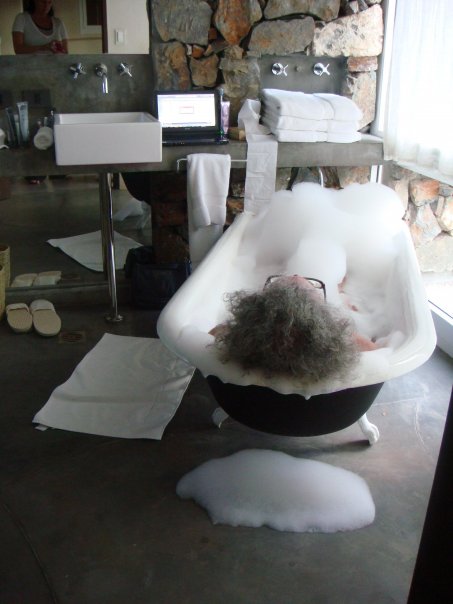
    avram in bath

  • Could Qualcomm really buy Intel: It is all Heddy Lamar’s fault

    Origins of Intel Capital and its mission

    Learning today that Qualcomm has a market capitalization that is now greater than Intel’s, makes me a bit sad and disappointed in myself.  When Les Vadasz and I started Intel’s Corporative Business Development Group around 1991, now known as Intel Capital,  we saw it as a strategic vehicle.  I had started making minority investment a few years earlier after giving up on the idea of using acquisitions to grow the company.  Les and I thought that by  investing in early stage companies, Intel would gain insight into the future which would impact its strategic direction.  Since our objective was  strategic, we would have been happy with just getting a good financial return.  Instead we got a fantastic financial return (when I left Intel in 1999, Intel was arguably one of the most if not the most successful venture capitalists).  The disappointing part is, as far as I can see, there was no impact on Intel’s strategy for the future and results are clear to be seen now. We did have major impact on the computer industry on the other hand, particularly in the development of residential broadband and consumer Internet.

    Qualcomm market Cap greater than Intel’s
    The market capitalization of Qualcomm at more than 100 billion is now higher than Intel’s. This would have been unthinkable in 1991 when I first meet with the founders of Qualcomm, Irwin Jacobs and Andy Viterbi.  It reminded me of the time in 1982 when I was a group manager at Digital Equipment Corporation, the second largest computer company in the world, and met the CEO of an early stage company called Compaq. How could I have guessed then that sixteen years later, Compaq would acquire Digital only to be eventually swallowed later by HP ten years after that.
    I was extremely impressed with the Qualcomm people at that meeting.  Les Vadasz, my boss at Intel and badge number three was with me as were a number of other Intel people but I no longer remember who they were.  The Qualcomm folks first gave us an amazing tutorial on CMDA  (Code Division Multiple Access) the technology they were developing for mobile phones.  At that time, cell communication was analog. The primary technology  deployed in the USA was called AMPS for Advanced Mobile Phone System. At the same time that Qualcomm was developing CMDA, while another technology was being developed primarily  in Europe called GSM.  GSM was very successful and is still the primary communications standard for most of the world.

    CMDA and Heddy Lamar
    CDMA uses a technique called spread spectrum.  I can’t go into it here and frankly, I am not sure I can explain why I thought that CDMA was the technology of the future other than to say  it was clear to me that it was both more secure and would provide higher bandwidth for data (and remember this is 1990).  Before leaving the technology discussion, I have to point out the role that actress Hedy Lamar played in the development of the idea.  Here is something from the Qualcomm site about this:

    Once described as the most beautiful woman in the world, actress Hedy Lamarr was one of Hollywood’s most glamorous silver screen goddesses of the 1930’s and 40’s. But Ms. Lamarr had another talent: she was brilliant.
    Working together with avante-garde music composer George Antheil, Lamarr came up with the notion that multiple frequencies could be used to send a single radio transmission – a concept that’s now known as frequency hopping. The concept would eventually provide the basis for the CDMA airlink, which Qualcomm first commercialized in 1995. Today, CDMA and its core principles provide the backbone for wireless communications, thanks to the creative vision of one extraordinary woman.
“Films have a certain place in a certain time period, but technology is forever.” – Hedy Lamar


    The possibility of an Intel investment in Qualcomm
    At the same Qualcomm meeting,  Les and I  were briefly introduced to Paul Jacobs the son of the then CEO and founder Irwin Jacobs.  Paul was responsible for another part of Qualcomm which was developing an email system called  Eudora. I am not sure why Qualcomm acquired Eudora from The University of Illinois where it had been developed.  Perhaps, they saw the possibilities of mobile email.  Paul Jacobs is now the current CEO of Qualcomm.

    I was interested in having Intel invest in Qualcomm.  As readers of my blog will know, I was always passionate about  communications/networking technology.  I thought these people were brilliant and had very complimentary technology capabilities.  It would also provide Intel with a relationship in the San Diego area where so many communications companies were located also seemed attractive to me.  But I certainly did not make the sale at Intel.  I am not sure it even got much further than Les Vadasz.  It is no longer clear to me why there was a lack of interest.  I suspect that it just felt too far away from our core business which at that time was selling microprocessors to manufactures of desktop computers. It might have been difficult for those that understood anything about mobile technology to imagine that CMDA  could compete with GSM which had much more support.  While CMDA never really beat GSM it allowed Qualcomm to develop its capabilities and to increase its patent position.  Over time, Qualcomm became the leading supplier of mobile communications technology with customers like Apple.  Qualcomm was the 7th leading semi conductor supplier in 2011.  In 2005, Paul Jacobs became CEO of Qualcomm, the company his father, Irwin Jacobs founded and led.

    So back to the Intel/Qualcomm story
    Since I could not get Intel interested in Qualcomm, I decided to buy Qualcomm stock in its IPO in 1991.  Unfortunately, I sold a few years later.  The market cap is now a bit over 100 billion. It was about 400 million in 1991.   Today, Intel’s market cap is slightly lower than Qualcomm. When I left Intel in April of 1999, the market cap of Intel was $218 billion.  At that time Qualcomm was valued at 26 billion dollars or one 10th of Intel’s value at that time.  Qualcom market cap was only 4 billion dollars the year before.

    Two lost opportunities that could have changed everything for Intel
    In the late 90s, there were two companies that Intel should have acquired in my opinion. One was Qualcomm.  The other was Broadcom which had a market cap of one billion in 1998. Intel did have an investment in Broadcom of some significance.  Broadcom is now worth 17 billion.  By owning these two companies, Intel would have the leading position in broadband and cellular communications instead of just owning an aging microprocessor architecture. But instead Intel has done nothing of significance. They have just been milking their microprocessor business. Winning Apple’s Mac business was a major success but Intel was not able to get the more important part Apple’s business which is the i-Devices.  I suspect that Apple will replace the Intel microprocessors with their own chips in the next 3-5 years and even the threat of this will put major pricing pressure on Intel.

    Over the years since I left Intel, I have suggested to some of the Intel executives that they consider acquiring Qualcomm but the response was always, it was too expensive.  Well the market has thought differently.  If anything, it has thought that Intel was too expensive.

    So will  Qualcomm acquire Intel?
    I doubt that they will do it.  Qualcomm will continue to grow while Intel will eventually end up a semi conductor foundry where Apple and other’s will have their chips manufactured unless they make some major changes.  How sad!  I am sure that many of my former Intel colleagues will disagree with my point of view but the numbers speak for themselves.   Interestingly, if it did happen, the CEO’s first name would still be Paul.