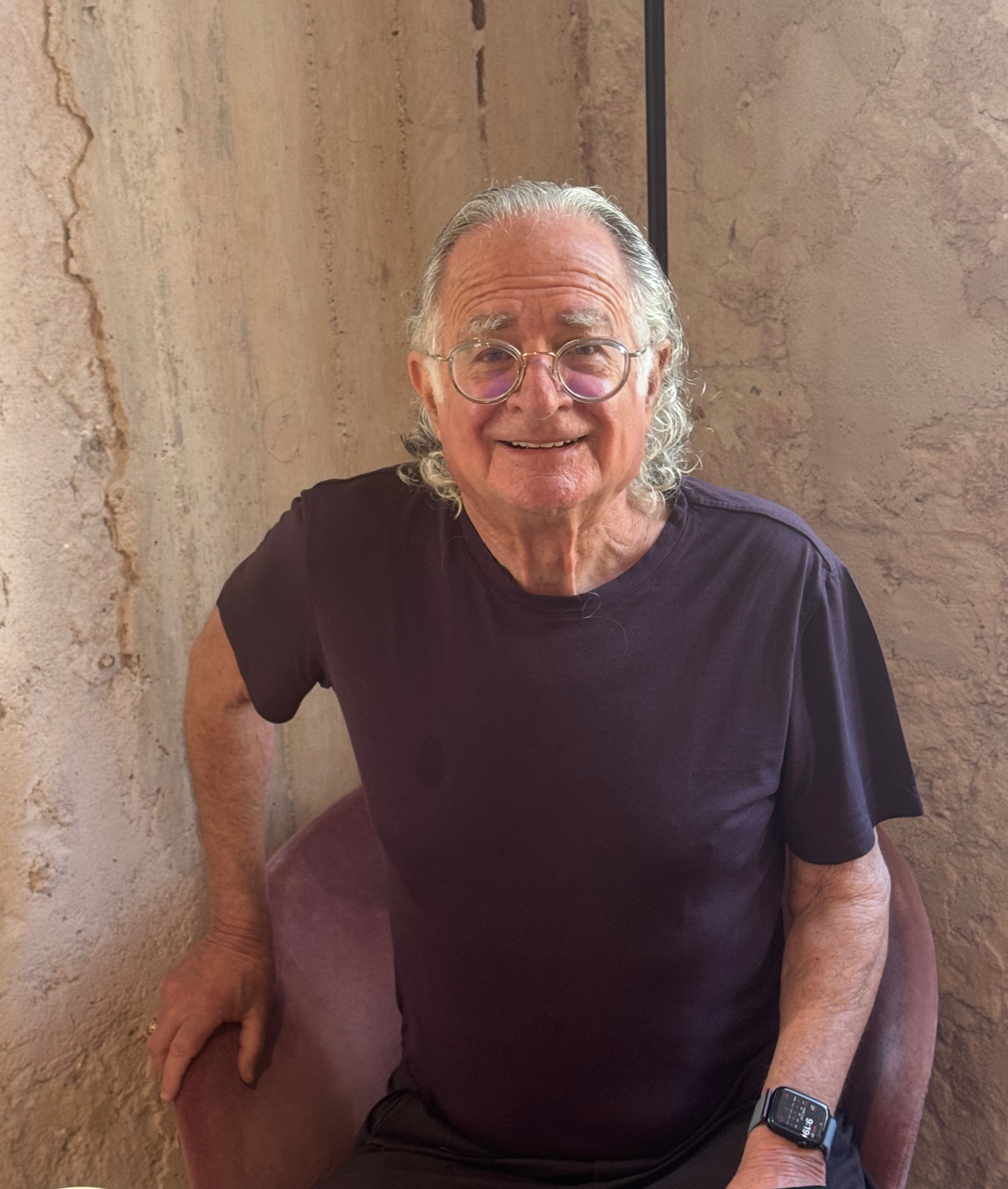
A new friend in Lecce recently asked me for advice about longevity. He was surprised by what he perceived as my relative youth. Others who know that I’ve worked in the field of longevity for years sometimes ask for my “secret.”
I usually joke that the secret was choosing the right parents.
Genetics Set the Ceiling but how You Live Determines the Outcome
I believe genetics determines your maximum potential lifespan. In that respect, I did win the lottery.
My father lived to 97 and remained in excellent physical condition, working out six days a week until he was 95. Had he treated his brain like a muscle as well, he might have avoided the dementia that appeared late in life. My mother, sadly, died young at 67 by taking her own life but her mother lived to 94 and her mother’s mother to 98.
So while genetics may define the ceiling, everything you do during your life subtracts from it.
Smoking at 20 may shave a decade off your lifespan. Chronic sleep deprivation quietly steals years. Poor metabolic health doesn’t announce itself early—it slowly gnaws away at your longevity. Longevity is less about adding years than about not losing them unnecessarily.
You’re looking at an 80-year-old man born in 1945, on the day Auschwitz was liberated. Realizing how old I am is often a shock. It’s difficult to come to terms with this. For most of my life, I saw myself as the youngest person in the room—even when that was no longer true. I still feel that way sometimes, though I doubt others see me like that now.
Less than 4% of the U.S. population is my age or older. Half of those born in 1945 are no longer alive. Less than a third will survive another ten years. Hopefully, I’ll be one of them.
If you asked someone “Would you like to know how long you have to live?” Some people would say yes; others would prefer not to know. I would very much like to know, because it would surely influence the decisions I make now.
It’s not just about how long we live—but how well. There’s a vast difference between healthspan (the years we’re healthy) andlife-span. (total years lived). Simply knowing how many years remain isn’t enough.
Life Span and Health Span
At 80, the average man has 8–9 years ahead, and the average woman has 10–11. But those are averages. What matters to each of us is not the general number, but how long we personally have—and how long we will remain well during that time. While someone might have eight years remaining, they could be sick for half that time. For instance, about 25% of men and 33% of women will develop dementia. It is not just about living longer. It is about living better longer.
The good news is: there’s a lot we can do to extend not just life-span but health-span. Exercise, quality sleep, a healthy diet, weight management, low stress, and strong social connections all make a difference. It also helps to have chosen your parents well—though genetics are estimated to account for only about 25% of longevity outcomes.
Lifespan in the developed world has increased significantly over the past century, although gains have slowed in recent years (COVID played a role). Life expectancy has risen by about 20% over the last five decades. However, healthy lifespan has increased only about 17%. This widening gap raises real social and economic questions, especially as population growth slows and societies age—leading to an inversion of the population pyramid. I’ll write more about that in another post.
None of these projections account for potential breakthroughs—especially from disruptive technologies like AI—which could radically change the landscape of aging and disease.
Those who are middle-aged today may live well into their 100s. Some believe they may become biologically immortal. I don’t think that opportunity applies to me. And then there’s the question: how long would we want to live, and in what kind of world?
Back to me
I realize this post may seem self-absorbed. But I want to share my thoughts and feelings. I can’t be alone in this. Many of my friends are my age and surely experience these same reflections.
If we knew we had 20 healthy years left at 80, what would we do with them? The economic implications—both personal and societal—are worth serious consideration as well. I’m in a better position than most, but I still ask myself these questions.
When I was diagnosed with prostate cancer in my early 50s—and was told it hade likely metastasized (it hadn’t, though I endured a few scary years)—I decided to live as if I only had ten years left. Now, at 80, I live as if I have just five years ahead. But that’s probably not true.
Recently, I had my biological age assessed by TruDiagnostic. They estimate I’m 15 years younger biologically than my chronological age. I’m not a full believer in this technology, but with such a large gap, I do feel confident that I’m aging well. I also had my brain MRI analyzed by a remarkable company I advise, BrainKey. And I underwent a CT angiogram—my coronary arteries are clear.
Where does this leave me and where does it leave you?
I’m caught between feeling like my life is winding down and believing I might have 20 more years. If I knew how long I had, my choices would probably be different. I am thinking that I should live like I have 20 years more. Perhaps believing that will play a role in making it true. What about you?
I realize that I am guilty of ageism—and in particular, what I would call self-ageism. Ageism is a form of prejudice. It means thinking poorly of someone not because of their behavior or character, but simply because of their age.
This realization came to me the other day while I was considering the possibility of joining the board of a company doing work I believe is very important. I said to myself, “You can’t join the board because you’re too old.” This wasn’t because I doubted my ability to contribute, but because of how I thought others would perceive me.
Chronological age is not the same as biological age. Chronological age is useful in understanding the kinds of experiences a person may have had. For instance, I can remember when televisions were circular, the images were in black and white, and there were only three channels. But this says nothing about my biological age.
Biological age is complex. It’s an estimate of how you compare to others, physiologically. It’s often thought to follow a bell curve around chronological age, but I don’t believe that’s accurate anymore. Advances in healthcare have extended both health-span and life-span. Importantly, different parts of our bodies age at different rates, making it hard to define anyone by a single number. For a board member, cognitive function is far more important than the ability to lift weights.
Yet the world still runs on chronological age. For example, I can’t get a mortgage in Italy, where I now live, because of my age. No test of ability will change that. It’s understandable that things like life insurance or driver’s licenses must rely on averages, but I don’t think that should apply to things like board positions.
Intel, where I served as a corporate officer, had a policy that management board members had to retire at 65, and corporate officers could not be older than that. That included people like Gordon Moore, Andy Grove, and Les Vadasz. Outside independent directors could not be older than 72. This meant losing those with the greatest experience and wisdom. It didn’t seem to work out so well for Intel.
I believe I still have much to offer. I shouldn’t let my perception of how others might view me affect how I view myself. While ageism is real, I at least have control over how one person sees me—me!