Due terzi compiuti

Pensieri e esperienze di un’anatra selvaggia di ottanta e un anni.

Avram Miller by the sea
EN | IT

587 post pubblicati dal 2006

Categoria: Tecnologia

  • Mixed emotions about the potential acquisition of Time Warner Cable by Comcast

    comcast+time warner My History with Comcast

    I have always held Comcast in high regard. My experience with this company goes back to 1993, when I met Mark Coblitz, then the Senior VP of strategic planning at Comcast. We were both speaking at a small conference focused on the cable industry, organized by Paul Kagan. I was already working on the development of the cable modem, but had not yet gone public with the concept.  I discussed it with Mark and we arranged for me to come to Comcast headquarters in Philadelphia for a meeting. Mark was very open to the concept of using the cable system to provide high speed broadband connections.  I told him that we (Intel) had found a way to provide 10 megabit downstream and 19.2 KB upstream which would be shared with about 500 subscribers. Getting the upstream to be faster than the downstream was one of our many challenges as the cable plant was not designed with upstream in mind. It was kind of like watching salmon swim upstream to spawn. He took me upstairs and introduced me to Brian Roberts the CEO of Comcast and we had a brief conversation.


    A few months later, I brought my boss Les Vadasz to visit QVC (a leading Cable Network for shopping) which was then run by Barry Diller.  Comcast owned 17% of that company at that time. I had been introduce to Barry by Norman Pearlstine who soon after became the Editor and Chief of Time Magazine. I was was one of the first, or maybe the first, to explain to Diller the potential of the internet. During our meeting at QVC (I thought that home shopping would be a big part of the broadband internet), I explained our idea to use the Cable Network together with home computers to create a new medium. Barry found this very interesting.

    He had taken over control of QVC in 1992 after leaving Fox. QVC was located close to Philadelphia.  After hearing our story, he said we should meet with Brian Roberts and called him.  Just an hour later, Les and I were in the office that Brian shared with his dad, Ralph Roberts – a truly remarkable man. I explained to Brian that Coblitz and I were in discussions about doing a cable modem trial and he said he was supportive of that.

    Later, in 1994, we did a trial in Merion County PA with 50 homes. The trial was very successful. By that time, I was meeting with most of the CEO’s of cable companies trying to convince them to deploy cable modems. It was slow going, although faster than my discussions with Phone Company Executives. I announced Intel’s cable modem, CableLink, in October 1994 and stated that we were doing a trial with Comcast as well as with Viacom which had owned some cable companies at that time.  It was not until 1996 that Comcast launched its first commercial cable modem.  Comcast joined with many of the other cable companies in forming @home which was created by Kleiner Perkins and TCI (John Malone) but was based on a concept that I had but was unsuccessful in getting launched.  Interestingly the first CEO of @home was Will Hearst the grandson of the publishing baron, William Randolph Hearst.

    I continued to have discussions with Mark Coblitz and on many occasions with both Brian and  Ralph Roberts, particularly during the summer at the Allan&Co conferences.  I really liked them and they liked me.  Eventually, they asked me to join them and build their venture investment business. I might have considered it, but it would have required me to move to Philadelphia and for many reasons, that was not possible. Although I did say that if Ralph adopted me, I would do it.


    Time for Time Warner Cable

    My experience with Time Warner Cable was different.  Time Warner Cable bought their equipment from Scientific Atlanta, now owned by Cisco, while Comcast used equipment from the Jerrold Division of General Instruments who was Intel’s partner on the cable modem project.  Time Warner, under the technical leader ship of Jim Chiddix, developed their own approach to the cable modem and then created an alternative to @home called Road Runner (the name is still used by Time Warner Cable.)

    In 1998, my friend David Roux who was at that time EVP of Business Development at Oracle (later he founded Silverlake Partners) contacted me with a very interesting opportunity.  Time Warner wanted to set up Roadrunner as a separate business and wanted investment and help from a couple of technology companies.  Oracle wanted to have Intel join them on this project.  We we had many meetings with the Time Warner team. The negotiation team on the Time Warner side was lead by Glenn Britt who later became the CEO of Time Warner cable.  Eventually we worked out the deal and were ready for the big announcement. We invited Compaq into the deal as well.

    I was in NYC on a Sunday, the day before the announcement, when I got a call from Glenn.  It turns out that Gerry Levin, the CEO ofTime Warner called up Bill Gates on the Friday before to tell him about the pending announcement. Bill at that time, being one of the most competitive CEOs in industry, asked “what would it take to dump Oracle and do the deal with Microsoft?”  A number was discussed that valued Roadrunner at double the amount agreed to in our deal.  Bill actually committed to the deal even though they had no deal structure in place.  Time Warner and Microsoft just agreed to use the terms that had been agreed to between Time Warner, Oracle and Intel.  I was stunned when I heard this.  I tried to see if there was any way to turn it around but there was not. So I flew back to California more than a bit angry and embarrassed.

    Two days later, I got a call from a very senior officer of Microsoft (I can’t use his name for obvious reasons.)  He said “sorry about screwing up the deal, frankly we would be happy if you joined our deal.  We had no issue with Intel, but we could not let Oracle make a deal with Time Warner.”  He then went on to say “we agreed to use the deal terms you negotiated so I would appreciate it if you could send me a copy of the agreement.”  All I could say was “we are not having this conversation” and hung up. Microsoft and Compaq did the deal and invested $425 million for a combine stake of 20%.  I don’t know how this worked out for them financially in the long term. I know it had no strategic impact on either company and I doubt that it did much for Time Warner Cable other than bringing cash into the Treasury of Time Warner Inc.

    After I left Intel in 1999, I did not have much contact with the cable companies. I spoke a few times with John Malone.  Brian Roberts and I exchanged emails from time to time.  Of course, as I saw Comcast increase its power in the cable industry via acquisition of other cable companies, and then expand into  media/content by buying NBC, I have to wonder what would have happened to me if I had joined Comcast.


    Broadband Development in the USA or, Welcome to the Third World of Communications!

    The development of broadband in the USA has been disappointing with respect to Europe and Asia. We have an expensive, slow and somewhat unreliable cable network.  This is surprising to me. If you had asked me in the 90s, I would have said that the US would lead in broadband but like so much infrastructure development here, the USA is becoming a Third World Nation.

    Cable companies like Comcast have improved their broadband delivery and provide video on demand, but given what could be done, this is really uninspired.  Generally, it is thought that the lack of competition is the main driver for this. I think it is true.

    So I while I am proud that my old friends at Comcast have done so well, I will be disappointed if Comcast ends up with the Time Warner Cable business.  I would have preferred that Google, Apple, Microsoft or even Intel would have bought it.  Then the model could be changed because they would aggressively adopt new forms of  content programing and commerce. Google is actually experimenting with providing broadband in, of all places, Kansas City where they provide fiber.  They claim to offer speeds that are 100 faster the cable.  Actually, I am not sure that will matter that much. Changes in computer architecture and compression will have greater effects than just brute force bandwidth.


    Growth will be Comcast’s biggest challenge

    The problem for Comcast will be how to achieve growth.  Of course they have the opportunity to increase profits by reducing costs but that will only go so far. There are other opportunities for them of course, but given their slow rate of adoption of new technologies, they will probably no longer be available by the time they become interested.

    With Mark Coblitz retired, they may need help in developing a strategy from the future.  I might know a candidate available for adoption.
  • The I-Pad and the Information Furnace-1994

    Gizmodo recently posted about an  Associate Press article that ran in June 1994 in which I describe a number of things including the Information Furnace and the I-Pad.  This post has been moving around in the world of iPad blogs and there are a number of comments.  Rather than reply to them on the various blogs, I thought I would do that here and link to my post on a few of those blogs.  Here is the quote about the I-Pad.

    From the Associated Press:

    “One of the devices that’s interesting, we call it an I-pad, an information pad,” [Avram] Miller said. “It would be a device that has a flat-panel screen. You can write on it, touch it. You might be able to speak into it and it might speak back. It would be wireless, cheap and have different forms in the house.”


    i-Furnace, not one of my better ideas?

    So as my buddy and former  Co-Corporate Rebel, Steve McGeady (well known for his testimony against Microsoft in the US Government Monopoly suite which ended up neutering Microsoft), said to me on Facebook, “the Information Furnace was not one of my better ideas.”  I partially agree with him but not completely.  Let me explain my objective in describing that concept back in 1994.

    Remember this was 1994

    First of all the article talks about Intel but frankly, Intel management had no idea what was going on.  I was pretty popular with the tech press because I was user friendly and good with sound bites.  I found out that if I communicated my ideas directly at Intel, for instance in our strategic long range planing process (SLRP as it is still know), I was usually mocked particularly by Andy Grove.  But if they read those same ideas in a news or a magazine, they thought it made sense.  The other company I was trying to influence was Microsoft.

    We need to understand the circumstances of home computing back in the summer of 1994 when the original article was published.  Cable Modems were just being tested. It would be a few years before many of the cable companies together with TCI (John Malone) and the VC firm Kleiner Perkins formed @home  and Time Warner and some other cable companies launched Roadrunner.   The Cable companies were still working on Intelligence Set Top boxes and specialized equipment to offer telephone services.  Broadband Internet was still way down on their list of priorities. Almost the same thing was going on with the Phone companies however they wanted to offer TV services since they already had the phone part.

    A new medium needs to be born

    I was totally committed to create a new medium based on the connected PC and high speed residential broadband  but was up against a number of issues. Here are some of the issues:

    The cable companies wanted to own the cable modems just as they still own the set top boxes.  The last thing they were interested in was having a cable modem sold at retail.  Anyway there was no way to connect the modem that could work at that speed to a PC unless it was an add-in board. USB  for instance was not yet released (It was in development by a number of companies including Intel).  Home computers did not come with ethernet connections.  The first cable modems where installed in home computers by cable techs that had to actually open the computer, install the board, install software, run a coax cable to the computer etc.  You get the  idea.

    In order or the computer to become the dominate form of computing  in the house, it had to be available to all the members of the home.  But even if one was willing to share a computer with the family which many did, it meant going to where the computer was since few homes had portable computers.

    Central Heating/Central Computing

    Then as now, I was always thinking about alternative computer architectures.  I thought that if there was one computer in the home that was attached to the high speed broadband network, it could be shared by various lower cost devices in the home.  It was kind of going back to timesharing  which is again the trend we see in cloud computing.

    Andy Grove, Intel’s CEO was finally getting on board with the idea of the PC dominating the computing environment of the home but frankly, he thought it would use communications technologies like ISDN.  I remember vividly, Andy laughing at me when I told him it would be cable modems.

    The I-Pad was cheap compared to a PC

    I imagined a number of devices in the home that would be low cost.  I used the word cheap and I see lots of comments on the blog that the iPad was anything but cheap.  Well maybe I should have said “low cost”.  In 1994 the average PC cost about $2,500 in today’s dollars.  I thought that devices like iPads would cost about $500 or 20% of the cost of a PC.  That is what I meant.

    I was hoping to get Microsoft to invest in the Information Furnace as I described back then.  But they also though that the “The TV was it”and not “The “PC was it.”  So in this sense, the information Furnace was not one of my better ideas.  But I still think it could have changed the game for Microsoft and perhaps for Intel.

    A rose by any other name would smell as sweet

    There is some discussion about Intel having the ability to go after Apple for the use of the iPad name.  I think there is no merit to that concept.  We never built a product.  Anyway, Intel wanted Apple as a customer and was constantly trying to get them so we would have gladly given the trademark if we had it, I would suspect.

    How were all these devices to connect in the home

    I am trying to remember how I imagined that all these devices would connect.  Hopefully it will come back to me.  I doubt that I thought it would be wifi since that was way in the future.  I think I thought about some connection via the installed telephone cables in most house.  Not really ethernet because that was still to expenses.

    More predictions

    I am still making prediction but without out the power of Intel’s PR they will probably not make there way to someone’s blog in 2034.

  • Confession: Why I am unfair to Google.

    Many of my friends ask me why I am so critical of Google. I have been examine possible motives.  I wonder if I am just jealous.  Back in 1999 when I joined the board of Alta Vista, the hottest search company at the time, we knew about Google and even had some discussions about buying them (they were really not interested for good reasons it turns out).  We knew they had better technology but we had market share and thought we would win. We would have lost out anyway because the management of Alta Vista accelerated that by trying to turn the company into a portal rather than keeping the focus on search.

    I also knew a bit about Google because my dear friend, Ram Shriram was one of the first investors and board members.  He is still on the board and made billions from his investment in Google.  I got zero from my efforts with Alta Vista so perhaps that affects my thinking.

    Maybe I am not objective about Google because every time I have met Larry Page, I have to reintroduce myself to him.  I tell him I was Vice President of Business Development at Intel and the cofounder of Intel Capital. He is about as interested as I might have been back in the day, if someone told me they had been a VP at Univac.  I have tried to tell him about the development of residential broadband and how I got the cable industry to provide high speed internet but his eyes glaze over which I find a bit surprising since he was already 21 years old when we did the first cable trial.  Since his dad and mom were both professors in Computer Science at Michigan State University, maybe the had a T-1 at home and he never had to deal with dial up modems.

    I wonder why I don’t admire them for doing things that I would have advocated when I was at Intel.  Google is clearly willing to take risks even though they very often do not pay off.  They appear to have some kind of  long term vision which you can see in their investments in driverless autos, artificial intelligence and even Google Glass which I think is an awful technology.

    I love that they give their people freedom to explore. I love their willingness to buy companies but I have trouble with the prices they pay.  I guess  when you have as much money as Larry Page, everything looks cheap.

    So what is eating at me?  I think it is that they are full of themselves.  Maybe not so much in an arrogant way but they just don’t appreciate other companies.  They don’t learn well from history.

    I think they had a great start with a wonderful technology for search and then they figured out how to make money from it.  But that is when they started mistaking luck for being smart.  I can’t help it.  I think the company is mediocre.  It is the same problem that existed for a while with Microsoft.  Microsoft was so powerful that they could put out mediocre products and still win and the good stuff from other companies never got to market.

    So in examine my negative feelings about Google, I still come away still having them.  It is probably my own shortcoming.   Maybe if Larry Page would have recognize me just once and said something nice to me, I would be a big fan of Google now but I doubt it.

  • Am I unfair to Google?

    I like to say that there is two things that defined success in the tech business.  The first is being lucky.  The second is not mistaking luck for being smart. Larry Page thinks he is smart.

    A number of friends have told me that I am overly critical of Google.  Some of these friends think that Google invincible. I have often said that Google reminds me of Microsoft, a inch deep and a mile wide.  They have the mediocrity of  the old Microsoft without the greed of Bill Gates.

    When Google bought Motorola a few years a go for $12.4 billion, I was sure it would end badly.  Not only were they buying a company like an old horse, should be put out to pasture, they were buying a pile of problems and they would not have the skills to deal with them.

    So now they are selling most of it to the china’s  Lenovo Group for $2.9 billion.  Google had also recovered $2.35 billion by selling the set top box part of the company to the Arris group who ever the hell that is.  Google is keeping some advance development actives and most of the 20,000 patents that Motorola had (I bet some are pretty long in the tooth).

    My guess is Google thought at first they would emulate Apple buy building their own phones and maybe set top boxes (remember the Google TV).

    I don’t know how much Google had to write off in losses while they owned Motorola (they will still own it for a while as the deal needs government approval).   But for a company that paid $3.2 billion for a company that makes thermostats and smoke detectors, the deal probably does not look that bad.

    In the mean time there stock continues to go up.  I remember those days when I was at Intel.  Intel and Microsoft’s stock continued to go up until they dropped like a rock and pretty much stayed there for a decade or more.  Note, I sold my Intel stock at the top in the low 70s in the 1st quarter of 2000.  Google stock will continue to go up until it no longer does.  If we have a major economic  crisis (I guess, I should say “when”) it will go down and then as the tide runs out, the rocks will show.

    I do promise to write a blog post in which I take the opposite side and challenge my negative assumptions about Google.

  • The end of Network Neutrality

    net neutralityMy friend, Robert X. Cringley,  wrote an excellent blog post on Net Neutrality which you can read here.  I have a few thoughts I would like to share about this topic. The concept of Net Neutrality simply put, is that the supplier of broadband cannot enter into a separate arrangement to provide better services for some companies than they provide to all companies.  They can not pick and choose what applications and services you use in general.

    In the beginning there was Greed

    As frequent readers of my blog will know, I played a principal  role in the creation of residential broadband, first with the development of the cable modem and then a bit later with the development of ADSL.  Establishing residential broadband  world wide was my primary mission from 1992 when I first realized the potential of cable TV and how it could be used for high speed communications. Then in 1999 I left Intel to  “cash in my chips”.

    I led the cable modem developments for Intel in my role as Vice President of Business Development. It was a joint effort with General Instruments (strangely enough at the time it was led by Don Rumsfeld who later became secretary of defense for George Bush).  My objective was to create a new medium of communications, entertainment and commerce.  So I worked on the opportunity from the bottom of the stack (hardware) to the top of the stack (applications), and how to monetize them and everything in between.  It was an amazing experience.

    The Business of Broadband

    It turns out the hard part was not turning the cable and phone system into a broadband network, it was making all this into a business that would thrive.  The key in getting the cable companies to embrace this was showing them it was opportunity to create an additional revenue stream and, also convincing them that it would put them into a stronger position vis a vis their satellite and telco competitors. It was all about greed.

    Consumer Online was Built on the Backs of the Phone Companies

    Back in 1992, there were online services for consumers but they used dial up networks.  Phone companies offered a variety of plans as they still do these days. Most consumers had unlimited local calls.  So companies like AOL and Prodigy would get local numbers.  This meant that the phone companies got zero additional revenue and did get some additional costs.  In fact the whole dial up online business was built on the back of the phone companies  although the online service providers had to have banks of modems to answer the incoming calls.  Since the modem would tie up the phone line, eventually some homes began to have a second line installed which was good for the phone company.

    Home at Work

    I the early days of the internet, most consumers would use their company’s computer network to go online.  I noticed people staying late in the office to connect with Amazon for instance.  Instead of “work at home”, I  called this” home at work”.

    Paying for Bandwidth or Praying for Bandwidth

    I tried to think what would be the best way to organize the payments for residential broadband.  I   thought that there should be a number of different ways to charge. I was very much influenced by how telephone calls were charged.  For those that are old enough, you will recall that long distance charges were different  depending on the time of day and day of week they were made.  I also thought about the equivalent of 800 long distant calls.  I imagined that a provider of content could elect to pay for the delivery of their content so that the consumer would have a better experience.

    The cable companies wanted to keep billing simple.  I think they were right, at least at that time.  It would have been too difficult for consumers to understand multi-tier pricing right away and the cable companies certainly could not have handled the complexity.  Later, when consumers understood more about bandwidth speeds, cable companies and telco’s introduced different pricing for different speeds.  They also introduced the concept of static versus dynamic IP addresses which they hoped to use to separate out business users from true consumers.  I won’t go more into this.

    The Role of Regulation

    Regulation also played a role.  There was a concern that the cable companies would do things that favorited some companies over others and in particular could favor their own content.  We can see this behavior in how cable companies have packaged video content on their TV access.  While TV had a limited number of channels which could justify some of this, broadband internet did not.

    How much bandwidth is enough?

    As Bob points out, there can be significant improvements in how much bandwidth is needed. Think of this as energy conservation.  Right now we are wasting a lot of bandwidth.  Reducing the number of bits needed to stream a movie by half is the same as increasing the bandwidth two times.  Also, the more computation that cab take place in the cloud and the more data can move directly from one application/service to another, the least bandwidth we will need.

    I think that the total amount of bandwidth needed in a home is pretty much proportional to the amount of video that all devices can stream simultaneously, plus some additional amount for other activities (the internet of things).  Latency is also an issue  particularly for interactive applications.  This will influence the movement of computing to the cloud.

    Where do I Stand on Net Neutrality?

    I am not exactly sure where I stand on net neutrality.  What I want is a high quality, high speed, low latency network for everyone in the USA. The quality of the US broadband is really poor compared to most of the development and even much of the developing world.

    I would certainly be against anything that allowed the Cable or Telcos to pick and choose what applications, content and services we could access.  I am not against the idea that content companies can pay for us to have higher quality of services even if that makes it harder for smaller companies to get established.  I don’t see that as being much different than a big company having more powerful computers than a little company.

  • How do I message thee? let me count the waze..

    This is not my next post on predictions for 2064.  They will be coming out but not all at once.

    Traveling around the world as I do really exposes me to all the ways people message each other.  I thought I would list some of those that I know, and actually have to use, since people have strong preferences – depending on age and residence.


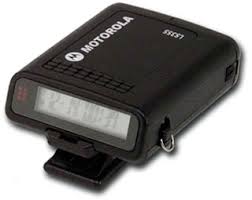
    pagers

    It all started with SMS or was it Pagers

    There are 3.5 billion users of SMS currently.  SMS stands for Short Messaging Service.  It supports a total of 160 characters of which 140 are visible.  Is is probably why Twitter decided to use 140 character for a tweet.  While there were some messaging capabilities in cell phones as early as 1980, SMS did not become a standard until 1985 when it was adopted as part of the GSM standard for cell phones.  In 2010 more than 6 trillion text messages were sent.

    I remember in the early 90s when the internet was just getting going and we were making a big push at Intel for the PC to be preferred device for communications, we ran into the differences in behavior between Europeans and the Japanese.  We were surprised to find out that many Europeans  for example were already using their phones to communicate with each other rather than email.

    One could also argue that it all started with Pagers which have been around since 1962 when AT&T introduced the first pager “Bell Boy”.  But pagers have very limited use and were certainly not consumer products. They were used by such diversified groups as doctors, plumbers and drug dealers.


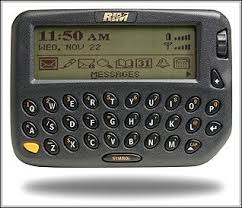
    early blackberryHandheld Communications Devices 

    While cell phones were being sold primarily for voice communications, there were a number of devices focused primarily at text.  In a sense these devices combined a handheld organizer with a messaging platform.  The most well know was the Blackberry from RIM, a Canadian company.

    In 1999, the Blackberry was introduced primarily as a messaging device but its real power was in its ability to connect to email systems to allow remote access.  I was an early  adopter of the Blackberry and was using it a lot by 2000.


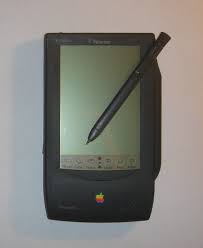
    NewtonPersonal Digital Assistants

    PDA’S were around from the early 80s but they tried to come into their own with connectivity.  The most famous attempt was Apple’s Newton first released in 1993. It did not have wireless communications capabilities.

    Jeff Hawkins first introduced me to the concept of wireless communications in his small office/lab in Palo Alto. He created Palm around 1990. Palm had some success but eventually lost out to the Blackberry and was eventually bought a series of companies: US Robotics, 3Com and eventually HP.  Jeff later started Handspring which brought out the Treo in 2002.  The Treo was eventually integrated with a number of cell phones and used a small keyboard.

    Later, the Palm team left and created Handspring which like Newton, used handwriting but this time with a special form of writing that the user had to learn,  It was eventually acquired by the Palm division of HP.


    Computer Messaging

    The computer messaging system, AIM, was developed in Israel by Mirabilis which was later sold to AOL.  It became the first major cross platform messaging system and was available on the Microsoft and Apple platforms. AOL also developed AOL Messenger.  This may have something to do with the number of Israeli’s involved in Platforms like Viber and Tango.

    Now all the major mail platforms support messaging.  You can message from Yahoo Mail, Microsoft Mail and Gmail.


    The Multitudes

    Today’s situation with messaging platforms reminds me of the early days of online services although the number of users is orders of magnitudes higher.

    In the 80s, there were a number of on line services such as AOL, Prodigy, and Compuserve.  There were also bulletin board services. But all of these services were basically Islands of communications. If you were on AOL, you could communicate with your friends and family on AOL. If you were on Prodigy, your communications were limited to other Prodigy customers.  Because SMS is part of a global standard, you can pretty much send a text message to anyone that has a cell phone anywhere in the world – as long as you are not concerned with how you may be charged. But this is not true for the messaging services/apps and it is driving me crazy.

    I now have the following Apps on my phone for messaging: Skype, Google+, Twitter, Facebook, Line, WeChat, Tango, Viber, Text+, Whatsapp, Kik, Facetime, and Snapchat.  In additional, there are other Apps that have another primary purpose but can be used for messaging such as Waze, and Spotify.

    Confusions abounds

    When you sign up for a new messaging system on your mobile device, you are asked to give the App access to you contacts.  Then you are are given a list of people that are on the new services.  You can then add them to the contact list for that service.  But does that mean they really use that service?  No, maybe they were just trying it out.  Remember I am probably on about ten services.  So, you send them a message and you get no response because they may have deleted the App or in any case, the App is not running.  And in some cases, you get through to the person as I have done, just to get a message back “why are you using Viber?  I don’t like Viber.  Use Whatsapp!” or something like that.  So how am I suppose to know what App to use? And what if I want to communicate to a group of people but some are on Tango and some are on TextPlus?

    Now some people are using messaging like they use to use email.  That is, they don’t expect much of a real time response.  I have people sending me all kinds of messages on Facebook even if they are not my friends. Or they are using LInkedIn for that purpose.

    And yet, the messaging companies are growing like crazy!  And they have really impacted the SMS business of the Telco which was the greatest exploration of bandwidth ever known. It was the mini bar of communications.  I don’t mind that, but SMS is still the only effective standard.

    The Future of Messaging

    It will be interesting to see what happens.  I don’t see one company taking all.  But I can’t see how this craziness can continue. I have the solution for all this which I am planing to auction off on ebay,   What do you think will happen?  And please don’t message me about it.

  • First Predictions for technology 2064: You won’t be using Google, you will be Google

    Will we be living on the moon or in a cave?

    When I made my predictions for the computer industry for 2014, a number readers suggested that I make predictions for 2064. With some anxiety, I decided to sign up for that and started by stepping back into 1964 and asking myself what I would have predicted back then. You can read that here.

    When I try to think about the year 2064, my mind almost explodes. Of course, I will probably not be around to see if I was right but then again you never know. Just today I got a link about a woman who is 109 years old who is still has it together and is playing the piano. She is 50 years older than I am now.

    So many things will influence the development of technology that it is really difficult to imagine how it would be possible to predict. Climate change, resource depletion, terrorism, effective political systems, and the collapse of currencies are just some of the negative factors that could influence the development of technology. While on the positive side there is the potential of ever increasing computing power and in particular quantum computing,  bio engineering – including genetic engineering, discoveries of neuroscience, anti-aging, the invention or discovery of new fuels are just a few of the things that could also influence the development of technology.

    I am going to try to focus on a pretty positive scenario not because I believe that, but because it will make for more enjoyable reading.  Everything I will write about is something I truly believe could happen.

    This is going to be a series of blog posts because I want to be able to go into depth on each one.  Then I will summarize them all in one final post on this topic.

    google

    First Prediction for 2064:  You won’t be using Google, you will be Google

    Over the years I have thought a lot about how humans and computers will be able to communicate effectively.  If you think of the power of the human mind and think about the power of something like Google Search, you realize that we have a very low bandwidth interface between the two.  For a human to receive information from Google currently, the human types or speaks or selects some words, then Google does its work and comes back with some more words, or photos or video.  Then the human mind might use that information to make another query.  Google gets better at doing its job not only because it is “indexing” more and more information, because there is more and more information available, but also because it is tied into the collective consciousness of all the human beings that use it. It learns from our behavior. Google is getting a lot smarter and lot faster than humans but we humans still possess one of the great miracles of nature, the human brain. There seems to be very little limitations placed on the Google Mind which is at a very early stage of development.  Our human minds are at a very advanced state of development but I also  believe they may expand in a number of ways that I will go into in future posts. Right now, I am going to focus on the interface between these two “minds”.

    As I just mentioned, we have a very limited, low bandwidth interface.  What is really bad about this limitation is that it requires our conscious minds to do the interacting when the real power of the human mind is in the subconscious. David Eagelman writes about this in his very engaging book, Incognito which I can definitely recommend.  Most of our thinking, exploring of ideas, what we call intuition and creativity happens beyond our conscious mind.  We are just starting to understand this. Many of us realize that if we try to manage driving, playing piano or hitting a baseball, we will fail. I for one believe in letting your subconscious mind have its day.  That was the true genius of Einstein.  But our unconscious mind has no access to Google directly.  For that to be achieved we need a very different  interface. I will try to describe how such an interface might come about but first we will go back almost 50 years, to 1966 when I first started working on this problem.


    mindfulness-meditation-brain-scanIt started with Zen Monks

    Back in 1966, I had been considering three different career paths.  One was as a musician/composer, the other was to become a Hassidic Rabbi and the third was to become a scientist.   Back in those days, I was very skinny and looked pretty much like an artists paint brush. None of these paths would require me to shave off my beard or cut my long hair. Fortunately for my children, I took the third path.

    I started my professional career in neurophysiology, working for Joe Kamiya, a phD at the Langely Porter Institute at the Medical School of UCSF in 1966.  We did the first work in brainwave bio-feedback.  It was my job to design the equipment that could measure brainwaves and provide feedback using either sound or light.  While this took me into the world of microvolt amplifiers, digital logic and eventually software, it also took me into thinking about the brain, the mind and their relationship.

    We discovered that we could teach people to change their primary brain state.  For instance, we could move them from normal Beta waves to Alpha waves. Joe had already done a study of Zen Monks and we wanted to see if we could re-create the state that they experienced if we could get our subjects to have the same kind of brain patterns. I am pretty sure that they did not really have the same exact experience, although they reported stuff that sounded similar to how people communicate their experience in meditation. I personally got pretty good at controlling my brainwaves.

    I even thought about how to create a computer that could play jazz and then tie in the physiological response of the listener by monitoring a number of parameters like, heart rate, galvanic skin response, and brain waves (EKG).

    My experience back then has continued to influence my thinking about the evolution of the interface between humans and computers.

    Joe Kamiya talk about the early research that I was fortunate to be a part of.


    brain plasticityPlastic Brains

    Not many years ago, I learned about brain plasticity.  I had thought like so many that at a certain point the brain when we are young, the brain stops developing.  Sure we may continue to learn things and gain wisdom and experience but that basic machinery of the brain not only stopped developing but was actually declining. I remember reading about all the millions of brain cells that were dying, never to be replaced. Then around 2000, work by pioneers like Michael M. Merzenic  demonstrated that the brain was more like a muscle which could be developed when exercised properly.  Merzenic co-founded a company called Posit Science. Around 2005, I became an advisor to that company for a number of years. I was able to take advantage of their technology personally.  I took some cognitive tests to get a baseline and then went through their program and tested again. I had substantial improvements in my cognitive functions – which were pretty good to start with. I continue to use their technology today and see improvements in brain speed and short term memory.

    The key thing is our brain keeps developing.  Also the brain learns to specialize but it starts out with a pretty open mind so to speak. I was pretty sure back in the 60s, and I still believe, that if you provide the brain with some kind of signal about the outside world, it would eventually learn to understand the signal and could experience it as a sensation.  Now we have actual examples as a scientist seeks solutions for those that have lost the one or more senses. This is called Sensory Substitution.  For instance, it is possible to use the tongue to see.  What I am thinking about is actually Sensory Augmentation.


    plug brain inWhere do I plug my brain in?

    Even in the 60s, I was thinking of how we could get a direct input into the brain.  I experimented on myself using electric stimulation on my forehead (I was a pretty weird guy as I am sure you can imagine). I stopped when I started developing skin discoloration.

    For many years, I thought that we would have to implant some kind of receiver that would connect electronically to the brain, a sort of ‘third eye”.  And maybe that will be the way this all comes about, but now I am thinking there will be an non-invasive way to “plug in” at least at first.  This is will be an important step because once we human can experience the direct Brain-to-Net connection, we will be motivated to take the next step which will probably be invasive.

    Eventually, we will genetically modify the brain so that it will have some wireless bi-directional interface.  It might have to happen prior to birth so there will come a time when a new species of humans will have evolved.


    broadband for the mindBroadband for the Mind

    My candidate for a non-invasive high speed Brain-to-Net connection is a magnetic interface.  I believe that the brain can develop the ability to “feel’ magnetic impulses just like it can hear or see. So the input may be a band that we wear on our head.  The output will be electronic signals originating in the brain like brainwaves.  They will be much harder to detect but we will have the capability.  Learning to communicate this way will require a training program just as we have to be trained to speak, read and write. We are already experimenting with Transcranial Magnetic Stimulation.


    human to humanWho is that Knocking in my Head

    Once we have a direct Brain-to-Net connection, we will of course start by using our conscious mind to communicate, but over time, our unconscious will also connect. And I am not really talking about a single connection. Just as you have many programs/apps running on your computer and phone, you will have many connections between your brain and applications on the Net.  Eventually we will lose the sense of separateness.  We will know things that we have never learned.  We will explore ideas influenced by information and influenced, not only by the deeds, but also by the thoughts of others.

    Of course we will also use this connection to communicate directly with others just as we talk to others now but we will also have deeper connections.  This will be challenging and very hard for us to understand now although some of this is already happening in things like crowd sourcing.

    In 1964, it was very hard for most people to imagine a world where a human being in any location could speak and see another human being in any location but that is what we have today.  In 1964, it was hard to imagine that we could access almost any book that has been written in a matter of second, but now with Kindle and ibooks, we take that for granted.  In 1964, it would have been difficult to imagine that you could reach in your pocket , bring out a map that not only would show you the location of any place in the world, but you could actually see images of those places right down to the people walking on the streets.   All these things will not only be possible in 2064 but we will no longer have to  use our voice or eyes.  And oh the dreams at night!  Sleep tight.  Don’t let the bed bits bite.


  • The future of technology in 2014, a 1964 perspective

    I got a number of comments which were surprisingly positive.  I try to be provocative, which often leads to some people being rather vocal in their disagreement.  Not this time or at least so far.

    isaac-asimov-1964One reader suggested I give my predictions for 2064 after reading a link I posted on Isaac Asimov’s predictions for 2014 which were made in 1964. You can read what he had to say qui.   Asimov was very much on the mark but then, as a science fiction writer, it was his job to think about the future.

    Screen Shot 2014-01-05 at 5.50.33 PMThe Best Business Idea for the last Ten Years

    The readers request reminded me that, in 2006,  Fast Company Magazine asked me and nine others to name what we thought was the most important business idea for the next ten years.

    I answered at first, that I was not sure what the most important business idea was for the last ten years. I was only half joking. I said the most important business idea for the period 2006-2016 was the end of time and space, meaning people would work where they wanted to work when they wanted to work and work would take place all over the planet at any time. You can read a post I wrote about that interview here. It also links to the Fast Company piece.

    year 2000The Year 2000 by Herman Kahn

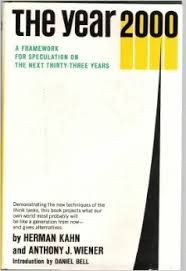
    In 1967, I read a book by Herman Kahn of the Rand Corporation called The Year 2000. It had a lot of impact on my thinking.  I had been a student of history since I was eight years old and introduced to the History of the World by by H.G. Wells.  After reading Kahn’s book, I realized that it might also be possible to write the history of the future.

    Kahn, was right about a lot of things.  But wrong about one thing in particular.  He thought that the use of nuclear energy would create an abundance of cheap energy which would impact all sectors of life including the production of food.  He could not predict that 12 years later, the accident at Three Mile Island would change the direction of energy production away from nuclear,  and that our reliance on fossil fuel would see continuous rising costs of energy. Both of which would have a very negative impact on economic development.  I have included some of Kahn’s predication at the end of this post.

    Beatles

    Stepping back to 1964

    In thinking about the next fifty years, I found myself thinking back to 1964 when I was just 19 years old.  I wondered what I would I have predicted back then about technology in the years 2014.  Frankly, I don’t think I could imagine 2014 even happening.  I would have had difficulty with the year 2000 and the fact that I would be 55 years old then.

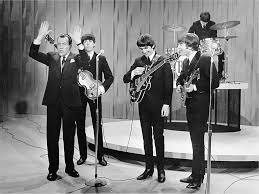
    In 1964, my life revolved around the girl I loved, the war I hated, the injustice I hated, the music I loved and some occasional recreational drugs. It was the year that the Beatles came to America. But it was also the year that IBM announced the legionary IBM/360 main frame computer. Gas cost 30 cents a gallon and the average new car would set you back $3,500. That year the Dow Jones closed at 874.

    So lets imagine that I understood technology and wanted to make predictions. What would have been the factors that would have affected my thinking? By the way, only two years later, in 1966, I began to actually work with computer technology.

    I have been thinking of writing a book or teaching a course called The Future History of Technology, an Historical Perspective of the Future. So lets think about what a young Avram Miller would have known and thought about technology in 1964.

    transitorTechnology I was aware of:

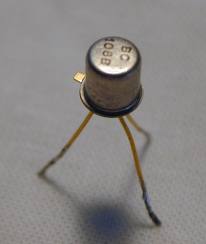
    I would have been aware of the transistor, and certainly had a transistor radio, and perhaps would have known about the first work that was being done in semiconductor technology.  I may have read the article in which Gordon Moore, the co-founder of Intel, introduced Moore’s law,  but I don’t know if I would have been able to comprehend what that law really meant.

    Time Sharing would have played a big role in my thinking.  In 1964, the airline reservation system was introduced.  Now, there were reservation agents that spent their entire work day using computers.

    I would definitely have been aware of the picture phone which AT&T had been demonstrating publicly.  I would have probably thought that picture phone would be the way many if not most people communicated remotely within a decade.

    Technology I may have been aware of:

    Perhaps, I would have known about citizen band radio but probably would not have extrapolated that to the cellphone.  By the way, 1964 was the first year that  touch tone telephones were introduced at that time they only had ten keys.  The # and * would be added later. I may have heard about the first handheld electronic calculators but I doubt that I could have extrapolated those to today’s mobile devices.

    I could have known about Digital Equipments first computer, the PDP-1 and may have perhaps seen its graphic display and played one of the first computer games, Spacewars on it.

    mouseTechnology I might not have been aware of:

    While I would have been aware of Cobol and Fortran as programing languages I doubt that I would not have known that Basic was being developed at Dartmouth.

    While the the precursors of computer networking were being developed around this time. I don’t think I would have been aware of it.

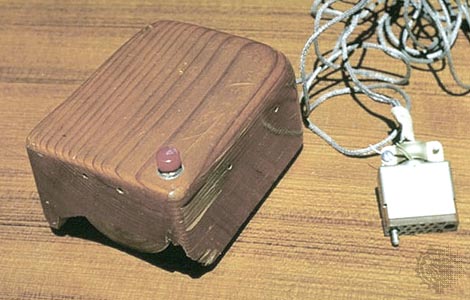
    I don’t think I would have been aware of the development of the first mouse at SRI in 1964 but I did get to pay with one in 1967.

    I would not have been aware of the early developments in fiber optic communication.

    Avram rises to the challenge

    To be honest, I think that if I was asked to predict the future of technology in 2014 back in 1964, I would have talked about Robots, self driving cars, and picture phones.

    The pace of technology development is increasing.  Looking back at the last 50 years, I have to say that I doubt that I can predict the next 50 years but I am willing to give it a go since I will probably not be around to see how badly I did.    So look for my next blog post, Technology in 2064.

    Appendix

    Evolution of Key Technologies

    I have listed some of the key technologies of 1964 and what I think they evolved into

    Transistor                        SemiConductors (including CPU, GPU, Flash)

    Time Sharing                  Distributed Computing/Cloud

    Modems/Fax Machine   Broadband, ethernet

    Microwave                      Wifi, 5g

    Basic                               HTML/Java Script

    First Mouse                      Touch Screens

    Computer CRTs              Flat Panels

    Handheld Calculator       Mobile Computing Devices

    Coax Cable                      Fiber Optics

    Passwords                        Encryption/bio metrics

    AI/Robots                          AI/Robots


    Some Prediction from The Year 2000  By Herman Kahn and Anthony Wiener

    In 1967, Herman Kahn and Anthony J. Wiener published The Year 2000: A Framework for Speculation on the Next Thirty-Three Years, which included contributions from staff members of the Hudson Institute and an introduction by Daniel Bell. Table XVIII in the document[5] contains a list called “One Hundred Technical Innovations Very Likely in the Last Third of the Twentieth Century”. The first ten predictions were:

    Here are the  first ten

    1.   Multiple applications of lasers.

    2.   Extreme high-strength structural materials.

    3.   New or improved super-performance fabrics.

    4.   New or improved materials for equipment and appliances.

    5.   New airborne vehicles (ground-effect vehicles, giant or supersonic jets, VTOL, STOL).

    6.   Extensive commercial applications of shaped-charge explosives.

    7.   More reliable and longer-range weather forecasting.

    8.   Extensive and/or intensive expansion of tropical agriculture and forestry.

    9.   New sources of power for fixed installations.

    10. New sources of power for ground transportation.

    The remaining ninety predictions included:

    26.  Widespread use of nuclear reactors for power.

    38.  New techniques for cheap and reliable birth control.

    41.  Improved capability to change sex of children and/or adults.

    57.  Automated universal (real-time) credit, audit and banking systems.

    67.  Commercial extraction of oil from shale.

    74.  Pervasive business use of computers.

    81.  Personal pagers (perhaps even pocket phones).

    84.  Home computers to “run” households and communicate with the outside world.

    Arthur C. Clark 1964 on the future in 2014


  • The First Bank of Apple or the end of the Credit Card as we know it.

    I reported qui about what I think are some of Amazons plans to continue to dominate the online market space. Of the four online giants that I follow, Google, Apple, Facebook and Amazon, my money is on Amazon for the long term.  But I only follow Facebook just to figure out the timing for their melt down. I continue to think that Amazon’s strategy is not fully appreciated but in this post, I am going to speculate about another company, Apple, and its strategy for dominating the physical world of retail.


    fingerprint

    The Story begins with the iPhone 5s

    Ever since the iPhone 5s came out, I have been wanting to post about the strategic significance of a number of its features.  In this post I will cover how it is a significant harbinger of Apple’s strategy to dominate retail transactions.


    Apple wants to be the dominate platform for transaction performed in the physical world of retail just as Amazon wants to dominate the online world of retail.  Google has a “do everything” strategy similar to Microsoft in the 90s which we Intel Executives use to refer to as the “Mile wide and inch deep” strategy.


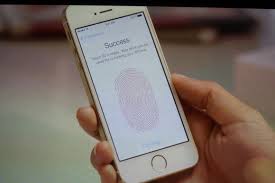
    While the iPhone 5s fingerprint scanner is a work in progress, I am convinced that we will be using fingerprints as a  secure way to conduct transactions.That is why the introduction of the fingerprint reader in the iPhone 5s is so very important.  As one who has lost their credit card in an airport only to find out that a few thousand dollars of transactions were made in a just few hours, I can really appreciate the day when, instead of carrying a credit card in my wallet,  I can use my finger.


    Low power Bluetooth 4.0 is very important in respect capabilities such as iBeacon which I will cover a bit later.  This is not a new capability but I wanted to mention it here since it is very relevant to my point of view regarding Apple’s strategy.


    Some have thought that the introduction of a 64 bit processor in a phone was just a marketing ploy.  I don’t think so.  I think there are couple of reasons why Apple went in this direction.  The first is that this will allow them to upgrade the iPhone 5s with a new OS that will be available on future Apple Devices and the Mac desktop and notebook computers. The second is they will need the computing power to provide for a number of in store capabilities yet to be demonstrated.

    ibeaconiBeacon


    iBeacons are small devices that can be spread around a physical environment such as a retail store or even a mall.  They use Bluetooth 4.0.  The protocols allow for a device such as an iPhone to establish communication without the use of Wifi or cellular capabilities.  Apple has already started using this in their own stores.  It will be possible to locate the device which means that directions can be given.  Now I am not talking about how to get to the grocery store.  I am  talking about how to find the milk in that store.  Offers can be made to consumers as they walk into stores or around stores.  And it will be possible to pay for items by scanning the products’ bar code.


    diners


    The evolution of Credit Cards


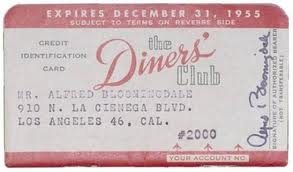
    The history of the credit card is very interesting.  It started in the 1920s by companies like Standard Oil who issued credit cards to allow drivers to purchase gas.  Diner’s card was the first general card. American Express came along l ater.  Then it was Visa and Master Card that really drove the mass adoption in the USA.  The use of credit cards came later in Europe and Asia but are not routinely used.  Most credit cards outside the USA are “smart card”, with embedded chips to provide more security.  ATM cards came a long which do not provide the credit feature since they draw money directly from a consumers account but they do have the convenience of credit cards as well as the security attributes. The use of ATM cards do not cost the retailer anything. They pay no fee and they get the benefit of having the money deposited into their accounts immediately.  Credit cards pay the retailer almost right way but since they charge a fee, it is almost as if they are lending the retailer money.  The bank makes money by using the float.  After all, I will have to have the cash just sitting my my account if it is going to be available for use by my ATM card.  On the other hand, the credit card company provides me with a float meaning that I am not charged for up to 30 days for the use of their money.  The average is 15 days. But then they are hoping their customers will not pay off the balance so they can charge them 18% or so a year on their unpaid balances.  To complicate matters further, the notion of getting loyalty points, like airline millage, is also now linked to credit cards.


    Now many people have a number of cards in their wallets.   I have five myself and I never use the credit feature.  For me it is all about the convenience of not having to carry cash, the tracking of my purchases. and to a lesser extent, the ability to dispute charges.


    Remember coupons?  I am sure some of you still use them.  I bet most of you can not remember or ever knew about “stamps”.  I think the use of coupons in the physical world is diminishing but I am not sure about that.  But the use of virtual coupons has just started.


    As we can see, the world of retail transactions has gotten very complex and this creates a major opportunity for guess who?


    One Stop Payment the Apple Way


    iTunes has made Apple one of the largest processors of transactions globally.  Right now, iTunes uses a credit card that you supply to Apple. For every Apple ID there can be just one credit card. But I would much rather just use my phone. I could decide on what “card” to use and have the security of my finger print (which I think works very well on the iPhone).


    About 2/3 of Americans carry iPhones.  I would guess this represents over 90% of buying power in retail.  No company is in a better position to make the phone the new payment device.


    This capability can of course go beyond just retail stores.  For instance, I am also looking forward to the day I can have my restaurant bill presented to my phone and paid with my finger print instead of waiting and waiting for for the bill to come.


    Recently, I was in NYC and discovered that I could pay for most taxi rides using an app that communicated with the Taxi’s meter system.  Finally, I have receipts for my taxi rides!


    Recently, I was in NYC and discovered that I could pay for most taxi rides using an app that communicated with the Taxi’s meter system.  Finally, I have receipts for my taxi rides!


    Apples’ real objective?


    I am not  quite sure what Apple’s real objective is but I can see at least four possible ones


    • They could make money from every transaction.  It would require a lot of heavy lifting byut Amazon for instance already has a credit card.
    • Collecting information about our buying habits and selling that to business
    • Making the iPhone even more indispensable to consumers.
    • Introducing Apple Points just as I expect Amazon to do


    Che ne pensate?


  • Stop waiting to be hacked and take action now.

    A while ago, I was hacked.  I discussed what happened and my recommendation on a blog post on my blog.  I strongly suggest you read it.  I was very much reminded of the issues when the Adobe web site was hacked. I determined that my information was part of the info that was taken.

    I have copied over an article from the New York Times to make sure you read it.  It explains how even sites from companies like Adobe can be hacked not to mention all those sites you signed up for that you no longer remember.


    NOVEMBER 12, 2013, 6:33 PM  New York Times

    Adobe Breach Inadvertently Tied to Other Accounts

    By NICK BILTON

    This week, Ammon Bartram, a software engineer and co-founder of SocialCam, was talking to a friend about a recent security breach at Adobe in which hackers were able to gain access to tens of millions of encrypted passwords and email addresses.

    The friend, Mr. Bartram said, did not think anyone would be able to find out his pass code from the stolen data. ”I’ll bet you $10 you can’t figure it out,” the friend said confidently.

    Mr. Bartram went to a file-sharing website, downloaded a nearly 9-gigabyte file the Adobe hackers had posted online that is said to contain 150 million emails and encrypted passwords for Adobe user accounts, and began searching.

    Soon after, Mr. Bartram said in a phone interview, he informed his friend: “Your password is ‘dinosaur.’”

    While he took glee in winning the $10 bet, Mr. Bartram was shocked by what he found during his search.

    “I’ve been able to break roughly one out of every six passwords I attack. That’s something like 25 million broken passwords, with associated emails,” he said. “This is a big deal. Due to password reuse, these passwords will give access to all sorts of accounts.”

    While Adobe “hashed” its passwords — which involves mashing up users’ passwords with a mathematical algorithm — the company did not apply this level of security to people’s e-mail addresses or the hints they use when they forget their passwords.

    So Mr. Bartram was able to search for his friend’s email address, then copy the “hashed” version of the password and search for other people who used that same string of letters and numbers. He found 500 people with the same password as his friend, and then searched the nonencrypted hints that people had written if they forgot their password on the Adobe website.

    Adobe did not respond to a request for comment.

    Even more disturbing, he said, was the number of people who used the same password for their bank accounts, email, Facebook and home garage door codes as a password on the Adobe website. Some even used their Social Security numbers as passwords.

    In tens of thousands of instances people write a hint to themselves that says “same as my Facebook password” or “same as my bank password.”

    Mr. Bartram said this could all have been much more difficult if Adobe had “salted” the data it stored on its users, meaning it would have appended random digits to the end of each hashed password to make it harder, but not impossible, for hackers to crack.

    Brian Krebs, an investigative reporter and security researcher with Krebs on Security who initially discovered the Adobe breach last month, said in a phone interview that Adobe did not put enough effort into securing its users’ information.

    “This is a perennial problem for most organizations, even the largest ones, which should know better, but they are still relying on approaches from a long time ago to protect people’s passwords,” Mr. Krebs said.

    And while Adobe appears not to have done well in protecting data, the problem is compounded by users who write password hints that tie back to their banks, home addresses and Social Security numbers.

    “The best advice is for people not to recycle the same password in multiple places,” Mr. Krebs said. “It’s prohibitively complex for hackers to crack passwords that are over 13 characters long; people have to think pass phrases instead of passwords”


    Mr. Bartram said he found a number of email addresses tied to government institutions, including senate.gov. “All of this happened because Adobe did not follow best practices for password storage,” he