Due terzi compiuti

Pensieri e esperienze di un’anatra selvaggia di ottanta e un anni.

Avram Miller by the sea
EN | IT

587 post pubblicati dal 2006

Tag: business

  • La mia recente intervista a un giornalista italiano 

    L’INTERVISTA

    Avram Miller: “Da Intel Capital all’AI, la mia vita da agente del cambiamento”

    I had the pleasure of being interview recently by Luciana Maci of EconomyUP which is an Italian digital media outlet focused on innovation, startups, technology, and the transformation of business and society.

    The actual article in Italian can be found qui.  

    When I said “pleasure” I really mean it.  I felt that Luciana actual got me in the way most business journalist do not.  This is what she so generously wrote on LinkedIn. 

    I am grateful for my work (which is also a bit of my passion) because sometimes it leads me to meet extraordinary people. It happened with Avram Miller, known in the world of large companies because, in the late 1980s, he gave life to the corporate venture capital of Intel Corporation. Said that way, it seems like something for insiders, but, believe me, Miller is much, much more: an American Jew who experienced firsthand the period of counterculture, met Janis Joplin and corresponded with Allen Ginsberg, never graduated but taught at a university. And again: a businessman, an investor, a scientist, a technology enthusiast. And again: a jazz pianist (this would have been enough to win all my esteem).

    Miller now lives in Lecce, he is 80 years old and yet he has the intellect, the enthusiasm and the desire to act like he is still a boy, so much so that he has a project to counter the demographic winter with the Italian Institute of Technology.

    What else to say? Read the interview, if you want, it’s my Christmas present for all those who have the kindness to follow me. Avram gave me the gift by giving me this interview.

    Avram Miller: “From Intel Capital to AI, My Life as a Change Agent”

    Interview by Luciana Maci – EconomyUp

    Complete verbatim English translation of the Italian article

    (altro…)
  • Driving the Creation of Residential Broadband

    I am resending this because there was an issue in the link to the chapter in my book about broadband. Sorry about this.

    Driving the creation of residential broadband was unquestionably the highlight of my career. Many others played important roles: developing the technology (Broadcom, 3Com), creating cable and DSL modems (General Instrument, LANcity, Texas Instruments), providing broadband services (@Home, Covad), enabling streaming media (Launch Media, Broadcast.com), interactive services (AOL, Yahoo), browsers (Netscape, Microsoft), and, of course, the cable and telephone companies that became broadband service providers (Comcast, Bell Atlantic).

    It Began with a Phone Call

    It all started with a phone call in 1992 between Bill Gates and Andy Grove. Les Vadasz and I had recently started what became Intel Capital, and I had decided to make the home computer market a key focus. Grove thought I was foolish for wanting to do this. He said the market for home computers would never be significant. But he also told me that if I wanted to waste my time on it, it was my choice.

    Then one day, Gates called Grove and said Microsoft wanted to work on the home computer market. Since no one at Intel seemed interested, Gates suggested he might work with AMD, Intel’s primary competitor. Of course, Bill said this to get Andy’s attention, knowing he wouldn’t want Microsoft partnering with AMD. Grove quickly responded that Intel was indeed interested in the home market—“after all, one of his vice presidents, Avram Miller, was devoting himself to it.”

    Bill, whom I had first met a decade earlier during my time at Digital Equipment, replied, “Great! Have Avram come up to Redmond and meet with Rob Glaser, who’s leading our consumer activities.” We started a project to create an interactive set-top box and brought in General Instrument, which at the time was led by Don Rumsfeld. There I met GI’s CTO, Matt Miller (no relation), who later played an important role in creating residential broadband over cable.

    “Bill believed that the top of the TV set (and TVs did have ‘tops’ back then) was the most important real estate in the home.”

    Like many others, he believed interactivity would happen through the television. I did not share that view.

    Grove called me and told me my real job was to keep Microsoft away from AMD. He still thought there was no real home market for personal computers; he only cared about the business market. History would prove otherwise. But for me, this gave the opening I needed.

    (altro…)
  • Driving the Creation of Residential Broadband

    Driving the creation of residential broadband was unquestionably the highlight of my career. Many others played important roles: developing the technology (Broadcom, 3Com), creating cable and DSL modems (General Instrument, LANcity, Texas Instruments), providing broadband services (@Home, Covad), enabling streaming media (Launch Media, Broadcast.com), interactive services (AOL, Yahoo), browsers (Netscape, Microsoft), and, of course, the cable and telephone companies that became broadband service providers (Comcast, Bell Atlantic).

    It Began with a Phone Call

    It all started with a phone call in 1992 between Bill Gates and Andy Grove. Les Vadasz and I had recently started what became Intel Capital, and I had decided to make the home computer market a key focus. Grove thought I was foolish for wanting to do this. He said the market for home computers would never be significant. But he also told me that if I wanted to waste my time on it, it was my choice.

    Then one day, Gates called Grove and said Microsoft wanted to work on the home computer market. Since no one at Intel seemed interested, Gates suggested he might work with AMD, Intel’s primary competitor. Of course, Bill said this to get Andy’s attention, knowing he wouldn’t want Microsoft partnering with AMD. Grove quickly responded that Intel was indeed interested in the home market—“after all, one of his vice presidents, Avram Miller, was devoting himself to it.”

    Bill, whom I had first met a decade earlier during my time at Digital Equipment, replied, “Great! Have Avram come up to Redmond and meet with Rob Glaser, who’s leading our consumer activities.” We started a project to create an interactive set-top box and brought in General Instrument, which at the time was led by Don Rumsfeld. There I met GI’s CTO, Matt Miller (no relation), who later played an important role in creating residential broadband over cable.

    “Bill believed that the top of the TV set (and TVs did have ‘tops’ back then) was the most important real estate in the home.”

    Like many others, he believed interactivity would happen through the television. I did not share that view.

    Grove called me and told me my real job was to keep Microsoft away from AMD. He still thought there was no real home market for personal computers; he only cared about the business market. History would prove otherwise. But for me, this gave the opening I needed.

    (altro…)
  • Founders and Venture Capitalists: Not on the Same Page

    I was the co founder of Intel Capital and Vice President of Business Development at Intel.  I left in 1999 to  advise companies, sit on corporate boards and invest in early stage companies for my own account.  While many considered me as a venture capitalist (for instance I was listed as number eight in the Forbes Midas List in 2003), I never thought of myself that way. At Intel, I saw early stage investing as a tool for achieving strategy.  That is why I referred to myself as an activist strategist.  But in my role at Intel, I worked closely with venture capitalist and as well as with founders.  But I did not identify with either.  I never started a company because I considered that too risky.  While I had many significant opportunities to join venture capital and private equity firms as a partner, I knew I would not feel comfortable in that role.  But all this experience has given me a perspective on the inherent conflict between founders and venture capitalist which I am sharing here.

    Venture capitalists (VCs) and founders are often not aligned—but it’s the VC’s job to convince them that they are.

    VCs pitch themselves as more than just capital. They say things like, “We’re not just money—we’re partners on your journey.” They’ll list all the ways they can help the startup succeed. And indeed, a good venture firm can add significant value.

    But what they won’t do is explain the fundamental conflict: VCs and founders define success differently. For founders, success means building a successful company and creating personal wealth. For venture funds, success means generating returns for the fund and making themselves rich in the process. These are not the same thing.

    In fact, with the unlikely outcome of a major liquidity event, the next best thing that can happen to a founder is an early failure. I’ll explain why.

    How Venture Capitalists Make Money 

    Venture capitalists invest in portfolios—usually 20 to 50 companies per fund. This diversification is key to their success. Founders by contrast, are all-in on one company. That’s where the conflict starts.

    VC returns are driven by what’s known as a power law distribution—just a few companies return the majority of the fund’s profits.

    Here’s a simplified example:

    • Total invested: $20M
    • Total return: $79.1M
    • Fund multiple: ~4x

    VCs earn a 2% annual management fee and a 20% carried interest (the share of profits). Top-tier funds sometimes negotiate even better terms. Most of their focus is on expected return: a weighted average of all outcomes. VCs typically target a 10x return per investment, knowing full well that only one or two companies will achieve it.

    A typical portfolio might look like this:

    • 70% fail (return $0)
    • 20% return $1–3M
    • 7% return $10–40M
    • 3% return $100M+

    From the Founder’s Perspective

    Let’s consider a founder’s odds:

    • 70% chance of failure
    • 20% chance of a small or break-even outcome
    • 10% chance of a meaningful return

    And remember—VCs usually hold preferred stock while founders and employees hold common stock. So even if a company is sold for a modest return, VCs might recover their investment while the team walks away with little or nothing.

    Realistically, founders have about a 1 in 10 shot at a significant payday—and some studies suggest it’s closer to 2%. Even if there is a successful exit, it can take 7–10 years. Many founders work for a decade and end up with little or nothing.

    Not All VC Firms Are Successful

    VC fund returns also follow a power law. Fewer than 20% of VC firms deliver strong returns for their limited partners. That further reduces the odds for founders, depending on which firm they partner with.

    Success among VC firms is not about having more winners, but about having bigger ones. Being backed by a top-tier firm may increase expected value, but it doesn’t improve the founder’s probability of a meaningful payoff.

    Diverging Interests

    Here’s the real divergence: VCs are playing a portfolio game. They’re often willing to increase the risk of failure for a company if doing so raises the fund’s expected return.

    For example:

    Scenario 1:
    • 50% chance of $10M exit
    • 50% chance of failure
    → Expected value: $5M

    Scenario 2:
    • 20% chance of $50M exit
    • 80% chance of failure
    → Expected value: $10M

    The expected value doubles, so the VC favors the riskier path. But the founder may not—because they only get paid if the company survives.

    I recall a startup where two founders each held 25% of the equity. A VC owned 40%, and I held part of the remaining 10%. The company was doing well. I found a buyer willing to pay $160 million. That would have meant $40 million for each founder—not bad for two guys in their twenties.

    But the VC thought the company could be worth $1 billion and persuaded the founders not to sell. I urged them to take the deal and use their proceeds to fund another startup. They declined. The year was 1999. The internet bubble burst shortly after, and the company was wiped out.

    Are Founders Irrational?

    Some founders don’t fully grasp the financial structure of venture capital. Others do, but believe they’ll beat the odds due to their brilliance and vision. It’s not unlike roulette.

    Over my career, I’ve invested in over 20 startups, including a few successful ones like Pluto TV, Oura Ring, and Neutrino. I’ve had five complete failures and five companies still in flux. I’ve never wanted to be a founder myself—but I’m grateful that others are willing to take that leap.

    The nature of venture capital means wealth often flows from founders to investors. It’s not that VCs don’t want success—they do. But they also understand how random outcomes can be. As I often say: luck is the strongest determinant of success, and the greatest mistake is confusing luck with being smart.

    What About Limited Partners?

    Limited Partners (LPs)—the investors in VC funds—are usually institutions like pension funds or insurance companies. Fewer than 20% of LP dollars come from high-net-worth individuals. LPs are aligned with VCs, not with founders.

    I’ve been an LP in several VC funds, sometimes on favorable terms in exchange for guidance—and I’ve done very well.

    And Then There Are Angel Investors

    Angel investors fall into two broad categories:

    1. Professional Angels: Wealthy individuals with early-stage experience and strong networks. They behave like mini-VCs, investing early with high risk and occasional high return. Deep pockets are needed, especially to survive recapitalizations (or ‘cram-downs’).

    2. Friends and Family: Typically lack both capital and diversification. They often suffer the same fate—or worse—than the founder they back.

    Final Thoughts

    The disconnect between founders and venture capitalists is structural, not personal. It’s portfolio math versus personal risk.

    Founders bet everything and mostly end up with nothing. VCs spread their bets and may win big. While They need each other—but don’t be fooled into thinking they’re on the same page.


  • The best ideas can be found in the grave yard of failed dreams

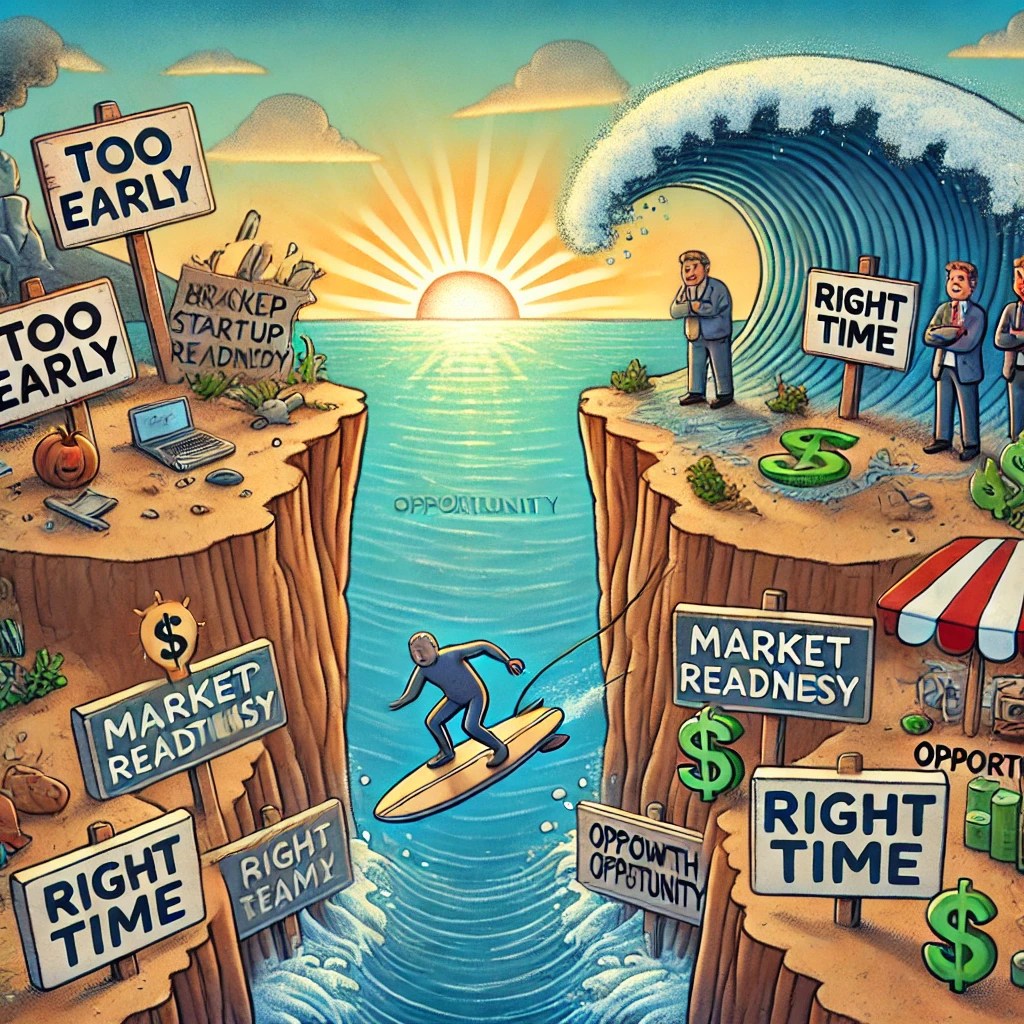
    Timing,  a leading cause of death

    There is a phenomena that I have often observed during my 35 years as an active investor in early stage companies. More than 70% of new companies fail. While there are many reasons, one of the leading causes of death is timing.

    Take the first wave of internet companies in the 1990s. Many had business models that were entirely sound in retrospect had they been done five or ten years later.

    • Webvan (1996–2001) envisioned grocery delivery decades before its time. It raised nearly $400 million and built massive infrastructure—but consumers weren’t ready for online grocery shopping.  Later success: Instacart (founded 2012) and Amazon Fresh (launched 2007) thrived thanks to improved logistics, smartphones, and shifting consumer habits.
    • Pets.com (1998–2000) tried to sell pet food and supplies online, but the economics didn’t work. Shipping 40-pound bags of kibble was a losing proposition without scale and efficiency. Later success: Chewy.com (founded 2011) leveraged better supply chains, customer loyalty, and e-commerce maturity—going public in 2019.
    • GeoCities (1994–1999) gave everyday users tools to build personal websites—organized into “neighborhoods.” It was one of the first platforms for online self-expression, but it was clunky and had no social layer. Yahoo! bought it in 1999 and shut it down a decade later. Later success: Facebook (launched 2004), Tumblr (2007), and Squarespace (2003) offered richer, more intuitive platforms as user behavior and broadband access evolved.
    • CyberCash (1994–2001) provided digital payments for the web—well before people trusted putting their credit card info online. It was solving the right problem, but the market wasn’t there yet.Later success: PayPal (founded 1998, acquired by eBay 2002) nailed the timing—riding the wave of eBay sellers and a growing comfort with online transactions.

    In each case, the core insight was correct. But the companies entered too early, burned through capital and patience, and exited—only to watch others come in later and build billion-dollar businesses on the same premise.

    The right thing done the right way at the right time

    Great ideas don’t guarantee success. The trick is being right at the right time.  I write often about the concept I developed which I call Oyster (opportunity, strategy, executive and reward).  

    But you have identified an excellent opportunity, have a great strategy and wonder team to execute it and still fail because you were to early.  

    Timing is one of the hardest things to predict because it is influenced by so many factors that you can not control or can even predict.

    The winners confuse us

    Luck is the most important ingredient in success. Of course, there are many other factors but without luck you will most likely fail.  One of the areas where luck plays a very important role is in timing.  

    Once I gave a keynote lecture at the Anderson Business School at UCLA.  I knew that the first question I would be asked was “ what do successful business have in common?” And it was the first  question.  My answer was “they are successful” but I should have said “they were lucky.”

    The myth of the first mover advantage 

    It is a common myth that there is a big advantage to being first.  Most companies that go first fail but the luck ones like Netscape,  broadcast.com and  Launch Media are bought by larger companies before that happens. While these business fail but the founders and investors are lucky enough to get a big payday, just ask Mark Cuban.

    I experienced this when I was on the board of YouCast in 1999.   It was similar to Youtube which was founded in 2005 and later bought by Google. YouCast was the brainchild of one of the great early internet visionaries, Dave Wetherell, the CEO of CMGI on whose board I served.  In addition to being too early, it was also hit like so many companies by the dot.com bubble of 2000-2001.  But given the difficulties users had creating videos with camcorder, back then, I do not see, in retrospect, how the company could have succeeded.  Perhaps if the bubble had not happened, YouCast could have lasted long enough to benefit from the advent of camera phones capable of recording video.  But for me YouCast was a great success. I meet my wife at its launch party.

    Failures can delay stating successful companies

    The early failures often color the perception of the opportunity.  The companies that follow the strategy of the early failures can find it difficult to get financing as every one points to the failures as proof that the market does not exist not recognizing the changes in conditions that now enable the opportunity to be sized. 

    So that is why it is useful to look at the early failures and ask the question “why not then and why now?” While you are at it, honestly address the question “Why me”?

    How to wait things out

    Don’t let the sense that you have to move quickly because of  expected competition propel you into the abase.  Be careful ramping up sales and marketing.   Look for adjacent opportunities that may be more mature and allow you to grow albeit slowly into the timing is right.  

    VCs and entrepreneurs are not on the same page

    Be careful not to raise too much money.  Understand that VCs and entrepreneurs have different models.  VCs have a diversified portfolio of companies (twenty or more) and entrepreneurs are concentrated in only one.  This drives VCs to take more risks than make sense for the entrepreneur.  That why I say,” VCs and entrepreneurs are not on the same page but it is the job of the VC to convince the entrpenure that they are.”

    As an investor, especially while at Intel Capital, which I cofounded, I was often too early. While I could recognize the opportunity, I knew it was almost impossible to get the timing right.  However, I was willing to loose the small amounts we invested and keep making bets until we got a winner.  

    What is worse, too early or too late

    It is important to realize that everything will take longer than you think starting with product development.  Somethings you can control but much you do not particularly the rate at which the market will develop.

    I don’t think this is an easy question or one that can be generalized.  But I think if you are going to fail it is better to do this quickly so you can move on.

    Your company is a surf board-Find a Wave

    First you have to go to a beach that has waves because you can’t make a wave.  But be ready for a wave and then pick your timing to intersect it.  You can’t surf without a wave and you can’t make a wave.  

    Get in too early → Get out → Get in too late.

    Establish companies suffer the same problem but not the same consequences.  The technologies driver the company to get into something too early.  Then they stay to long before deciding to pull the plug.  However, they usually start this activity because it had some competitive value.  So once the market takes off, they enter it once again but this time to late. They poor lots of money into the effort try to catch up which they seldom do. They often end up buy one of the successful startups.

    Timing may not be everything but it is close

    Well it is not really everything but getting the timing right is essential.  Most companies that get the timing right are just simply lucky.  Of course they don’t think they are lucky but think they are smart!

    To create a successful company almost everything has to go right:

    Identify an Opportunity

    Develop an excellent strategy

    Execute flawlessly 

      Rewards follow

    All done at the right time!

  • Intel Capital: A Financial Success and a Strategic Failure-A Point of View from the Co-Founder

    When Les Vadasz and I started Intel Capital in 1991 (I had already been doing minority investments since 1988), we had three objectives:

    1. Provide strategic insight that would support the long-term plans of the company
    2. Grow the current business
    3. Realize an adequate financial return

    We believed, correctly, that by working with early-stage companies we could gather important insight into future opportunities and challenges. That part was true, but our inability to use this information to inform Intel’s long term plans meant that little strategic value was actually received.

    We were definitely able to help grow the current business. The example I like to use (probably because I led this activity) was driving the creation of residential broadband, which played an extremely important role in making the personal computer the interactive device in the home.

    We wanted to get a good enough return that we would not be constantly under the eye of the finance people. Instead, we made billions and became one of the most successful venture groups in the world and the leader in corporate venture capital.

    Les and I did not think of ourselves as venture capitalists. We originally called the group Corporate Business Development (CBD). Les Vadasz’s title was Senior Vice President and Director of Corporate Development, while my title was Vice President of Business Development.

    CBD was rebranded as Intel Capital after I left in 1999. I think the focus of Intel Capital really changed when Arvind Sodhani took the helm in 2005. Prior to that, Arvind was Intel’s Treasurer.  While he had a strong background in finance he had no understanding of technology. 

    In the 90s, Les and I  recognized the importance of the Internet, but Intel was stuck in the PC era and would not change. It pretty much missed every major change in the computer industry since.

    One of the lessons I learned from both my time at Digital Equipment Corporation and then Intel is that it is more important what you do in the good days than how you react to the bad days that follow. Thinking that today will last forever is the curse of successful companies.  I fear that Apple is now in the mode.  

    The latest  major change in the computer industry that Intel missed was AI and its relationship to GPUs (graphics processors). In addition, the company, which had been the leader in semiconductor process technology, lost that leadership position.

    I wonder if the old CBD would have seen it coming. I am sure that even if we did, we would have had no impact on the company’s strategy. Andy Grove set into motion a series of increasingly poor choices in CEOs. Not one of them had a strategic bone in their bodies.

    Let’s hope the new guy, Lip-Bu Tan, can figure out what to do to save Intel—if it can be saved.

    In the meantime, Intel is spinning out Intel Capital as an independent entity. Just what the world needs: another venture capital firm.

  • End of Time and Space-A reflection

    Yesterday, I had a wide-ranging interaction with my dear friend, Mark Goldstein. I am not sure how to describe a Zoom call when it is just between friends. It is clearly not a meeting, but perhaps a virtual get-together? I have been checking in online with friends all over the world during these difficult times. We recently moved to Genoa, so all my good friends are remote. I stay in touch via Zoom.

    Back in 2005, ten thought leaders who had been previously interviewed by Fast Company Magazine, including me, were asked to forecast the biggest changes that would affect business in the coming ten years. Later in this post, you will find the list of those interviewed, people like Malcolm Gladwell, and their key points. I had ChatGPT rate the accuracy of their predictions. Five, including me, got five stars, three got four, and two got three stars. Pretty impressive, I would say.

    My prediction was “the end of space and time.” The point I was making was that it would no longer matter where you were or what time it was. I will explain more later, but I am very glad that my prediction proved to be correct, even though it took more than ten years to happen. Now, more than a third of the time of knowledge workers is spent in virtual meetings. Many have become remote workers. I am also sure that more and more families and friends are using video services such as Zoom, Teams, and Meet to interact. For me, 98% of my business meetings are virtual, as well as my communications with friends and family. As someone who is actively working in the field of longevity science, I know that social interaction plays a crucial role, and I believe that maintaining relationships with family and friends over great distances will be very important.

    When I first moved far from my parents in 1965, a long-distance call was $12 for a three-minute call—about $100 adjusted for inflation. I had figured out how to hack the telephone system, so I was able to call my parents whenever I wanted. Now, my wife calls her mom almost every day and speaks for half an hour.

    Mark and I have known each other for about 30 years. He is an entrepreneur who loves creating and marketing products, while I am a former corporate executive, business strategist, and author who is slowly morphing into some combination of a philosopher and an angry old man.

    Mark’s latest startup is surprisingly a toothbrush company, Great Gums, with a revolutionary technology. Frankly, as someone who is very interested in the longevity, I applaud his effort. There is a strong link between oral hygiene and inflammation and dementia.

    Mark is about 20 years younger, and our age difference allows us to share different perspectives about life and work. He told me that one of the benefits of working in early-stage companies is his access to younger people who challenge his thinking and expose him to new ideas. He now interacts with people young enough to be his children, while I interact with people young enough to be my grandchildren. I think this interaction is beneficial to both sides because, with age, comes wisdom (at least for some).

    We had a wide-ranging conversation about what it is like to get old, the world political situation, M’s newest venture, and how the workplace is changing. It was that part of the discussion that brought back memories of the interview I did with Fast Company Magazine 20 years ago.

    In that interview, I predicted a lot of the changes we are now seeing taking place within the workforce. Of course, it all happened slower than I predicted. That seems to always be the case because everything that happens follows an S-curve, but I, like most people, see it as a straight line.

    There were a couple of points that my friend made that I did not anticipate. They related to women in the workforce.

    Twenty years ago, when I was being interviewed, I was not really aware or sensitive to the issue of women in the workforce. M pointed out that women continue to have limited success in the corporate world because it remains largely a man’s world. M discussed the impact of Fractional Work, which spans from Uber drivers to corporate CEOs, and how this affects life/work balance by providing flexibility. My friend further said that there are many talented women who will never take a full-time job even if they work full-time because when you work fractionally, you are actually working for your own company and have more control.

    While I did forecast the advent of fractional work in my interview twenty years ago, I did not think of it in the context that M was describing. Mark k kalso pointed out that women are now dominating marketing because they have higher emotional intelligence than men. That is for sure!

    I take pride in my role in shaping the end of time and space. The ability for the best minds to collaborate without the constraints of geography, time, or language has already transformed business and will continue to have profound implications.

    While I understood its impact on breaking free from industrial-age structures in the workplace, I hadn’t considered how these capabilities would shape our social lives—and, ultimately, our longevity.

    ——————————————————————————————————

    More about the Fast Company Interview

    *THE CORNERSTONE FOR THIS MILLENNIUM is the end of time and space. Most organizations today are run the same way as early-20th-century businesses. Everyone goes to his car, drives to work, has certain hours, has a certain job. It’s all built on the factory model. Moving forward, it really isn’t going to be important where you are in order to do your job.Ideas are being worked on 24 hours a day. Nobody seems surprised anymore if I wake up in the middle of the night and start IM-ing someone in Europe, because the fact is, they don’t even know where I am. And it doesn’t matter.

    Corporations don’t provide security and provide fewer and fewer benefits. People may find new ways to sell their skills.

    Fewer and fewer people will want to be employees of corporations, because corporations don’t have anything to offer.

    I can imagine eBay or the equivalent of eBay being in the business of letting people bid on work all day long. Office buildings may turn into housing, or maybe individuals will rent office space as you would rent a hotel room.

    And those individuals will compete with people from all over the world. This isn’t globalization, because globalization to me feels big. I think it’s the opposite, it’s villagization-making everything smaller and in some sense more intimate. And that’s very powerful. I’m totally capitalistic, but I don’t like large organizations because they tend to want to control. If this reduces the power of corporations and governments to limit what human beings can do, the thing most exciting to me is the potential for everyone to participate.” – Interview  of Avram Miller by Danielle Sacks

    Towards the end of 2005, Fast Company Magazine decided to have an article on the most important business idea for the next ten years. It was the tenth anniversary of that magazine. They asked ten people  (see list below) they had interviewed over the last ten years that question (presumably because they liked what we said in the passed. 

    The interview lasted 40 minutes. And you can see here that it turned itself into less than a page. I thought there were a few other things of value in the interview and asked Fast company for a copy of the raw interview which had been recorded and permission to put it up on my blog which they gave me. So you can listen to the whole thing qui. There first five minutes is pretty much small talk but the rest may be worth your while if you are interested in the basic concep

    ——————————————————————————————————–

    Here are the top ten points I made (please keep in mind this was

    1. The End of Time and Space in Work

    • Traditional office structures are outdated.

    • Technology enables people to work from anywhere, anytime.

    • The concept of commuting, fixed hours, and physical office spaces is becoming obsolete.

    2. The Globalization of Work

    • Companies will hire talent from anywhere in the world rather than relying on local employees.

    • Businesses will become less tied to specific countries and more borderless.

    3. The Rise of the Personal Information Device

    • The PC was the center of technology, but now mobile devices will take over.

    • Future personal devices will be voice-controlled and capable of immersive experiences like projecting images onto the retina.

    4. The Decline of Large Corporations

    • Big businesses will shrink as smaller, more agile companies disrupt industries.

    • Large corporations struggle to adapt, while startups and  decentralized organizations thrive.

    5. The Collapse of the Traditional Employee Model

    • People will no longer want to be full-time employees.

    • Instead, they will sell their skills independently, much like freelancers on platforms like Guru.com or Upwork.

    6. The Transformation of Media and Entertainment

    • Consumers will demand on-demand, personalized content rather than scheduled programming.

    • Traditional media companies will lose control, and content will become globally accessible.

    7. Automated Translation Will Remove Language Barriers

    • Future technology will allow real-time automatic translation.

    • People will be able to speak their native languages while communicating globally.

    8. Governments and Nations Will Lose Power

    • Countries and national governments are becoming less relevant.

    • Businesses and industries will operate beyond national borders with less reliance on government regulations.

    9. The Future of Real Estate

    • The demand for office buildings will shrink as remote work grows.

    • Cities might decentralize, and real estate will need to adapt to new work patterns.

    10. The Rise of Brain Health and Lifelong Learning

    • Cognitive abilities and adaptability will matter more than age.

    • Those who can master new technology and information will succeed, regardless of traditional experience.

    ——————————————————————————————————

    Fast Company Interview: 10 Key Voices on the Future of Business

    1. Malcolm Gladwell-Writer, The New Yorker

    Businesses must engage in social policy discussions beyond just tax cuts and deregulation.

    2. Barbara Ehrenreich-Writer, Author of “Nickel and Dimed”

    Hiring practices favor likability over skills, leading to workplace incompetence.

    3. Avram Miller- CEO, The Avram Miller Company

    The traditional 9-to-5 office model is outdated, and remote, global work will dominate.

    4. Kevin Roberts-Worldwide CEO, Saatchi & Saatchi

    The screen (TV, mobile, digital billboards) will be the dominant medium for business engagement.

    5. Donna Dubinsky-Founder & CEO, Numenta Inc.

    The future of computing lies in intelligent systems that mimic how the human brain learns and predicts.

    6. Esther Dyson-Editor, Release 1.0 (CNet Networks)

    The internet will force transparency and make companies more accountable to consumers.

    7. Tim Brown-President & CEO, IDEO

    Design thinking will expand beyond product design and into business strategy and problem-solving.

    8. John Mackey

    CEO & Co-founder, Whole Foods Market

    Business will be forced to adopt greater transparency and ethical responsibility.

    9. Scott Adams-Cartoonist, Creator of “Dilbert”

    Automation and outsourcing will eliminate most jobs, leaving only creative and sales roles in the U.S.

    10. Alice Waters-Executive Chef & Owner, Chez Panisse

    The future of food must prioritize local, sustainable production over industrial-scale businesses.

    Here are the Ten Interviews

    Starting in 1997,  I was interviewed about five times by Fast Company about five times. My best interview with the,  in my opinion, was done soon after I left Intel in 1999. You can read that one here.

  • Intel recently announced it is spinning out Intel Capital.

    Les Vadasz and I co-founded Intel Capital in 1991. Les had hired me in 1984, and he was the only person I reported to during my 15 years at Intel. He was among the original 12 people who started Intel, appearing as employee #3. Sadly, he is the only one of that group who is still alive. Les and I met a few weeks ago when I was in California visiting friends and family. He was my mentor, partner, and remains my friend.

    Initially, Intel Capital was named Corporate Business Development (CBD). It wasn’t renamed to Intel Capital until after I left in 1999. In fact, I started the precursor to CBD in 1988, reporting to Les. I had a small group focused on minority investments and M&A. At the time, my focus was more on M&A, as I wanted to expand Intel’s business into areas like communications, networking, and graphics.

    After several attempts to acquire networking companies—Cisco was deemed too expensive, and 3Com was “too screwed up,” according to Andy Grove—I came to the conclusion that we couldn’t afford the companies we liked, and we didn’t like the ones we could afford. Watching what happened to the few companies we did acquire also taught me a valuable lesson: Intel’s culture was so strong and insular that it would reject acquisitions like “antibodies attacking a foreign object.” This led me to shift the focus toward early-stage companies.

    By 1991, both Andy Grove (then CEO) and Les concluded there was significant benefit in taking minority investments, not just in early-stage companies but also in more mature ones. Andy asked Les to take overall responsibility for these activities (Les was one of the most senior executives at Intel) and probably added something like, “And keep Avram under control.”

    Les and I worked together to define the role of CBD/Intel Capital. We settled on three major objectives:

    1. Investments that would grow Intel’s current business: A great example was my leadership in developing residential broadband, which played a major role in driving the home computer market for PCs.

    2. Gaining strategic insights to guide Intel’s future business plans: Unfortunately, we had limited success here—not because we didn’t gain insights, but because we couldn’t exert enough influence within Intel to act on them.

    3. Achieving reasonable financial returns: We knew we had to be profitable quickly, or Intel’s “bean counters” would make our lives miserable. On this front, we exceeded all expectations. We made buckets of money. By the time I left, Intel Capital had $9 billion in assets (mostly from gains) and had already taken about $3 billion off the table.

    We didn’t operate like a traditional venture capital group. No one had carry-interest. Compensation was the same as for the best of Intel’s employees: salary, bonuses, and stock options. Les and I were well-compensated, though we could have made more as partners in a VC firm. However, making money wasn’t our primary driver; we believed deeply in Intel. Those who worked for us didn’t fare as well financially, as they didn’t benefit as much from stock options. Still, many learned the trade and eventually moved on, which we were okay with. Recruiting and training excellent people from within Intel was a core part of what we did.

    Over time, Les expanded his team, and I expanded mine. My efforts were recognized when I was named one of Intel’s 33 corporate officers, a milestone I achieved thanks to Les and Andy’s support.

    After Les retired in 2003, Arvind Sodhani, Intel’s former Treasurer, took over Intel Capital. From what I understand, Arvind focused more on returns on investment than on the broader strategic impact of the group. However, I can’t say for sure—I wasn’t there.

    I firmly believe corporate venture capital is a strategic function and shouldn’t be driven primarily by financial returns.

    Intel is going through tough times now, and it’s unclear if the company can survive. This is the result of a series of bad decisions, particularly in the selection of CEOs, starting with Craig Barrett in my opinion. Intel’s board has been one of the worst I’ve ever observed, and this decline started when Andy Grove became chairman.

    Spinning out Intel Capital is likely the right decision given Intel’s current situation. Nevertheless, it makes me sad.