Two Thirds Done

Thoughts and experiences of an eighty one year old Wild Duck.

Avram Miller by the sea
EN | IT

587 posts since 2006

Tag: interactive advertising

  • The First Bank of Amazon or the End of Advertising as we Know it.

    Twenty years ago, I proclaimed that Advertising would be the Killer App of the Internet.  Now I am pronouncing the end of Advertising.  What will replace it as a source of revenue for media companies.  It will be the First Bank of Amazon. Read more!

    Old Farts using today’s technology to speculate about the future of technology

    taplin


    Jonathan Taplin, a long time friend and former early internet entrepreneur, now a professor at USC and director of the Anneberg Center for Innovation was intrigued my recent blog post about advertising.  He asked to discuss it with me.  Below you will find the ideas I shared with him.   So we Skyped.  John Seely Brown, the former director of the Xerox Parc and that company’s Chief Scientist and  currently the Director of the  Deloitte Center for Innovation, joined  the conversation for the first few minutes. He and I served on the board of Maxis together before that company was sold to Electronic Arts and he wanted to say hello.    John Seely Brown is also board member of Amazon. For that reason, I want to be clear that he and I have never discussed Amazon but I do hope he reads this post.

    Taplin is a truly interesting man who started his professional life as the tour manager for Bob Dylan and The Band; produced Martin Scorsese’ first feature film, Mean Streets; acted as an investment advisor to the Bass Brothers; and he founded Intertainer, one of the first video on demand internet sites.  Intel was an early investor.  Taplin ended up Academia.  He is one of the few people I’ve met professionally that has a crazier life story (or maybe not) than me.  His book, Outlaw Blues is well worth reading.

    Outlaw Blues


    Why advertise?

    The primary purpose of advertising is to cause someone to purchase something.  There  is also advertising to get votes for candidates, support a concept, etc.  But most advertising is about selling.  In fact, the world of advertising created the consumer economy that we now experience.  It resulted from a time when there was an over-production of goods. Producers of these products needed to find a way to get consumers to buy things they did not actually need and in some cases, things that are

    Lucky Strikes not actually good for them.  It may not be surprising to realize that the leader in advertising in the 1920s was the Tobacco  Industry.


    Transactional and Brand Advertising

    We can divide advertising into the kind that encourages a consumer to directly take an action that results in a purchase and those that build desire and comfort with a product that will re-enforce a purchase decision at some later time.   I will call the first kind Transactional Advertising and the second kind, Brand Advertising.  My focus in this blog post will be on the first kind.

    Different media (print, radio, TV etc.) are better at one or the other.  Digital Media is particularly suited for Transactional Advertising.  It is far easier to click on a link than to have to call a phone number or drive to a store.  The devastating  effects this has had on traditional media can be witnessed by watching the decline of the Newspaper Industry.

    In 1993, I gave a key note speech at the National Association of Broadcasting in Los Vegas.  During my talk, I declared that the the Killer App for the Internet was Advertising.  The founders of Google were just 20 years old at that time and it would be several more years before the founding of Google.   Now, I am declaring that this phase is over.


    The closer to a purchase the more valuable the Ad

    Obviously, the more an Ad results in a purchase, the more valuable it is.  But it is difficult to know if a specific Ad has that effect.  Digital Media provides the ability to Narrow Cast advertising; that is to target advertising that might be more effective for particular  consumers.  If I know that someone plays golf and is a male, an Ad about golf clubs might be more effective than an Ad  about feminine hygiene products. This makes the Digital Medium superior to traditional linear medium for advertising.   While it might be possible for the traditional cable industry and their content partners to Narrow-Cast advertising, they lack of vision and technical skills has handicapped them in this regard.

    The power of interactive digital media is that an Ad can result in a purchase just a few minutes later.The downside for the site hosting the Ad is that it often results in the consumer leaving their site in order to make the purchase.


    Enough Ads already

    We are saturated in ads. We are exposed to hundreds of Ads per day. Consumers are finding ways to reduce the onslaught of advertising.  In linear media such as TV, we are using DVRs to time shift and skip ads.  We listen to music on sites like  Spotify and are willing to pay a few bucks to avoid ads just as many of us are willing to pay for HBO or Netflix. The pay on demand or subscription model is clearly an alternative to the advertising model.  Sometimes there is a combination which has to be one of the stupid ideas of all time.  Hulu Plus does this, which I find combines the worst of two worlds (Ads and Subscription).

    Web browsers like Chrome and Firefox offer Ad blockers.  I am pretty good at removing the Ad from the sites I visit.  Of course, I understand that these sites have to make money but I am not willing to pay for content with my attention.

    noisy restaurant

    The less effective Ads are, the more Ads are presented.  It is kind of like conversation in a noisy restaurant where everyone keeps talking louder in order to be heard.  I personally avoid these restaurants.


    The Substitute for Transactional Advertising: The First Bank of Amazon

    Sometime in the next five years we will see the collapse of advertising supported media.  Here is how it might play out with respect to the TV industry.


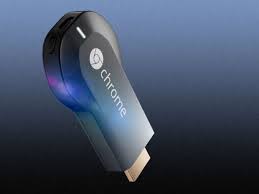
    Chromecast, the Trojan Horse that Will Invade TV Manufacturers

    Google recently created an amazing product, Chromecast  (I don’t think I have ever used the word “amazing product” and Google in the same sentence before).  It is a $35 device that plugs easily into a modern flat panel ChromecastTV via an HDMI port.  It connects to the internet over wifi to the home’s local area network. It is controlled right now by an iPhone or Android product or any computer running Chrome.  There is limited programing but that will change.  Eventually all television programing will move to such devices.  Cable companies will cut the cord with Network programers.  They already make more money from Broadband than they do from TV programing (you can thank me cable industry, for that).  HBO and Showtime and the like, will unbundle their programing from the Cable and Satellite packages (by the way DirecTV and Echostar are totally screwed and I will write about that in the future).
    Netflix with ‘House of Cards’ and ‘Orange is the New Black’ has proven that traditional Hollywood does not have a lock on content.  Google and Amazon are not far behind.  Eventually, individual shows like Mad Man will go ala-cart.

    Google will establish Chromecast as a viable way of getting TV programing. But they are stuck with the idea of traditional advertising.  They will offer their technology to TV manufacturer for no cost and offer to share revenue with them.  This gets the TV manufacturer out of the business of trying to keep up with Internet technology and provides a valuable revenue stream.  Once one or two manufactures go, all the others will be forced to follow.


    Apple Forced to offer a TV

    Apple, is in a bit of a bind.  They do not like to license their technology.  That is why they want to build a TV directly but they have to wait until the content is available.  Consumes will not upgrade their TV’s very quickly so this approach will be very limiting for Apple.

    While Google has an ad centric business model much as do the Network TV companies, Apple will push for “pay per view” and subscription models like they now offer on their current AppleTV product via the iTunes Store.


    Amazon enters and everything changes

    Enter Amazon and the game changes.  Amazon will also have a devices similar to Google’s Chromecast with both an HDMI add-on and embedded technology for TV manufacturers.  TV manufacturers may not have to choose sides but offer Macro Networks from Google, Apple and Amazon.   Amazon’s business model will be different.  There will be no Ads.  Instead, Amazon customers (which is pretty much all of us) will get “points” for buying things on Amazon. These “points” will be deposited in the First Bank of Amazon and  can be used to pay for programing including on line newspapers, social networks etc. Imagine Facebook  or a Facebook competitor without stupid Ads.   As long as you buy enough from Amazon, you can consume media without ads.  Periodically, Amazon will let you know if you need to add to your “account”.

    There will be many ways to do this but one will be the Amazon Shopping Network.  Think of Home Shopping on steroids. It will be an informercial channel which is tailored for the individual.  The informercials will be made and supplied by the companies offering the products.  With today’s technologies even small companies can create compelling video Ads.  Take Kickstarter as an example. Check out this Ad for the Menurkey which was designed by the nine year old son of one of my friends to celebrate the unusual event of having Thanksgiving and Hanukkah on the same day (OMG did I just make an AD?). In addition to knowing the price for every product, there will be an indication of the number of “points”.   And of course, you can always make a direct deposit into the First Bank of Amazon.  Amazon will be paying the content providers something less than you pay them (after all they are a Bank).


     Google and Apple get left in the dust

    Assuming the content is unbundled and available to anyone for distribution at a price, Google and Apple will have a very difficult time duplicating the Amazon strategy.  As I indicated, Amazon Points can be used to purchase content from any medium, even Newspapers like the Washington Post who coincidently just got a new owner. Jeff Bezos.


    First Bank of Amazon is a great investment

    My money is on Amazon (literally.)  Jeff Bezos is one of the few founders of major tech companies left.  He has a vision and the ability to implement his vision an is fortunate to be the King of Transaction.


  • Will the Killer App of the Internet Get Killed

    Sometime around 1993, I gave a keynote speech about the Internet to the National Association of Broadcasters in Las Vegas (where else?).  There I stated that the killer App for the Internet would be Advertising.  I guess I was right.

    The internet has not only been fueled by advertising revenues but it has challenged the very existence of other forms of media that have been dependent on advertising revenues.  Just look at what is happening to the Newspaper Industry.

    I think we are about to go through another transition.  I have some ideas about what this will be.  It will be much more transaction oriented.  Amazon will be a key driver of this phase just as Google was the driver of the current phase,

    In the meantime, enjoy this article from Red Herring which was probably done in about 1994 or so.

    THE FUTURE OF INTERACTIVE ADVERTISING

    The Herring talks to advertising leaders who are adapting to new technologies.

    Metrics When The Herring first considered digging into the interactive advertising world our intuition told us that it was too early in the game to be interesting.

    MARKETS

    Then we read a rather bold comment made by Intel’s vice president for corporate development, Avram Miller: “Advertising is probably going to be the killer app for the information highway.” Given that Mr. Miller had demonstrated the keen vision of being one of The Herring’s first subscribers, his comment was enough to set off a flurry of calls on our part to key advertising executives throughout the country for further inquiry. When the dust cleared, The Herring found four thoughtful and articulate advertising industry veterans who appeared to know what they were talking about: Ted “Bleeding Edge” Leonsis of Redgate Communications, Wunderkind (he’s 32 years old) Mark Kvamme of CKS Partners, Wild Dave Carlick of Poppe Tyson, and interactive marketing pioneer Martin Nisenholtz of Ogilvy & Mather. To add to their credibility, we learned that each of these gentlemen is not only pondering the potential value of interactive marketing services, they are actually selling these services to their top clients today. But as Dave Carlick told us, “We are just beginning to click on to the power of interactive marketing.” When you read on, we think you will agree.

    Ted Leonsis

    CEO, Redgate Communications

    The Herring: Redgate has had a reputation for being on the bleeding edge of multimedia. Now that the dust is beginning to settle, what interactive services are you currently recommending for your clients?

    Leonsis: When we are first hired by a client, we go in and perform a very sophisticated content and new media audit. In other words, we analyze what state the company’s advertising, marketing, and technical content is in; whether it’s on paper or digitized, we look at how it is being delivered, and we look at the customers and influencers the company is trying to reach with their message. We then make very specific recommendations as to how to create very targeted, very interactive, and very accountable ways for our clients to connect with their primary audience. We propose a new database management system, where clients digitize their content and make it ready for delivery over multiple vehicles.

    The Herring: What are those vehicles?

    Leonsis: The hottest area, of course, is online. Now that we are owned by America Online, we are well-positioned in that area. The vehicles include: demand fax; CD-ROM, which adds video, audio, and animation capability; private networks via satellites; and broadband delivery over a cable modem or broadband file. We provide all of those services. And, finally, the RBOC’s broadband trials and interactive television, which we are working on.

    Search the site

    The Herring: Sounds like a bunch of new life forms.

    Leonsis: Exactly. We’ve created a matrix that looks at traditional media versus new media to illustrate this point. Traditional media is broadcast in nature, and new media is highly targeted, personal, and granular. Traditional media is unaccountable, new media is very accountable. Traditional media is one dimensional, you know, “Here’s my ad,” and new media is multi- dimensional because it adds words, pictures, and sounds. And traditional media is one-way, and new media is two-way and interactive. Redgate can put together a new media program that will make your company’s message dance. THE RED HERRING should hire us. (smiles)

    The Herring: Perhaps. (frowns) How do you think new media is going to change the economics of the advertising business?

    Leonsis: When you look at the big picture, advertising agencies are operating under a business model that is ass-backwards and 250 years old. Agencies don’t get paid to make advertisements that sell products. Agencies get paid by the media companies like CBS and Time Warner to run their clients’ advertising on their mediums. The best deal under this model is for an agency to develop a single ad campaign and run it for three years. This is exactly the opposite of what new media allows. New media demands daily updating, tracking responses, real-time dialogue, and placing a value on the content. So there are two things we want to do. We want to work with ad agencies to teach them how to break the code on new media so they can get their clients digitally fit to take advantage of all the emerging new technologies. The other thing we want is a piece of the rock. When we develop interactive shopping environments on Macintoshes and CD-ROMs, for example, we will forgo the production fee in exchange for a share of the income stream generated by the product.

    The Herring: So what capabilities must an advertising agency master in order to be competitive in the 1990s?

    Leonsis: It needs to understand all the different technology weapons, and be able to creatively integrate them in whatever form makes the most sense for its clients. And no matter what combination you use, it has to be highly targeted, interactive, and highly accountable if you want to be competitive.

    The Herring: What was Redgate’s strategy behind its merger with America Online (AOL) other than making you a multi-millionaire?

    Leonsis: AOL’s charter is to digitize content and deliver it over a narrowband medium and provide interactivity and a sense of community between its huge and rapidly growing base of subscribers, now at one million. Redgate’s skill sets are more multimedia and broadband in nature. We really understand consumer behavior, advertising, direct marketing, and transactions. When Steve Case [AOL’s CEO] and I began talking about combining our two capabilities, we saw how we could create a dynamic new medium that combines the traditional online service with interactive advertising and transaction processing. So now we’re in the position to create the next MTV or CBS.

    The Herring: MTV?

    Leonsis: Yes. Essentially we are really no different than MTV. We take other people’s content, we put a look and feel over it with our own navigational software, and we deliver it over other people’s pipes. For instance, Redgate and AOL were the first two of four partners to announce that we will be delivering our wares over cable modem.

    The Herring: In the final analysis, what pipe will the multimedia vendor use to deliver its content?

    Leonsis: The race is whether cable companies will actually provide phone services, or whether phone companies will provide content and cable services. It really doesn’t matter to the network programmer/content developer like

    Redgate. Narrowband, personal computers, and CD-ROM are merely the training wheels for the broadband interactive network. Once the mythical switch is turned on, Redgate will be right there will all our clients. And we will win because we will have had several years behind us of learning about what customers want from their interactive services, how marketing dollars and transactions flow, and what development tools work best.

    Mark Kvamme

    CEO, CKS Partners

    The Herring: Describe some interactive marketing services that have real value today?

    Kvamme: Interactive marketing services?

    The Herring: Or whatever you want to call them. We’ve been grappling for the right buzz word. At least we didn’t call it cyber advertising or something stupid like that.

    Kvamme: Some agencies claim they have gone interactive if they offer an 800 number response service. (laughs)

    The Herring: Yeah, we’ve talked to a few of those folks. But I think you know what we are talking about.

    Kvamme: We provide a wide range of interactive services for our clients. On the low-end, we can produce interactive CD-ROMs which deliver information about a company’s products or services. We refer to CD-ROM as the low-end because its fixed and one-way interaction, that is, there is no way for the user to get more information after they have viewed everything on a given CD. In the online area, we offer two levels of services. The first is where we create an electronic forum for our clients within an existing online service such as American Online or the Internet. Once we create these forums, our clients can then go in and change and update the information the forum offers at any time. The second level of service is where our clients actually have live operators standing by monitoring the online activity and assisting users to navigate to the information they need. This is becoming a very hot area, and represents a point at which I think interactivity starts to become very, very interesting. The next level of interaction we see is similar to what I’ve just described, but instead of working in a text-based or keyboard-based environment, you are actually engaging in peer-to-peer video conferencing.

    The Herring: How long is it going to take before that kind of service is real?

    Kvamme: You can do it today over company networks. We are doing it between our offices, and we will soon be doing peer-to-peer conferencing with our clients. What you need to do is wire every computer in your network with ISDN, so you can send your video images over the network without dragging it down, while still sharing files using Ethernet. Intel, Compression Labs, and PictureTel all have great stuff that can help you achieve this type of network integration.

    The Herring: How about interactive TV?

    Kvamme: We see two levels of interactive marketing services for the TV. One of which we call in-band interactive, where you actually send the interactive signal within the existing broadcast single. Our client, Zing Systems from Englewood Colorado, is actually in this business. Zing’s products allow people to receive signals from their television through the vertical blanking interval, and send information through normal telephone lines through their special modem called the Zing dialer.

    The Herring: We recently visited a Dutch company called HyperCom which

    has developed a software package and TV card which allows you to network computers using CNN’s broadcast signal.

    Kvamme: Cool. The second level is, of course, the information highway stuff, which we refer to as an out-of-band interactive service because you are actually sending information and interacting over a fiber or cable line, or whatever it ends up being. It is my belief that it will probably take five, seven, maybe even ten years before more than twenty percent of the households are hooked up to this kind of network. So, anyway, we have carefully positioned CKS to participate in all these different areas of interactive marketing. (Pause) Is this part of the question?

    The Herring: Sure.

    Kvamme: O.K. To take advantage of all these opportunities, we’ve divided up the company into the three different areas. The first is our traditional advertising and marketing area, where we do all our product packaging and printed collateral. The second area is CKS Interactive, where we produce online interfaces and electric forums for our clients. It’s my belief that in the future much of a company’s brand identification will come across in the way they design their electronic interfaces. And the third area is CKS Pictures, which is set up to create and edit video content very quickly and cost- effectively. [Editor’s Note: CKS Pictures was initiated when the company bought Apple Computer’s television and video production studio in 1993 for an estimated $6 million.]

    The Herring: It seems to us that the advent of content on demand, and cheaper video production, will dramatically change the economics of the television advertising business.

    Kvamme: Absolutely. I strongly believe that much of the content development in the new one hundred-plus channel paradigm will be sponsor driven. For example, our client Ziff-Davis can now afford to create its own informational shows by contracting agencies like CKS. Right now, cable company executives run around giving each other high fives when they reach a 0.8 or maximum 1.0 rating. When we hit one hundred and fifty channels, a programmer will be hustling for a 0.2 rating.

    The Herring: Television programming will then become more highly targeted like the magazine business, and the advertising opportunity will also become more targeted and cheaper as a result.

    Kvamme: Exactly. But at a 0.2 rating, you have to deliver your program much more cheaply. That’s where digital production and editing makes it all possible.

    The Herring: Any final advice for those of us trying to survive the digital information revolution?

    Kvamme: The first thing to remember is that whoever has the information wins. There is so much information out there, you have to put in place the systems that allow you to quickly get to the information you need to make the important decisions. We have our own custom program, built on a 4th Dimension database, that tracks all the information in this company digitally. The second principal is to embrace change, because change is happening faster and faster. At CKS we have to reinvent the company every six months. It’s funny, when I was back at Apple, I always expected change to happen faster than it actually did. As I am getting older, change is happening faster than I thought it would. It’s really weird.

    Dave Carlick

    Senior Vice President, Poppe Tyson

    The Herring: What area of interactive advertising do you think has the most commercial potential?

    Carlick: I find the online service personally the most interesting, and believe it will have the most dramatic impact on the commercial world because it has the potential to become so pervasive. You can just dial up the information you need from anywhere at anytime.

    The Herring: Do you think there exists a sustainable consumer demand, or is there a risk that it will be a passing fad like the CB radio?

    Carlick: The demand for online advertising is overwhelming! And the reason that this demand will remain strong is because online advertising satisfies two economic forces. One force I call instant gratification, and the other force is what I call enlightened self-service, or sales robotics. (Pause) Now you are supposed to say, “So, Dave, what exactly do you mean by the forces of instant gratification and enlightened self-service?”

    The Herring: So, Dave, what exactly do you mean by the forces of instant gratification and enlightened self-service?

    Carlick: Instant gratification is what the consumer wants, and enlightened self-service is what the advertiser wants. In the current advertising paradigm, there is a lag time between when an advertisement generates consumer interest, and the time the consumer gets his information. Even if he responds to an 800 number, he still has to wait until his brochure arrives in the mail. When you shop online, the consumer is provided instant access to the information he wants about the boat, the car, or the stereo he wants to buy. Information on demand! And instant gratification will always win over delayed gratification. So that’s what’s in it for the consumer. What’s in it for the advertiser is that he lowers his cost of sales by making the delivery of information about his products much cheaper and more efficient. It’s like the ATM machine delivering cash. Who would have thought twenty years ago that we would drive up and get cash out of a machine! The same revolution is happening in the gas station. Now you put in your card, pump your gas and drive through a car wash and you’re done. The old paradigm is where a guy comes out, washes your window and, in the process, messes up your car, hands you back your credit card all greasy, and charges extra for full service. Today, the customer does all the work and he’s happier with the deal. All of my clients want to accomplish this with their sales channel. They want to deliver information quickly so the consumer can make his purchasing decision, without the burden of funding an expensive sales force and distribution channel. If an advertiser can satisfy his customers’ impulse for instant gratification through the use of an online service, then it will be a more efficient seller than its competition. This is where we are taking our clients.

    The Herring: But haven’t people really just begun to appreciate the potential of using an online service to promote and sell their products?

    Carlick: You’re right. It reminds me when I started in this industry back in 1977, when I worked for one of the first personal computer software application companies. We made a general ledger system software for CPM computers. We used to dump the software on big eight inch diskettes that really flopped and stuff them into baggies with the manuals, like dope dealers (laughs). It was a hobbyist world. As soon as some real practical applications, such as accounting systems, word processing, and spread sheets came along, I could see how this was how we were going to work, write, and think. But, at the time, if you would have given someone that golden vision, and then sat them down in front of a computer and told them to type an “A” prompt, then type a “dir” to access the directory, and a “pip” to copy a file, they would have thought you were nuts! Seventeen years later you have a very polished, consumer savvy software industry. We are just beginning to click on to the online business.

    The Herring: What kind of creative talent do you need to recruit to set clients

    up with an online service?

    Carlick: This is a terrifying transition for the advertising community to go through. Right now the languages used to bring up an online service are a lot like PostScript. They are C-like, and very difficult to use. It isn’t quite like it is in desktop publishing, where applications such as PageMaker and Quark that allow users to perform very, very complex PostScript commands by just pointing, clicking and moving. As of today, we are contracting out the programming portion of the service. But we have found this to be unsatisfactory. The programming portion of the business is as integral to the creative process as the graphics and the words.

    The Herring: Are there companies that you know of that are creating the Page Makers and Quarks of the online business?

    Carlick: We are watching companies like Mosaic which are developing languages and scripting tools you need in order to be efficient in this area. I think the development of these tools are keeping pace with the demand for the services, so I don’t see the need to get out on the bleeding edge and create our own tools.

    Martin Nisenholtz

    Senior Vice President, Ogilvy & Mather

    The Herring: What would you consider Ogilvy & Mathers’ competitive advantage in the interactive marketing service world?

    Nisenholtz: Well, you may not know this, but we’ve been at this for about eleven years. I joined the firm in 1983 essentially to found a unit to get our clients more involved with interactive technology. This was back in the videotex development days, a movement that eventually failed, but has been reinvented in the form we now refer to as the online service. So our principal advantage is that you can count the number of arrows in our back. More specifically, I believe there are two parts to our competitive advantage story. First, we can either provide work-for-hire services and help our clients work through the interactive equation, all the way from understanding the options to helping them build their interactive distribution channel. Or, in some cases, which are confidential, we can actually develop an equity or joint venture arrangement with a client to build an information product or service with. The second piece, concerns the role we play as consultant and creative developer. As an example, we have worked with AT&T for the last five years for their R&D efforts in the broadband arena.

    The Herring: Ogilvy may have had an “interactive” unit since 1983, but haven’t interactive services just gotten to the point where they can be meaningfully implemented by your clients?

    Nisenholtz: No, I don’t think that’s true. We began creating interactive sales software, for instance, in the mid-1980s. This software could be used by both the company selling the products and their customers. For example, we developed the first interactive software for a financial services institution when we worked with Equitable in 1985. In may have been, in fact, the first interactive software ever produced. I’m not going to categorically state that it was, but it was certainly one of the first. This was a truly interactive tool built for the consumer marketplace.

    The Herring: That might be a little bit of a stretch.

    Nisenholtz: I think what you are referring to, potentially, is two observations that are in fact true. One, there has been a steady broadening of consumer interest in the online service arena. And two, because the whole interactive area has been so over-hyped, clients have become more interested in it. But while the growth path of online services has been very nice to watch, I would

    caution that there are about 4 million online subscribers which represents only about 2% of the households in America.

    The Herring: What do you consider the most valuable interactive marketing tools on the market.

    Nisenholtz: Obviously, direct marketing has always relied on interactive media. The 800 number is a form of interactive media, and so is the postage- paid reply card. Those services are provided by our main agency, and they will always be important. My group works exclusively in the digital arena, and we offer a whole other set of interactive marketing tools. On the narrowband side, we address the PC user needs with CD-ROM and software products, as well as online services on a even narrower basis. But that stuff is pretty mainstream. Outside the mainstream, we played around with the PDA market. But there are not enough users for that area to make sense yet. On the broadband side, we have probably done more work than all agencies combined. Broadband includes interactive television and fast data rate types of services, which include some work using a PC as a hookup.

    The Herring: Is Ogilvy’s international presence an advantage when you are out pitching business against the regional firms?

    Nisenholtz: Absolutely. While CKS and Ted’s group, Redgate, are good companies, they don’t have Ogilvy’s international breadth, or their ability to truly leverage large programmatic, integrated marketing concepts. At least I don’t think so. We are part of a major, major international agency, and most of our clients use that capability to their advantage.

    The Herring: But are their natural downside’s to trying to coordinate your work within a big agency?

    Nisenholtz: Sure. One thing we have on our side is that our interactive group is organically grown within the agency, so that helps because we all trust each other. But, I will tell you, nothing is harder than getting an account person to trust you with a big client, because there is major money involved, when we are trying to put together what appears to be a tiny little interactive project. However, that’s where our organic development clearly works to our advantage. I have more tenure than most of the account representatives working with the big clients. There is no agency out there right now that is comparable to us in the interactive arena. We’ve seen every presentation, and we know what its like to work with almost everyone. And to tell you the truth, we see 99 out of 100 people fail. So we are more discriminating than others. We are just not going to go out there and sign up for the next hyped-up opportunity.

    T