Two Thirds Done

Thoughts and experiences of an eighty one year old Wild Duck.

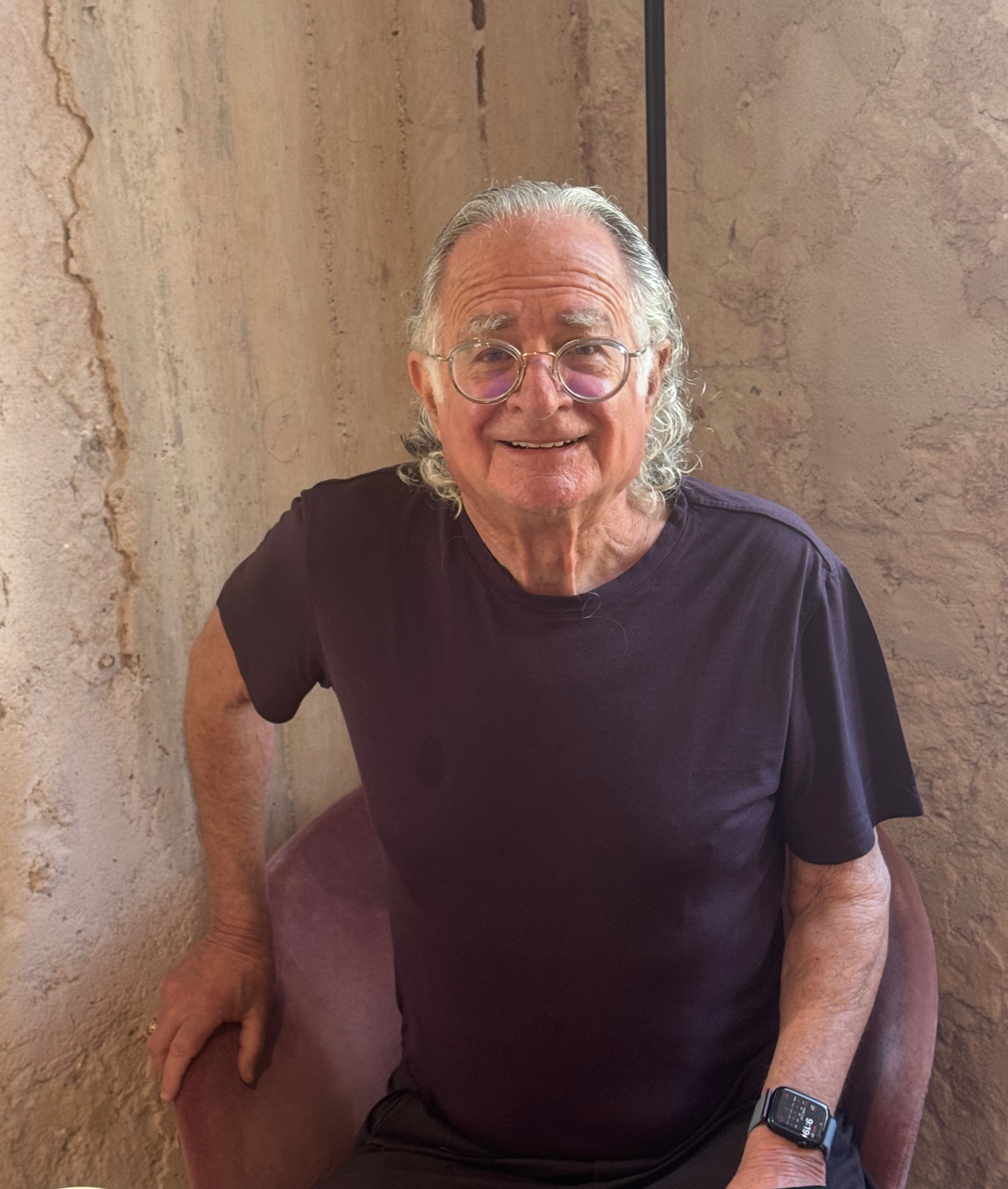
Avram Miller by the sea
EN | IT

587 posts since 2006

Tag: mental-health

  • My First Eighty Years Were About Building the Platform — Now the Adventure Begins

    I write about my eighties not because my life has been exceptional, but because so few people my age write about this time of their life at all. I want to inspire them if I can to embrace the future not fear it.

    Trying to Understand What Defines Me

    A few weeks ago, I created a series of Venn diagrams on my iPad to help me understand what defines me.

    The diagrams weren’t about my career. They weren’t about money or success. They were about curiosity, contribution, gratitude, imagination, learning, relationships, health, and creating things that didn’t exist before.

    As I looked at the overlapping circles, I realized that after more than eighty years I was only beginning to understand the thread that connected my life.

    Perhaps my first eighty years were just about building the platform for what is to come next.

    The Curious Child Is Still Alive

    At 81, I still feel like that little boy who found that everything was interesting.

    For the curious, every unanswered question is an invitation, not a problem. Every new technology promised another adventure. Every book opened, another world. That boy never saw limits, only possibilities. The piano keyboard was always waiting for his fingers. The typewriter wait for his touch.

    That little boy is still running my life. And he wants to run even faster now.

    A Beautifully Complicated Life

    My life today is wonderfully, and sometimes frustratingly, complicated.

    I’m still helping create companies. I’m fascinated by science and consider myself a scientist. Writing is a big part of my creative process; in addition to this blog, I am working on two new books. I play the piano and compose music. Deborah and I have moved to Italy, where I’m learning not only another language but another culture. We’re restoring a three-hundred-year-old palazzo and imagining what a truly intelligent home can be. I am using AI to create a digital twin of a home which was born in 1731.

    At the center of all of it is Deborah. Our relationship is the anchor of my life. I have been blessed by such love.

    (more…)
  • The Decline and Ascension of Avram Miller

    My body is slowing down as my brain speeds up. It is quite a dilemma. It is understandable that my body would be slowing down. After all, I am 81 years old. But why is my brain speeding up? That is not to be expected. Now, I feel like I felt when I was an eight-year-old, reading a book a day as I consumed a library. Then I only had two things to stimulate my mind: books and, most importantly, my imagination. I learned by creating and by doing. I was destined to find my own way because I was incapable of following anyone else’s.

    Now, at this advanced age, I am still driven to learn and to create. Perhaps the advent of AI has set my brain once again on fire. But like my childhood when I was so ill that most of my days were spent in a bathrobe, my body cannot keep up with my brain.

    I have begun to feel tired. Not sleepy tired, but weary. While I am still strong, doing pilates and gym training four days a week, walking miles every day, and doing push-ups and planks at home, the physical energy that sustained me over all these years is dissipating. I am beginning to be at war with myself. My body wants to lie on the sofa passively, but my mind demands that I stand up and go to my computer. I still put in about 10 hours a day of what others might think of as work, but it is the struggle to do this that I am expressing, as well as the concern about how this situation will evolve.

    (more…)
  • Brain Tech 60 years later


    There is a growing interest in coupling technology with the human brain, from devices that monitor brain activity and help relax or stimulate the mind, to the more ambitious goal of creating high‑speed connections between brains and computers.

    This year, CES in Las Vegas made it clear that brain technology is becoming one of the next major frontiers in health tech. Several companies demonstrated devices aimed at measuring, training, and enhancing mental states. CES is a show I used to attend regularly in my years as a corporate vice president at Intel, back when residential broadband was just beginning to reshape the world. Seeing this new wave of brain technology brought back memories .  

    While I helped drive the creation of today’s residential broadband, few people know that I was also a pioneer in EEG biofeedback. In 1966 I joined Professor Joe Kamiya at the University of California, San Francisco. I was twenty‑one, a hippie and jazz pianist with an unusual talent for designing electronics, and I was making ends meet as the night manager of a pizza parlor. Through a friend, Mel, who was a medical resident working with Joe, I was introduced to this scientist who had a radical idea: if people could see and hear their own brainwaves in real time, they could learn to change them.

    Joe believed that with feedback, people could learn to control their own brain states. He was right. Mel told Joe I might be able to build the equipment he needed to test this theory. Joe explained his vision and asked if I could make it work. I told him I didn’t know, but I would try and that if I succeeded, I wanted a job. He agreed.

    For the next two weeks I worked in Joe’s lab during the day and made pizzas at night. In less than a week I completed the first task, and Joe kept his promise and changed my life.  I quit the pizza parlor and joined the lab, first as a technician and later as a research assistant. Joe became my mentor, teacher, and friend. He turned a wandering musician into a scientist. Why he took that chance on me is something I still don’t fully understand.

    The equipment I built would look crude today. Brainwaves are extraordinarily faint electrical signal, only about 10 to 100 microvolts when measured at the scalp, roughly 100,000 times weaker than a AAA battery. We used around twenty electrodes attached to the head, which was messy and uncomfortable, especially with hair. I designed ultra‑low‑noise analog amplifiers using the first generation of operational amplifiers, filtered the signals to isolate different frequencies, and then digitized them with a custom‑built computer i designed and built, all in real time.

    (more…)
  • Would you like to know how long you have to live?

    You’re looking at an 80-year-old man born in 1945, on the day Auschwitz was liberated. Realizing how old I am is often a shock. It’s difficult to come to terms with this. For most of my life, I saw myself as the youngest person in the room—even when that was no longer true. I still feel that way sometimes, though I doubt others see me like that now.

    Less than 4% of the U.S. population is my age or older. Half of those born in 1945 are no longer alive. Less than a third will survive another ten years. Hopefully, I’ll be one of them.

    If you asked someone “Would you like to know how long you have to live?” Some people would say yes; others would prefer not to know. I would very much like to know, because it would surely influence the decisions I make now.

    It’s not just about how long we live—but how well. There’s a vast difference between healthspan (the years we’re healthy) and life-span. (total years lived). Simply knowing how many years remain isn’t enough.

    Life Span and Health Span 

    At 80, the average man has 8–9 years ahead, and the average woman has 10–11. But those are averages. What matters to each of us is not the general number, but how long we personally have—and how long we will remain well during that time. While someone might have eight years remaining, they could be sick for half that time. For instance, about 25% of men and 33% of women will develop dementia. It is not just about living longer.  It is about living better longer.

    The good news is: there’s a lot we can do to extend not just life-span but health-span. Exercise, quality sleep, a healthy diet, weight management, low stress, and strong social connections all make a difference. It also helps to have chosen your parents well—though genetics are estimated to account for only about 25% of longevity outcomes.

    Lifespan in the developed world has increased significantly over the past century, although gains have slowed in recent years (COVID played a role). Life expectancy has risen by about 20% over the last five decades. However, healthy lifespan has increased only about 17%. This widening gap raises real social and economic questions, especially as population growth slows and societies age—leading to an inversion of the population pyramid. I’ll write more about that in another post.

    None of these projections account for potential breakthroughs—especially from disruptive technologies like AI—which could radically change the landscape of aging and disease.

    Those who are middle-aged today may live well into their 100s. Some believe they may become biologically immortal. I don’t think that opportunity applies to me. And then there’s the question: how long would we want to live, and in what kind of world?

    Back to me

    I realize this post may seem self-absorbed. But I want to share my thoughts and feelings. I can’t be alone in this. Many of my friends are my age and surely experience these same reflections.

    If we knew we had 20 healthy years left at 80, what would we do with them? The economic implications—both personal and societal—are worth serious consideration as well. I’m in a better position than most, but I still ask myself these questions.

    When I was diagnosed with prostate cancer in my early 50s—and was told it hade likely metastasized (it hadn’t, though I endured a few scary years)—I decided to live as if I only had ten years left. Now, at 80, I live as if I have just five years ahead. But that’s probably not true.

    Recently, I had my biological age assessed by TruDiagnostic. They estimate I’m 15 years younger biologically than my chronological age. I’m not a full believer in this technology, but with such a large gap, I do feel confident that I’m aging well. I also had my brain MRI analyzed by a remarkable company I advise, BrainKey. And I underwent a CT angiogram—my coronary arteries are clear.

    Where does this leave me and where does it leave you?

    I’m caught between feeling like my life is winding down and believing I might have 20 more years. If I knew how long I had, my choices would probably be different. I am thinking that I should live like I have 20 years more.  Perhaps believing that will play a role in making it true. What about you?

  • Formerly, the Former Avram Miller

    Turning 80

    Turning 80 last month was not easy for me. I used to be the youngest person | in the room. Now I am the oldest. Once, I was a child prodigy. Now I am an elderly man who gets seats offered to him when he rides the metro. 

    Frankly, I am struggling to deal with my age and the issues related to it. It is mostly psychological but not completely.

    In 1999, I left Intel, where I was Vice President of Corporate Business Development and the co-founder of Intel Capital. I am best known for these roles, as well as being a key driver in establishing the residential broadband infrastructure that became so instrumental in creating today’s consumer internet.  I did important work which was valued then; this is now.  We are entering into a period of increased longevity.   The percent of people over the age of 80 in the USA has increased from 2.3% in 1980 to 3.7 in 2020, a more than 60% increase. This increase is expect to continue.  I don’t want to forecast much into the future because we do not know what kind of advances will be made in health care.  But most of us are not prepared for life after 80.  Also, most people that age have health problems that impact there lives.  Less than 25% are still 100% fit.  I fall into that category at least for now.  For most of my life, i was focused on the future including my own future.  Now I need to live in the present.  That is where I am struggling.  If I could just focus on the present without concern about the future.  My present is really very good.  I live well and have an amazing relationship with my wife.   

    My past is disappearing 

    At its height, Intel was one of the top ten companies in the world. That is when I walked out. When I resigned, the market cap of the company was about $250 billion. It would grow to almost $500 billion at its peak a year later. Since I thought that Intel had some room for appreciation, I hedged my stock and sold it right at the peak. In 2003, Forbes placed me in the 8th position on its Midas List of the top venture investors.

    My decision to leave Intel was based on several factors. Not only did I not see a continuing role for myself, but I also had serious concerns about Intel’s future, which sadly proved to be correct. I  no longer wanted to work for a company. I wanted to be on my own. I wanted to see what I could accomplish without Intel at my back. 

    In 1996, I was diagnosed with prostate cancer. It was treated using a new technique called brachytherapy (using radioactive seeds that are implanted directly into the prostate). I chose that method on the advice of Andy Grove, who did the same thing a year before me. Unfortunately, I had a reaction that was later identified as a PSA bounce, a phenomenon not recognized until several years after my treatment. It occurred in younger men (prostate cancer affects men as they age, and a 51-year-old like me was considered a young man). Instead of my PSA (the marker for prostate cancer) going down, it started to go up. It looked like my cancer had metastasized. My doctor said, “Well, at least it’s not going up quickly,” and then, of course, it started going up quickly. It was a very stressful time for me, to say the least.  A number of doctors told me that it had metastasized.  One even said that I probably had 5-10 years to enjoy my life. 

    It was then that I decided I would think about my future assuming that I only had ten years more to live. Prior to the cancer, I had been planning on starting a private equity firm with my friend Dave Roux of Oracle, but that no longer fit into my ten-year “rule.” He went on to found Silver Lake Partners. I became a limited partner.

    I was just 54 years old when I left Intel. With my experience and successful track record at Intel Capital, it would have been natural to start a venture capital firm, but I never actually thought of myself as a venture capitalist. Rather, I thought of myself as an activist strategist, and I wanted to help a few companies develop their strategic plans. Fortunately, I was financially comfortable and did not have to be concerned about adding to my wealth. I served on a number of boards, advised investment banking firms, and invested in early-stage companies for my own account. For instance, I put together much of the first round of Oura Ring. But slowly, I began to lose interest in business. I also realized that much of my standing in the world of technology was associated with Intel and its success. I remember thinking that the half-life of a technology strategist was about a year. The result is less than 1% after ten years.

    It was then that I started to jokingly refer to myself as “The Former Avram Miller.” For the longest time, I could explain that I had been an executive at Intel and founded its very successful venture arm, Intel Capital and people would be impressed.  Now, Intel is seen as a failing company. Intel Capital is a shadow of what it was in my time and is in the process of being spun out as a separate entity with a new name. A big part of my identity has  been eroded.

    From a ten year horizon to a five year horizon

    Fortunately, I am in good physical and mental health. But at my age, how long will this continue? So now I have revised the time horizon for decisions. I make life decisions assuming I have only five years. When I had a horizon of ten years, I felt that I had a lot of time to make things happen, but with five years, I have my doubts.

    I no longer want to be on boards, and it is unlikely that any board would want me at this age. I am happy to advise entrepreneurs, but this results in at most a few hours of engagement a week.

    I am still able to keep up with the key developments in technology. I have returned to my first career, which was in medical science. But I want  to transition to something I can do all by myself. I wrote a memoir called The Flight of a Wild Duck, which was published in 2022. It took three years and was, all in all, a good experience. I am considering writing another book, but perhaps this time it will be a work of fiction. I like the idea of creating something out of nothing. It was what I did when I was programing computer and composing music.

    But right now, I feel lost. Saying this probably makes some people uncomfortable. I guess you are not supposed to say that kind of thing. However, I have always been able to share my feelings, and I think it may be valuable to others who are having some of the same experiences.

    The depressing state of the world

    To make things even more complex, the world situation is creating a great deal of instability and uncertainty, which is also impacting me like so many. We moved out of Israel just before the Oct. 7th war. We traveled for a while before moving to Amsterdam while we thought about where we would want to settle longer term. Eventually, we decided to move to Italy, where we are now living. We are studying Italian. This will be my fourth language. I am hoping I will love it.  I was never able to master my third language, Hebrew.  

    We do not age uniformly

    Health is a consideration. Our bodies do not age uniformly. So while I may look sixty-five to some, I know that my hearing and sight are not sixty-five. I struggle to see my  computer screen as I write this post. I have trouble understanding people in noisy environments. I have arthritis in my hands, which makes it difficult for me to play the piano with the same level of energy as in the past. At some point, I will probably have one or more chronic diseases and have to spend a lot of time dealing with that. This is not something to look forward to.

    When I see people my age whom I have not seen in a while, I am stunned by how they look. The beautiful girl that I met and loved when she was 16 is now a senior citizen.  My oldest son is older than I was when I left Intel. Three of my four grandsons are adults. Every year, a few friends die. Many just disappear. Perhaps they are struggling with some of the same things that confront me now.

    I need some reprograming

    For the first time in my life, I have bouts of depression. If I say anything about this, people start worrying about me because of the suicide that runs in my family. But I think it is better to own up to it. I hope it does not get worse.  

    Still, I am adventurous. We have traveled to twelve countries in the last year. I guess most my age would not just pick up and move to a different country which I have now done three times in the last ten years and each with a different language.  

    Fortunately, I am married to the most amazing woman, Deborah. She is my joy and blessing and more than enough reason to stay alive.