I’ve been thinking about language a lot these days as I study Italian, which will be my fourth language. English is my native tongue, but I have spoken Dutch fluently for most of my life. My third language is Hebrew, though I’m anything but fluent. While English and Dutch are fairly similar, Hebrew feels like it’s from a different planet. Italian shares many common words with English but has some radical differences in syntax. This makes me reflect on how language affects thought.
I also wonder how being deaf affects the thought process. I know there’s a lot of research on this, and clearly, there are effects. Language is deeply internal to the way we think. I believe humans and language evolved together — each shaping the other.
The world is full of different languages. Most people on Earth cannot communicate with each other through language. The largest common language is English, with about 1.5 billion total speakers, but less than 5% speak it natively. In contrast, almost twice as many people speak Mandarin Chinese as their first language.
What would happen if we all spoke the same language? Would the world be a better place because we could understand each other better? Or would we lose some of the richness that comes from the diverse ways different languages shape thought?
It’s rumored that Apple will soon release a translation capability using AirPods and iPhones. The AirPods would translate what they hear, and when you speak, your phone would play back a translation so the other person can understand you.
I already use my iPhone for translating so many things. Apple has made this much easier. I can easily read an email in Italian using its built-in translation tools, and then write a reply in English and convert it back to Italian.
But I believe that actually learning to speak Italian will give me a deeper insight into how Italians think.
Yesterday, I had a wide-ranging interaction with my dear friend, Mark Goldstein. I am not sure how to describe a Zoom call when it is just between friends. It is clearly not a meeting, but perhaps a virtual get-together? I have been checking in online with friends all over the world during these difficult times. We recently moved to Genoa, so all my good friends are remote. I stay in touch via Zoom.
Back in 2005, ten thought leaders who had been previously interviewed by Fast Company Magazine, including me, were asked to forecast the biggest changes that would affect business in the coming ten years. Later in this post, you will find the list of those interviewed, people like Malcolm Gladwell, and their key points. I had ChatGPT rate the accuracy of their predictions. Five, including me, got five stars, three got four, and two got three stars. Pretty impressive, I would say.
My prediction was “the end of space and time.” The point I was making was that it would no longer matter where you were or what time it was. I will explain more later, but I am very glad that my prediction proved to be correct, even though it took more than ten years to happen. Now, more than a third of the time of knowledge workers is spent in virtual meetings. Many have become remote workers. I am also sure that more and more families and friends are using video services such as Zoom, Teams, and Meet to interact. For me, 98% of my business meetings are virtual, as well as my communications with friends and family. As someone who is actively working in the field of longevity science, I know that social interaction plays a crucial role, and I believe that maintaining relationships with family and friends over great distances will be very important.
When I first moved far from my parents in 1965, a long-distance call was $12 for a three-minute call—about $100 adjusted for inflation. I had figured out how to hack the telephone system, so I was able to call my parents whenever I wanted. Now, my wife calls her mom almost every day and speaks for half an hour.
Mark and I have known each other for about 30 years. He is an entrepreneur who loves creating and marketing products, while I am a former corporate executive, business strategist, and author who is slowly morphing into some combination of a philosopher and an angry old man.
Mark’s latest startup is surprisingly a toothbrush company, Great Gums, with a revolutionary technology. Frankly, as someone who is very interested in the longevity, I applaud his effort. There is a strong link between oral hygiene and inflammation and dementia.
Mark is about 20 years younger, and our age difference allows us to share different perspectives about life and work. He told me that one of the benefits of working in early-stage companies is his access to younger people who challenge his thinking and expose him to new ideas. He now interacts with people young enough to be his children, while I interact with people young enough to be my grandchildren. I think this interaction is beneficial to both sides because, with age, comes wisdom (at least for some).
We had a wide-ranging conversation about what it is like to get old, the world political situation, M’s newest venture, and how the workplace is changing. It was that part of the discussion that brought back memories of the interview I did with Fast Company Magazine 20 years ago.
In that interview, I predicted a lot of the changes we are now seeing taking place within the workforce. Of course, it all happened slower than I predicted. That seems to always be the case because everything that happens follows an S-curve, but I, like most people, see it as a straight line.
There were a couple of points that my friend made that I did not anticipate. They related to women in the workforce.
Twenty years ago, when I was being interviewed, I was not really aware or sensitive to the issue of women in the workforce. M pointed out that women continue to have limited success in the corporate world because it remains largely a man’s world. M discussed the impact of Fractional Work, which spans from Uber drivers to corporate CEOs, and how this affects life/work balance by providing flexibility. My friend further said that there are many talented women who will never take a full-time job even if they work full-time because when you work fractionally, you are actually working for your own company and have more control.
While I did forecast the advent of fractional work in my interview twenty years ago, I did not think of it in the context that M was describing. Mark k kalso pointed out that women are now dominating marketing because they have higher emotional intelligence than men. That is for sure!
I take pride in my role in shaping the end of time and space. The ability for the best minds to collaborate without the constraints of geography, time, or language has already transformed business and will continue to have profound implications.
While I understood its impact on breaking free from industrial-age structures in the workplace, I hadn’t considered how these capabilities would shape our social lives—and, ultimately, our longevity.
——————————————————————————————————
More about the Fast Company Interview
*THE CORNERSTONE FOR THIS MILLENNIUM is the end of time and space. Most organizations today are run the same way as early-20th-century businesses. Everyone goes to his car, drives to work, has certain hours, has a certain job. It’s all built on the factory model. Moving forward, it really isn’t going to be important where you are in order to do your job.Ideas are being worked on 24 hours a day. Nobody seems surprised anymore if I wake up in the middle of the night and start IM-ing someone in Europe, because the fact is, they don’t even know where I am. And it doesn’t matter.
Corporations don’t provide security and provide fewer and fewer benefits. People may find new ways to sell their skills.
Fewer and fewer people will want to be employees of corporations, because corporations don’t have anything to offer.
I can imagine eBay or the equivalent of eBay being in the business of letting people bid on work all day long. Office buildings may turn into housing, or maybe individuals will rent office space as you would rent a hotel room.
And those individuals will compete with people from all over the world. This isn’t globalization, because globalization to me feels big. I think it’s the opposite, it’s villagization-making everything smaller and in some sense more intimate. And that’s very powerful. I’m totally capitalistic, but I don’t like large organizations because they tend to want to control. If this reduces the power of corporations and governments to limit what human beings can do, the thing most exciting to me is the potential for everyone to participate.” – Interview of Avram Miller by Danielle Sacks
Towards the end of 2005, Fast Company Magazine decided to have an article on the most important business idea for the next ten years. It was the tenth anniversary of that magazine. They asked ten people (see list below) they had interviewed over the last ten years that question (presumably because they liked what we said in the passed.
The interview lasted 40 minutes. And you can see here that it turned itself into less than a page. I thought there were a few other things of value in the interview and asked Fast company for a copy of the raw interview which had been recorded and permission to put it up on my blog which they gave me. So you can listen to the whole thing here. There first five minutes is pretty much small talk but the rest may be worth your while if you are interested in the basic concep
——————————————————————————————————–
Here are the top ten points I made (please keep in mind this was
1. The End of Time and Space in Work
• Traditional office structures are outdated.
• Technology enables people to work from anywhere, anytime.
• The concept of commuting, fixed hours, and physical office spaces is becoming obsolete.
2. The Globalization of Work
• Companies will hire talent from anywhere in the world rather than relying on local employees.
• Businesses will become less tied to specific countries and more borderless.
3. The Rise of the Personal Information Device
• The PC was the center of technology, but now mobile devices will take over.
• Future personal devices will be voice-controlled and capable of immersive experiences like projecting images onto the retina.
4. The Decline of Large Corporations
• Big businesses will shrink as smaller, more agile companies disrupt industries.
• Large corporations struggle to adapt, while startups and decentralized organizations thrive.
5. The Collapse of the Traditional Employee Model
• People will no longer want to be full-time employees.
• Instead, they will sell their skills independently, much like freelancers on platforms like Guru.com or Upwork.
6. The Transformation of Media and Entertainment
• Consumers will demand on-demand, personalized content rather than scheduled programming.
• Traditional media companies will lose control, and content will become globally accessible.
7. Automated Translation Will Remove Language Barriers
• Future technology will allow real-time automatic translation.
• People will be able to speak their native languages while communicating globally.
8. Governments and Nations Will Lose Power
• Countries and national governments are becoming less relevant.
• Businesses and industries will operate beyond national borders with less reliance on government regulations.
9. The Future of Real Estate
• The demand for office buildings will shrink as remote work grows.
• Cities might decentralize, and real estate will need to adapt to new work patterns.
10. The Rise of Brain Health and Lifelong Learning
• Cognitive abilities and adaptability will matter more than age.
• Those who can master new technology and information will succeed, regardless of traditional experience.
——————————————————————————————————
Fast Company Interview: 10 Key Voices on the Future of Business
1. Malcolm Gladwell-Writer, The New Yorker
Businesses must engage in social policy discussions beyond just tax cuts and deregulation.
2. Barbara Ehrenreich-Writer, Author of “Nickel and Dimed”
Hiring practices favor likability over skills, leading to workplace incompetence.
3. Avram Miller- CEO, The Avram Miller Company
The traditional 9-to-5 office model is outdated, and remote, global work will dominate.
4. Kevin Roberts-Worldwide CEO, Saatchi & Saatchi
The screen (TV, mobile, digital billboards) will be the dominant medium for business engagement.
5. Donna Dubinsky-Founder & CEO, Numenta Inc.
The future of computing lies in intelligent systems that mimic how the human brain learns and predicts.
Starting in 1997, I was interviewed about five times by Fast Company about five times. My best interview with the, in my opinion, was done soon after I left Intel in 1999. You can read that one here.
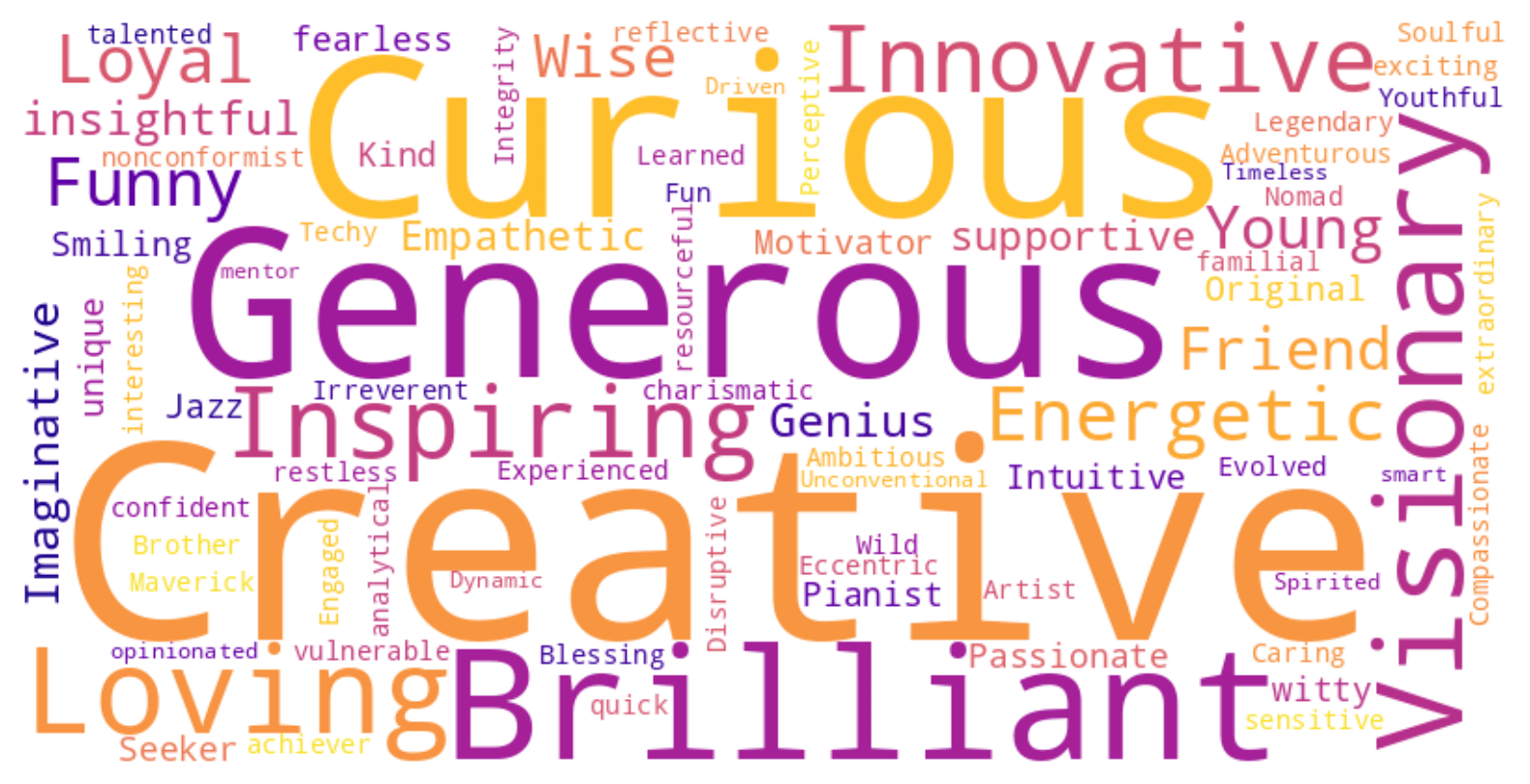
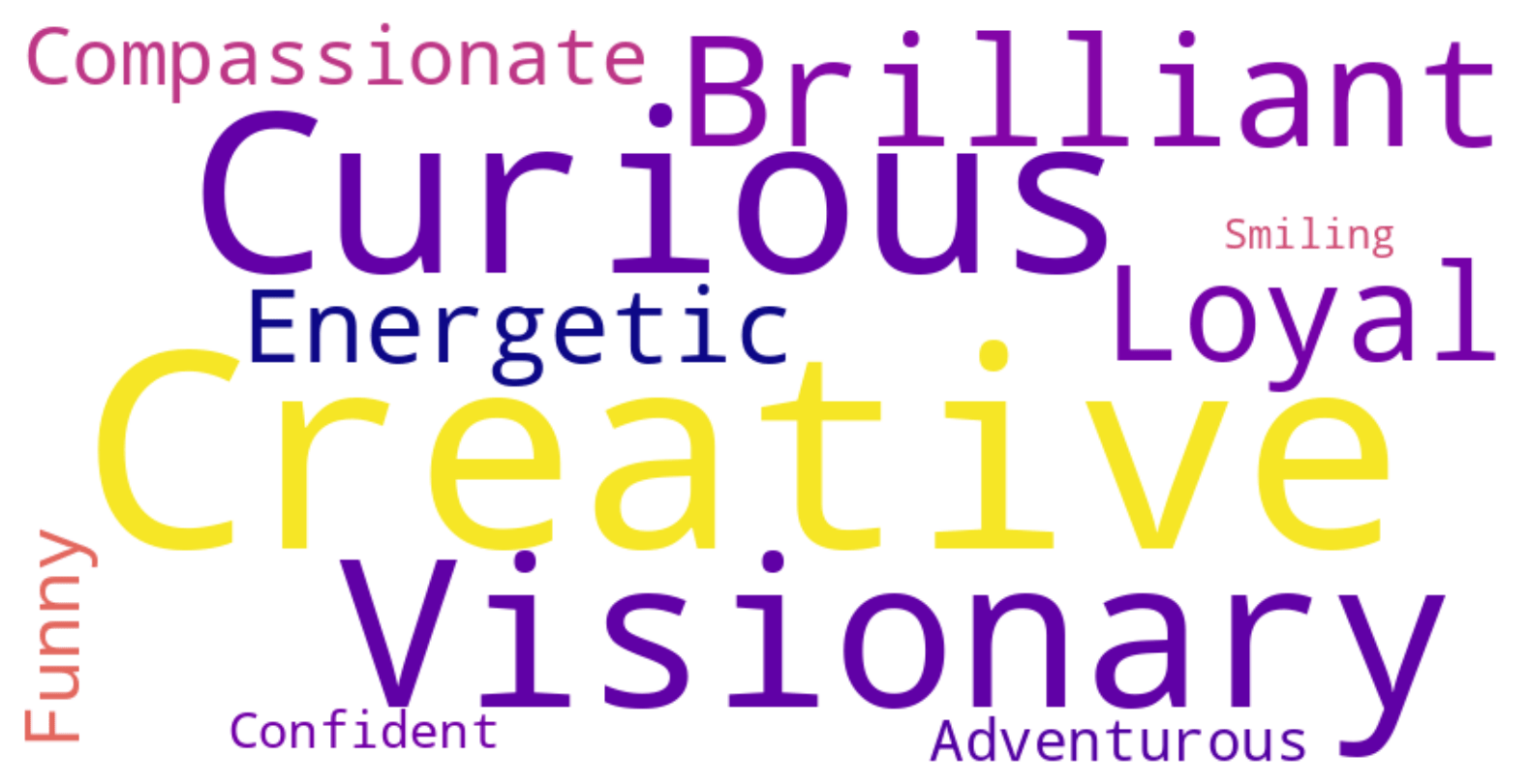
As I turned 80, I became interested in how people saw me. In particular, I wanted to see if there would be a strong commonality among responses (there was) and whether their perceptions would significantly overlap with how I see myself (they did). And yes, I know I am being self absorbed but give me a break. I just turned 80.
I asked about 35 people to describe me in three to five words and received 30 responses. I then created a word cloud using ChatGPT. Since many words were synonyms of others, I asked it to consolidate similar terms to reduce redundancy. You can see the result below.
I also asked ChatGPT how people who knew of me but did not know me personally would describe me. It suggested that those who didn’t know me would likely focus on what I accomplished, while those who did know me would emphasize how I accomplished these things. I found that insight to be quite compelling.
In the 90s Intel Capital invested in Broadcom, initially as part of Intel’s ethernet initiatives. This investment was later augmented in support of our very successful effort to create residential broadband, an effort I was spearheading. Intel became the largest outside shareholder of Broadcom owning about 7%. At the time, I believed that Intel should have acquired both Broadcom and Qualcomm. Unfortunately, I couldn’t gather any support for this move, and frankly, I didn’t push very hard for it. By then, I had come to realize that getting support for expanding beyond the PC was unlikely to succeed. The PC under Grove had become our prison. Intel was indeed inside. We eventually sold our shares in Broadcom and made a great gain but it was almost meaningless compared to Intel’s earnings at the time. Now 7% of Broadcom is about equal to the value of Intel.
Fifty-five years ago, I moved from San Francisco to Rotterdam to join the staff of the Thoraxcenter, which became one of the world’s leading heart centers. It has been 50 years since I was last there. Nico Bruining, the current occupant of my previous position as head of the computer department, kindly invited me to visit. He surprised me by inviting two other former heads to join us. Together, we represented four generations.
The Thoraxcenter had been housed in a separate four-story building. My office was on the third floor, and I looked out at a beautiful park. Now, that building is mostly empty and will be used for other purposes. We toured the facilities, but entering the area where my group was formerly located took was not possible. That was a disappointment. I wanted to be in the computer room, where I had experienced so much joy.
The Thoraxcenter is now integrated into the massive Erasmus University Medical Center. With 1,200 beds and more than a million outpatients treated annually, it is the largest medical facility in the Netherlands. Although the current facility was completed in 2018, its origins go back to 1966, when the Medical Facility of Rotterdam was first established.
I joined the Thoraxcenter in April 1969 at the age of 24 and left in 1974. There I established and led the Department of Clinical and Experimental Information Processing Department, known in Dutch as the Afdeling Klinische en Experimentele Informatieverwerking (AKEI), reporting to Professor Paul Hugenholtz, the Thoraxcenter’s visionary founder. When I left, my title was Hoofd Medische Werker, equivalent to department head.
Those five years at the Thoraxcenter were some of the most impactful years of my life, professionally and personally. I transitioned from an individual contributor to a manager and from a technician to a scientist.
Reflecting on Computers in 1970
I want to reflect on the capabilities of computers in 1970. Even though I have fortunate to have experienced the development of computers for more than half a century, I can barely comprehend the changes that have taken place and can scarcely imagine what is to come.
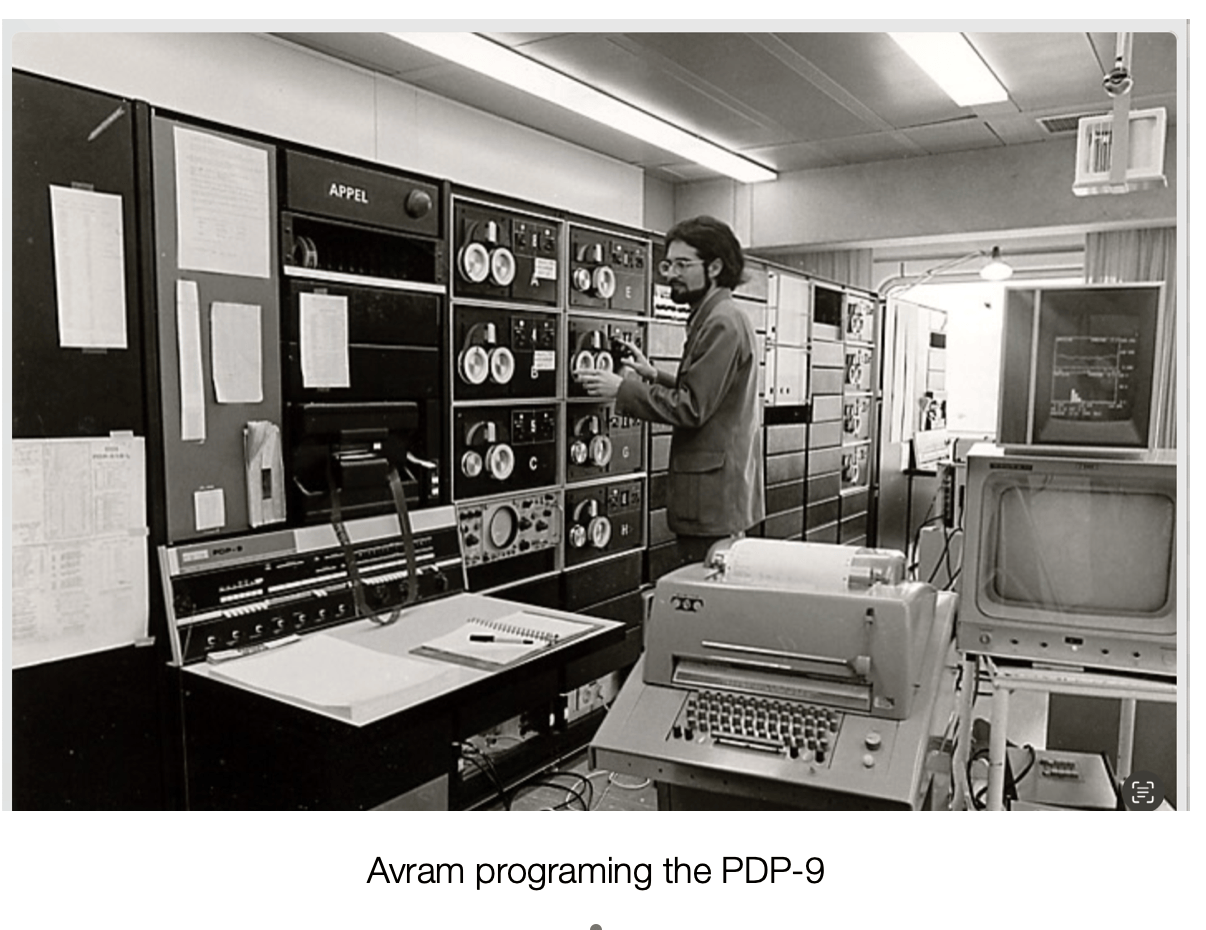
The main computer we used, a PDP-9 manufactured by Digital Equipment Corporation, was called a Minicomputer even though it weighed 350 Kilograms. To give you an idea of its computing capabilities, my electric toothbrush is significantly more powerful than the PDP-9. A single photo on my iPhone is 30 times larger than the PDP-9’s main memory. In fact, the iPhone in my pocket is more powerful than all the computers that existed in the world in 1970.
Meeting with my successors
The four of us reminisced. We discussed the past and the evolution of the Thoraxcenter. We also discussed the many people who were part of the founding team and stayed on. Sadly, many, if not most, have passed on.
I was surprised to learn that no computers are physically located on the premises; all the computers are now off-site and connected by high-speed networks. I also learned that starting in 1993, the Government of the Netherlands began regulating medical devices and computer systems. The Thoraxcenter could no longer use the systems that had been developed there and was forced to transition to transition to commercial systems. When I was there, it was the Wild West of regulations; there were none. We could build systems, and if we thought they worked, we deployed them.
Paul Hugenholtz Vision
Working in Boston, the leading area in the world at that time for computer technology, he began to understand the potential of computers to play a role in medical science and patient care.
Rotterdam was heavily damaged during World War II. The city suffered extensive destruction on May 14, 1940, when the German Luftwaffe bombed it. It still showed signs of damage when I moved there in 1969. The government of the Netherlands decided to make significant investments in the reconstruction (Wederopbouw plan) of Rotterdam. These involved creating a medical school along with a university hospital. It had been decided to start by creating a center of excellence for cardiovascular and pulmonary medicine, which would be named Thoraxcenter. It would become one of the first heart hospitals in Europe. But to make it happen, a visionary leader had to be found. In 1968, Paul Hugenholtz was identified to be this leader.
At first, Paul was not interested in leaving Boston, but starting something with the magnitude of the Thoraxcenter was very appealing. The new center would inherit a four-story building built as a test run for the School of Medicine building, which would be 31 stories high. The Dutch government had allocated many million dollars to develop the Thoraxcenter, which was fantastic. In addition, he got Philips, a leading Dutch conglomerate with a significant medical business, to provide a lot of funding. Under the leadership of Hendrik Casimir, the head of their R&D, Philips would provide the funding that enabled the Thoraxcenter to bring me to the Netherlands.
Paul grasped the potential of computers for patient care. He wanted to develop a computer system to monitor patients in the intensive care unit and use computers for diagnostic purposes, notably to support the catheterization lab. He was early to recognize the importance of Echocardiology and recruited Kaas Bom, a young engineer working with the Dutch Navy on using ultrasound for submarines. Paul realized the importance of biomedical engineering, as he knew his vision would require creating new medical devices.
In 1968, Paul embraced the opportunity to create the Thoraxcenter. His partner was the famous Dutch cardiac surgeon Jan Nauta. Paul needed someone responsible for technology, which initially included medical devices and computers. He recruited a biomedical engineer named Jerry Russel, who was then leading the biomedical department at an academic hospital in San Francisco. Jerry, who had a limited understanding of computer technology, sought people to join him at the Thoraxcenter. One of my friends at the time had worked for him and told Jerry about me. Jerry had already moved to Rotterdam. Both Paul and Jerry contacted me and encouraged me to leave my position at the University of California Medical School, where I worked as a research assistant, to join them in Rotterdam to create the Thoraxcenter. While I was reluctant to leave, the opportunity to build something on the scale of the computer department at the Thoraxcenter was captivating. Moving back to Europe also was a strong draw. I had lived in Paris and London in 1965/66.
A wild duck flies to the Netherlands
Those who read my blog know I have a rather unusual background. I am self-educated (I tested out of high school and never went to University). My book, the Flight of a Wild Duck, covers how I became a technologist, medical scientist, corporate executive, and venture capitalist. I joined Professor Joe Kamiya in 1966. He pioneered brain wave bio-feedback, and I had a deep understanding of hardware and software. I started programming computers in 1967. I had a talent for electronics and, primarily, digital technology, although I could also build analog devices. I was the ultimate full-stack developer who could create digital logic from transistors, resistors, and capacitors, design computer architecture, and do advanced programming.
Avram’s lecture at the Dutch Computer Society 1970
The equipment I developed for bio-feedback of brain waves (the first of its kind) requires real-time analysis. I like to joke that I was the leading expert on real-time physiological signal processing, but it might be true because I may have been the only one doing this then. We see this in devices like the Apple Watch and the Oura Ring. This capability intrigued Paul and Jerry because Paul wanted to develop a real-time patient monitoring system for the intensive care unit.
Towards the end of 1968, I began getting calls from Hugenholtz asking me to move to Rotterdam and join his team. He was charming and persuasive. However, the major attraction for me was the budget for the computer development and the opportunity to build something at scale. I realized there was more money in hearts than brains. Paul would call me early in the morning, waking me up. Eventually, I said yes. Paul was one of the most persuasive people I have ever known. Before joining Professor Kamiya, I was the manager of a pizza restaurant and, before that, a Merchant Seaman. I played jazz piano and was active in civil rights and anti-war movements. These differed from the usual credentials for a technologist and scientist but did not concern them.
Arrival in Rotterdam
I arrived mid-day in Rotterdam, having stopped for a few days in London to see family. The first person I met was Arianne. She was Paul’s assistant, showed me around, and helped me get settled. We fell in love almost immediately. We were engaged three weeks after my arrival and married seven weeks later. Our first child, Adin, was born the following year, and our second son, Asher, would follow a few years later.
Then, I meet Jerry in person for the first time. I had already met Paul in his home in the Boston Suburbs, where his family was still living. I stayed at his house while taking a class at Digital Equipment Corporation and got to know the family.
Promoted
The relationship between Paul and Jerry was not working out. Furthermore, Jerry provided no added value to the computer activities. Soon, Paul put me in charge of the computer department and had me report directly to him. John Laird, a distinguished biomedical engineer from the USA, eventually replaced Jerry.
My department would eventually grow to over twenty people. I was 24 years old and had no managerial experience. Even though he did not understand the work of a computer department, Paul would guide me. While he knew little about computers, he understood people. He gave me confidence and insight into how to be a leader. It was challenging to get time with Paul. He was very busy and always traveling. So if I learned he was driving somewhere to have a meeting, I would show up next to his car and ask if I could ride with him. For instance, if he traveled to Amsterdam, I would get a few hours of his time. It was invaluable.
Putting the team together
Two people were already hired for the computer activities when I arrived: Cees Zeelenberg, who would eventually succeed me, and a man named Bruin, who became the first person I ever fired; I cried when I did that, and Paul told me it would get easier. I am afraid he was right. Cees, on the other hand, was a keeper. He was finishing his engineering degree at Delft University.
My first challenge was putting together the team. I brought Pete Harris over from Langley Porter. Pete was a bit younger than me. We had worked together programming the PDP-7 that the department had acquired. Pete was a very talented programmer and a lot of fun. He stayed at most of a year. I even brought over an assistant from San Francisco. She turned out to be a problem. She had been an ex-marine. One night, I was called by the police to pick her up after she was arrested for a fight in a gay bar. I had to send her back to the USA. Fortunately, I found a new assistant, Maud van Nierop. She was a talented and influential member of my team. Maud stayed at the Thoraxcenter until she retired about ten years ago.
At that time, few computer programmers were available in the Netherlands, so I recruited several from the UK. We were getting hardware support from a group that was part of the Dijkzigt Hospital, which later merged with the Erasmus Medical Center. That is where I met Wim Engelse. He was a technician there. He joined my team and, together with Cees, provided the group’s foundation. I loved working with them. It was an absolute joy. Wim would later join me at Digital Equipment Corp. While he, like me, never went to university, he was recognized for his technical capabilities at Digital. Wim later started a successful company. Cees went on to join TNO, an important research organization in the Netherlands, where he led their bio-medical activities.
The Patient Monitoring System
Jerry made the initial decision on the computer configuration. He decided to use two PDP-9s from Digital Equipment Corp. One was for the patient monitoring system, and the other was for programming and could serve as a backup. When I arrived, they were in the computer room but wrapped in plastic.
For most of those reading this post, it will be hard to imagine a time before personal computers and networks. When I moved to Rotterdam, there were no microprocessors; it would take another two years for that to happen. It would take six more years before Microsoft was formed.
There was only a rudimentary operating system, and we had to program it in assembly language. It was a significant challenge to develop the software. The biggest challenge was getting all the software into such a small memory. Every bit counted.
We created our programs sitting around a big table. First, we would write the instructions on paper. Then, when we got computer time, we could enter the program into the computer using a teletype. The programs would then be stored on a digital tape system. We would often show our programs to each other to see if any things needed to be corrected. Since we only had one computer we could program and there were about five programmers, we had to be very careful. There was a magnetic board that had the times for the computer. Each of us had a marker, and we could reserve time. After a while, I no longer programmed, which I still miss. Writing programs for me was like composing music. Starting with a blank piece of paper and a pencil, I could create something out of nothing.
Display terminals
Display terminals did not exist in general. We used teletype to communicate with the computers, but that did would not work for the nurses in the ICU. So, we used a specialized video disk that could create characters that could be displayed on standard televisions.
We also had to create hardware. For instance, we had to build a console for nurses to access the information the computer system generated. At first, we had no idea how to let the nurses interact with the computer system. Then we decided to use a telephone dial. We had a list of functions, like menus, and a number following every function. The nurse would then dial in the number. A year or so later, we designed a nurse keyboard. I remember looking for keys and deciding the buttons used in elevators would be perfect.
We surveyed the nurses once the system was operational and asked about their favorite functions. I was horrified to learn that the function gave them the time digitally. I thought we had just built the world’s most expensive clock.
Catheterization Lab System
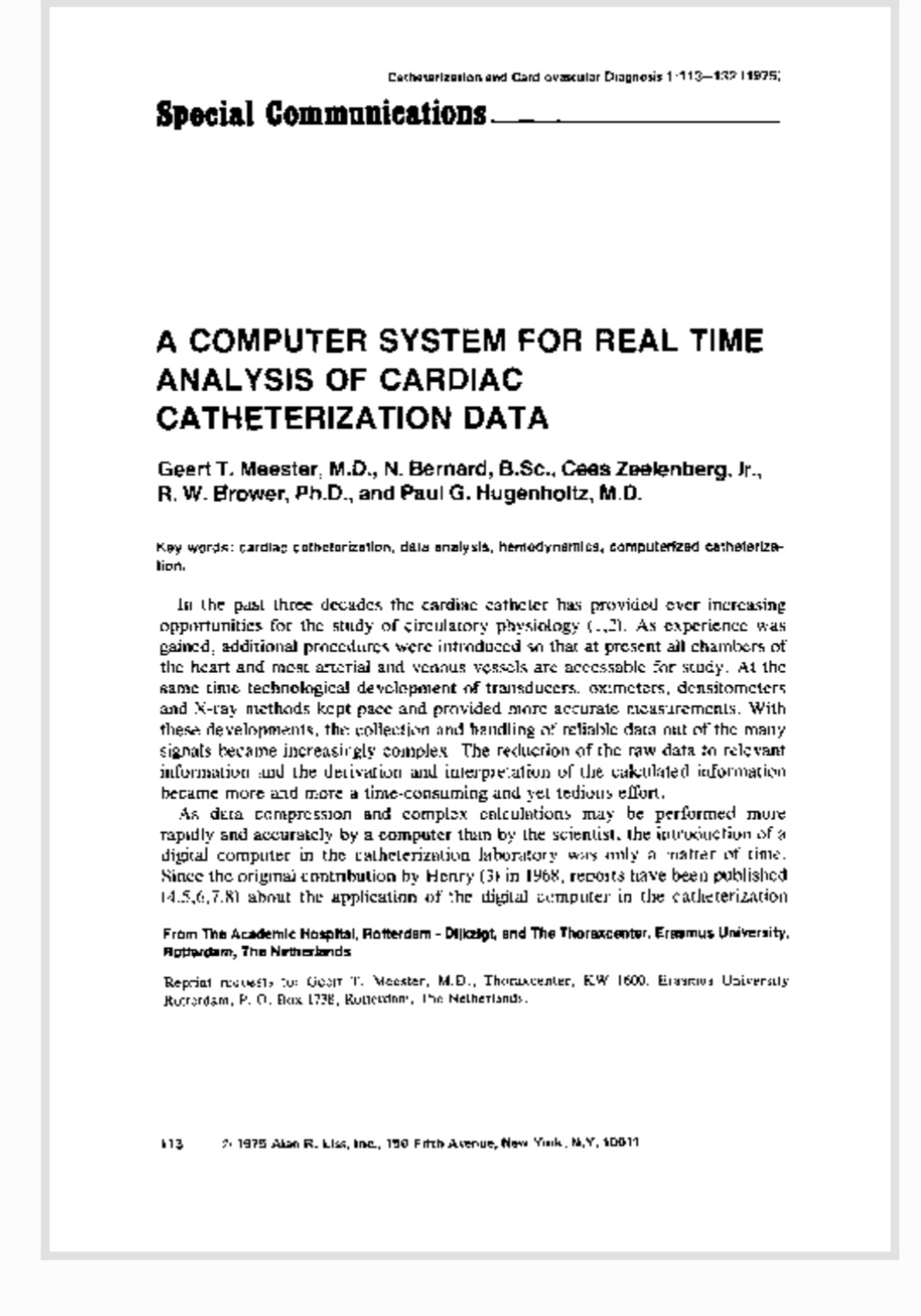
The most successful computer system we developed was for the Catheterization Lab. A cardiac catheterization lab is a specialized medical room for diagnosing and treating heart conditions. It uses advanced imaging to view heart arteries and chambers. We designed a specialized computer system using a PDP-11 from Digital Equipment Corp. We utilized a video disk system developed for instant replay of sports events to allow the cardiologist to replay the injection and flow of dye in the coronary arteries. Then, we figured out how to subtract the background so that the flow of the dye became more visible
The system we developed was instrumental in the development of many medical procedures.
Echo Cardiogram
The Thoraxcenter was a leader in using Echo Cardiograms. An engineer named Klaas Bom led this effort, and my group supported his computer requirements. Klaas played a significant role in developing the Thoraxcenter and eventually became head of biomedical engineering.
Computers in Cardiology Conference
Over the five years, I was at the Thoraxcenter, it gained international recognition as a leader in applying computer technology to cardiology. The Thoraxcenter was one of the founders of the Computers in Cardiology Conference. After leaving the Thoraxcenter in 1974, I attended this conference for several years and stayed in touch with people at the Thoraxcenter this way.
Leaving the Thoraxcenter
My family and I immigrated to Israel in 1974. There, I established a business based mainly on my work at the Thoraxcenter. I was also appointed as an Associate Professor in the Department of Cardiology at the University of Tel Aviv.
I transitioned from the medical world to the computer industry when I joined Digital Computer Corp in 1979 as the head of low-end computer engineering and later as the Group Manager for Professional Computers. I would go on to become a vice president at Intel, one of the world’s top companies. There, I co-founded Intel Capital.
Paul, my Mentor
Paul Hugenholtz had a distinguished career. He stayed as head of the Thoraxcenter until 1988. From 1982-1984, he served as President of the European Society of Cardiology. He was the founder of the Netherlands Heart Institute. He is still alive but at 97, not in good health.
But he was also one of the critical people that took a chance on me. He became my mentor and, most importantly, my friend. I owe him much. One of the joys of writing this blog post is thinking back to my time with Paul. He taught me the value of humor, the effectiveness of charm, and the importance of drive in achieving goals.
Here is a beautiful interview with Paul some eight years ago where he reflects on his life.
After working for Paul for five years, he made me an offer. The Medical Center wanted to create a significant outpatient clinic that would handle more than a million patients annually. Paul had been asked to develop a plan and recruit someone to lead it. While it would utilize computers, Paul wanted someone who could imagine how such a center could function. He wanted someone who would embrace the future. He turned to me and asked me if I would like this assignment. I was stunned. It was a significant project, much more vast than anything I had done. I was not a doctor and not even an engineer. But what really hit me was that Paul acknowledged that my Thoraxcenter task was done.
I thanked him and asked, “Am I done setting up the computer department at the Thoraxcenter?” He said yes that I had done all that had been expected of me and more. I thank him for that. Then I surprised myself and said, if I am done, I am going to leave the Netherlands and immigrate to Israel. This was something that Arianne and I had contemplated for a while. After what had happened in the war, we wanted to bring up our children in Israel. Paul did not try to dissuade me. He understood dreams better than most.
To understand situation in Israel now, one has to understand the role of Iran. Most people know that Iran is the center of all the terrorist activities directed at Israel by its proxies such as Hamas, Hezbollah, and the Houthis. Some of the terrorist actions originating from the West Bank do not have a direct linkage to the Iranians.
Why does Iran, a country located more than a thousand miles from Israel, and 80 times larger, hate it so much and want to destroy it? Do they care about the Palestinians, who are Sunni Arabs, while Iran is Shiite (think Catholic and Protestant but much more extreme)?
We have to go back to before 1979 and the Iranian Revolution. At that time, about 100,000 Jews lived in Iran, one of the oldest Jewish communities in the world. Today, there are less than 10,000. Before the revolution, they were very successful and played a major role in Iran. Most moved to the United States, particularly LA, where they were highly successful.
Iran had been a big supporter of Israel when it was formed. It was the second Muslim country to recognize the state of Israel. The first state was Turkey.
Israel and Iran had a strategic relationship, including cooperation in military activities. Israel provided security services for Iran’s ruler, the Shaw.
Before the revolution in 1979, I lived in Israel and visited Iran several times for business. I loved Tehran. Everything changed with the revolution. There is so much history here, but too much for me to relate. The relationship between the USA and Iran became very combative. The new ultra-religious government blamed the USA for many things that happened in the past. In Nov 1979, militant Iranian students took over the American Embassy and held 55 Americans Hostages for 444 days. Jim Carter was president, and this was a critical factor in his losing his second term.
The Iranian leaders show the USA as the Great Satan and Israel as the Little Satan. Iran had many issues with its neighbor, Iraq. This resulted in a war that lasted between 1980 and 1988. This conflict and continuing problems with Iraq served to keep Iran in check. All this was changed by one of the greatest blunders made in modern times—the attack on Iraq by the USA in March of 2003. Removing Iran’s strategic enemy created the mess we now have. We can thank George Bush for that. We can also thank Saudi Arabia for 9/11.
In the late 80s, Iran started to support Palestinian resistance to Israel, including Hamas, which is a Sunni group. I suppose that the Iranian government, led by religious zealots, could not stand the idea that Jews would live anywhere in the Middle East, but mostly, they saw Israel as the ally of the USA. Hezbollah started in 1982 in response to Israel’s invasion of Lebanon. They are a Shiite group.
We can only imagine what would have happened if Iran had ended up with a government more like Turkey. The Iranians are a charming people. With a different government, the country would have prospered. The country was blessed with an abundance of oil.
Iran is also in a cold war with Saudi Arabia, which is also seen as a US ally.
I believe there will be no peace in the Middle East until the current Iranian government is overthrown.
The government under Netanyahu has focused on Iran as an existential threat to Israel. In that, he is correct. By the way, I think he is a horrible person. He has sought to get the USA to take action that would lead to a regime change in Iran, but the US has not been willing to go that far. However, I think it will end up there. It should take action now before Iran has atomic weapons.
Please consider the impact the Iranians have had on the Palestinians. How has that worked out? And how has the hatred of Israel worked out for the Iranians? There are only losers in this conflict.
I always say that two things make for success: being lucky and not mistaking luck for being smart. Luck is the most impactful factor contributing to success. It is generally not sufficient, but it is usually the most important. This is a crucial lesson for all business professionals, as mistaking luck for being smart can lead to disastrous consequences.
So, how does this relate to Intel’s dramatic decline? The IBM personal computer brought the luck that fueled Intel’s remarkable growth. Intel had no influence over IBM’s decision. IBM chose the 8088 microprocessor due to time-to-market considerations. To supply IBM, Microsoft bought an operating system that ran on that microprocessor, which became PC DOS. This stroke of luck became the foundation of the Personal Computer. Once Intel realized the opportunity (several years after the IBM announcement in 1981), Andy Grove got the whole company focused on it. As I am fond of saying, Intel discovered a vein of gold and extracted every ounce, leaving it eventually in a big hole.
The result was a substantial increase in its market cap. However, the company mistakenly believed that the PC phenomenon would continue indefinitely. Andy Grove and I had many arguments about this, and I, for one, made several attempts to expand the company into other areas, particularly networking and communications, but my efforts failed. My suggestion to acquire Qualcomm was dismissed because ‘why would we want to be involved with cell phones?’ Broadcom was the most logical company for us to develop, but we didn’t do that either. Intel just doubled down on the PC.
We should’ve turned our overvalued stock into a currency to acquire many other companies. At the same time, Intel Capital, which Les Vadasz and I founded in 1992, became the most successful corporate venture group of its time. Les and I wanted to have a significant strategic impact on the company through the insight that we gather from working with with early stage companies, but we did not. We did help grow the PC business and made a lot of profit but it had no long-term influence on Intel’s direction.
Just before the so-called dot-com bubble burst, Intel had a market cap close to $500 billion, resulting from Intel’s growth and astounding profits and a stock market that went crazy for the internet. How Intel could think this would continue is beyond me.
After leaving Intel in 1999, I was on the board of several internet companies. One, PCCW, under the leadership of Richard Li, also had a ridiculous market cap. But we knew it and used our stock to buy a real asset, the Hong Kong phone company.
After the PC, Intel never got lucky again. But luck was there. Luck would have been buying Nvidia, which had a market cap of about 6 billion. We considered it many years earlier because we needed to improve in graphics. But our concept was to make the microprocessor do everything to justify our high prices. However, the micro process could not do everything. The luck would have been buying a graphics company focused on gaming that would turn out to be the engine for AI.
Intel managed to miss every significant new opportunity after the PC, 43 years ago.
Now, I am sad to say, its days are numbered. I think it would eventually be broken into pieces and sold off. It reminds me of Digital Equipment Corp which suffered from the same, disease, hubris.
It was the summer of 1966. I was 21 years old. Having spent almost a year in Europe mainly in Paris and London writing poetry, it had been my plan to emigrate to Israel and live on a kibbutz. I had gotten as far as Athens when for reasons I still do not understand, I turned around and started my journey back to San Francisco, the city of my birth.
I found a position tutoring African American kids living in East Palo, one of the few economically disadvantaged communities in what would later be called, Silicon Valley. These students were selected to attend the University of California under a special program. Looking back, it is funny that someone who had barely graduated from High School, was given such an opportunity. The College Readiness Program was run out of the College of San Mateo, located just south of San Francisco. A friend attending school there, Rita Vrat, introduced me to the Shlomo Carlebach, the famous and controversial Hassidic Rabbi who composed much of modern Jewish religious songs. I became close to Shlomo and traveled with him. The Kippah (skull cap) I occasionally wear was a gift from him. For a brief time, I, too, was a religious Jew and even considered becoming a Rabbi. After I finished my tutoring job, I moved back to to San Francisco. I lived primarily from the money I had saved several years earlier when I worked as a Merchant Seaman sailing in Asia.
I began to write a novel. It was about four people, three men, and one woman. They had been friends when they were young adults, having met at a kibbutz near the Sea of Galilee in Israel. Aaron, was born in Priluki in Ukraine (where my great grandmother, Bessie, was from); Michael was born and grew up in Detroit, and Tirosh, was born in Israel. The woman, Rachel, was from Morocco and had moved to Israel as a child when the Jews there were expelled from there in 1948. They had met in the Kibbutz in the mid-50s and went their separate ways a few years later. Aaron moved to Paris, Michael returned to the USA, and Tiros stayed in Israel, as did Rachel who eventually moved to London. They stayed in touch with each other by writing letters.
Much of the book would contain letters between the four of them. From reading them, one would get to know them, learn about their lives, and gain insight into their views and feelings. The letters slowly revealed that each of the men had been and were still in love with Rachel. Rachel was in love with each of them as well. It had been the tension that resulted from this that had caused them to leave the Kibbutz in 1956.
They decided to have a reunion in 1966, ten years after they had left and to do this at the very kibbutz where they first met. Once they all arrived, they talked late into the night on the first night of their reunion.
It is important to realize that I was writing the book before the 6-day war, which took place in June of 1967. That war demonstrated the power of Israel. I doubt that I would have finished the book before the war and it would not have made sense to continue it given the book’s premise.
It was a bit after midnight when the Kibbutz was attacked as part of a major war that was started by the Arab countries surrounding Israel. This was not a war that Israel would win (like 1967). There was a great deal of destruction and deaths. While the four survived Israel almost did not.
Aaron had become a physicist. Michael was an attorney. Tirosh was an up and coming chef. Rachael was a fashion designer. They were all successful. It was not to be made clear if any of them had romantic relationships.
This is an intricate part of the book to describe, and I am not sure I could have pulled it off had I finished the book. After the war, the identities of the men slowly blur. It becomes apparent that there is only one man, and that Aaron, Michael, and Tirosh are just different manifestations of that one man. Then, it becomes clear that Rachel never actually existed. I don’t know how I would have made this transformation. It certainly would have been a great challenge.
The backdrop is the continued decline of the state of Israel due to poor decisions by its government and because of the hatred of the Arabs and the indifference of the rest of the world to the plight of the Israeli Jews.
Much of the book dealt with ambiguity especially of identity. The Kabbalah which is the main expression of Jewish mystical and esoteric tradition would have had a string influence on my writing as well as I was deep into studying it at the time. My writing was I was heavily influenced by the the German authors, Herman Hesse and Thomas Mann as well as the French authors Andre Gide, and Albert Camus. I suspect that the Alexandra Quartet by Laurence Durrell and The Magus by John Fowles both which had read during this time, had a major impact on how I viewed my book.
I had drafted about 20% of the book on a portable typewriter which I had carried with me through my journey in Europe. I had only one copy of my draft. One evening, I went with Shlomo to a synagogue near Dolores Park in San Francisco. I had an small bag with me, which contained the draft of my book. Somehow, I forgot that I had brought it. It was only the next day when I discovered that I no longer had the bag and the book. I went back to the Synagogue to try to find it, but it was not there, and no one there had seen it. I was devastated at the loss and could not bring myself to rewrite it. It was like a death. I never tried to write a novel again but I think I am on the verge of it once more.
Soon after, I changed my life completely. I became a scientist but one focused on the study of consciousness
Now, with all that is going on in Israel and once again an existential threat to its existence, I am reminded of the book and its title“ All Israel Lay in Ruins.”
I am intensely interested in longevity science, and my interest has increased as I age. This January, I turn 80. Aging is like climbing a mountain. Eventually, you will reach the top. It was a lot of work getting there. The view is lovely, but there is only one path ahead, and that is down. The trip will be much shorter. Friends ask why I write about mortality from time to time. I often think about it and want to share my thoughts and experiences through this journey down the mountain.
Increasing Lifespan
Most things we can do to increase our lifespan are related to lifestyle. For instance, exercise, diet, regular sleep, and low stress significantly extend longevity. Combining such factors can add at least ten years to the life span. That means that those who have the right lifestyle choices can add five years to the median age of death or more, while those who have lousy lifestyle choices will have five years less than the medium. We are at the median now, with half of those born in 1945 still alive. You probably have another ten years on average if you are of this age. Half of those will live at least another five years after reaching 90. None of these forecasts are taking into consideration in medical advances
There are three aspects of health: 1)prevention, 2) diagnosis, and 3) treatment. I will be discussing prevention.
Colonoscopy
Prevention means simply not getting an illness, and, in this case, one that could affect your mortality. Besides lifestyle changes, some diseases can be prevented by testing and action. Colonoscopy is a great example. Having a colposcopy every five to ten years can reduce death from this cancer by more than 60%, from 4% to 1.2%. Pulps (small growths on the colon’s wall) are found in about half of the procedures. They are rarely cancerous at this stage and are removed. In this case, a patient is recommended to have another colonoscopy in five years. If none are found, ten years is the recommendation. By removing the polyps before they turn cancerous, the probability of having cancer is dramatically reduced.
Let’s look at the costs. I will say that a colonoscopy costs $2,000 to perform and that the average person would get five in a lifetime. That means that it would cost $10,000 on average to reduce the death from colorectal cancer to 1.5% from 4%. Keep in mind that if someone does not die from cancer, they will die from something else. So I think on average the increase in average lifespan is three months. Of course, if you were a person who would have gotten cancer, it would have a very significant impact on your life span and for the others, no impact.
This expense and the difficulties of preparing for the procedure have created great interest in alternatives. Most of these alternatives involve using stool samples. They look at the presence of blood or analyze the DNA found in the stool. Typically, they cost less than 1/3. They are not as accurate but are still within the 10% false negative range. However, they must be done more often, so they are about half the cost.
Colorectal cancer has a genetic aspect, so if there were this cancer in your family, it would be a strong indicator of the need for testing.
In the Netherlands, where I currently live, colonoscopies are rarely performed. Instead, stool tests are utilized. When we moved here, my wife received icy a test by mail without even asking for it. The government did not send one to me, I suspect, because of my age.
Why did I say final colonoscopy? In the test I just had, no polyps were found. My following procedure would be in ten years. The likelihood of finding something is very low, and even if they did, the chances that I would die from colorectal cancer rather than something else are minimal.
Other Screening/Prevention
Routine monitoring for skin cancer is an easy and effective way of reducing death from this disease. Reducing cholesterol is thought to impact heart disease significantly, but this is somewhat controversial. Breast and prostate cancer screening can be adequate, especially the former. I already had a melanoma that was successfully treated about 20 years ago. I check my skin 2-3 times a year and check myself often.
Cardiovascular tests, such as Echocardiography Stress tests, can identify cardiovascular disease ( I was part of the team that developed this test in 1970s). Depending on the findings, these may lead to treatment or lifestyle modification. I do this test every three years.
I had a CT angiogram done a few years ago to check for issues with my coronary arteries. Having a few friends who died from “sudden death syndrome,” I wanted to make sure my arteries were clear. They are.
The Economics of Screening
Many factors are considered when considering the economics of screening. There is a tremendous economic benefit to early detection of disease. The problem is that we have to test so many people and so often. So if it costs $1,000 to detect a disease but only 1 in 100 people test positive, the cost for that positive test is $100,000. But then we have to consider the cost of not detecting the disease early and either having expensive treatment or the illness and death of a person.
I can only look at it from my own personal perspective. How much is another year of healthy life worth to me or to you? And does that change as we age (I think for sure). Because we are largely using population based medicine, we would have to test and treat a lot of diseases to have an increase in a year. However, as we move into personalized medicine, we can reduce the number of tests to fit our personal probabilities.
What does the future hold for us
Right now, we are focused on what I refer to as population-based medicine. AI will allow us to move to personalized medicine. It will tell us who will benefit from procedures like colonoscopies. One of the key drivers will be liquid biopsy. Using AI to analyze various information in the blood will help determine the likelihood of developing various diseases or the presence of these diseases (diagnosis) and the best way to treat them. This is the area I am working in at the present. I often say the blood knows it all.
The friends that I made when I was young are slowly dying. We are no longer at the stage where people will say, “he died so young.” Even though I understand that death is what follows life, it remains a bit uncomprehensible
It was 1966 when Geoff and I first met. He was a bit younger than me, so we were 21. Returning from Europe, where I had been living for the last year, I signed on to be a tutor in a new program at The College of San Mateo (San Francisco peninsula) called the College Readiness Program. It was started by a fantastic woman, Jean Wirth. Our mission was to tutor predominantly African American kids living in East Palo Alto who had been admitted to schools such as the University of California at Berkeley. You can read about this fantastic program here.Also, here.
Geoff was also a tutor. He was attending the University of California Berkeley, ) and was living that summer with his mother, her husband (Geoff’s father had died when he was a young child), two brothers, and a sister. They lived in the wealthy town of Woodside. The famous childhood actress Shirley Temple lived next door, and I would sometimes see her when I visited with Goeff.
After the summer, Geoff moved back to Berkeley. His girlfriend, Stephanie, was 18, studying art. I moved to San Francisco and began my career in medical science at the University of California Medical School in San Francisco. I often spent my weekends with Geoff and Steph at their place in Berkeley. It was the time of the hippies, the summer of love. We were not hippies, although I had played a role in the early stages of that movement in 1964-65. We did smoke a lot of dope. I remember Geoff and Steph’s wedding which took place on a small lake adjacent to his mother’s home in Sonoma. Many years later, moved to Sonoma myself. The last time I visited that home, was in 2015.
The Anti-War Movement (Vietnam War) played a big role in our lives. I had been given a 4-F status because of health issues, but Geoff was called. Rather than serve in a war he did not support, he and Steph fled the country and ended up in Paris. We reconnected in 1969 when I stopped to see him on my way to my new position at the Medical School, Erasmus University Rotterdam. There, I married Arianne, and soon after, Adin was born.
Eventually, Geoff and Steph moved to Canada, where they had their daughter, Phoebe, and a son, Jason. Arianne and our three children lived in Israel but moved to Boston in 1979. I visited them in Canada, and once, Steph and her kids came to see us in Boston.
His daughter, Phoebe, moved to Sonoma, where Geoff’s mom had moved. I connected with the family and saw Geoff occasionally, but we had moved apart. Our circumstances had become very different. I moved to Sonoma with Deborah (my second wife) many years later. Eventually, Phoebe went to work for us as our assistant. But I always felt she was family. Geoff and Steph eventually broke up, but I also connected with her. She would visit Sonoma from time to time. Her family lived there as well. She lived in Canada, where she still lives.
Geoff moved to Hawaii. He was not in good health, suffering from COPD and having to use oxygen. We continued to communicate infrequently. In his last message, a year ago, he referred to the political issues of the 60s and how it seemed we were back there again.
Rest in peace, my dear friend. You will be missed by many.