Two Thirds Done

Thoughts and experiences of an eighty one year old Wild Duck.

Avram Miller by the sea
EN | IT

587 posts since 2006

Category: About life in the last third

  • The Flight of a Wild Duck was published a year ago

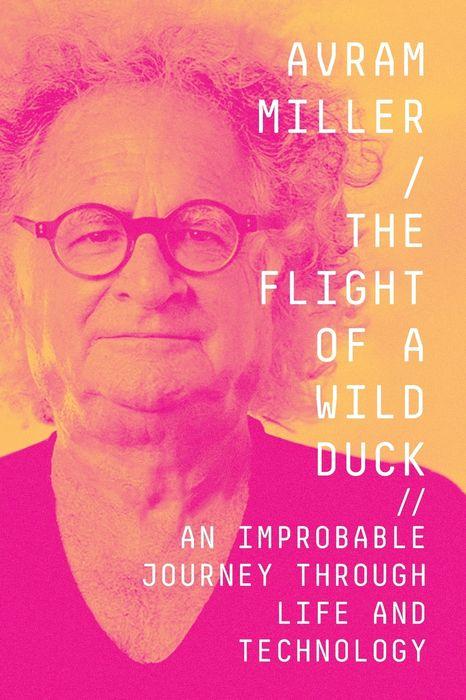
    My memoir, The Flight of a Wild Duck, was published a year ago. It took me three years to write; a year of research, a year of drafting, and a year of editing. While it was a lot of work, I found the experience rewarding. I learned a lot about the history I had lived through, which in retrospect, I would often view differently. I also learned a lot about myself. I found that I had done more and accomplished less than I had thought. While writing, I imagined that my experiences/lessons could be helpful to others, and many might enjoy my stories.

    It has been gratifying to hear from many that read my book, and for them, it seemed I had accomplished the objectives I had in mind when I wrote the book.

    But since it was published, only about 500 copies have been sold. Partly because of the world we live in where fewer books are read, and more and more books are published. So as part of the promotion for the book, I did many interviews (podcasts and youtube videos). The result was hundreds of thousands had to listen to my stories. But reading a book is a different experience.

    It is not too late to read it. Just click on this link. I would appreciate it. Also, if you have read the book and liked it, please help me by promoting it on your social network.

  • Time Travel via the London Underground

    Today I took a trip on a “time machine” via the London underground. I went back to 1965 when I first arrived in London at the age of 20. My grand uncle Joe Harris and his wife Alice, invited me to visit them. At that time, I was living in Paris. Living is not really the correct term, I suppose. Perhaps it would be better to say, I was surviving. I literally slept under a table in a friends small apartment on the left bank of Paris. I had no money. My French was not good, and the Parisians at that time, were awful to foreigners. I was constantly being humiliated. My friend was studying music at the Conservatory of Paris. I took a few classes there myself.

    When Joe asked me if I’d like to visit him and meet some of the family. I jumped at it. My mothers father, Mark Harris, had been born in London very close to Carnaby street. He came from a family of tailors. All around that area, in the 1900s, Jewish tailors worked doing subcontracting for Saville Row. My grandfather had many brothers and sisters and they were all still alive in 1965. Joe will take me around to meet all of them. I am still in contact with their grandchildren and great grandchildren.

    My wife and I have been spending a few weeks in London. Today, I decided to venture on my own, back to where Joe and Alice had lived in a neighborhood called Maida Vale. They had a nice apartment but it was quite small. So as part of my visit, Joe rented me a small studio apartment, actually just a room around the corner from where they stayed. After spending a few weeks in London I went back to Paris. However as soon as I got there I realized I could not remain. After a week, I return to London.

    This time I found a room in a much poor part of the neighborhood where Joe and Alice lived. It was on Warwick Street. I rented what was called a bed-sitter. It was just one room which had a table, a bed and a few chairs. The heating system was gas but it required me to put in shilling pieces into its meter. It didn’t take me long to figure out how to hack the meter and I was able to stay warm. I was the only one in the apartment building that wasn’t from Nigeria. There were six Nigerian families and me. We shared a common kitchen which also had a meter for the gas stove and hot water. We also shared one bathroom and toilet. Nevertheless I was pretty happy living there.

    I had no telephone, television, radio, and certainly nothing like the Internet. The only thing I had was a portable typewriter on which I wrote poetry and letters. I still have the book of poems, I wrote then. Recently, when I was researching for my book, The Flight of a Wild Duck, I came across an index of documents from the famous poet Allen Ginsberg. I was delighted to find that there were letters from me that Allen had kept.

    Today, after some 57 years I decided to return to Maida Vale. I took the underground to a station that I thought was close to where Joe and Alice lived. It turns out that wasn’t the right station. For about a half an hour I was very much lost trying to figure out where it was that they had lived. Slowly, it came back to me and eventually I stood in front of their apartment building. It was there that I had met the singer Donovan, as he lived on the same floor as they did. I went around the corner and I saw the place where I first aid. After that I remembered how to walk back to the building where I had my bedsitter.

    It’s amazing how much time has transpired since I first arrived in London. It makes me also realize how little time there is left ahead

  • My talk to 150 high school students (mixed Jews and Arabs)

    On Sunday, I had an opportunity to talk to about 150 students aged 16 and 17. I was the opening speaker for the summer program by a remarkable organization called MEET. They work with teens in what they call “The Region,” which is really Israel and the West Bank. Half of the students are Jews living in Israel, half Arabs living in Israel proper, and some are in the West Bank. Half are boys, and half are girls. They form integrated teams. English is the only language allowed. The teaching is divided into 40% technology (mostly coding), 40% entrepreneurship and 20% improving understanding between the Jewish and Arab students. The summer is the most active time, and there are opportunities for the students to be physically together. It was started by two Israelis at MIT, and MIT is a big supporter of MEET.

    I invite you to learn more about MEET here. 

    Here is a link to the video of my presentation.

    I also had a lot of questions.  As there was not enough time to answer them, I asked for additional questions to be sent to me by email.  Below you will find the questions and answers.  

    Meet Presentation by Avram Miller

    Q&A

    July 2022

    • How do you decide whether or not to invest in a certain company?

    First, I must believe that there is an unmet opportunity in the near future.  You can not create an opportunity, but you can recognize one. Recognizing it early but not too early is critical.  Next, I want to be comfortable that leaders are capable of strategic thinking.  Then, I need to understand if they can execute the strategy effectively.  Finally, I want to make sure that there will be a great reward for all those that will make the company successful including me as an investor.  I call these four qualities, OyStER, Opportunity, Strategy, Execution, and Reward.  I always drives my investment decisions.

    • What kind of stuff are you doing now?

    I am mostly retired, but I like to call it rewired.  Actually, I still advise a number of early stage companies, invest a bit and continue to learn and learn.  I also have many friends that have successful companies or venture funds that ask for my advice from time to time.  I have gone back to my roots in health care. I advise two of the worlds leading medical institutions, The Cleveland Clinic and Sheba Hospital (Israel).  My current interest in longevity and precision medicine.

    • What keeps\kept you going?

    I am driven by a combination of curiosity and a need to have an impact.  I was blessed with a pretty good mind, and I like to use it to make a difference.  Financial gain plays a very limited role, but then again, I am fortunate to financially comfortable.  

    • How did you manage to get into business?

    The first eight years of my career were in academic settings in medical schools in the USA and then the Netherlands.  Then I went to live in Israel for the first time.  At that time, in 1974, Israel needed to develop industries, and I decided to start a business that would commercialize the work I had done earlier in medical science. I was also an adjunct professor at the Tel Aviv Medical School.  It was not so surprising that I took to business.  After all, I came from a family shop keepers.

    • If you didn’t enjoy school and studying, how did you get into the habit of learning and even teaching?

    I have always wanted to learn.  Curiosity drove me then and still drives me now. But it was a bit strange as my parents had no interest in education.  So I did not end up going to University.  Instead, I became a Merchant Seaman and sailed on a ship to Asia.

    • What books and podcasts does he recommend?

    I think this question really depends on your interest and direction.  Rather than suggest books specifically, I am going to suggest a process.  Pick a few companies you admire and read several books about their history.  Don’t read just one because every author has a bias.  Find videos on youtube about the company.  Look for the oral histories of the founders. Ask yourself what was the company’s opportunity and what was its strategy.  What did they do well, and what did they do poorly.  

    • What are some of the ventures you regret investing in, and what did you change about your approach to analyzing businesses from those failures?

    Most early-stage investments do not work out.  Which means most early stage companies do not work out.  As an investor, you must have a portfolio (diversification).  As an entrepreneur, you usefully only have one investment: you and your effort.  Looking back over my investments for Intel and later for myself, I can see that I was often too early.  This is the plight of a “visionary”, I guess.   

    • Why didn’t you become an entrepreneur?

    I am a bit risk-averse.  I almost did it in 1983 when I left Digital Equipment Corp., But I was a father when I was 25.  I had three children and my wife to support. The strongest feeling I had was to provide for my family.  I also enjoyed having the resources of a large company and the opportunity to do many different things simultaneously.  I enjoyed strategy more than execution.  Once a start-up identifies an opportunity and develops a strategy, it is all executed from then on. There is little flexibility.

    • How do you find good mentors?

    Why you meet people that you feel can help you and you relate to, ask them.  Don’t be shy.

    • Do you think that partnerships should be only between brothers or like really close family members?

    No, a partnership can be with anyone.  Not even sure if it is a good idea to be partners with family members.

    • What was your motivation to start?

    Not sure about what you mean.  My motivation for my first professional job was to get a salary.  I was running out of money.  Later, my motivation was to have an impact.  To know the world would be different because I had lived.  I like to say, “to leave my tracks on the fabric of time.”

    • What is your opinion on crypto marketing and its improvement?

    I have no interest in cryptocurrency if that is what you mean.  I think it is mostly a speculative bubble at the moment. Ultimately, the currency will be digital but driven by governments.  Blockchain is an important technology.

    • What are the most important qualities that your partner needs to have

    Honesty, empathy, openness, and being able to communicate are key.  But they need to be complimentary.  If you are technical, your partner should marketing and business oriented.  If you are an introvert, you should be an extrovert.  

    • How do you manage to do so much work and your personal life and family?

    I never managed that well.  I regret not being there for my family, especially as my children were growing up.  I had children young, so they were already out of the house when I was most active in my career.  

    • What is your biggest insight from all the things you’ve done?

    Think more and do less. I think people are to prone to want to get started without thinking things out.

    • What you’re most proud of?

    I played a leadership role in creating residential broadband starting in 1992.  That really changed the world.  It would have eventually happened without me, but I am convinced that my work made it happen fast.

    • How do you know what amount to invest in something?

    When I invested for Intel, it would depend on so many factors, particularly the stage of the business.  Now that I invest for myself, it mostly has to do with diversification.  I only have a small number of my assets in early-stage companies, and I like to have at least ten investments at a time so which limits the amount I can invest in any one company.  

    • What was a “Day in the life of a young Avram Miller”?

    I have to pick a time because I was young for twenty years.  So let’s take the 16-year-old Avram.  I had a job at a jewelry store for 25 hours a week.  I was still in high school but mostly only showed up for one class which was choir.  I played piano and started composing music.  I read probably a book a day.  My best friend and I would talk about everything from science to history to philosophy to mud

    • Have you had any investments that didn’t work out? If so what do you think was the problem in those cases?

    So many because it is so hard and easy to fail. Everything has to go right for the former, and anything wrong can cause a failure.  

    • Which one of your failures surprised you most? 

    There was a whole group.  When the internet took off, I thought entertainment would play a big role.  So I worked with people in the media industry and made investment in early stage entertainment companies. They mostly failed, although there were some successes. 

    • Avram talked about the future areas to invest in, but he didn’t mention his opinion about nft and crypto, so do you think it might have a future, especially with the last drop in the market.

    I am not positive about cyber currency as a long-term investment opportunity.  I do believe that NFT has an important role.  I am an investor in www.niio.com, which does this for digital art.

    • So he talked about how ai is advancing and how it would break into the car and drone industry, does he think humanity can trust ai enough to (up to a certain point) run itself?

    I am not sure if humanity can trust AI but I am pretty sure we can not trust politicians.

    • what is the most valuable thing u have learned throughout the years

    Human beings can do amazing things if given the opportunity.

    • I want to ask if i build a program that work on its own on stock market based in how thee graph working< what red lines should i do so the program stops when it happen

    I don’t have the skills to answer this.  Sorry.

    • Do you recommend using programming books?

    I learned to program the hard way.  There were no classes and no books.  I had to create my own programming methods. That was more than fifty years ago.  I am sure there are great tools now to learn to program but I do not know what they are. 

    • Why does he live in Tel Aviv?

    I live in Tel Aviv because I find it one of the most exciting cities in the world and close to Europe, Asia, and Africa.  It is also a secular and liberal city which fits my personal views.

    • What things are you looking forward to doing next?

    Not really sure.  I want to do something that does not involve influencing people.  I want to do something creative and artistic, I think. 

    • Who helped you in the most difficult moment?

    I think it was my boss, Les Vadasz at Intel.  He helped me through many difficult moments, particularly when dealing with cancer.

    • Do you have any previous experience working in the stock market and what do you think about someone developing a program that can generate money from the stock market on its own.

    I only know the stock market as an investor.  I think many smart people are always trying to do it.  Sounds risky to me.

    • What do you think about the metaverse?

    I think that VR and AR will create new platforms and will be very important.

    • Looking back at your journey, what is one thing you would change if you could?

    When I first moved to Israel in 1974, I should have left the medical field and started a computer business.  I would have been more successful and had more impact.  I was reluctant to leave medicine and start over again but then five years later, I did that.

    • What daily habits would you recommend to an entrepreneur that’s starting out, and what habits to avoid

    Learn to listen to others.  Don’t let your ego get in the way.  Treat the people that work for you with respect and kindness.  And always learn.

    • When you first started in hi-tech, did you think you will be this successful?

    No, I had no idea.  I am still surprised and very grateful. 

    • When Avram said he exercised his brain every day, what he mean and how he does it?

    I use an application called BrainHQ from Posit Science, as well as an application called Elevate.  

    • What was your typical daily routine when you were starting out

    I got up early, worked during the day, and studied at night (on my own).  

    • He talked about how easy it is to manufacture chips these days. Doesn’t he think it can be rather dangerous in, let’s say, military use?

    Perhaps.  But governments already have the ability to do so much.  I think in general, it is a good thing.

  • Intel’s strategy for the future is to recreate the past

    Intel’s strategy for the future is to go back to 2005. It was then that Paul Otellini, the CEO of Intel, turned down the opportunity to be the manufacturer of the chip that would be at the heart of the iPhone. The result was that Apple went to Taiwan Semiconductor to produce that chip. In 2005, Intel was the world’s most valuable semiconductor company. It was riding on the PC wave that started in the 80s. This wave was about to peak, but Intel could not recognize this. Intel missed every significant opportunity that has come along in this century, with the possible exception of providing the microprocessor to power internet servers in the cloud. And that too is vanishing.  

    Intel’s decision not to manufacture the chip for the iPhone caused Apple to move to Taiwan Semiconductor as its manufacturer. It gave that company the scale to build a world-class semiconductor manufacturing capacity and effectively changed the nature of the semiconductor business, separating design capabilities from manufacturing. Companies that manufacture semiconductors for other companies are called foundries. Foundries operate on low margins. Intel was designed for high margins. It did not want to be a foundry.

    Since Pat Gelsinger returned to Intel a year ago to become its CEO, he has decided to recreate the Intel of his youth, the Intel that led the world in semiconductor manufacturing. But to do that in a world no longer dominated by the PC and therefore the Intel X86 architecture, Intel would also have to become a foundry. To accomplish this requires significant investment in factories. As a result, Intel has announced investments of tens of billions of dollars to build new factories in the USA and Europe.  

    Right now, demand for semiconductors leads supply. But when that happens, all the major semiconductor companies invest heavily in production. I think that Samsung, Taiwan Semiconductor, and Intel each will all build-out for 60% of the capacity needed. The total manufacturing capacity could exceed 180%. The result of this will be plunging prices and lower and lower margins.This has always been the nature of the semiconductor business. Intel was able to escape this because of the success of the PC and its propriety hold on the X86 architecture. I believe that of the three companies mentioned, Intel will suffer the most.

    Pat was a brave man to take over the helm of Intel. Pat sees himself, it appears, as the Steve Jobs of the semiconductor world, bringing back Intel to its glorious past. But to paraphrase, “I knew Steve Jobs and you sir are not Steve Jobs .”Jobs did not reach back into the past. Instead, he created a new future in which Apple could dominate. I see no evidence of that for Intel.

    It saddens me to write this. Intel was good to me in many ways. After I left in 1999, I offered my advise to the CEOs various times, but they didn’t take me up. I like to think it might have made a difference, but we will never know.

    So it is natural to say, “so if you are so smart, Avram, what should Intel do”? I would probably suggest doing the opposite of what Pat is doing. I would retrench for a while. I would build up my cash reserves and use that to invest in new applications of semiconductors. I might even see if I could take the company private to not deal with the stock markets quarterly judgments. I would think more and do less.  

    If you are interested in reading about my 15-year experience and intel, please read my book, The Flight of a Wild Duck. 

  • A significant chapter, or better said, a volume of my life, is over

    When I turned 50 in 1995, I began to think about how my life would evolve. I realized that I wanted to have a home in the wine country of Sonoma, California. During this period, I had often been traveling to Italy. I fell in love with Tuscany but knew that it did not make sense to buy property there as I thought I would continue to be based in the San Francisco Bay Area.

    As a child, I spent a lot of summers in Sonoma. The area around Boys Springs was the west coast version of the Borscht Belt on the east coast, going back to the beginning of the last century. For instance, I have many photos of my grandparents vacationing there in 1920.

    One day, I explained to my son, Asher, my desire to have a place in Sonoma because it reminded me of Tuscany when I suddenly realized that perhaps, I loved Tuscany because it reminded me of Sonoma.

    After failing to buy a suitable home, I decided to build one, knowing how difficult and expensive that could be. But I went ahead and made the home of my dreams. It took years from when I bought the land in Kenwood, California, in 1997 to moving in in 2001. When I started, I was a the height of my career as both Vice President of Corporate Development and co-founder of Intel Capital, the most successful corp venture group in technology during my time. By the time I moved in, I had left Intel two years earlier. I was single when I started living with the woman that I have now been married to for almost 20 years, Deborah.

    In 1996, I was diagnosed with prostate cancer and treated with radiation by the end of that year. But things did not go well. I had used a relatively new therapy called brachytherapy, which Andy Grove used the year before. So Andy’s experience had a significant influence on me. But instead of the PSA (the marker for prostate cancer) going down, it slowly and then quickly rose. It looked like my cancer was metastatic and would gradually spread through my body and ultimately kill me, but it would not be an easy death. I used to say people die and then go to hell, but with prostate cancer, the order is reversed.

    In the summer of 1999, after leaving Intel, did I want to embark on this project, knowing I might not be around to enjoy it for long. I had worked very hard on every element of the design. The house was a creative expression of my being. I decided that I was not building a house but creating a work of art that would live far beyond me. I still feel that way.

    After moving in early in 2001, we gave it a name, The Villa Megilla. It was never our only home except for one year in 2009. We had a home in San Francisco at first, then in West Hollywood, and finally in Tel Aviv, where we live now. At the beginning of our life at the Villa Megilla, many friends came and visited. There were many parties and family celebrations, including the wedding of my son Asher and his bride, Kirsten. My children and their children, my sister, her children, and grandchildren spent countless days there. But slowly, things changed. The grandchildren had a lot of commitments. Asher and Kirsten moved from living just 20 minutes away to almost 1000 miles away. We no longer felt like entertaining friends. The center of our life moved from California to Israel. Once we complete building our home in the center of Tel Aviv, we put the question that was once unthinkable, should we sell the Villa Megilla. In 2017, we made that decision in the affirmative.

    It took four years to find a buyer. The wildfires, in particular, slowed the market even though our home, which has a masonry wall 18 inches thick and a copper roof, would have withstood a fire. We were only able to go back twice in four years. In 2018, our assistant, who lost her home in the big fire of 2017, was living at our place. We returned in 2019. On the night of our arrival, I learned that my beautiful daughter, Dafna, had just died. In 2021, we came back for a few months, having skipped 2020 because of corona.

    We have no idea what we will do next. But, for sure, we will spend the summers traveling and auditioning places where we may have a summer home, such as Greece.

    I have sadness and relief that we have now sold our beautiful home. We are now moving our things, including all the art Deborah and I collected over the years. We are giving much of that way to our family because we will never have a home again large enough to contain all of it.

    There have been times when we felt anguish thinking that we were tearing down so much of what we built together, but then there are times when we are very excited about the prospects for the future.

  • My interview on the history of residential broadband

    As many of you will know, I played a leadership role in creating residential broadband. My activities span the period of 1992 to 1999. Not only was I involved in the development of cable modems and DSL modems, but I used Intel’s might to pull together all the elements required to create what became a new medium; a medium for education, entertainment, commerce, and communication.

    Around 2005, I began to work on a book documenting the history of residential broadband since I believed that I had a complete overview of what happened. But then I found out that I did not have the skills to write such a book. So I undertook this blog as both a way of communicating and developing my writing skills.

    Three years ago, I started writing The Flight of a Wild Duck. I realized that I probably only had one book in me. So instead of writing only about residential broadband, I wrote mainly about my complete professional life. However, this is an extensive section on residential broadband that readers interested in this topic should appreciate.

    I have done many podcast and video interviews in promoting my book, which was published in September of 2021. Sometimes they encompassed the whole of the book. Sometimes the focus was on early-stage investing, given that I co-founded Intel Capital.

    Recently, I had the opportunity to be interviewed by the Cable Center. The focus of these interviews is primarily on the development of cable-based broadband.

    You can watch it here.

  • Continuously monitoring our critical physiological parameters

    We are in the process of going from a time when critical information about our bodies will go from being measured occasionally/rarely to a time when they will be measured continuously. This capability will be a significant transformation in maintaining and improving our health. But, unfortunately, the medical professional unsurprisingly is lagging.  

    I have been monitoring my heart rate continuously throughout the day for some time. I have used the Oura Ring to monitor my heart rate at night and the Apple Watch to monitor it during the day. With the 3rd generation of the Oura Ring, I can now measure heart rate 24 hours a day using that device. I have also been using the Oura Ring to monitor important aspects of my sleep. The Oura Ring and the Apple Watch were my main methods of monitoring many psychological parameters. Recently, I added continuous monitoring of blood glucose because my doctor insists that I am pre-diabetic (it turns out she is wrong.  I am looking forward to the ability to measure my blood pressure continuously which I suspect will happen in the next few years.

    As consistent readers of this blog will know, I started my career developing equipment for EEG biofeedback (brainwaves). I am a firm believer in biofeedback.  

    Measuring is not an end in itself. Measuring should allow for actions like changes in behavior that improve one’s health. I can say, for instance, that the Oura Ring has had a significant impact on the quality of my sleep. From using it, I learned that what and when I eat can considerably impact the quality of my sleep. I only eat vegan most nights because that improves my sleep quality; longer sleep, more deep sleep, and lower resting heart rate.  

    In measuring my glucose, I expected to make changes to my diet to lower my blood sugar levels. Most of you will have had fasting lab tests. The idea behind having your blood taken in the morning before you eat is to get a sense of your lowest glucose level. For years, mine has been slightly above 100, which is an indication that you are pre-diabetic. There is also another test called A1c that indicates glucose levels for the last 90 days. Mine is consistently five, which is not an indicator of being pre-diabetic.  

    Using the Abbott Labs continuous glucose monitor for several months, I learned that my glucose rises in the morning just before I wake up. It turns out that some people, I am one, have blood sugar levels increase just before they wake up. In these people, the body increases blood sugar to give them the energy to start their day. I guess that I have always been like this. I describe myself as a morning person, but now I know why. I always wake up without an alarm at around the same time, 6:00 am. I used to joke that I would wake up standing up because I had so much energy in the morning.  

    My average glucose level is about 97 mg/dl, which is normal’s high side. But then again, I am 77 years old. So glucose levels do increase slightly with age.

    Currently, we have several devices that can give us essential information about various physiological parameters. Improvements in devices will only increase over time. For instance, I believe that 50% of adults suffer from poor sleep quality. Other than those that snore, most are not aware of this. But almost all of these people are now using smartphones. Wishing five years, I predict, smartphones will be able to use sound (sonar) to analyst the quality of sleep without the need to be wearing anything, for instance. Even such mundane appliances as a toilet will become diagnostic devices. Our phones will tell if we have cognitive decline long before our loved ones or our doctors know.  

    Coupling all these measurements, the results of no- continuous measurements from blood tests, and using AI has the potential on transforming medical diagnostics substantially. 

    I imagine that will be medical services that can offer deep diagnostic capabilities, way beyond what traditional doctors can offer. 

    How will the medical profession adjust to all these changes? I am not optimistic.  

  • Why I might end up loving Omicron

    It seems my recent post on the Omicron in Israel was overly pessimistic. It now appears that it is indeed much less severe than the Delta, although very infectious. Maybe this is what we have been waiting for. Everyone will get infected, although most may not even know it. Omicron may be the read to herd immunity.

    We have delayed the fourth dose, but I think it will soon come. One of the factors is that we have a lot of supply which will expire. For reasons I do not understand, many have been reluctant to get the booster, so rather than waste it, it will be better to use it in those willing to get a fourth shot, like me. Of course, it would be great to provide it to the Palestinians, but politics (not just Israeli) makes that challenging. There is no trust on the Palestinian side. If Israeli’s will not use the shots, there must be something wrong with them, many would think.

    I just learned that those infected in the past but no longer have any antibodies still have some significant protection against infection. So there must be something at work that we do not understand, but this is also good news.

    Israeli’s are reluctant to vaccinate their children, again for reasons I do not fully understand. Instead, they happily vaccinate their children for much less prevalent diseases.

    Israel will probably open up for travel soon and certainly by the end of January. That is important not for tourism but for allowing for family visits. There are many in Israel with close relatives living abroad. It has been harrowing for them.

    I am thinking that the virus will burn itself out here in April.

  • The Announcement I wish Joe Biden Would Make

    I wrote on Facebook a few days ago that I thought Joe Biden was failing at the tasks he faces. Lots of people defended Biden saying he is doing his best. That he was dealt a bad hand etc. I wrote back that none of that matters. That we had less than a year to save the American Democracy. And asked what do we need to do. One of my friends rightfully asked what I thought needed to be done. The result is an announcement I drafted for Biden. I did not fill in all the names as you will see. I would love suggestions from you.

    An announcement by Joseph R. Biden, President of the United States of America

    This decision is the most significant announcement of my entire career. The United States is one of the most perils points in its history. We are dealing with challenges that we have not seen since the civil war. We are faced with the combination of a deadly virus, international challenges in both economic and military, polarization between our citizens. In addition, climate change may deprive our children and their children of the future we wish for them. For these reasons, I have made the following decisions:

    1. I will not run for a second term. While I genuinely believe that I could lead our great nation once again, I know that I must use all my energy and efforts to solve the significant problems confronting our nation. By making this decision now, I can clear the way for others to present themselves as candidates for the presidency.  
    2. Anyone who holds a position in the executive branch I oversee must resign before running for office. We need everyone working in my administration to give their full attention to solving the critical problems confronting us. I also ask that anyone in Congress who wishes to declare themselves a candidate for president resign before running. The one exception would be except cases where that would result in the possibility that their seat would go to the other party and thereby change the balance of power in Congress. In that case, I ask that they do not run for office but instead put all their attention on passing the legislation required to solve the critical problems we now face. While I can not require that the vice president resign her office if she decides to run, I request that she follow the requirements I have made for all others in the executive branch.
    3. Fair elections are a cornerstone of our democracy and are now under significant threat. We must fight against those who no longer believe in free and fair elections at the federal, state, and even city levels. I appoint {to be added later} a respected member of the Democratic Party and { to be added later} a respected member of the Republican Party to oversee a nonprofit organization focused on voting rights. Private donations will fund this organization as I do not have a budget.  
    4. There are less than eleven months before the next election. The Democratic Party must hold Congress if we continue to make progress for the American People. Barak Obama has agreed to lead our effort to hold on to Congress in 2022.   
    5. Climate Change must be dealt with now if there will be a future. I have assembled a small group of some of the most outstanding business leaders in the USA to drive our efforts. This group will be led by { to be named later }.
    6. The Covid virus represents an enormous challenge. We already have a strong team of scientists. But we need increased leadership. {to be named} one of the most successful business people has agreed to join my team as Covid Czar and will report directly to me.
    7. The Tax system in our country needs a dramatic overhaul. Much of this requires congressional action, which I do not expect will be forthcoming. However, the executive branch is responsible for implementing the tax code. In addition to advocating changes in our tax code to make the system more equitable and simpler, we will have the initiative to increase enforcement of the current regulations. {to be announced} will take over has the head of the IRS to this end.
    8. America was built on the rule of law. But the rule of law has to be enforced. To this end, I am announcing Preet Bharara, the former United States Attorney for the Southern District of New York will be replacing Merit Garland as Attorney General of the United States.  
    9. Health Care is a right for all citizens, but not all citizens can afford adequate care. I will be establishing a committee of leaders from both the private and public sectors to look at actions that the executive branch can take. In addition, they will put together a blueprint for congressional efforts in the future. They will work to get support for this proposal from the American People.
    10. International economic and military challenges will both be a critical focus for me. I will not delegate this work.

    Thank you for your understanding and support. May God Bless America and the American People.

  • Report from Israel-I am getting a fourth vaccination

    The bad news is the Omicron variant is very contagious. I was hoping that it would be less severe, but I fear the data does support this. The good news is that it will be over soon because everyone will either get infected and/or vaccinated. The scary part is what may happen to the hospital system.

    I live in Israel, and our government is very aggressive. We have green passports, and it is impossible to go to restaurants, bars, and many other venues without three vaccinations. In Israel, you have to have had three vaccinations to be considered fully vaccinated or infected with corona and a follow-up vaccination within six months.

    The third vaccination had been done six months after the second one, but this is changing and will soon be three months after the second one.

    We closed the country to tourists. Israeli’s are not allowed to fly to Red Countries, which is now most of Africa, Europe, Canada, and the USA. Even though I am both an Israeli and USA citizen, I can not fly to the USA except for exceptional circumstances.

    Those over sixty like me will be getting a fourth vaccination soon. I am personally pleased about that.

    I expect that there will be a modified version of the vaccine that targets Omicron by April. However, the government does not want to wait for those at high risk for hospitalization.

    Our numbers are still low, a bit over 8,000 infected. The hospital numbers are low at 82. But this will soon change. More than 10% of the population has not been vaccinated; a much larger number has not had the third vaccination (they naively thought they were safe because the numbers were so low).

    I expect that if we see the hospitalization rise, we will start taking more robust measures, including lockdowns. While this will slow down the spread, eventually, everyone will get it. Once that happens, it will burn itself out at least until the following variant arrives.

    I consider those the refuse to get vaccinated potential murders. They are equivalent to drunk drivers. In this case, they take up needed hospital beds. I will not socialize with anyone that has refused to get vaccinated. If you think I feel strongly about this, you are right.