Jimmy Kimmel’s late-night show was recently “preempted” indefinitely by ABC, owned by Disney. The word is telling — probably chosen instead of “terminated” because of the legal fight likely to follow.
Why? Kimmel’s remarks about the assassination of Charlie Kirk — suggesting Republicans were exploiting his death for political gain — infuriated Trump and his allies. The real pressure, though, came from Sinclair Broadcasting, which owns about 40% of local TV stations that carry national network programming.
Sinclair is deeply conservative and has grown by gobbling up local affiliates. Now it seeks to merge with Tegna, another giant owner of local stations. If successful, they could control as much as 80% of network affiliates — far above the FCC’s 38% cap. That gives the Trump administration extraordinary leverage over both companies. Was Sinclair acting out of outrage at Kimmel’s comments, or out of deference to political power? Probably the latter.
Sinclair also wants to move beyond distribution and into content, aiming to create a network even further to the right than Fox.
A Nine-Year-Old TV Technician
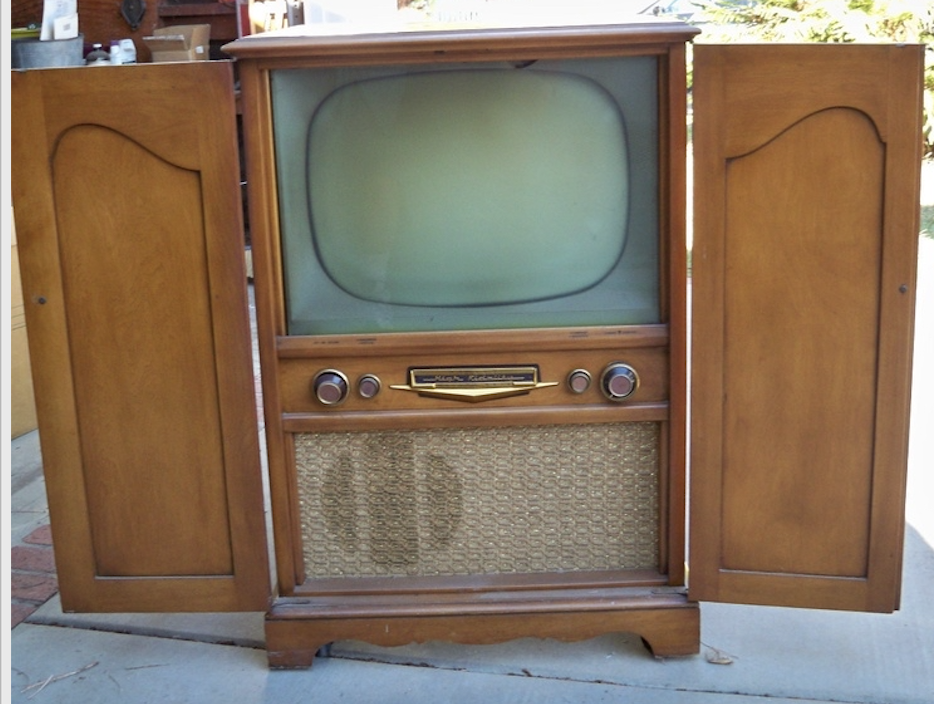
We got our first TV around 1952, when I was seven. It had a 17-inch screen and cost the equivalent of $3,000 today. By then San Francisco had four channels: NBC, CBS, ABC, and a local independent.
TV quickly became central to my life. Asthma often kept me home, and I spent hours watching soap operas, game shows, evening comedies, and the news. I remember the McCarthy hearings vividly — my first real exposure to politics. I remember Walter Cronkite.
That love of TV sparked my love of electronics. Sets then ran on vacuum tubes, about 20 in a typical unit, and they failed constantly. You’d call a repairman, but waiting days for a house call was frustrating. At age nine, I learned to test and replace tubes myself. That was the beginning of my technical curiosity.
But Who Needs Broadcast TV
Broadcast TV was built on a unique foundation. Since 1934, the FCC has licensed local stations to use public airwaves, requiring them to serve the “public interest.” Importantly, the FCC regulates only local affiliates — not national networks like ABC or NBC.
Cable, which rose in the 1970s, largely escaped these rules because it didn’t use the airwaves. Streaming platforms like Netflix, YouTube, and TikTok live entirely outside the FCC’s reach. That’s why cable and streaming can air content — profanity, nudity, partisan slant — that broadcast cannot.
Only about 15% of U.S. households now rely on antennas for broadcast signals. Yet licenses remain valuable because of the FCC’s must-carry rule: cable and satellite providers must carry local affiliates or pay retransmission fees. Those fees are worth billions.
Broadcast networks today are not fundamentally different from cable channels like CNN or ESPN, which live on advertising. What keeps affiliates valuable isn’t the sliver of homes that still use antennas, but the leverage must-carry rules give them in negotiations with distributors.
Politics and TV
This makes broadcast uniquely vulnerable to political pressure. In 2017, Trump threatened to revoke NBC’s “license” after unfavorable coverage — a hollow threat, since only affiliates hold licenses. But it revealed the leverage politicians can wield.
Now the FCC chair is again rattling the saber, threatening ABC over Kimmel. In reality, the FCC can only act on local affiliates. Still, the threat matters.
ABC could tell Sinclair, “Don’t carry Kimmel if you don’t want to.” But that would cut off millions of viewers who still watch through Sinclair stations. While 90% of households can stream ABC, many are not set up to do so easily. Transitioning away from broadcast would be painful — which is why the networks cling to the system despite its vulnerabilities.
Cord cutters aren’t waiting around for late-night ads. They catch the best bits on TikTok the next morning.
Who Is King? Trump or Content
What if Kimmel simply produced his show independently, streamed it with ads, or offered a subscription version without them? Colbert’s show, already slated to end in May 2026, points to the fragility of the late-night format.
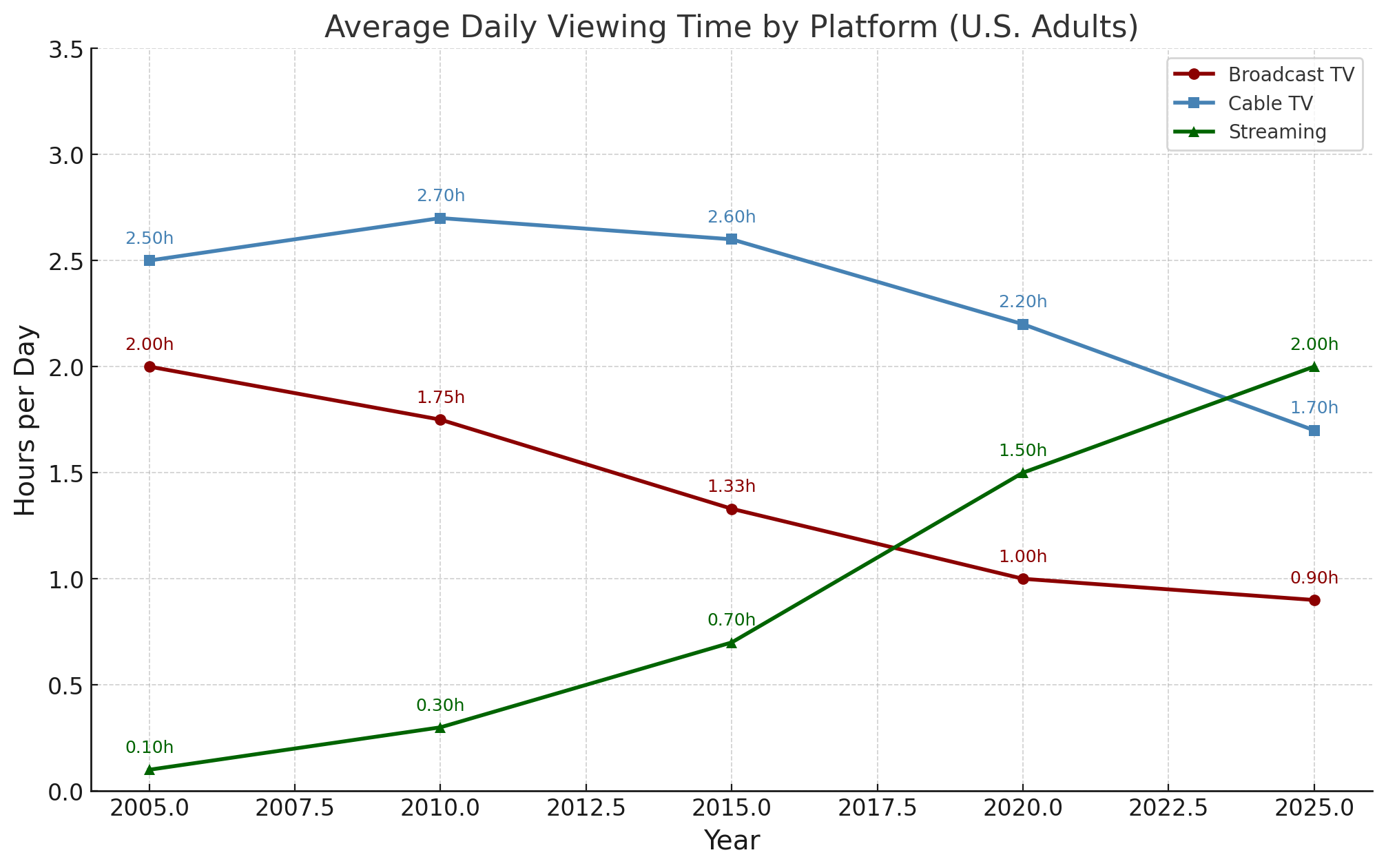
Streaming overtook broadcast and cable combined in May 2025. Broadcast viewing has fallen more than 50% in two decades. Removing Kimmel only accelerates that decline.
YouTube already commands about 12% of TV screen time, Netflix about 8%, while ABC has less than 5% and falling. The internet has fractured the audience. TikTok alone shows how much power has shifted away from traditional networks.
My Role in Broadcast TV
In 1998, while still Corporate Vice President of Business Development at Intel, I joined the board of King World Productions. Herbert Allen Jr. of Allen & Co. had asked me to help shape strategy for a company whose hits included Wheel of Fortune, Jeopardy!, Inside Edition, and The Oprah Winfrey Show.
The question was whether King World should expand by acquisition or sell. From my vantage point in technology, pushing high-speed internet into homes, the answer was clear: SELL. CBS bought King World 10 months later for $2.5 billion.

The Future of TV
The future of broadcast television looks grim. Networks will try to stretch today into tomorrow, milking what’s left of a declining business. But the trend is irreversible. Political interference may accelerate the collapse, but technology and audience behavior have already decided the outcome.
 Two Thirds Done