Two Thirds Done

Thoughts and experiences of an eighty one year old Wild Duck.

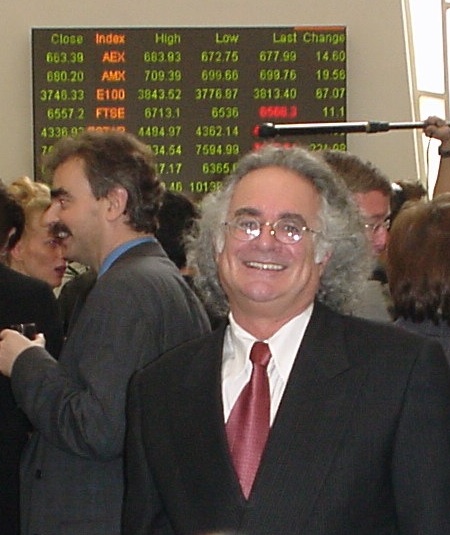
Avram Miller by the sea
EN | IT

587 posts since 2006

Category: Thoughts about the Media Industry

How media industry is impacted by technology

  • A Photograph from 1996 with Remarkable People including Andy Grove


    Starting at Andy and going clockwise, Dave Goldberg, Renee James, Sheri Herman, Ron Whittier, Hassan Miah, Matthew Cowan, Josh Geer, Avram Miller and Allee Willis.

    I recently learned that my old friend Sheri Herman had died.

    Sadly, the deaths of friends are becoming more frequent events these days. I don’t know exactly how old Sheri was, but I believe she was in her late sixties. Her sister said that she died in her sleep from some kind of cardiac event. I am grateful that she died without pain or fear. Sheri and I met in 1996, at the dawn of the commercial Internet.

    Michael Ovitz, the co-founder and CEO of Creative Artists Agency, and I had put together a joint initiative between CAA and Intel. Our purpose was to introduce Hollywood’s creative community to the possibilities of digital entertainment. The venture included a Media Lab housed at CAA’s offices on Little Santa Monica Boulevard in Beverly Hills, as well as an effort to invest in companies creating content for the emerging digital world. Ovitz and I shared what turned out to be a mistaken belief: that entertainment for the Internet would come primarily from the established media industry. Things worked out very differently.

    Two members of my Intel Capital team, Matthew Cowan and Sriram Viswanathan, were based at CAA. On the CAA side were Sandy Climan, who remains a dear friend, and Bob Kavner, a former senior AT&T executive who was in the process of fleeing  from AT&T to the future, was also involved in helping set up what we called the Media Lab at CAA.

    Matthew and Sriram went on to become very successful venture capitalists. I am proud of both of them and think of them as family. They learned the trade, so to speak, from me, and we remain very close.

    Sheri and The Spot

    The Spot home of America Cybercast-Internet Entertainment in 1996

    Sheri had built a career in the entertainment industry and had served as a senior vice president at E! Entertainment Television. When I knew her, she was running The Spot, an early Internet company built around an online soap opera called American Cybercast. Its fictional characters maintained online diaries, and the audience could follow and interact with their unfolding lives.

    This was 1996. The World Wide Web itself was still young. No one knew how dominant the internet would become although I strongly suspected this would be the case.

    One evening, we organized a dinner in a private room at the House of Blues on Sunset Boulevard. Andy Grove, then Intel’s CEO, and Ron Whittier, an Intel senior vice president, were visiting Los Angeles. We invited the leaders of several companies in which Intel had invested.

    Matthew Sends Me a Photograph

    Announcement of the Media Lab (Intel and CAA)

    When I told Matthew that Sheri had died, he sent me a photograph from that dinner.

    I remember the evening well. But it was painful to study all the young faces and realize that four of the people in the photograph are no longer with us:

    • Andy Grove, then CEO of Intel.
    • Dave Goldberg, founder of Launch Media—later Yahoo! Music—and the late husband of Sheryl Sandberg.
    • Sheri Herman, former senior vice president at E! and CEO of The Spot.
    • Allee Willis, the immensely talented songwriter and wonderfully original person who was creating something called Willisville, an idea that, only now, technology may be capable of fully realizing.

    Dave Goldberg had founded Launch Media around what were then called “enhanced CDs.” These were music CDs containing photographs, liner notes and other supplementary material that could be viewed when the disc was placed in a computer. I remember meeting Dave and asking him how his technology could move to the Internet. His answer made it clear that he knew very little about the Internet at the time. But Dave was quick and sharp, and he immediately understood the opportunity.

    Launch Media eventually moved online and was acquired by Yahoo! It proved to be a very good investment for Intel. In fact, the return on that one investment paid for the entire CAA/Intel initiative including the dinner at the House of Blues. Dave later met Sheryl Sandberg, the former COO of Facebook and they married.

    There are several other people in the photograph whom I should mention. Hasan Miah managed the joint activity from the CAA side. He went on to become an investor and entrepreneur across many areas of technology.

    Josh Greer ran a company called Digital Planet and is now focused on eldercare. I am glad to report that both Hasan and Josh are alive and well.

    Ron Whittier was one of Intel’s earliest employees and held several prominent positions during his long career there. Andy had given him responsibility for managing many of Intel’s software relationships, including the crucial relationship with Microsoft. Ron was also the senior executive with whom I worked most closely on our media investments. 

    Sitting next to Dave Goldberg is Renée James. Renée later became president of Intel and is now the founder, chair and CEO of Ampere Computing. Renée and I remain friends, although we are not often in touch.

    It was Renée who indirectly gave me the title of my book, The Flight of a Wild Duck. She once told me that Andy thought of me as Intel’s “wild duck.”

    We Were So Young

    It is difficult for me to comprehend how young we all were. Andy was not yet sixty. He would probably consider me, now  at eighty-one, an old fart.  Andy was seventy-nine when he died, two years younger than I am today. Sadly, he suffered from Parkinson disease in his final years.

    Ron Whittier is now ninety, close to the age Andy would be if he were still alive. From recent photos I have seen, he seems to be doing well.

    I wish all the surviving people in that photograph continued health and long lives. They are or were remarkable people. 

    Sheri’s Gift

    Sheri and I probably had not spoken in twenty years. We went our separate ways and eventually had little in common, although I would occasionally hear from her.

    But Sheri gave me the greatest gift of my life. She introduced me to my wife, Deborah. For that, I will always be grateful.

    And what about me?

    At eighty-one, I still embrace the future.  I still hang out with people the age of those in the photo.  Looking at that photograph, I see an amazing evening filled with extraordinary people. Each of them, in different ways, led a life of contribution, curiosity and joy.

    I am thankful to have been part of their club.

  • Announcing Pluto.tv – Lay back and enjoy


    My First Commercial

    Today, Pluto.tv was officially launched.  I am proud to be an early advisor and investor in this company. Those of you that read my blog frequently will know that I have been following and in some cases participating in the restructuring of the medium we call TV.  I am pretty excited and decided to give it a plug on my blog.  Please think of this post as an infomercial because it kind of is.

    First start with the teaser:

    A revolution in TV that started over twenty years ago 

    In 1992, when I began to work on residential broadband starting with the development of the Cable Modem, I realized that the combination of powerful home computers coupled to a high-speed always on connection  to the Internet would result in a new medium for communications, commerce, education and entertainment.  

    Back then, the only computer in the home was a PC.  We did not yet have smart phones, tablets and powerful set-top boxes.  I was watching developments at the Intel Architecture Lab.  In the early 90s, PCs began to be able to play back video in real-time without special chips.  We called that Native Signal Processing.  By 1998, the labs were demonstrating the ability to encode video in real-time.  It was then that I realized that the TV industry was about to turn on its head, albeit slowly.

    Enter the DVR

    At that time, I was on the board of King World Productions which was the largest syndicators of TV content.  We distributed such shows as Oprah and Wheel of Fortune.  I thought that the technology I was witnessing in the lab would allow devices to be built that would provide for the ability to Time Shift Television Programing.  I knew about Replay and Tivo, the first DVR companies.  Both of which launched their companies in 1999.  I was pretty sure that the DVR would also allow TV advertising to be skipped.  So I recommended to the Board of King Word that we sell the company, which we did, to CBS. That was 15 years ago.

    The beginning of self published TV

    I left Intel in 1999 and joined a number of boards.  One of which was CMGI.  We started a business called iCast which was the brain child of the CEO of CMGI, Dave Wetherell.  iCast was Youtube but just five years too early.  But it helped me to understand the power of user-created content.  

    Over the last 15 years we have seen more and more video content on the Internet. Much of it is just regular video programing repurposed.  You get a video clip here and a video clip there.  We have also seen the use of the Internet to augment Video on Demand.  So now we have applications like HBO GO.

    Cut the Cord

    We have also seen the growth in what is called Cord Cutters.  These are people, mostly young people, who have decided that they no longer need a subscription to cable TV.  They might not even have TVs but they certainly watch TV.  They just do it over the internet and use one of their devices as the display. 

    How long is your format?

    I would say that up until today’s announcement of Pluto.TV, there have been two kinds of applications of the Internet for Television.  One is a transport for more traditional TV programing.  In addition to HBO GO we of course have Netflix which one could think of as being an Internet Cable Company offering traditional programing via the Internet.  The other use, is short format TV.  Examples of this abound with the most prominent being YouTube.  I like Shelby.tv myself.  Short Form TV is fun and a good way to kill a few minutes but if you want to lay back and relax you probably turn to traditional TV, even if it is delivered over the internet via some device.  

    However, there is a lot of great long form TV that is Internet only.  Examples of that would be TED.  Sites like TED even come with Applications so you can easily select programing on you phone or tablet.   Smart Set Top Boxes like Apple TV or even Smart TV’s may allow you to connect directly to a large screen and lay back on you sofa and watch.  But these sites only represent a fraction of the long form content on the internet.  Much of the really great content has to be discovered.  So we sometimes get links sent to us by a friends or embedded in some electronic newsletter, like Huffington Post.  But then we often forget about this content and can not find it again.  Frankly, it’s a lot of work.

    The Role of Pluto.tv

    So what is the role of Pluto.tv?  It provides much of the same experience one would get by watching cable TV, but the content is from the  internet.  Pluto has editors that curate by subject.   You can browse channels much as you do if you are watching cable TV.  But you can go deeper.  You can have not just one cooking channel but many.  And not only can you send a link to a friend about a program but you can synchronize and watch the program together but from different locations.  

    You can watch on any device and if you want to put it on a big screen, you can use AppleTV or Chromecast.  Please give it a try and let me know what you think.

    PLUTO.TV OFFERS A NEW WAY TO EXPERIENCE

    THE MOST ENTERTAINING ONLINE VIDEO CONTENT

    Free Video Platform Brings the Best of the Web to Viewers

     With Nearly 100 Curated Channels Available on Any Device


    LOS ANGELES, March 31, 2014 – Pluto.TV announced today the launch of its video platform that allows viewers to watch the most entertaining online and traditional content in one place. Pluto.TV curates and continually streams content around areas of passion including music, sports, news, entertainment, comedy, lifestyle, technology, art & culture, education, and kids, so viewers no longer have to search for it.


    At launch, Pluto.TV will offer nearly 100 channels, featuring a wide variety of content programmed to specific interests like hip-hop, snow, surf, food, health and fitness, travel, sketch comedy, and many more. Pluto.TV is also partnering with some of the most popular content creators from the web and well-known television programs to create individual channels, including Funny or Die, QVC, Refinery29, RocketJump, The Young Turks, and more.


    Pluto.TV is live and available for free on any device, 24 hours/day, so viewers can start watching on their laptop at home or in the office and move to a mobile device with no interruptions. Users can also share content on social networks and chat live while watching Pluto.TV. Pluto.TV features include:

    •        Curated channels: Pluto.TV hand picks the best video content across a multitude of interests and passions.
    •        Intuitive channel guide: The Pluto.TV guide helps viewers navigate everything there is to watch. Select channels and programs in an easy to use and familiar interface. From the home screen, viewers can see the programming schedule breakdown, find what’s coming up, and read through descriptions to help decide what to watch first.
    •        Personalization: Users can create a personal “favorites” list by adding a “star” to favorite channels and programs for easy and immediate access to preferred channels.
    •        DVR: If viewers like what they see, they can rewind, pause or fast-forward the content.
    •        Multi-platform: The Pluto.TV mobile app is available for both tablets and smart phones on iOS and Android. Pluto.TV is available for free at www.pluto.tv and in the App Store and Android Market starting today.
    •        Social features: Pluto.TV is built for sharing with social features like live chat that allow users to talk with friends and family in real time as they watch, as well as share what shows they’re into by notifying their friends. Users also can invite friends to watch or share through social media.


    “Pluto.TV is revolutionizing the way people enjoy video content online,” said Pluto.TV co-founder and chairman Nick Grouf. “We’re making the process of discovering new content seamless by delivering free programming around areas of interest anytime, anywhere. Pluto.TV has done the heavy lifting for you, so you can sit back, watch, and enjoy.”


    “Pluto.TV provides premium content and the best entertainment for our viewers, from traditional TV favorites like sports highlights, breaking news, and comedy to engaging content like educational talks, Funny or Die videos and the hottest music online,” said Pluto.TV co-founder Tom Ryan. “Whether viewers are watching the latest runway show from Milan or the coolest skating tricks, Pluto.TV helps them discover that content in a way that’s easy, engaging, and fun.”


    Pluto.TV was co-founded by seasoned entrepreneurs Nick Grouf, Ilya Pozin and Tom Ryan in 2013. The company’s investors and advisors include Terry Semel’s Windsor Media; Jeremy Zimmer, CEO,UTA; Avram Miller, founder, Intel Capital; Mich Mathews, former CMO, Microsoft; Chris Silbermann, president and partner, ICM; Greg Steiner, COO, Beachmint and former COO, eHarmony; Nas & Anthony Saleh’s Queensbridge Venture Partners; Great Oaks Venture Capital; Dennis Phelps, general partner, Institutional Venture Partners; Jonathan Nelson, CEO Omnicom Digital, Omnicom Group Inc.; Tom Whalley, former CEO, Warner Bros. Records and co-founder, Interscope Records; Jamie Tarses, former president, ABC Entertainment; Brent Weinstein, head of digital media, UTA; David Waxman, managing partner, TenOneTen Ventures; and Jeremy Welt, SVP marketing, Maker Studios.


    About Pluto.TV

    Pluto.TV is an online video platform that offers a new way to experience the most entertaining and engaging content on the web. Viewers can experience continuous programming around areas of passion for free, and available 24/7. With nearly 100 channels organized into popular common interest categories like Music, Sports, News, Entertainment, Comedy, Lifestyle, Tech, Art & Culture, Education, and Kids, Pluto.TV is for everyone who enjoys being entertained. Pluto.TV is headquartered in Los Angeles.

  • 10 Predictions for the Computer Industry for 2014

    My dear friend, Bob Cringely is a very successful blogger amongst other accomplishments.  You can read his blog here. He and I often speculate together about the future of technology.  Every year around this time he makes predictions on what will happen in the new year in computer technology.  Often he asks for my ideas, some of which he may incorporate with is own views and some of which he ignores.  This year Bob had to deal with the illness of his mother so he asked his readers for their ideas.  I decided that this year I would write up my own ten predictions which I will of course send to Bob.  I should also say that as a technologist in my core, I often see things happening much earlier that they really happen.  It is sort of the opposite of the sign on your cars side mirror which reads “objects may appear further away then they actually are”.  Here they are in no particular order:


     (1)  Bitcoin becomes the MySpace of Crypto-Currency

    I have to confess that I am a bit bewildered about Bitcoin.  On the surface, it is easy enough to understand if you just think of it as just another form of currency like the Dollar, Euro or Yen.  But unlike the Dollar, Euro or Yen, there is no country or countries backing and controlling it.  To really understand Crypto-Currency, one has to have both a pretty good technical background and in particular an understanding of cryptographic, open source and distributed systems.  But one also has to have a pretty deep understanding  of economics and especially money systems.  Frankly, understanding money is a lot harder than most people think.  It kind of reminds me of quantum mechanics.

    At first, I did not take Bitcoin seriously and that in retrospect was wrong.  I actually have friends who have made small fortunes in Bitcoin (I hope none of them accomplished this by starting out with a big fortune).

    I am wondering, like many, about how Bitcoin can become a real currency.  I don’t think it is that yet.  It is more like Gold although a lot easier to use and store.  But until there is a whole supply chain that takes Bitcoin as its primary currency, I think those that that accept Bitcoin for payment must be changing their prices every day to match their preferred currency.  Bitcoin is way too volatile to be used as a main currency. Because a lot of Bitcoin’s are held by speculators, there is incentive drive the value up creating a potential bubble.  We all know what happens to bubbles. Debt is a very important aspect of a successful currency. It is hard to have debt when there is high inflation or volatility.

    There is a lot of concern about the potential for Bitcoin to be manipulated.  There is concern that  it could be hacked.  The mysterious start of Bitcoint by Satoshi Nakamoto (a person or collection of persons) who has since disappeared, causes some to wonder who is really behind Bitcoin.  Now it appears that Marc Andreessen, the technical brains behind Netscape and now very successful venture capitalist, has sort of taken over the leadership of the Bitcoin movement. Anyway, I guess we should be glad its not George Soros.

    Given the early success of Bitcoin, there are many other Crypto-Currencies being created.  The Bitcoin people feel that they can maintain the lead because of their momentum and present dominance.  History proves that this is not always the case.


    (2)  iWatch – just in time

    This will be the year that Apple Introduces the iWatch.  I wrote about the iWatch here. The features that I described are still the ones I expect, but I would place more emphasis on the use of the iWatch for transactions.

    By the way, Apple may introduce a large iPhone and/or a larger iPad.  I don’t think this a game changer so I am not mentioning it here.


    (3) Microsoft – Breaking up is hard to do

    Microsoft will finally get a CEO. The primary task of this person will be to breakup the company which will prove very difficult to do because this kind of thing is always difficult to do.  In some cases, parts of the company will become independent companies and trade on the stock market. For instance, I expect that will be the case for the Xbox, while other parts, like Office might be sold to a company like  Oracle.  I think it will take about five years for all the work to be completed.  Expect that Bill Gates will leave the board when the new CEO takes his/her place.


    (4) Desktop and Notebooks fall into the black hole of mobile computing

    There is a lot of computing power in smart phones.  Take a look at the iPhone 5s as an example with its 64-bit  CPU.  The power of a mobile computer coupled with the move to Cloud Computing will change the partitioning of computing.

    Look for Apple to bring out a new line of Cinema Displays that will have wireless connectivity with IOS devices.  Imagine that you can walk up to any of these displays and your phone, iWatch or iPad will link to this display.  Applications will be designed to make full use of the display’s real estate.  Blue tooth keyboards and track pads/mice will interface with your IOS device.  All of a sudden you have the full desktop experience that most users know. You will be able to use the full iWorks suite for instance.  It will might be running in the cloud but it will feel, as it does now, that it is running on your “desktop.” This is an extremely important event.  Maybe the most important event of 2014.

    For instance, about two thirds of American have an iPhone. Of course, most of these are not iPhone 5s, but enough are to get things started.  Not all these customers have Macs. In fact most do not.  But most have desktops or notebooks that they will want to replace.  Instead of replacing them, they only have to buy a new Cinema Display.  They can then either use the free iWorks suite or or use the Microsoft Office Cloud service.  Microsoft will have to make sure their apps work well in this environment because the Apple iWorks programs are awesome and are free.  Google will have to do the same.
    So the only customers buying desktops in the future might be those that are heavily involved in using computers to do serious computational work.  Welcome to the Mac Pro and the unannounced Mac Pro Light or the Windows equivalent.

    The same kind of thing will happen with large flat panel displays.  The Apple TV will become an HDMI dongle just like Chromecast. You will be able to easily connect your IOS device to the display just as you can with Airplay now.  Apple will introduce a very powerful gaming environment for IOS that will take advantage of both the A8 64 bit processor in the iPhone but also the motion co-processor to connect with various gaming peripherals.

    Look to 2014 being a very good year for Apple and in particular Apple stock (although I am negative on the stock long term).  The capabilities I described will drive demand for new iPhone and iPad purchases.


    (5) Cable TV becomes Cable Internet

    When I first went around to all the cable company CEO’s in 1983 to introduce them to the concept of the cable modem, I told them that they should no longer think of themselves as being Cable Television Companies but rather Cable Communications Companies.  Not all of them got what I meant, but fortunately,  their greed and the fear of the telephone industry helped persuade them to experiment with the idea of using their “cable plant” to allow computers in homes to communicate with the nascent internet.

    Now, the cable industry is experiencing a loss of TV subscribers as young people in particular “cut the cord” and watch TV via the internet.  But they are not really cutting the cord all the way. In particular, if they are at their home they are most likely still connected to the cable company.  Revenue from providing residential broadband has allowed the cable industry to grow in the face of a decline in TV subscribers. This year, Cable Companies will make more money from broadband than from TV. TV is just one attribute of Cable just as Word Processing is no longer a  Device but just an Application.

    However, the Cable Industry has kept a lot of bad habits (like bundling of channels) which make it difficult for new companies to provide Internet based TV.  This is about to change.  But to make it really happen, Cable Companies will want to get a bigger piece of the action. They will want to charge not only for speed but also for quality just as the wireless companies are now doing.  Once this happens, everything will change.  But since this will depend on government regulations, I can not predict exactly when and how this will happen.  As part of this, providers of content can pay directly for the bandwidth.  So if you use Netflix to stream a lot of Video, it will not effect your bill with your cable company. Netflix will pay them for the bandwidth you use when streaming.

    Once the dam breaks, things will change very fast.  This will have negative effects on the cable networks who have relied on having TV channels to be able to make deals for programing. Now if the Internet is used as a medium, there are unlimited “channels”.    Once TV is on the internet, advertising can be done in a much different and more targeted way.  This will also weaken the Networks that rely on advertising.  As the Networks see major declines in their profits, they will be able to invest less and less, leading to a quickening of their demise.

    We will continue to see changes in consumer viewing habits. Not only will consumers see what they want when they want but they will see it with the people they want no matter where in the world they will be.  I hope to say more about this in a few weeks when a company I both advise and have invested in leaves stealth mode.


    (6) Facebook – the AOL of Social Media

    Facebook is a company I am negative on even thought I use it every day.  Clearly it is the dominate company on the social media stage but I don’t think for long.  There are a number of factors that will effect their standing.  The first is demographic. Young people that first created the market for Facebook are either moving off the Facebook Platform or never getting on.  They don’t want to be on a social media site that they share with their parents and grandparents.  Also much of the growth of Facebook as been outside the USA and in developing countries.

    I suspect that while these numbers add to Facebook’s population, they don’t do much for the bottom line.


    Equally as important is that Facebook’s users don’t really like the company.  They might like using Facebook because it connects them with their friends but they don’t like the confusing interface, constant changes in privacy and the sense that Facebook is exploiting them.

    Young people are moving to social media sites that are more mobile oriented like Tango, Talk Plus, Line and WeChat. Then there is SnapChat the opposite of a “time line”.

    Facebook has a market capitalization of $135 billion dollars but made less than a billion dollars on the sale of more than $5 billion dollars.  It recently spent a billion dollars to by zero revenue buy acquiring Instagram.  Facebook is trading at 90 times estimated earnings.  For Facebook to justify its stock price it will be forced to find more ways to monetize its traffic and most of those ways will turn off their users.  Actually, the only hope for Facebook will be discovering life on another planet.


    (7) Amazon buys Netflix and finally has to pay California Sales Tax

    Amazon intends to be one of the major media distribution companies in the “new order.”  They are already following in Apple’s footsteps using Amazon Prime to distribute Media.  Now they are imitating Netflix with original programming.  Netflix has House of Cards which is a drama about a bunch of smart but corrupt politicians.  Amazon has Alpha House which is a comedy about four moronic politicians living together in a house in Washington DC.  Given that these guys are idiots, it might be better to describe it as a documentary.  House of Cards was a major hit and won an Emmy.  Alpha House is pretty much a dud. Netflix redefined viewing habits and created the concept of Binge Viewing while Amazon has had little impact on viewing habits of consumers.

    Netflix is, in a sense, the worlds largest “cable” operator.  It reaches more people than HBO.  Most devices and most modern TV’s can receive Netflix.  Bezos is going to finally figure out that he can not catch up.  And he will not want to see Netflix in the hands of some other company.  Netflix was really cheap a year ago when it traded at about $90.  It is now just a bit south of $350 dollars.  Its total market cap is about $22 billion. While Amazon has done well going from $245 to $405 and has a market cap of $182 billion this is nothing compared to the movement in Netflix’s stock price.  Netflix must now feel comfortable with their current price because they have recently removed a Poison Pill provision making it much easier for someone to accumulate large amounts of their stock.  This will push the stock up even further so the sooner Amazon moves to acquire Netflix, the better.  Of course, Bezos hates paying state sales tax which Netflix does.  Maybe this is what is slowing him down.


    (8) Internet of My Favorite Things

    Everything is going to be connected to everything.  It is going to be a wild ride.  I already have light bulbs that are connected to the cloud. My car is connected to the cloud. I wear exercises devices that connect to the cloud. My piano is connected to the cloud.  I could even jam with musicians. It will be like the wild west all over again.

    But then again, I am waiting for the hackers to take over cars, cause washing machines to destroy clothes and of course stream videos of us in our pajamas.  And then there are the personal Drones!


    (9) Google Glass joins the other zero billion dollar business that Google has launched 

    If you read my blog often, you will know that I am not too fond of Google.  I refer to Google as the Microsoft of 21st century. Of course they have done some amazing things but much of what they do is mediocre.  For me, throwing a bunch of spaghetti against the wall and seeing what sticks is not a business strategy.  I do understand that many of you will disagree with my point of view.

    I know something about the ‘glass’ application. In fact, I know a great deal. I have been working in this area for over ten years.  They company I have been involved with most recently is Innovega.  We have the real deal but it takes both glasses and contact lenses to really work, so it’s not for everyone. But I know that Google Glass is probably for a lot fewer people.

    I think it is a silly idea that has very limited long term prospects.  Not because I do not believe in the concept.  It is because I do not believe in the implementation.  I joke (partly) that when Larry Page became CEO he tried to figure out how to get Sergy out of his hair.  Sergy came to him with the idea of Google Glass – which may have started when Innovega paid a visit to Google.  Larry said to Sergy “this is so important that you should spend all your time and energy on it.” It was probably worth spending a few billion dollars for Larry to no longer have to share an office with his co-founder.


    (10) Foundry or Floundery

    Finally I have to mention my former company, Intel, where I was Vice President of Business Development until I left in 1999.  Intel has a great deal of excess semi conductor manufacturing capacity.  It  is perishable – if it is not used it just goes to waste.  We used to say that when we designed a new factory, the first chip it produced cost a couple of billion dollars and the ones after that just a few dollars.  Factories have very high fixed costs.  They are like airplanes or hotels, you want to fill every seat and every bed.

    Apple needs Intel to build its A processors.  For obvious reasons, it no longer wants to have Samsung build its chips.  So it probably has put a “gun to Intels head” and said that they will design out the Intel microprocessors in the Mac line if Intel does not start doing foundering work for Apple.  And Google is threatening Intel with developing its own line of server processors if Intel does not start making chips for Google.

    Intel will remain the top semi conductor company in the world, but that is like owning the best house in the worst neighborhood.

    As most of you know, Intel missed the transition to mobile but frankly even if they had made the transition, there was no way the company could continue to have the margins they enjoyed during the PC phase of computing when Microsoft and Intel earned more than 120% of the profit of the industry (this was possible because so many other companies lost money.)   It takes a long time to develop and build new factoriess to take advantage of new semi conductor manufacturing and design technology.  Intel was used to growth and building out capacity to intersect that growth.  In the 90s I was often quoted as saying that “Intel had to build factories to manufacture products that were not yet designed to serve markets that were not yet created.” That was true then and it is true now, but now the products will not be Intel’s.


    Please feel free to comment and make your own predictions.  And don’t forget to check Bob’s blog.


  • The First Bank of Amazon or the End of Advertising as we Know it.

    Twenty years ago, I proclaimed that Advertising would be the Killer App of the Internet.  Now I am pronouncing the end of Advertising.  What will replace it as a source of revenue for media companies.  It will be the First Bank of Amazon. Read more!

    Old Farts using today’s technology to speculate about the future of technology

    taplin


    Jonathan Taplin, a long time friend and former early internet entrepreneur, now a professor at USC and director of the Anneberg Center for Innovation was intrigued my recent blog post about advertising.  He asked to discuss it with me.  Below you will find the ideas I shared with him.   So we Skyped.  John Seely Brown, the former director of the Xerox Parc and that company’s Chief Scientist and  currently the Director of the  Deloitte Center for Innovation, joined  the conversation for the first few minutes. He and I served on the board of Maxis together before that company was sold to Electronic Arts and he wanted to say hello.    John Seely Brown is also board member of Amazon. For that reason, I want to be clear that he and I have never discussed Amazon but I do hope he reads this post.

    Taplin is a truly interesting man who started his professional life as the tour manager for Bob Dylan and The Band; produced Martin Scorsese’ first feature film, Mean Streets; acted as an investment advisor to the Bass Brothers; and he founded Intertainer, one of the first video on demand internet sites.  Intel was an early investor.  Taplin ended up Academia.  He is one of the few people I’ve met professionally that has a crazier life story (or maybe not) than me.  His book, Outlaw Blues is well worth reading.

    Outlaw Blues


    Why advertise?

    The primary purpose of advertising is to cause someone to purchase something.  There  is also advertising to get votes for candidates, support a concept, etc.  But most advertising is about selling.  In fact, the world of advertising created the consumer economy that we now experience.  It resulted from a time when there was an over-production of goods. Producers of these products needed to find a way to get consumers to buy things they did not actually need and in some cases, things that are

    Lucky Strikes not actually good for them.  It may not be surprising to realize that the leader in advertising in the 1920s was the Tobacco  Industry.



    Transactional and Brand Advertising

    We can divide advertising into the kind that encourages a consumer to directly take an action that results in a purchase and those that build desire and comfort with a product that will re-enforce a purchase decision at some later time.   I will call the first kind Transactional Advertising and the second kind, Brand Advertising.  My focus in this blog post will be on the first kind.

    Different media (print, radio, TV etc.) are better at one or the other.  Digital Media is particularly suited for Transactional Advertising.  It is far easier to click on a link than to have to call a phone number or drive to a store.  The devastating  effects this has had on traditional media can be witnessed by watching the decline of the Newspaper Industry.

    In 1993, I gave a key note speech at the National Association of Broadcasting in Los Vegas.  During my talk, I declared that the the Killer App for the Internet was Advertising.  The founders of Google were just 20 years old at that time and it would be several more years before the founding of Google.   Now, I am declaring that this phase is over.


    The closer to a purchase the more valuable the Ad

    Obviously, the more an Ad results in a purchase, the more valuable it is.  But it is difficult to know if a specific Ad has that effect.  Digital Media provides the ability to Narrow Cast advertising; that is to target advertising that might be more effective for particular  consumers.  If I know that someone plays golf and is a male, an Ad about golf clubs might be more effective than an Ad  about feminine hygiene products. This makes the Digital Medium superior to traditional linear medium for advertising.   While it might be possible for the traditional cable industry and their content partners to Narrow-Cast advertising, they lack of vision and technical skills has handicapped them in this regard.

    The power of interactive digital media is that an Ad can result in a purchase just a few minutes later.The downside for the site hosting the Ad is that it often results in the consumer leaving their site in order to make the purchase.


    Enough Ads already

    We are saturated in ads. We are exposed to hundreds of Ads per day. Consumers are finding ways to reduce the onslaught of advertising.  In linear media such as TV, we are using DVRs to time shift and skip ads.  We listen to music on sites like  Spotify and are willing to pay a few bucks to avoid ads just as many of us are willing to pay for HBO or Netflix. The pay on demand or subscription model is clearly an alternative to the advertising model.  Sometimes there is a combination which has to be one of the stupid ideas of all time.  Hulu Plus does this, which I find combines the worst of two worlds (Ads and Subscription).

    Web browsers like Chrome and Firefox offer Ad blockers.  I am pretty good at removing the Ad from the sites I visit.  Of course, I understand that these sites have to make money but I am not willing to pay for content with my attention.

    noisy restaurant

    The less effective Ads are, the more Ads are presented.  It is kind of like conversation in a noisy restaurant where everyone keeps talking louder in order to be heard.  I personally avoid these restaurants.


    The Substitute for Transactional Advertising: The First Bank of Amazon

    Sometime in the next five years we will see the collapse of advertising supported media.  Here is how it might play out with respect to the TV industry.


    Chromecast, the Trojan Horse that Will Invade TV Manufacturers

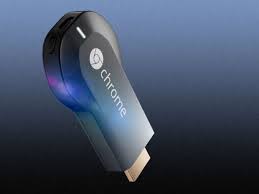
    Google recently created an amazing product, Chromecast  (I don’t think I have ever used the word “amazing product” and Google in the same sentence before).  It is a $35 device that plugs easily into a modern flat panel ChromecastTV via an HDMI port.  It connects to the internet over wifi to the home’s local area network. It is controlled right now by an iPhone or Android product or any computer running Chrome.  There is limited programing but that will change.  Eventually all television programing will move to such devices.  Cable companies will cut the cord with Network programers.  They already make more money from Broadband than they do from TV programing (you can thank me cable industry, for that).  HBO and Showtime and the like, will unbundle their programing from the Cable and Satellite packages (by the way DirecTV and Echostar are totally screwed and I will write about that in the future).

    Netflix with ‘House of Cards’ and ‘Orange is the New Black’ has proven that traditional Hollywood does not have a lock on content.  Google and Amazon are not far behind.  Eventually, individual shows like Mad Man will go ala-cart.

    Google will establish Chromecast as a viable way of getting TV programing. But they are stuck with the idea of traditional advertising.  They will offer their technology to TV manufacturer for no cost and offer to share revenue with them.  This gets the TV manufacturer out of the business of trying to keep up with Internet technology and provides a valuable revenue stream.  Once one or two manufactures go, all the others will be forced to follow.


    Apple Forced to offer a TV

    Apple, is in a bit of a bind.  They do not like to license their technology.  That is why they want to build a TV directly but they have to wait until the content is available.  Consumes will not upgrade their TV’s very quickly so this approach will be very limiting for Apple.

    While Google has an ad centric business model much as do the Network TV companies, Apple will push for “pay per view” and subscription models like they now offer on their current AppleTV product via the iTunes Store.


    Amazon enters and everything changes

    Enter Amazon and the game changes.  Amazon will also have a devices similar to Google’s Chromecast with both an HDMI add-on and embedded technology for TV manufacturers.  TV manufacturers may not have to choose sides but offer Macro Networks from Google, Apple and Amazon.   Amazon’s business model will be different.  There will be no Ads.  Instead, Amazon customers (which is pretty much all of us) will get “points” for buying things on Amazon. These “points” will be deposited in the First Bank of Amazon and  can be used to pay for programing including on line newspapers, social networks etc. Imagine Facebook  or a Facebook competitor without stupid Ads.   As long as you buy enough from Amazon, you can consume media without ads.  Periodically, Amazon will let you know if you need to add to your “account”.

    There will be many ways to do this but one will be the Amazon Shopping Network.  Think of Home Shopping on steroids. It will be an informercial channel which is tailored for the individual.  The informercials will be made and supplied by the companies offering the products.  With today’s technologies even small companies can create compelling video Ads.  Take Kickstarter as an example. Check out this Ad for the Menurkey which was designed by the nine year old son of one of my friends to celebrate the unusual event of having Thanksgiving and Hanukkah on the same day (OMG did I just make an AD?). In addition to knowing the price for every product, there will be an indication of the number of “points”.   And of course, you can always make a direct deposit into the First Bank of Amazon.  Amazon will be paying the content providers something less than you pay them (after all they are a Bank).


     Google and Apple get left in the dust

    Assuming the content is unbundled and available to anyone for distribution at a price, Google and Apple will have a very difficult time duplicating the Amazon strategy.  As I indicated, Amazon Points can be used to purchase content from any medium, even Newspapers like the Washington Post who coincidently just got a new owner. Jeff Bezos.


    First Bank of Amazon is a great investment

    My money is on Amazon (literally.)  Jeff Bezos is one of the few founders of major tech companies left.  He has a vision and the ability to implement his vision an is fortunate to be the King of Transaction.


  • Time to Channel Steve

    Screen Shot 2013-04-24 at 12.26.03 PM

    As a reader of this blog, you probably know that Apple stock has lost almost 40% of it value from a high of $705 to low of $409, as of this morning.  In just seven short months Apple has gone from the “wonder company” which might have become the first company with a trillion dollar market cap to a “dog”.  Tim Cook went from sucessor of Steve Jobs to an Apple version of Steve Balmer.  At the earning announcement yesterday, Apple reported a down earnings  quarter year over year for the first time in a decade.  iPhone sales are now having single digit growth.  Apple is entering the replacement phase of their  business.  What was worse, there was no indication of new products to the fall and nothing about a new breakout category.  Rather, Apple said it would buy back its stock and double its dividend and thereby demonstrated that do not have better ideas for their cash like acquiring Dropbox and/or Netflix.
    What went wrong.  Apple had been growing by creating new categories of computing from the iPod, iPhone and iPad. They were brilliant at design and marketing of these products.  The combination of their increased buying power coupled with the benifit of Moore’s law allowed them to make significant improvements in these products but all good things come to an end.  For instance, how many pixels do you need on a phone?  The answer is clearly no more than you can see.  In the meantime, the double edge sword of Moores law, means that it is easier for competitors to catch up from a lower price point.  As products come to market from companies like Samsung that have similar capabilities but at much lower price points,  new years especially in price point sensitive geographies  start buying these products. Apple can not easily reduce price without having a major effect on their margins.  They want to keep the margins up feel that they can hold onto most of their customers because of the high cost of switching out.  Cook thought he could grow the company by explaining in new markets but that is turning out to be harder than he probably thought.
    Apple’s strength has been in integration of devices but many young people only have one device.  And more and more, applications are moving to the cloud.  I use to tell Andy Grove that Intel’s competition was not AMD but it was bigger screen monitors.  He never got that by the way.  Right now there are many companies chipping away at Apple in areas that Apple does not really pay attention to. For instance Dropbox.  Apple is bit particularly talented in network technologies.  The real sleep here is probably Amazon.   The cloud will have impact on iTunes.  Why own music when you can subscribe to Spotify.
    Steve Jobs was not only the composer of Apple’s success but he was also the conductor who had an excellent sense of time.  Steve would tell everyone inside and outside of Apple that Apple would not do certain things (“we will never develop a phone”) only to reverse himself later either because he changed his mind or he just was trying to manage company priorities.  After Steve died, the company continued to work on the things Steve said to do but no one was able to work on the things Steve said not to do.  That is why it may be necessary for Apple to Channel Steve to get permission to go against some positions he took.
    It was reported that Jobs figured out what to do with the TV causing lots speculation about a true Apple TV.  I have always had might doubts about this.  It just did not make sense.  I have spent months trying to figure out what if anything Apple could do to do to TV what it did to the cellular phone.  Well I finally figured it out but I realize that Apple is no longer capable of making it happen.
    If there heaven  and Steve Jobs is there, I can imagine that he is looking down on Apple and trying to figure out how to change the channel.
  • Avram’s Congressional Testimony on HDTV 1998

    It is hard to imagine that just only fifteen years ago, we still had not settled on the HDTV standards let alone deployed HDTV.  Flat panel TV’s were just being introduced.  I got my first a year later.  It was 42 inches and did not have enough resolution to display HDTV and cost close to $5,000.

    The  House Commerce Committee Subcommittee on Telecommunications, Trade and Consumer Protection convened a 2 1/2 hour meeting to discuss HDTV standards and deployment issues on April 24, 1998. I was invited to give testimony.   The panel was made up of a  large group of executives representing the consumer electronics, the television broadcast and the cable industries.  In addition there were two representatives from the computer industry, Bob Stearns from Compaq and me, from Intel.  The chair was Billy Tamzin, a republican who later went on to make a fortune as a lobbyist.  The ranking member from the democrats was Ed Markey (now running for the Senate in MA).   Stearns and I had a couple of objectives.  While most of  the panel saw a TV, we saw a Monitor.  We understood that with that if we could achieve  high resolution and progressive scan, the HDTV set of the future could serve as a monitor for computers.  Just like the  CD and DVD, the consumer industry do the R&D and and manufacturing  of important and innovative products which the computer industry would “highjack” for its own use. Everyone one on the panel had their own agenda and often it was a secret agenda. By the way, the guy who is looking is staring at me in the photos is Chase Carey the current COO of News Corp.

    Here is my testimony followed by my friend, Bob Stearns.


    Digital TV and Compression

     Back then TV transmission was still analog.  The majority of American homes no longer received TV over the air but instead they got TV content via cable including the so called Broadcast Networks. The move to Digital Television which allowed an ever greater number of television channels to be squeezed to a given amount of spectrum (bandwidth) had begun. It  all started when John Malone declared the 500 channel Universe at a cable industry show in 1992.  The bandwidth needed for HDTV required digital compression.  One HDTV channel was the equivalent of four normal resolution channels.  Digital Compression was first introduced by Direct TV who had a needed to get as many channels into their limited spectrum.  The cable industry was looking to eventually distributed HDTV. By using digital compression, they could get between 1-2 HDTV channels in the same 6 meg hertz bandwidth normally used for standard definition analog TV channel.  They soon realized that they could also squeeze between 4-10 standard definition channels into the same space depending on the quality that they would be willing to offer consumers.  This turned out to be very important to Malone because TCI had one of the worst cable plants . This way they could avoid the cost of upgrading the plant by using digital compression to offer more channels with the same old bad quality.

    A six mega hertz channel was converted to what was called 64 Quam.  It was a packet structure and could be used for a combination of HDTV and standard TV.  It was this technology that we hijacked to create the downstream portion of the Cable Modem.  We could turn an analog TV channel into about 30 mbits which between a number of homes.

    Open Set Top Box

    The consumer electronics companies represented on the panel were interested in finding away to let consumers buy set top boxes directly from retail instead of getting them from the cable companies. For instance,  Sony really wanted to be able to offer set top boxes direct to consumers that would integrate capabilities like DVDs.   The cable Companies did not want this top happen.  Even Circuit City was represented at this hearing.

    Cable companies wanted to keep the set top boxes proprietary for a number of reasons.  The charged customers $5-$10 a month for equipment that was not only cheap to make but keep in service for many years.  In fact they are still doing this.  They would claim that they needed to control the set top box to make sure that consumers were not able to access content they had not paid for.  I was amazed to hear the representative from Time Warner Cable say that they were working hard to create an open standard for Set Top Boxes when I knew they  were doing everything they could to prevent it.
    The cable companies are promoting that they would open the set top box market and provide interactivity.  There were only two major manufactures of set top boxes in the USA, the Jerold Division of General Instruments (now owned by Google) and Scientific Atlanta (now owned by Cisco).  They were tightly controlled by the Cable Industry.

    Broadcasters were concerned about the cost of HDTV and the Digital transition.

    The major networks were concerned about the cost of both creating and distributing HD content.  They really wanted to slow things down.  Only PBS seemed to be aggressively pursuing the concept of Digital Channels and HDTV.  But the government wanted to reclaim the spectrum which they provide free of charge to Broadcasters.   It was a battle that went on for more than a decade.

    Interactivity

    I wanted to make sure that nothing would happen to interfere with the possibility of interactivity over cable.  Interactivity required a return channel  (upstream) which was actually the most difficult part of getting cable broadband access done.  While the Cable Industry was buying into the concept of Internet Broadband for home computers, they did not want this to creep into the TV area.  They wanted to be able to control TV interactivity just like they controlled TV content.  By this time, I knew them well enough to know that they were not capable of pulling this off but saw no reason to rub this in.  Instead, during the Q&A session, I gave an example of the kind of interactivity that I thought the cable industry and TV industry would find exciting.  You can view those comments here.

    It is strange that now 15 years later, the kind of interactivity I was referencing still has not happened other then what is now called “second screen” where a companion device like and iPad or iPhone is used in conjunction with the TV.


    Here is a link to the full session.

    This is the formal statement that was entered into the record.  My actual remarks at the hearing are more interesting, in my opinion.

    Statement of Avram Miller Vice President, Business Development Intel Corporation Before the House Commerce Committee Subcommittee on Telecommunications, Trade and Consumer Protection
    April 23, 1998: Hearing on Digital Broadcast Television

    Mr. Chairman, and members of the Committee:

    I thank you for the opportunity to appear before the Committee today to discuss the issues surrounding development and deployment of digital broadcast technology to American households during the next few years. In the interest of brevity, I summarize below the major points I wish to make regarding the promise that this technology holds for consumers of both traditional television programming and interactive data and media services and products.

    We at Intel are persuaded that digital broadcasting win be a key element of growth in the computer industry, worldwide. It will serve as a carrier for enhanced television (video and data) as well as Internet services and products. As such, it will have a significant role to play in making interactive media a widely dispersed facility, available to a broader range of consumers than it is today. Every Internet user will benefit from expanded services — and that is the principal reason we are involved in this effort.

    From the perspective of manufacturers and retailers of computers, digital broadcasting will expand the market for a wide range of computing platforms. It represents new applications for computing technology and a widely expanded base of new users. For Intel in particular, HDTVs high resolution displays will require high performance microprocessors to bring the full benefits of the technology to the screen.

    Intel has fully supported the work of the Advanced Television Systems Committee (ATSC) that has diligently pursued the development of coherent and comprehensive standards for deployable digital broadcasting technology:  

    We have participated in the following ways:

    – Defining technical specifications

    – Integrating All Format Decoding (AFD) protocols into hardware

    – Developing a variety of Intel Architecture based platforms that will be able to receive and decode broadcast video and data in all formats

    – Ensuring the ability of broadcasters to deliver interactive video and data

    – Developing Intercast technology and tools which allow the insertion of data into the broadcast stream (VBI). We have worked closely with broadcasters on this for the past three years.

    We have also been involved in cross-industry efforts designed to facilitate a smooth transition from existing analog technology to the digital formats. Aside from embracing and advocating the AFD protocols, we have also sought to ensure the maximum possible ease of transition for broadcasters in the following ways:

    – Ensuring that broadcasters will be able to exercise “Edge to Edge” screen control (allowing use of the entire screen to display content and brand information).

    – Developing, through the Open Digital Content Initiative, “create once” standards that will allow one iteration of the digital data to be sent through multiple transports (satellite, cable, terrestrial) to play on any platform (desktop, set top box, PC, or TV).

    – Facilitating the migration of existing video and data programs that are interactive from analog to digital formats (which will occur as broadcasters begin to deploy digital television market trials).

    – Working with key broadcasters to facilitate trials. We have recently announced a cooperative program with PBS in which Intel will work to supply technical resources required for trials of digital broadcast of PBS educational content.

    – Working to accelerate deployment of high bandwidth Internet connections through our advocacy of Universal Asynchronous Digital Subscriber Line (ADSL) technology, which allows high speed communications over existing copper telephone fines. ADSL will require specialized modems and switches at the terminus points of the connection, and in the transmission facilities. Telecommunication providers are the key to deploying this technology.

    – Working with the Cable Industry to advance the implementation of these relatively lower cost solutions to the bandwidth problem so that PC’ s connected through cable facilities will be able to process more data than present technology would permit.

    Certainly, difficult issues have at times divided the disparate parties involved in this complex development process. The issue of formats has been particularly mettlesome; the PC industry can support all 18 of the standard formats, but progressive display offers the best balancing of economics and “program acceleration”. It is clear that future digital television market segments will require data-enhanced programming.

    Our goal is to serve the consumer of interactive video and data services. Digital broadcasting is not just a means to give the consumer advanced picture quality; it also presents an unparalleled opportunity to dramatically enhance Internet content and services for the public The key to success in this goal is the cooperative working relationship we are forging between broadcasters, the computing industry, and telecommunications providers.

    To that end, our program has aimed at eliminating uncertainties (technical, product, and business issues) thereby enabling the development of the technology and its market. By serving as a bridge across industries (computing, television broadcast, consumer electronics, telephone and cable) and working diligently to develop “universal” standards that address the complex interoperability problems, we are succeeding in moving digital broadcasting closer to reality.

    Intel has been driven by one objective: providing the consumers – “netizens”, students, parents, and small business owners — with a truly advanced technology which brings together the converging worlds of computing and interactive video and data, and which offers the highest quality of performance achievable, given the need for an orderly are moving steadily transition from existing analog technology. We believe that we toward the accomplishment of that objective.


  • Smart TV 1995: sponsored by the Software Publishers Association whose motto at the time was “Don’t copy that floppy”.

    The Computer Chronicles
    PBS had a television show called the Computer Chronicles which ran from 1981-2002.
    There is a  particularly interesting episode and one that relates to my recent post “When Technologies Collide“.  The title of the episode is Smart TV 95  and it was recorded in 1995.  It is a pretty amazing piece of history which was captured by the Internet Archieves.  It is about 25 minutes long and is worthwhile watching especially for those interested in Interactive TV.

    In 1995, most people in technology were convinced that the TV would be the interactive device in the home.  Well things turned out very differently.  The PC became the interactive device.  Now we are pretty much at the end of that road and entering the period of ubiquitous computing. Finally the TV is joining the world of interactivity, seventeen years after this TV show was made.

    Vertical Blanking Interval Goes Nowhere
    The first company interviewed offered a board that could be plugged into a PC. It had an antenna and could receive television signals. It was designed to use the Vertical Blanking Interval (VBI) that existed in analog television. It was a small amount of video signal that ironically could not be used for video for reasons I will not discuss here.  A number of companies tried to use this capability, including a project at Intel (not one of mine), and they all failed.

    Convergence 95: A conference of losers
    Then there is a discussion of a conference called Convergence 95 where a bunch of companies dealt with the concept of Interactive Television.  In attendance were equipment suppliers who had hoped to provide interactive set top boxes and OS companies that wanted to become the Microsoft of the set top box.  Even cable channels like Discovery were present, talking about how to offer interactivity along with their programs.  Frankly, most if not all the companies present were losers.  Some of the concepts did not make sense and some have still not been implemented 17 years later.

    HP demonstrates a set top box and cable modem and fails at both
    Next, HP demonstrates a set top box that ended up going nowhere.   They also demonstrated a cable model which was based on the technology that we developed under my direction at Intel. HP failed to take advantage of their early lead in cable modems but then again, so did Intel.

    First Cable Modem Trial a Major Success
    Next there is a discussion of one of the first cable model trials which was done in Castro Valley CA.  The trail was done by Intel and Viacom who at that time owned some cable companies.  Video of a school in Castro Valley is shown.  The class is using a cable modem to retrieve high quality images of earthquake faults at high speed.

    One Person Got it Right, Guess Who
    At 16:45 minutes, I am interviewed .  You can see this clip here where I make the case that the PC is designed for interactivity, not the TV.  One of the more important points I make is about the poor resolution of TVs at the time.

    High Resolution Video on a PC makes its debut
    Finally there is a discussion of video on computers.  In 1995, it was very difficult to display high quality video and synchronized audio.  That is pretty hard to imagine now in the era of youtube and Netflix.   I can remember the efforts of the Intel Architecture Labs (IAL) to be able to render video in real time just using the CPU of the computer.  This project was called Native Signal Processing.  It was the holly grail for the labs.  It was not many years later that we began to experiment with real time encoding/compression of video.  Seeing that for the first time, I realized that it would be possible to record and store television just as we were already doing for audio and that would allow advertising to be stripped out of video and change the nature of the TV industry.

    Smart TV 2015
    Since 1995, there have been many attempts to develop interactive TV.  With the exception of game platforms like Wii and the xBox, they have all failed.  Periodically, some company tries again.  Google is the latest to fail with Google TV.  Companies with the more modest goal of providing linear content over the internet like Apple TV, Roku and Netflix have had success.

    There are many rumors about a TV from Apple.  Steve Jobs talked about figuring out how to do to the TV what the iPhone did to the cell phone but no one is sure what his brake-through idea was.

    We now have the concept of the the second screen. The idea is that you use your smart phone or tablet to interact while you watch linear television. Zeebox is an example of this concept.  While I think this will happen, I don’t think it is the real breakthrough.

    It is now possible to clone your iPad display using the Apple TV.  Maybe the winning architecture is just to keep the display the display but make it open to getting its content from many devices.

    It is interesting to think about the role of key computer companies as this evolves.  I believe Google, Apple and Amazon will be come the domineer players in Interactive TV.  They are the new media companies.  The current networks/studios will see their roles reduced.  Note, I did not even mention Microsoft.  They could have a role but given their current leadership, I doubt that they will have any importance in shaping the future of TV.  As for my alma mater, Intel.  There will be no Intel Inside the Smart TV.

  • Facebook: Mixed feelings about Facebook and some views on the IPO.

    Mediocrity and Technology
    I have been thinking a lot about mediocrity recently.  This is probably driven by the election cycle.  Recently, I said “Google had the mediocrity of Microsoft without the greed of Bill Gates”.  Google and Microsoft prove that you can produce mediocre products and services if you manage either through luck or effort to dominate your segment.  I think we can add Facebook to that list now.  With the billions it raised in its recent IPO, Facebook has the ability to maintain its position and buy up any challengers.

    I have mixed Feelings about Facebook
    I use Facebook almost every day.  I have 950 “friends” down for 1000 and hope to reduce this to about 500.  I have uploaded  375 photos and have 208 “likes”.  I post status almost every day and try to post things that are interesting and/or funny.  It even appears that I have a Facebook following.

    The concept of a Social Network is a very powerful idea.  Frankly, while I was aware of this concept (see post about  Geocities), I did not really understand the power of it.  As far back as the early 90s, I was pretty sure that much of the content on the internet would be created by the “audience”  but  I did not realize that this kind of “conversation” would play such a profound role.

    Many may disagree with me, but I think Facebook is an example of recognizing an opportunity and pursuing it with focus and passion at just the right moment in time.  Facebook and Mark Zuckerberg remind me of Microsoft and Bill Gates.  Both companies have dominated a major part of the computer ecosystem with mediocre products. Zuckerberg, whom I have never met (I think he was probably 16 years old when I left Intel in 1999) reminds me of Gates. Both men understood the their opportunity and would stop at nothing to achieve it including diminishing the role of their co founders.  Neither of these founders cared much for their customers nor took much pride in there products  And neither of them had a sense of design.  It is rumored that Zuckerberg wants to model himself after Steve Jobs.  Zuckerberg is no Steve Jobs.

    For years, I suffered using Windows on my PC. Now, I  am Apple based and Microsoft Free. I am hoping that I will have the similar experience and something will come along to replace Facebook.  Too bad Google is so mediocre or Google + could have done that.

    Now for the IPO
    It has been interesting observing the Facebook IPO.  I never thought that Facebook would be able to go public because of all the law suits I suspected would come out against Zuckerberg.  I guess there were less of these than I thought or people were bought off prior to the IPO.  The IPO was clearly miss managed.  But managing an IPO is very difficult when the company is “hot”.  If you set the price low and do not offer a lot of stock (float), the stock will trade up and people will say the company left money on the table while the Investment Banker’s friends made out.  If you do as Facebook did and raise the price an the number of shares, you the disappointment in the market. By the way, these are what one calls “high class problems”.

    One of the crazy things about this IPO was the amount of stock already out in private hands.  And then the crazy way restricted stock options vested liquidity.

    Also, there were a lot of short sellers on the day of the IPO which is not suppose to happen.

    My experience with an IPO gone bad
    I have had some experience with an IPO gone wrong.  I was on the board of World Online when the company went public on March 17,2000.  World Online was the dominant Internet company in Holland.  The IPO was the biggest ever for the Netherlands Stock Exchange and the biggest IPO for a European Tech Company.  ABN AMRO and Goldman Sachs were the key underwriters.

    We went public at 43 euro’s and the stock traded up briefly to 50 euros. The stock was 12 times oversubscribed.  That was the reason that the underwriters had recommended to the board that we price at the highest level we had indicated and make a full allotment of stock.  Frankly, what could the board do other than follow that recommendation. In fact on the London Grey market the night before the stock was trading at 72 Euros.

    By the end of the first day the stock was back at the 43 euro opening price and would have been lower had the underwriters not been trying to stabilize  the stock.  On its second day of trading, WOL tumbled 16% below its listing price. By March 22 the stock was trading at 31 euro.  The stock continued to fall over the next days; its value plunging from 12 billion Euro to 5 billion in a week.  There were a lot of factors for the decline of the stock.  Some of these are similar to the Facebook situation.  For instance a lot of stock was bought by people who were speculating on the stock appreciating substantially.  When this did not happen, they unloaded quickly driving the price down fast.  Many of the speculators were afraid they would not get enough stock so they place extra orders creating the sense of more demand then was actual.  Some individuals and companies that owned stock and were not subject to lock up’s began to unload.  Information was put out to further drive down the stock.  In particular information that had not  been clearly disclosed in the prospectus about a previous sale by the CEO, Nina Brink, was cited as a reason for the stock decline.   Probably the most important factor was the overall decline of technology stocks (the bubble) which started on March 10, 2000, just a week before the World Online offering.   On Sept. 7th, 2000, we sold World Online to Tiscali a major Italian Internet Provider.  I remember spending the very early morning selling my shares for about 7 euro a share.  I can’t complain because I still did very well personally although obviously not as well as I would have at 50 euro.

  • The American System of Greed: How the smart and greedy take advantage of the greedy who take advantage of the dumb and greedy

    I have posted several times regarding my negative views of the financial value of Facebook.  As you may know, Goldman Sachs put together a “fund” to invest $500 in Facebook at a valuation of 50 billion.  This structure lets Facebook get around the requirements of going public by having more than 500 investors.  Goldman is well know for having creative ways to get around regulations.  Just look at how they helped Greece hide much of their debt.  But the deal also lets Goldman get even more money then they would get if they just sold stock.  They are getting a 4.5% placement payment, a 4% carried interest (they get 4% of any gain in Facebook stock over the 50  billion dollars) and they get a 1.5% a year management fee.  Now who did they sell the stock to?  To a bunch of greedy people who do not really care what Facebook is worth but think that there are greedy and  stupid people that will buy Facebook at the IPO for 100 billion dollars.  There are probably terms that will allow the Goldman investors to sell into the IPO or soon after or Goldman will find away to lock in their gains (and Goldman 4% carry interest). Then all the people that have Facebook at low valuations will start dumping their stock.  That will not hurt Goldman who will have probably sold Facebook short.  I have seen this movie before.  It will be ugly.

  • The future of the Novel in the electronic age

    The future of the Novel.  I had an interesting discussion about the future of the Novel.  This was the result of a discussion regarding my recent blog post on what books were on my Kindle.  My friend asked me if I thought books would continue given the short attention spans of young people these days and their need to multi task.  At first, I said yes.  Because most forms of media have lasted even though new forms have come along.  But then I realized that was saying that books would continue albeit in electric form but like TV’s effect on radio, the type of content would change.  For those of my generation and maybe even the generation of my children (now entering mid life), we enjoy giving up control of our minds and emotions to a write or a director of a movie.  But this pretty much only possible in a linear medium.   Novels take a lot of work to read because they ask for us to pay attention and to use our imagination to bring to life in our minds what the words on the page our saying.  Maybe a generation that has grown up with the Internet will not learn the disciple to read through a 300 page novel.  I pass no value judgment in this.