Two Thirds Done

Thoughts and experiences of an eighty one year old Wild Duck.

Avram Miller by the sea
EN | IT

587 posts since 2006

Category: Israel

  • People Need Something to Lose

    Side view of a single-story building with a stone pathway, surrounded by greenery and trees.

    My garden was built by workers from Gaza in 1975

    A friend of my wife, a well-known television producer, is visiting Israel. During one of his meetings, he learned that on October 7 thousands of Gazans who were not Hamas fighters followed Hamas into Israel and took part in the atrocities. He was astonished.

    The Israeli army later estimated that about 6,000 Gazans crossed the border that day. About 3,800 were Hamas’s elite fighters. The other 2,200 or so were a mix of members of other armed groups and ordinary civilians. It is the civilians I want to talk about. Frankly, I was not surprised when I learned about this a few days after October 7. The civilians of Gaza had been living in what was called by some the “world’s largest open-air prison.” A prison, I have to add, that was run by a gang of inmates, Hamas. I was not surprised; this was the first time they could leave, and the opportunity to take “treasures” like automobiles, TVs and computers must have been so tempting. However, I was shocked to learn about the violence some of them committed against Israelis they found, including murder and rape. I do not want to conclude that these civilians were typical of the people living in Gaza. I do not know. I do know that since the 1990s, they have been systematically taught to hate Israelis.

    The Gaza I first knew

    I found myself thinking not only about October 7, but about the Gaza I first knew more than fifty years ago. I moved to Israel in 1974. Gaza and the West Bank were under Israeli military occupation, but the physical separation that exists today did not exist in anything like its present form. I lived close to the West Bank, and I regularly drove there to buy vegetables. I didn’t often go to Gaza as it was about forty miles away but I employed workers from Gaza to help me build my garden. This sounds almost unimaginable today.

    I don’t mean to romanticize the occupation at that time. Palestinians and Israelis certainly had grievances against one another then. But the relationship was different. There was human contact. The populations were intertwined economically and physically in ways that have largely disappeared.

    Oslo and the two intifadas

    This started to change with the first intifada, which began in 1987. Then came the Oslo peace agreement in 1993, and on July 1, 1994, Yasser Arafat returned, first to Gaza and a few days later to Jericho in the West Bank. I believe Israel, under a left-wing government at the time, was serious about a two-state solution, but Arafat was not. I also believe that Arafat stole billions from his own people, and his successor, Abbas, has faced persistent allegations of corruption, but that is another story.

    Over the next fifty years, Israel built walls, some physical, some political and some psychological. The government also kept expanding the Jewish settlements on Palestinian land in both the West Bank and Gaza, which had begun after the 1967 war, under the mistaken belief this would make Israel safer.

    How did we get from there to here?

    One of the decisive moments came in 2005.

    Prime Minister Ariel Sharon made the extraordinary decision to remove every Israeli settlement from Gaza and withdraw Israeli forces from inside that territory. Roughly 8,000 Israeli settlers were evacuated, some forcibly by Israeli soldiers and police.

    I remember how traumatic this was within Israel. Israelis watched Israeli soldiers carrying other Israelis from their homes.

    Whatever one thinks about Sharon’s decision, it created an extraordinary moment. For the first time since 1967, there were no permanent Israeli settlements or military bases inside Gaza. But there was opportunity.

    Hamas takes over

    What happened next was not what many people hoped for. In January 2006, Hamas defeated Fatah in Palestinian legislative elections. The struggle between the two movements eventually became violent, and in June 2007 Hamas seized control of Gaza. Fatah and the Palestinian Authority remained dominant in the West Bank. Gaza and the West Bank effectively became two different Palestinian political entities.

    The open-air prison

    Rocket attacks against Israel continued. Israel progressively tightened restrictions around Gaza, particularly after the Hamas takeover, while Egypt also severely restricted movement across its border.

    Gaza became increasingly isolated, “the world’s largest open-air prison.” One run by its imates.

    Israel controlled most access by land as well as Gaza’s airspace and maritime access. Egypt controlled the other land frontier. There was no functioning airport. Movement of people and goods became highly restricted, although Gazans could sometimes obtain permits to enter Israel for work, medical treatment and other purposes.

    There was an undeniable reality behind that phrase: roughly two million people were living in a very small territory from which leaving was extraordinarily difficult. It was a prison of geography, politics, security and history. And Hamas ruled inside it.

    A generation grew up behind the fence

    This is the part of the story that worries me most. Half the population of Gaza is under 18. They grew up without any knowledge of the world I had known in the 1970s, a world where someone from Gaza could work in my garden. Rather, they knew checkpoints, permits, rockets, Israeli air strikes, Hamas, periodic wars and a border fence separating them from a country they were taught to regard as their enemy.

    At the same time, Israelis living near Gaza grew up with rocket shelters, warning sirens and the knowledge that an organization committed to armed struggle against Israel governed just a few kilometers away.

    Each side accumulated its own memories. Each generation inherited the fears of the generation before it.

    Then came October 7, 2023.

    Hamas and other Palestinian armed groups broke through the Israeli defenses and attacked communities, military positions and a music festival. About 1,200 people were killed and roughly 250 were taken hostage.

    For Israelis, October 7 changed something fundamental. The border fence had represented security. Suddenly it represented the failure of security. And whatever sympathy many Israelis had once felt for the civilians living on the other side of that fence became much harder to sustain.

    The war that followed

    The war that then resulted brought death and destruction on an enormous scale to Palestinians. I do not support the actions Israel took and is taking after October 7 in Gaza. I think Israel should have first asked other countries to help it get its hostages back and to participate in disarming Hamas. Instead it acted out of rage. The rage is understandable, but the results were not good. I will not speak here of the ignorance of so many that only see Israel’s actions and do not assign any responsibility to Hamas and its supporters like Iran. Where does this end?

    Netanyahu’s responsibility

    The government of Netanyahu carries a heavy share of the responsibility for the situation. He has been in power about two-thirds of the time since 1996. He did not just ignore Gaza. For years he allowed Qatar to send money to Hamas there, because a divided Palestinian leadership suited him. What did he think would happen? Israel needed to work with other countries to find a solution for the people that lived there, not just build a bigger fence. The people of Gaza, like all people, deserved a decent life for themselves and their children. When you have nothing to lose, you will risk everything.

    My dream for Gaza

    I had, and still have, a dream for Gaza. Imagine, for a moment, something radically different.

    It starts with both Israel and Egypt offering land to create a “Gaza II” adjacent to the current one, “Gaza I.” Then imagine a massive regional development project involving Israel, Egypt, Palestinians and outside countries willing to finance it. New Palestinian communities would be built with modern infrastructure.

    Desalination plants could produce water, as they already do on a massive scale in Israel. Solar installations could produce abundant electricity. Modern agriculture could use some of that water and energy. New cities could be designed rather than improvised. Industry could provide jobs. A functioning port could connect the population with the outside world.

    Most importantly, imagine hundreds of thousands of young Palestinians waking up in the morning with someplace to go. A job, a business, a university, farms, and industry. A future!

    Can prosperity become part of security?

    We have spent decades trying walls, checkpoints, military deterrence, blockades, rockets and wars. They have not produced peace. We need a different way forward.

    The West Bank is equally difficult but needs a different solution

    I understand why many Israelis fear the creation of a Palestinian state immediately adjacent to Israel’s principal population centers. Israel is extremely narrow in places, and October 7 made territorial security concerns much more visceral.

    Palestinians, however, cannot reasonably be expected to live indefinitely without political rights, economic opportunity and control over their own future.

    At the same time, there are Israelis who regard the West Bank, Judea and Samaria as an inseparable part of the historical Land of Israel and support permanent Israeli control or annexation.

    These positions do not fit neatly together but that is the reality.

    I can imagine arrangements that might eventually reconcile Palestinian self-government with Israeli security. I have much more difficulty imagining the political leadership capable of implementing them today. And perhaps that is what saddens me most.

    A word about the hatred directed at Israel and at Jews in general

    My heart breaks to see how Israel and Jews in general are being treated. I have no problem with people being critical of the Israeli government. I am myself. But unless you think that every American is responsible for Donald Trump, you cannot think that every Israeli is responsible for Netanyahu, let alone non-Israeli Jews. How people can support Hamas is beyond me. I do not understand the stupidity of gay people that support the people that would kill them after cutting off their testicles. Women that support rapists who would cut off their breasts.

    The supporters of the Palestinians have accomplished nothing for the Palestinian people. They are not really for Palestinians because they know nothing about them. They are just against Israel and Jews. The result of their actions has only strengthened Israel’s resolve and feeling of isolation, which can lead to the government taking more actions against the Palestinians.

    I remember something different

    I keep returning to those men from Gaza who helped me build my garden in 1974.

    I don’t remember discussing geopolitics with them.

    They came to work and I paid them.

    We worked together, we smiled. My wife would bring them water. My children would play with them

    Then they went home to their wives and children

    It was hardly a solution to the Israeli-Palestinian conflict. But it was human contact, and human contact matters. Today a young Israeli and a young Gazan can live perhaps twenty kilometers apart and inhabit completely different universes. Each may know the other primarily as someone dangerous.

    Something to lose

    I don’t pretend to know how to solve it.

    I do believe, however, that security alone cannot be the objective. Nor can Palestinian nationalism, Israeli nationalism, revenge, historical entitlement or military victory by themselves produce a livable future.

    People need something to lose and something to love.

    They need homes, jobs, education, businesses and families whose futures seem more valuable than the promises offered by extremists.

    Maybe that sounds naïve after October 7 and the war that followed. Perhaps it is.

    But after watching this conflict for more than fifty years, I find the alternative much harder to believe: that another wall, another generation of hatred and another war will somehow produce a different result.

  • Stupidity and Hubris: How Trump, aided by Netanyahu, helped break the world

    I just listened to the latest episode of Fareed Zakaria GPS, and I have to say—it left me genuinely frightened.

    https://edition.cnn.com/world/video/gps-0322-tehran-nuclear-bomb

    Israeli analyst Danny Citrinowicz made a striking point: this could be the war that pushes Iran past the threshold toward acquiring a nuclear weapon. His analysis is thoughtful, measured, and deeply concerning. I strongly recommend listening to the interview.

    What stood out to me is how he explains the role of leadership—specifically how the hubris and poor strategic judgment of both Trump and Netanyahu have contributed to a situation that may no longer be reversible. In my view, Trump may be the least capable president in modern history, and Netanyahu has done profound damage to the long-term security and moral standing of the Jewish people.

    The likely outcome? A stronger, wealthier Iran which is possibly nuclear-armed alongside a reinvigorated Russia. Furthermore , it would not surprise me to see China move on Taiwan.

    The world order I’ve known throughout my life may be ending. What comes next is deeply uncertain and, frankly, quite scary.

    Sorry to be such a downer.

  • Israel’s actions and its impact on the Jewish Diaspora

    Most Israeli Jews think of themselves first as Israelis and second as Jews. Regarding the Jewish diaspora, they generally believe that one of Israel’s core purposes, the Zionist mission, is to provide a safe haven for Jews. While I disagree with the actions of the current Israeli government, I subscribe to this belief myself. I am a Zionist and believe that the Jewish people must have their own homeland if they are to survive.

    Unfortunately, this movement has been distorted under Netanyahu and his coalition, particularly through the support of the settler movement and the treatment of Palestinians in the West Bank. While I understand the desire for an Israel that encompasses the heart of the ancient Jewish homeland in Judea and Samaria, we must also recognize that Palestinians have a legitimate claim. Regrettably, they do not reciprocate by accepting the right of Jews to their own homeland.

    As I have written previously, I believe the future of the diaspora is already in jeopardy due to intermarriage and declining birthrates. While Israel’s actions since October 7, 2023, have contributed significantly to the rapid rise of antisemitism, they did not cause it; they merely gave expression to the latent antisemitism that characterizes much of the Western world.

    (more…)
  • I Will Not Allow Antisemitism to Steal My Humanity

    The months since October 7, 2023 have changed something in the world as well as something in me.

    The barbaric attack by Hamas on Israeli civilians shook Israel to its core. Families murdered. Women assaulted. Hundreds taken hostage. I spoke almost daily with friends in Israel. The grief in their voices was raw. The fear was real. The anger was overwhelming. I felt it too.

    What followed was a war that has devastated Gaza. Entire neighborhoods destroyed. Tens of thousands killed. Images of injured and displaced children broadcast across the world. As the war unfolded, something else happened. The world polarized.

    Israel was condemned in capitals and on campuses. Protesters filled streets in Europe and America. In some places, criticism of policy blurred into something darker  hostility toward Jews as Jews. Antisemitism reared its ugly head once again. Jewish communities far from the battlefield were treated as extensions of a government they did not elect and may not support. I found myself reacting defensively.

    When people accused Israel of genocide, I rejected the claim. Words matter. Genocide has a definition. I do not believe this war, however tragic, meets it.

    Some spoke as if October 7 had not happened. In some cases, that it was even justified. Hamas targeted civilians deliberately and in the most despicable ways. It knew Israel would respond militarily. It knew civilians in Gaza would suffer. It prepared for both the military confrontation and the public relations battle. Israel was prepared for one of those and not the other. I disagreed with aspects of how the Israeli government handled the war. But I understood the trauma that shaped its response.

    Then somewhere in the outrage, the arguments, and the rising antisemitism, something shifted inside me. I stopped being empathetic.

    (more…)
  • If you want to help Palestine, do something that matters.

    I guess I need to start by saying that while I am a supporter of Israel, I am not a supporter of its current government and in particular how it has conducted itself in Gaza. 

    I must also say that Hamas and its supporters are aberrant.  They are both religious fanatics but also scum.  How women and gay people can support them is not comprehensible.  Hamas are killers of babies, rapists and torturers of their captives. They have given ups any right to be alive.

    All around the world there are millions of people coming out in support of Palestinians and in particular the people of Gaza while ignoring the plights of so many others

    • Russian invasion of Ukraine
    • Sudanese civil war (2023–present)  
    • Conflict in eastern Democratic Republic of the Congo / DRC–Rwanda tensions  
    • Myanmar internal conflict / civil war
    • Uyghurs 

    Just to name a few.  

    (more…)
  • Israel and Palestine: A Personal Proposal

    I’ve lived in Israel twice in my life—first in the seventies, then again from 2015 to 2023. Back in the seventies, I lived just a few miles from the West Bank. I could cross over freely. The men who built our garden came from Gaza. Life felt complicated, yes, but also connected.

    In my most recent years in Israel, I again traveled into the West Bank. I met Palestinians, supported nonprofits, and even helped some young people with their education. They were warm, kind, and eager for a better future.

    That’s why October 7th shook me so deeply. I don’t support Netanyahu’s policies or Israel’s heavy hand in Gaza. But that doesn’t mean I can accept what Hamas did. I understand the rage Israelis feel. What I don’t understand is the world’s double standard—the marches that cry for Palestinian rights but fail to condemn Hamas or call for the release of hostages. That silence speaks volumes.

    I sometimes joke that I support a “two-state solution”: one where Palestinians and Jews live side by side, and another where their politicians are kept far away from them. Beneath the joke is a serious truth: the people can live together, but the politics keep them apart.

    (more…)
  • Israel and the Future of the Jewish People Part II

    The history of the Jewish people before the establishment of the Kingdom of Israel around 1000 BCE, under King David, is not fully understood. What we do know is that the ancestors of the Jewish nation lived in Canaan. The Kingdom of Israel was their first independent state.

    Over time, the land was conquered repeatedly—first by the Assyrian Empire, then by the Babylonians, later by the Persians, and eventually by the Greeks. Independence was briefly restored under the Hasmoneans, but Rome ultimately took control. Following a series of revolts, the Romans forced many Jews into exile, scattering them throughout their empire, particularly in North Africa and Europe. Yet not all left—Jews continued to live in the Land of Israel, maintaining an unbroken presence that has lasted to this day.

    (more…)
  • Israel and the Future of the Jewish People: Part I

    I am deeply saddened and concerned about what has been happening in Israel, especially since October 7, 2023. But it did not begin that day. For years, Israel has been shifting steadily to the right, particularly under the leadership of Benjamin Netanyahu. Ironically, had Arab citizens of Israel voted at the same rate as Jewish citizens, Netanyahu’s coalition would not have secured a majority.

    It is often said that Netanyahu clings to power to avoid the consequences of his bribery trial. While there is truth to that, I believe the greater reality is simpler: he wants to stay in power for the sake of power itself. He has become a megalomaniac, much like Donald Trump, convinced that “he alone” can save his country. Meanwhile, the opposition in Israel has grown weaker and less clear in its leadership. Tragically, the same phenomenon can be seen in the United States. As a citizen of both countries, I find myself living under the leadership of two men I deeply despise.

    (more…)
  • A Week in Tel Aviv – What I Learned

    Many restaurants show this on their menu.

    We left Israel, where we had been living for eight years, for a trip to Europe on October 3, 2023, stopping first for five days in Bodrum, Turkey. It was there that I heard the news of October 7th. Like so many, I was stunned. We decided to continue our trip in Europe and return as planned on October 19th, but we never went back.

    We had already decided to leave Israel in 2025 for our next adventure, but given the situation, we accelerated those plans. This resulted in a convoluted journey that eventually took us to Amsterdam, where we have been living. But soon, we will move to Italy.

    When I thought about where and how I wanted to spend my 80th birthday, I realized I wanted to do that in Israel. Israel is the only country I have ever loved. It is the only place where I look back when I fly somewhere.

    I knew that Israel would be deeply affected by the war. But in many ways, at least on the surface, Tel Aviv still feels much as we left it—crazy, exciting, gritty, and beautiful. I was surprised to see so much construction still ongoing. During our time in Israel, we were amazed by the sheer scale of construction. I had expected that this would have stopped due to the war. Palestinian workers from the West Bank are no longer allowed to work in Israel, and they played a major role in the construction industry. But Israel has found others to take their place, including workers from China, Sri Lanka, and Nepal.

    There is a deep sadness when speaking with people. Everyone feels personally connected to the hostage crisis. Among my friends, there is widespread anger directed at Netanyahu and his allies. But this is Tel Aviv. I don’t know how people feel in other, more right-wing parts of Israel.

    There is hope that the Middle East is changing and that soon there will be an agreement with Saudi Arabia—and eventually Lebanon and Syria. But no one knows how to deal with the Palestinian issue. How does Israel live next to 5.5 million people who hate Israelis? The brutality of Hamas has left a scar on Israelis that will not heal anytime soon. And the actions Israel has taken against Palestinians will not be easy to forget. I see no solution to this conflict.

    Many Israelis think about leaving, especially if they have—or can obtain—another passport. But for many, it is hard because they love Israel and have close family here.

    The economy seems to be doing much better than one would expect during a war. Israelis are incredibly resilient.

    The airport is still largely empty, but foreign airlines are beginning to return. There are no tourists.

    Trump is very popular in Israel. I understand why, but I am not a single-issue person, and my feelings about Trump are very negative. However, I do not try to explain how I feel to my Israeli friends.

    I hope we can continue to integrate Israel into our lives and visit from time to time.

  • Yossi Elaz 1947-2024

    Yossi Elaz (left and Israel Brill (right). Rehovot Israel aroundd 1978.

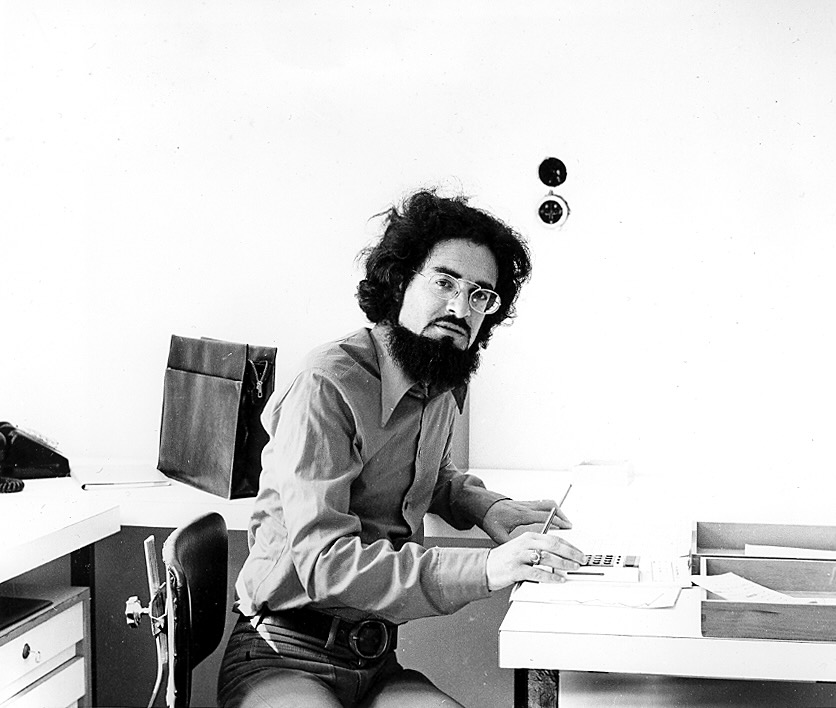
    Me at that time

    Sadly, I am writing once more about a dear friend, Yossi Elza) who passed away a few days ago. The number of such occasions is accelerating,  I am afraid.

    I moved to Israel for the first time in 1974, fifty years ago.  There, I  founded a division of a US Medical Equipment Company, Mennen Medical, located in its bye-bye Israeli subsidiary, MG Electronics.  I worked there for five years until my family and I left for the USA.  My division was called the Medical Computer Systems Division (MCSD).  

    Soon after I started at MCSD, I met a young engineer, Yossi Elaz,  who was already working at MG Electronics.  He had an engaging smile, warm personality, curiosity, and incredible talent.  Yossi joined my group and was responsible for all the hardware development.

    Our products were computer-based systems for monitoring or diagnosing cardiovascular disease. We were primarily focused on intensive care. They were a combination of hardware and software. Yossi ended up being responsible for the hardware development.

    One such product was SOLO (pictured below with Yossi, the hardware engineer, and Israel Brill, the software engineer). SOLO was a computer-based single-patient monitoring system (I believe it was the first of its kind).  It stood for Single OnLine Observer (I think).  Interestingly, it used the LSI-11 single-board computer from Digital Equipment Corp and a memory board from Intel.  I would end up working for Digital Equipment Corp and then later Intel.  

    After I left Israel, Yossi and I communicated from time to time. I just reread our email exchanges over the years. He stayed working in the medical field and moved to the USA, working for Mennen Medical and later Philips and then Boston MedTech Advisors in 2008. dated each other, wrote about our families, and shared views on the situation in Israel. The last email I received from him was in 2015, almost ten years ago. It is very touching to read what sent me with this email.

    One of the greatest gifts in my life is working with young people (I was young too for a while) and helping them develop, but importantly, learning from them. I have been in touch with many over the span of my long career, and for that, I am grateful.  

    My Yossi’s memory remains a blessing for his three daughters and all the other who who love him. I am one.