A while back, I was invited to speak at an event connected to the World Business Forum conference in Milan which was sponsored by the Italian Institute of Technology. At the time, I was beginning a relationship with the organization. Having recently moved to Italy, I was looking for a way to stay connected to technology and to contribute to the country that had welcomed Deborah and me. I also wanted an identity here that wasn’t simply “some old wealthy retired American.” IIT offered a path toward that. Recently, IIT appointed me as the first Fellow, giving me an official role at this amazing institute.
When I was asked to speak, I immediately said yes. I thought, mistakenly, that I would be speaking on the main World Business Forum stage. I didn’t realize the talk was for a special IIT event with only about a hundred participants. But honestly, I would have accepted even if I’d known.
Still, when I later stood inside the enormous main hall, which seats 3,000 people, I felt a pang. That was the kind of room I used to speak in regularly, many times a year. I remember finishing talks and being swarmed by people offering business cards like I was some kind of rock star.
I promised a number of you that I would give my impressions of the Apple Watch. Frankly, I don’t have a lot to say, which in some strange way, is saying a lot. I have numbered the various capabilities on a scale from 1-10, but bottom line, unless you have an extra $500 or so that is burning a hole in you pocket, you could wait out the first generation of the Apple Watch. I am not negative about it, I’m glad I bought it, and I wear it every day, but frankly, my desk is full of wearable devices I no longer wear. I could easily have a garage sale, but I keep this kind of stuff, so it will eventually show up in an estate sale.
It is a great a watch (8) This is the most important thing if you already wear a watch. It has to keep time and feel comfortable. It does that very well. I also love that it shows me my next appointment. The timer and alarm functions are easy to use, especially with Siri. If I want to take a nap, I can say “Hey Siri, wake me up in 15 minutes” and she will. I don’t wear a watch to bed, which some people do, although I have no idea why. So charging it at night is not an issue for me.
Battery Life (4) I have had my Apple Watch for over six weeks. I wear it every day and only once did it run out of power before the end of the day. It seems that if you leave a power hungry application running (like an exercise app) it will suck out all the juice and your phone will die. This is what happened to me. I don’t know why the Apple Watch does not do a better job dealing with this, but there are other examples where I would have expected more intelligence on the part of the Apple Watch. I will give a few examples later.
Fitness Device (3)
I think the Apple Watch is a mediocre fitness device. I much prefer the Intel Basic Peak which is smart enough to figure out if I am exercising or not, and even what kind of exercise without having to start up an app. Sometimes I forget to run the fitness app when I exercise or figure out thirty minutes later that I have not loaded it. It does not do continuous heart rate, probably to save energy.
One of the really stupid things, is that it tells me to get up and move if I have been stationary too long, but it does that even when I am in in an airplane or a moving car. It could use its GPS and Accelerometer to understand that I must be in a vehicle. This could be more difficult in an airplane.
Glance and Notification (7) I like getting short messages on my watch especially when I have my phone in my pocket. But at first I was getting way to many. It is important to decide on the apps that you want to have this capability. Less is more in this case because otherwise you will start ignoring the notifications.
Siri (6)
Siri works pretty well, although I feel stupid talking to my watch because it makes me think of Dick Tracey.
Maps and such (7) I love using the native Apple Watch map application when I am walking because the Apple Watch taps me on my wrist to let me know the turns I have to take. I don’t look like an idiot staring at my iPhone while I walk which can also be pretty dangerous when you cross a street.
Some fun stuff (7) I like to order Uber from my watch. I am looking forward to using it with Home Kit devices once they are out. I am still trying to figure out how to send my heart beat to someone else that has an Apple Watch.
I can use the Apple Watch as a remote for my Apple TV, but I still need to have my iPhone close by. This is something that I hope gets fixed soon. Since the Apple TV has Bluetooth it should either be able to communicate directly with the Apple Watch or act as a gateway to the phone over the Wifi network.
Passbook seems to work well and you can even check into a flight using the Apple Watch. I have yet to get Apple Pay to work via the Apple Watch, but I just need a bit more practice.
I will try Yelp, Find Near Me and Trip Advisor when I travel next.
Stuff I don’t really plan to do at least for now (4) I don’t really see doing my email with the Apple Watch. It is hard enough with an iPhone. I am not sure about messaging. I don’t see using it as a phone when I need my phone with me to even use it.
I also do not plan to use it to control music, but that might make sense for others.
Relationship with the iPhone (2) You have to be within bluetooth range of your iPhone. The Apple Watch is basically a peripheral to an iPhone. This is a major limitation, but it appears to be necessary one. Too bad Apple does not offer a bluetooth range extender so you could leave your phone (charging) and wander around the house. It does not even send you a notice when you are out of range of your iPhone. In fact, letting you know that you left your phone on the table as you leave Starbucks would not be a bad feature.
Apple Watch now and then We have to keep in mind this is a first-generation product. I think Apple made the right trade-offs. Because of battery limitations, the watch could not really support WiFi so it has to be tethered to an iPhone. I think we will see functionality move over to native apps on the Watch over time. Eventually, we can use the watch instead of a phone although we will need bluetooth headphones if we want to use it as a phone.
The Apple watch has a long way to go before it is in the “must have” category currently occupied by the iPhone. I think that will take about five years and then you will never be able to imagine how you could have lived without it. So like most of the people that have bought an Apple Watch, I am not recommending that my friends buy one yet.
If Steve Jobs is turning over in this grave, it probably is not to check the time.
On June 2nd, Apple had its 25th annual developer conference which has been covered extensively by the press. Personally, I thought Apple’s announcements were very important in a variety of ways, and I can’t wait to get the next version of the Mac OS which is called Yosemite, the first Jewish version of the OS (Yo Semite) as well as IOS 8.
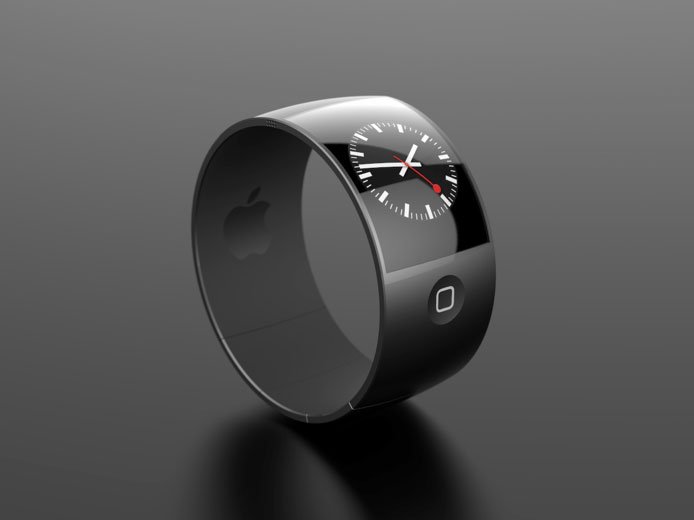
It is surprising that with all the press coverage, one very important aspect of the announcements was missed: Apple laid out the foundation of the iWatch that should launch in the fall. Here is why I think that: Smart Home
Apple outlined the software structure it plans to use for Home Automation. The company indicated that IOS would become a platform for this capability. The iPhone was the example device. Using your iPhone, you will be able to control the lighting in your home, climate, security and more. To do this means you have to have you phone with you. But many if not most people do set down their phones in their homes. It is much easier to keep something on your wrist.
Health Care
It is no secret that Apple has been developing a platform to integrate health information. The platform for this is called Health Kit. It will allow the integration of health information from a variety of devices, applications and services. Don’t be surprised when it become apparent that most prominent on this will be Apple’s own devices, applications and services. The key device will be the iWatch as I have stated before. Siri-always on and always listening
Siri, Apple’s voice control App is constantly improving. It is getting better at understanding what you are saying and can do more things. For instance, I can ask Siri to pay a certain song or call a certain person. Now with the new versions of the Operating Systems. Siri will always be listening. You will not have to push anything but just say, “Hey Siri” followed you your question or command. This will be especially important when the thing on your wrist is doing the listening. It will be a lot easier to just say “Hey Siri, can you dim down the lights and turn on the next episode of “Orange is the new Black” without having to look for your phone.
You don’t need your phone to have a phone
Apple will provide a way to make and accept phone calls and text on every device. If your cell rings, but you are not near your computer, you can answer it on your computer, iPad, AppleTV or your iWatch. It is likely that your phone will not be near you when you are now able to answer or make a call from any device. I have experienced this for sometime using a combination of Google Voice and Hangout.
Security
App developers will be able to use Apple verification to authenticate users. The fingerprint verification will be added to all devices but once you verify yourself on the iWatch, you will not have to do that again unless you take the watch off.
iBeacon
iBeacon is a very important part of Apple’s strategy going forward. With iBeacon, Apple will know where you are in your home for instance (they will give you good reasons to put beacons around your house).
iCloud
Apple is moving more an more functionality to the cloud that is a critical component of their strategy for the future. Steve Jobs discussed this during his last speech. Moving functionally, and data to the cloud makes devices much more powerful and yet easier to use. iCloud is not there to support the iWatch. It is the other way around.
Finally I should say that the iWatch will not be named iWatch. The name of this device is one of the most carefully guarded secrets. I think that I will refer to it as iBand in the future.
Sorry, if you are getting this twice. I made this post a “page by accident”.
1949, George Orwell wrote a book called 1984. I probably read it when I was about ten years old, in 1955. Then, 1984 seemed like a long time in the future. So it was interesting that Apple used this concept for it’s famous 1984 Macintosh SuperBowl ad. The concept of 1984 was that a totalitarian government was spying on all its citizens. It was busy developing “double talk” and had journalists whose job it was to rewrite history. Big Brother was not just a TV show. It was a term for the leading political boss (think Putin). If you have not read it you should, especially these days. So I find it ironic, to use the term “Big Brother” when talking about Apple Computer.
Almost seven years ago I wrote this post about the use of GPS to provide information not only about your surroundings, but about you. Frankly, I did not realize how right I was. Recently, I was listening to a Podcast about the iPhone 5s and its M7 motion processor. When the iPhone 5s came out, many thought that it was not much more than an update to the iPhone 5 even though it had a fingerprint scanner, a 64 bit processor and the new M7 motion processor. I wrote about it here, suggesting that it was the first gateway into Apple’s attempt to become a dominant force in physical retail purchases. Later, I discussed the use of the iBeacon technology. I felt that the M7 would play a big role in Apple’s launch of the iWatch which I wrote about here. I still do. But now I know something else about the M7.
The M7 is literally collecting information all the time about your movements. The Podcaster had loaded an app which would count the number of steps he was walking each day. Nothing strange about that but, when he started up the application, it came back with something startling. It knew how many steps he had already taken during the previous seven days. The M7 had been tracking the streps and storing the results. A bit of investigation by the Podcaster revealed that developers already knew about that. They had been taking advantage of the M7’s capability. So I started thinking about what else Apple might be keeping track of. It would be pretty easy for them to keep track of all your movements not only your steps but where you took these steps. Even if you turned off the GPS function, Apple could still be using it. They can easily know many of your habits, for instance when and where you charge your phone. They could know when the phone is placed on a surface and if you are using your pointer finger to touch the finger print scanner, or if you are holding the phone in your hand and using your thumb. They can know who you are near if that person is also using an iPhone. Apple could map all of your relationships either by who you are near, or who you message or call. They already know a lot of about your habits – what music you like or what newspapers you read online, etc. They will have a pretty good idea about when you go to sleep and when you wake up, and if you use your phone to monitor your sleep, they will know even more about that. They can know how you get to work and where you stop for gas or coffee.
You are probably getting the picture. Pretty soon there will be insurance companies that will give you a discount if you walk 10,000 steps in a day. Your phone will tell them that in exchange for a discount. In addition to dog walkers, we may find that we have phone walkers for those too busy to do the actual walking.
With the use of low power Blue-Tooth and iBeacon, your behavior when shopping will be collected. You will probably be offered incentives to allow this, but will not understand the fine print in the agreement.
Soon, with the iWatch and/or other health related products, Apple will be able to get a sense of your emotional state. They can build a profile of your heart rate, blood pressure, body temperature, sweat, and the changes when you do different things. If you think that the iPhone knows a lot about your habits, just wait for the iWatch.
By the way, I don’t mean to single out Apple. I am sure Google is busy with the same kind of stuff (
1949, George Orwell wrote a book called 1984. I probably read it when I was about ten years old, in 1955. Then, 1984 seemed like a long time in the future. So it was interesting that Apple used this concept for it’s famous 1984 Macintosh SuperBowl ad. The concept of 1984 was that a totalitarian government was spying on all its citizens. It was busy developing “double talk” and had journalists whose job it was to rewrite history. Big Brother was not just a TV show. It was a term for the leading political boss (think Putin). If you have not read it you should, especially these days. So I find it ironic, to use the term “Big Brother” when talking about Apple Computer.
Almost seven years ago I wrote this post about the use of GPS to provide information not only about your surroundings, but about you. Frankly, I did not realize how right I was. Recently, I was listening to a Podcast about the iPhone 5s and its M7 motion processor. When the iPhone 5s came out, many thought that it was not much more than an update to the iPhone 5 even though it had a fingerprint scanner, a 64 bit processor and the new M7 motion processor. I wrote about it here, suggesting that it was the first gateway into Apple’s attempt to become a dominant force in physical retail purchases. Later, I discussed the use of the iBeacon technology. I felt that the M7 would play a big role in Apple’s launch of the iWatch which I wrote about here. I still do. But now I know something else about the M7.
The M7 is literally collecting information all the time about your movements. The Podcaster had loaded an app which would count the number of steps he was walking each day. Nothing strange about that but, when he started up the application, it came back with something startling. It knew how many steps he had already taken during the previous seven days. The M7 had been tracking the streps and storing the results. A bit of investigation by the Podcaster revealed that developers already knew about that. They had been taking advantage of the M7’s capability. So I started thinking about what else Apple might be keeping track of. It would be pretty easy for them to keep track of all your movements not only your steps but where you took these steps. Even if you turned off the GPS function, Apple could still be using it. They can easily know many of your habits, for instance when and where you charge your phone. They could know when the phone is placed on a surface and if you are using your pointer finger to touch the finger print scanner, or if you are holding the phone in your hand and using your thumb. They can know who you are near if that person is also using an iPhone. Apple could map all of your relationships either by who you are near, or who you message or call. They already know a lot of about your habits – what music you like or what newspapers you read online, etc. They will have a pretty good idea about when you go to sleep and when you wake up, and if you use your phone to monitor your sleep, they will know even more about that. They can know how you get to work and where you stop for gas or coffee.
You are probably getting the picture. Pretty soon there will be insurance companies that will give you a discount if you walk 10,000 steps in a day. Your phone will tell them that in exchange for a discount. In addition to dog walkers, we may find that we have phone walkers for those too busy to do the actual walking.
With the use of low power Blue-Tooth and iBeacon, your behavior when shopping will be collected. You will probably be offered incentives to allow this, but will not understand the fine print in the agreement.
Soon, with the iWatch and/or other health related products, Apple will be able to get a sense of your emotional state. They can build a profile of your heart rate, blood pressure, body temperature, sweat, and the changes when you do different things. If you think that the iPhone knows a lot about your habits, just wait for the iWatch.
By the way, I don’t mean to single out Apple. I am sure Google is busy with the same kind of stuff (remeber “Do no evil”), I just don’t follow Google as much as I follow Apple.
So I am going to end this post by saying goodnight to you. And as long as my phone has a power switch, I can say goodnight to my little brother, Apple.
“Do no evil”), I just don’t follow Google as much as I follow Apple.
So I am going to end this post by saying goodnight to you. And as long as my phone has a power switch, I can say goodnight to my little brother, Apple.
I remember when Bill Gates told me and a few others, that the most important real estate in the world was the square foot on top of your television set. It was 1992 and the set-top wars were raging. It turned out to be a war in which there were no victors. Bill’s prediction, like most of his predictions about the future of technology, was wrong. I actually believed he was right for a while until I realized that we had not yet reached the point where technology would allow for a device on top of the TV that would have the needed functionality, the TV did not have enough pixels and that the Cable Industry was not capable of letting this happen. That is when I secretly started up the Cable Modem project that I so often boast about on this blog.
Instead of the TV, it turned you that for the next twenty years or so, the most important real estate in the home was wherever your PC was located. It was the PC connected to high-speed residential broadband that created today’s internet. As we said then “The PC is it”. Ironically, by the time, true interactive capabilities came to the TV it no longer had a top at all, and Bill was long gone from his role as Microsoft Visionary. There was, of course, one important exception to this; game consoles where young males learned the manly arts of shooting automatic weapons, blowing up buildings and automobiles and abusing women. Game consoles made it to the top of the TV for a while. Even Microsoft benefited via the Xbox.
Apple failed to achieve a leadership role in the era of the connected PC. But then Steve Jobs realized that the most valuable piece of real estate was not always located in your home. No, it was in your pocket or your purse. With the launch of the iPhone in 2007, Apple changed the world of technology and in the process became one of world’s leading companies.
Soon there will be a new battle for real estate: A battle for what might be the most valuable real estate of all, your wrist. Apple fully intends to own it.
Importance of limited space
Right now there is a lot of attention evolution of TV industry. It is not clear that any one company will dominate the connected TV market. Flat panel TV’s not only come with many slots (HDMI) but many have their own capability to connect to the internet. I have an Apple TV; Chromecast and Amazon Fire connected to my TV. I could add several more devices if I liked. There is not much of a difference with respect to what I can do with these different devices. But I am pretty sure that there will only be one device on my wrist. The Watch
Many people wear watches although younger people are relying more and more on their phones to check the time. Watches can also be status symbols. While some people own more than one watch, most do not. Those that wear watches tend to wear them most of the time taking them off when the wash or sleep. For those of us that have been around for a while, we can even remember when watches did not have batteries and had to be wound up by hand. My first experience carrying around a battery on my person was a watch and for many years it was the only object that I carried that had a battery.
Recently there has been a challenge to the watch as various fitness devices have sought to compete for the right to occupy your wrist. We now have devices that can track the number of steps, your heart rate and even blood oxygen levels. Companies like Fitbit and Withings are competing for the location where your watch normally lives.
By the way, I am aware that we all have two wrists but for some reason, we seem only to want to use one of these. So while this may change, I am going to act like we only have one useable wrist. Why Apple wants to dominate the Wrist Market
I believe that Apple’s primary objective is to insert itself into the world of retail transactions. Because of iTunes, it now has more credit cards than any company including Amazon. I wrote about this concept before and pointed out the intersection of iBeacon, low power bluetooth and iTunes billing.
While the device that Apple will offer is so much more than a watch, I will refer to it as iWatch for now. Apple’s goal will be for you never to take off the iWatch. It will become part of you. And in a very real way, it will become you. For instance, it might not need to have a fingerprint sensor but will have some intrinsic way of knowing that it is attached to you.
Of course, it will know where you are and where you have been. It will know if you are with others that also have an iWatch and who they are. It will know your habits like no one knows including you. It will be capable of listening to your conversations and that of others. It will know what music you like and what TV shows you watch.
It will not be dependent on any other device like an iPhone, but it will communicate and integrate with these devices. The iWatch will have to have WiFi.
I could go on and on with ideas about the functionality but you have an imagination so please use it so I can finish this post.
The importance of wellness functionality
It is no secret that Apple is investing aggressively in wellness/fitness technology. Apple has hired some of the greatest experts in a number of very important wellness areas. I suspect that the iWatch will be able to measure very important psychological data including Blood O2 and Glucose. There will be a big emphasis on healthy sleeping that will require the owner of the iWatch to keep it on when they sleep. I don’t want to downplay the importance of health in connection with the iWatch. We will soon enter a major shift in healthcare with a much great emphasis on prevention and early diagnose of a disease. I am sure that Apple wants to have a big role in this not only for business reasons but because of what happened to Jobs and Tim Cooks commitment to fitness. However, the key is to make the iWatch the one piece of technology that you never leave behind.
Business Model
While the iWatch will be profitable but I can’t see it providing the kind of gross margin that Apple has gotten from the iPhone and iPad unless its price is beyond $500 which would limit it acceptance. But if I am right that the iWatch is tied to Apple’s intention to dominate retail transactions, they may be willing to sacrifice margin.
Major Challenges
There are many challenges to designing and producing the kind of iWatch that I envision.
Style: The iWatch more than any other product that Apple will offer has to be stylish. Apple understands this. Therefore, it will not bring out the iWatch unless the available technology allows for a product that is both functional and stylish.
Comfort will be very important.The idea here is to make sure the owner never takes it off. That also means it also has to be water proof.
Power: If you never take it off, how do you charge it. I don’t know but here are a few ideas. It could be charged using RF (radio power) probably from a device on the night stand. It might be able to use solar, movement or even body heat.
Functionality: The iWatch must have to have incredible functionality to dominate this market and to fulfill its mission of literarily being “always on”.
I think these are the kind of challenges that appeal to Apple. The iWatch provides the opportunity to once again define a category, and have a product that is clearly superior to anything else in the market. It is also an opportunity to create a lot of IP that it can use as a moat to protect its castle.
It is not clear when Apple will announce the iWatch. I suspect it will be in the fall, but it could be earlier. The first generation will, of course, fall short of my of the capabilities I have described, but you only have to look at the iPod and iPhone to see how Apple was able to add capabilities rapidly.
Want to have some fun
There are a lot of skeptics about the iWatch and some of them are pretty funny. Here is one in particular.
Today, Pluto.tv was officially launched. I am proud to be an early advisor and investor in this company. Those of you that read my blog frequently will know that I have been following and in some cases participating in the restructuring of the medium we call TV. I am pretty excited and decided to give it a plug on my blog. Please think of this post as an infomercial because it kind of is.
First start with the teaser:
A revolution in TV that started over twenty years ago
In 1992, when I began to work on residential broadband starting with the development of the Cable Modem, I realized that the combination of powerful home computers coupled to a high-speed always on connection to the Internet would result in a new medium for communications, commerce, education and entertainment.
Back then, the only computer in the home was a PC. We did not yet have smart phones, tablets and powerful set-top boxes. I was watching developments at the Intel Architecture Lab. In the early 90s, PCs began to be able to play back video in real-time without special chips. We called that Native Signal Processing. By 1998, the labs were demonstrating the ability to encode video in real-time. It was then that I realized that the TV industry was about to turn on its head, albeit slowly.
Enter the DVR
At that time, I was on the board of King World Productions which was the largest syndicators of TV content. We distributed such shows as Oprah and Wheel of Fortune. I thought that the technology I was witnessing in the lab would allow devices to be built that would provide for the ability to Time Shift Television Programing. I knew about Replay and Tivo, the first DVR companies. Both of which launched their companies in 1999. I was pretty sure that the DVR would also allow TV advertising to be skipped. So I recommended to the Board of King Word that we sell the company, which we did, to CBS. That was 15 years ago.
The beginning of self published TV
I left Intel in 1999 and joined a number of boards. One of which was CMGI. We started a business called iCast which was the brain child of the CEO of CMGI, Dave Wetherell. iCast was Youtube but just five years too early. But it helped me to understand the power of user-created content.
Over the last 15 years we have seen more and more video content on the Internet. Much of it is just regular video programing repurposed. You get a video clip here and a video clip there. We have also seen the use of the Internet to augment Video on Demand. So now we have applications like HBO GO.
Cut the Cord
We have also seen the growth in what is called Cord Cutters. These are people, mostly young people, who have decided that they no longer need a subscription to cable TV. They might not even have TVs but they certainly watch TV. They just do it over the internet and use one of their devices as the display.
How long is your format?
I would say that up until today’s announcement of Pluto.TV, there have been two kinds of applications of the Internet for Television. One is a transport for more traditional TV programing. In addition to HBO GO we of course have Netflix which one could think of as being an Internet Cable Company offering traditional programing via the Internet. The other use, is short format TV. Examples of this abound with the most prominent being YouTube. I like Shelby.tv myself. Short Form TV is fun and a good way to kill a few minutes but if you want to lay back and relax you probably turn to traditional TV, even if it is delivered over the internet via some device.
However, there is a lot of great long form TV that is Internet only. Examples of that would be TED. Sites like TED even come with Applications so you can easily select programing on you phone or tablet. Smart Set Top Boxes like Apple TV or even Smart TV’s may allow you to connect directly to a large screen and lay back on you sofa and watch. But these sites only represent a fraction of the long form content on the internet. Much of the really great content has to be discovered. So we sometimes get links sent to us by a friends or embedded in some electronic newsletter, like Huffington Post. But then we often forget about this content and can not find it again. Frankly, it’s a lot of work.
The Role of Pluto.tv
So what is the role of Pluto.tv? It provides much of the same experience one would get by watching cable TV, but the content is from the internet. Pluto has editors that curate by subject. You can browse channels much as you do if you are watching cable TV. But you can go deeper. You can have not just one cooking channel but many. And not only can you send a link to a friend about a program but you can synchronize and watch the program together but from different locations.
You can watch on any device and if you want to put it on a big screen, you can use AppleTV or Chromecast. Please give it a try and let me know what you think.
PLUTO.TV OFFERS A NEW WAY TO EXPERIENCE
THE MOST ENTERTAINING ONLINE VIDEO CONTENT
Free Video Platform Brings the Best of the Web to Viewers
With Nearly 100 Curated Channels Available on Any Device
LOS ANGELES, March 31, 2014 – Pluto.TV announced today the launch of its video platform that allows viewers to watch the most entertaining online and traditional content in one place. Pluto.TV curates and continually streams content around areas of passion including music, sports, news, entertainment, comedy, lifestyle, technology, art & culture, education, and kids, so viewers no longer have to search for it.
At launch, Pluto.TV will offer nearly 100 channels, featuring a wide variety of content programmed to specific interests like hip-hop, snow, surf, food, health and fitness, travel, sketch comedy, and many more. Pluto.TV is also partnering with some of the most popular content creators from the web and well-known television programs to create individual channels, including Funny or Die, QVC, Refinery29, RocketJump, The Young Turks, and more.
Pluto.TV is live and available for free on any device, 24 hours/day, so viewers can start watching on their laptop at home or in the office and move to a mobile device with no interruptions. Users can also share content on social networks and chat live while watching Pluto.TV. Pluto.TV features include:
Curated channels: Pluto.TV hand picks the best video content across a multitude of interests and passions.
Intuitive channel guide: The Pluto.TV guide helps viewers navigate everything there is to watch. Select channels and programs in an easy to use and familiar interface. From the home screen, viewers can see the programming schedule breakdown, find what’s coming up, and read through descriptions to help decide what to watch first.
Personalization: Users can create a personal “favorites” list by adding a “star” to favorite channels and programs for easy and immediate access to preferred channels.
DVR: If viewers like what they see, they can rewind, pause or fast-forward the content.
Multi-platform: The Pluto.TV mobile app is available for both tablets and smart phones on iOS and Android. Pluto.TV is available for free at www.pluto.tv and in the App Store and Android Market starting today.
Social features: Pluto.TV is built for sharing with social features like live chat that allow users to talk with friends and family in real time as they watch, as well as share what shows they’re into by notifying their friends. Users also can invite friends to watch or share through social media.
“Pluto.TV is revolutionizing the way people enjoy video content online,” said Pluto.TV co-founder and chairman Nick Grouf. “We’re making the process of discovering new content seamless by delivering free programming around areas of interest anytime, anywhere. Pluto.TV has done the heavy lifting for you, so you can sit back, watch, and enjoy.”
“Pluto.TV provides premium content and the best entertainment for our viewers, from traditional TV favorites like sports highlights, breaking news, and comedy to engaging content like educational talks, Funny or Die videos and the hottest music online,” said Pluto.TV co-founder Tom Ryan. “Whether viewers are watching the latest runway show from Milan or the coolest skating tricks, Pluto.TV helps them discover that content in a way that’s easy, engaging, and fun.”
Pluto.TV was co-founded by seasoned entrepreneurs Nick Grouf, Ilya Pozin and Tom Ryan in 2013. The company’s investors and advisors include Terry Semel’s Windsor Media; Jeremy Zimmer, CEO,UTA; Avram Miller, founder, Intel Capital; Mich Mathews, former CMO, Microsoft; Chris Silbermann, president and partner, ICM; Greg Steiner, COO, Beachmint and former COO, eHarmony; Nas & Anthony Saleh’s Queensbridge Venture Partners; Great Oaks Venture Capital; Dennis Phelps, general partner, Institutional Venture Partners; Jonathan Nelson, CEO Omnicom Digital, Omnicom Group Inc.; Tom Whalley, former CEO, Warner Bros. Records and co-founder, Interscope Records; Jamie Tarses, former president, ABC Entertainment; Brent Weinstein, head of digital media, UTA; David Waxman, managing partner, TenOneTen Ventures; and Jeremy Welt, SVP marketing, Maker Studios.
About Pluto.TV
Pluto.TV is an online video platform that offers a new way to experience the most entertaining and engaging content on the web. Viewers can experience continuous programming around areas of passion for free, and available 24/7. With nearly 100 channels organized into popular common interest categories like Music, Sports, News, Entertainment, Comedy, Lifestyle, Tech, Art & Culture, Education, and Kids, Pluto.TV is for everyone who enjoys being entertained. Pluto.TV is headquartered in Los Angeles.
In 1949, George Orwell wrote a book called 1984. I probably read it when I was about ten years old, in 1955. Then, 1984 seemed like a long time in the future. So it was interesting that Apple used this concept for it’s famous 1984 Macintosh SuperBowl ad. The concept of 1984 was that a totalitarian government was spying on all its citizens. It was busy developing “double talk” and had journalists whose job it was to rewrite history. Big Brother was not just a TV show. It was a term for the leading political boss (think Putin). If you have not read it you should, especially these days. So I find it ironic, to use the term “Big Brother” when talking about Apple Computer.
Almost seven years ago I wrote this post about the use of GPS to provide information not only about your surroundings, but about you. Frankly, I did not realize how right I was.
Recently, I was listening to a Podcast about the iPhone 5s and its M7 motion processor. When the iPhone 5s came out, many thought that it was not much more than an update to the iPhone 5 even though it had a fingerprint scanner, a 64 bit processor and the new M7 motion processor. I wrote about it here, suggesting that it was the first gateway into Apple’s attempt to become a dominant force in physical retail purchases. Later, I discussed the use of the iBeacon technology. I felt that the M7 would play a big role in Apple’s launch of the iWatch which I wrote about here. I still do. But now I know something else about the M7.
The M7 is literally collecting information all the time about your movements. The Podcaster had loaded an app which would count the number of steps he was walking each day. Nothing strange about that but, when he started up the application, it came back with something startling. It knew how many steps he had already taken during the previous seven days. The M7 had been tracking the streps and storing the results. A bit of investigation by the Podcaster revealed that developers already knew about that. They had been taking advantage of the M7’s capability. So I started thinking about what else Apple might be keeping track of. It would be pretty easy for them to keep track of all your movements not only your steps but where you took these steps. Even if you turned off the GPS function, Apple could still be using it. They can easily know many of your habits, for instance when and where you charge your phone. They could know when the phone is placed on a surface and if you are using your pointer finger to touch the finger print scanner, or if you are holding the phone in your hand and using your thumb. They can know who you are near if that person is also using an iPhone. Apple could map all of your relationships either by who you are near, or who you message or call. They already know a lot of about your habits – what music you like or what newspapers you read online, etc. They will have a pretty good idea about when you go to sleep and when you wake up, and if you use your phone to monitor your sleep, they will know even more about that. They can know how you get to work and where you stop for gas or coffee.
You are probably getting the picture. Pretty soon there will be insurance companies that will give you a discount if you walk 10,000 steps in a day. Your phone will tell them that in exchange for a discount. In addition to dog walkers, we may find that we have phone walkers for those too busy to do the actual walking.
With the use of low power Blue Tooth and iBeacon, your behavior when shopping will be collected. You will probably be offered incentives to allow this, but will not understand the fine print in the agreement.
Soon, with the iWatch and/or other health related products, Apple will be able to get a sense of your emotional state. They can build a profile of your heart rate, blood pressure, body temperature, sweat, and the changes when you do different things. If you think that the iPhone knows a lot about your habits, just wait for the iWatch.
By the way, I don’t mean to single out Apple. I am sure Google is busy with the same kind of stuff, I just don’t follow Google as much as I follow Apple.
So I am going to end this post by saying goodnight to you. And as long as my phone has a power switch, I can say goodnight to my little brother, Apple.
At first, when I read that Mark Penn would become responsible for strategy at Microsoft, I though this was crazy. I don’t know Mark Penn but I understand that he is brilliant if not a bit strange. But what would a 60 year old political advisor, that lives in Washington DC have to offer a technology company like Microsoft? Microsoft desperately needs to major strategic choices driven by changes in technology and customer behavior.
Then I realized that he was the perfect person. It is all about politics. It is about getting rid of Ballmer and Gates. So while the announcement from Microsoft said he would be looking at new product areas and M&A, we really know what he will be doing. It will not be easy for Mark to get rid of two of the worlds richest men, but I suspect he will find a way and make a lot of money in the process. This will have to happen pretty quickly because his next job will be running Hillary Clinton’s campaign. If that succeeds, maybe Mark will end up with a cabinet post.
Given Mark’s success, maybe we will be seeing a lot of political advisors and lobbyists looking for strategy jobs in tech. I am having fun in my mind matching CNN and MSNBC political advisors with tech companies.
I think this actually makes sense for FB even at this amazing price. Most of it will be paid in FB funny money. That is, it is paid in stock which they will just create out of thin air just like the US Federal Bank creates money. Maybe Ben Bernanke is advising Facebook.
I mocked the 3.2 billion dollar purchase of Nest, a company that makes thermostats and smoke detectors, because Google paid in real money. This is money that could have been used to buy back their own stock or paid a dividend. I think that Facebook is proving that they actually have a brain even if they can’t design software that very well. Maybe the team at What’s App can help them there. One thing is for sure, the price of real estate is going up in the San Francisco Bay Area.
Living through the wrong bubble
Looking that these acquisition makes me feel that I lived through the wrong bubble. For instance I was on the board of CMGI in the beginning of 2000 when it was worth more than $40 billion (and more than General Motors). I sold all my stock in that company then. Later after the bubble burst, CMGI’s stock like all internet stocks fell to the floor. An investor at a shareholders meeting was screaming at Dave Wetherell, the CEO because the company had invested a lot of money (I don’t remember how much), in PCCW a company based in Hong Kong and managed and largely owned by Richard Li, the son of one of the richest people in the world. The CMGI shareholder claimed we lost most of this money because PCCW’s stock had also dropped. But it did not drop as much as CMGI. Why, because we (I was also on the board of PCCW), bought a real asset, the Hong Kong Telephone Company, with stock. That asset retained its value. So it turns out that CMGI actually made a lot of money on the deal because it was the equivalent of selling CMGI stock at a very high price, stock that was made out of thin air.
Buy Time Warner
If I was Facebook or Google, I would be selling as much stock as I could and buying assets like cable companies that have good cash flow. It may come in handy later.
This is not my next post on predictions for 2064. They will be coming out but not all at once.
Traveling around the world as I do really exposes me to all the ways people message each other. I thought I would list some of those that I know, and actually have to use, since people have strong preferences – depending on age and residence.
It all started with SMS or was it Pagers
There are 3.5 billion users of SMS currently. SMS stands for Short Messaging Service. It supports a total of 160 characters of which 140 are visible. Is is probably why Twitter decided to use 140 character for a tweet. While there were some messaging capabilities in cell phones as early as 1980, SMS did not become a standard until 1985 when it was adopted as part of the GSM standard for cell phones. In 2010 more than 6 trillion text messages were sent.
I remember in the early 90s when the internet was just getting going and we were making a big push at Intel for the PC to be preferred device for communications, we ran into the differences in behavior between Europeans and the Japanese. We were surprised to find out that many Europeans for example were already using their phones to communicate with each other rather than email.
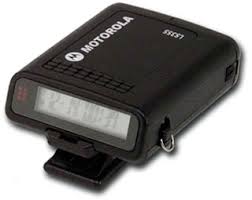
One could also argue that it all started with Pagers which have been around since 1962 when AT&T introduced the first pager “Bell Boy”. But pagers have very limited use and were certainly not consumer products. They were used by such diversified groups as doctors, plumbers and drug dealers.
Handheld Communications Devices
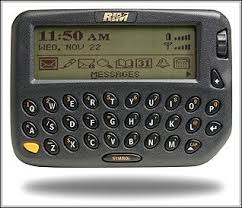
While cell phones were being sold primarily for voice communications, there were a number of devices focused primarily at text. In a sense these devices combined a handheld organizer with a messaging platform. The most well know was the Blackberry from RIM, a Canadian company.
In 1999, the Blackberry was introduced primarily as a messaging device but its real power was in its ability to connect to email systems to allow remote access. I was an early adopter of the Blackberry and was using it a lot by 2000.
Personal Digital Assistants
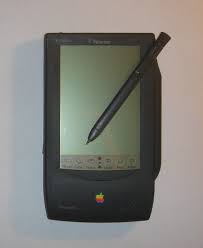
PDA’S were around from the early 80s but they tried to come into their own with connectivity. The most famous attempt was Apple’s Newton first released in 1993. It did not have wireless communications capabilities.
Jeff Hawkins first introduced me to the concept of wireless communications in his small office/lab in Palo Alto. He created Palm around 1990. Palm had some success but eventually lost out to the Blackberry and was eventually bought a series of companies: US Robotics, 3Com and eventually HP. Jeff later started Handspring which brought out the Treo in 2002. The Treo was eventually integrated with a number of cell phones and used a small keyboard.
Later, the Palm team left and created Handspring which like Newton, used handwriting but this time with a special form of writing that the user had to learn, It was eventually acquired by the Palm division of HP.
Computer Messaging
The computer messaging system, AIM, was developed in Israel by Mirabilis which was later sold to AOL. It became the first major cross platform messaging system and was available on the Microsoft and Apple platforms. AOL also developed AOL Messenger. This may have something to do with the number of Israeli’s involved in Platforms like Viber and Tango.
Now all the major mail platforms support messaging. You can message from Yahoo Mail, Microsoft Mail and Gmail.
The Multitudes
Today’s situation with messaging platforms reminds me of the early days of online services although the number of users is orders of magnitudes higher.
In the 80s, there were a number of on line services such as AOL, Prodigy, and Compuserve. There were also bulletin board services. But all of these services were basically Islands of communications. If you were on AOL, you could communicate with your friends and family on AOL. If you were on Prodigy, your communications were limited to other Prodigy customers. Because SMS is part of a global standard, you can pretty much send a text message to anyone that has a cell phone anywhere in the world – as long as you are not concerned with how you may be charged. But this is not true for the messaging services/apps and it is driving me crazy.
I now have the following Apps on my phone for messaging: Skype, Google+, Twitter, Facebook, Line, WeChat, Tango, Viber, Text+, Whatsapp, Kik, Facetime, and Snapchat. In additional, there are other Apps that have another primary purpose but can be used for messaging such as Waze, and Spotify.
Confusions abounds
When you sign up for a new messaging system on your mobile device, you are asked to give the App access to you contacts. Then you are are given a list of people that are on the new services. You can then add them to the contact list for that service. But does that mean they really use that service? No, maybe they were just trying it out. Remember I am probably on about ten services. So, you send them a message and you get no response because they may have deleted the App or in any case, the App is not running. And in some cases, you get through to the person as I have done, just to get a message back “why are you using Viber? I don’t like Viber. Use Whatsapp!” or something like that. So how am I suppose to know what App to use? And what if I want to communicate to a group of people but some are on Tango and some are on TextPlus?
Now some people are using messaging like they use to use email. That is, they don’t expect much of a real time response. I have people sending me all kinds of messages on Facebook even if they are not my friends. Or they are using LInkedIn for that purpose.
And yet, the messaging companies are growing like crazy! And they have really impacted the SMS business of the Telco which was the greatest exploration of bandwidth ever known. It was the mini bar of communications. I don’t mind that, but SMS is still the only effective standard.
The Future of Messaging
It will be interesting to see what happens. I don’t see one company taking all. But I can’t see how this craziness can continue. I have the solution for all this which I am planing to auction off on ebay, What do you think will happen? And please don’t message me about it.