Two Thirds Done

Thoughts and experiences of an eighty one year old Wild Duck.

Avram Miller by the sea
EN | IT

587 posts since 2006

Tag: Google

  • It’s not big brother that should worry you, it’s little brother, the spy in your pocket.

    steve-jobs-apple-big-brotherIn 1949, George Orwell wrote a book called 1984. I probably read it when I was about ten years old, in 1955. Then, 1984 seemed like a long time in the future. So it was interesting that Apple used this concept for it’s famous 1984 Macintosh SuperBowl ad. The concept of 1984 was that a totalitarian government was spying on all its citizens. It was busy developing “double talk” and had journalists whose job it was to rewrite history. Big Brother was not just a TV show. It was a term for the leading political boss (think Putin). If you have not read it you should, especially these days. So I find it ironic, to use the term “Big Brother” when talking about Apple Computer.

    Almost seven years ago I wrote this post about the use of GPS to provide information not only about your surroundings, but about you. Frankly, I did not realize how right I was.

    Recently, I was listening to a Podcast about the iPhone 5s and its M7 motion processor. When the iPhone 5s came out, many thought that it was not much more than an update to the iPhone 5 even though it had a fingerprint scanner, a 64 bit processor and the new M7 motion processor.  I wrote about it here, suggesting that it was the first gateway into Apple’s attempt to become a dominant force in physical retail purchases. Later, I discussed the use of the iBeacon technology. I felt that the M7 would play a big role in Apple’s launch of the iWatch which I wrote about here. I still do. But now I know something else about the M7.

    The M7 is literally collecting information all the time about your movements. The Podcaster had loaded an app which would count the number of steps he was walking each day. Nothing strange about that but, when he started up the application, it came back with something startling. It knew how many steps he had already taken during the previous seven days. The M7 had been tracking the streps and storing the results. A bit of investigation by the Podcaster revealed that developers already knew about that. They had been taking advantage of the M7’s capability. So I started thinking about what else Apple might be keeping track of. It would be pretty easy for them to keep track of all your movements not only your steps but where you took these steps. Even if you turned off the GPS function, Apple could still be using it. They can easily know many of your habits, for instance when and where you charge your phone.  They could know when the phone is placed on a surface and if you are using your pointer finger to touch the finger print scanner, or if you are holding the phone in your hand and using your thumb. They can know who you are near if that person is also using an iPhone. Apple could map all of your relationships either by who you are near, or who you message or call. They already know a lot of about your habits – what music you like or what newspapers you read online, etc. They will have a pretty good idea about when you go to sleep and when you wake up, and if you use your phone to monitor your sleep, they will know even more about that. They can know how you get to work and where you stop for gas or coffee.

    You are probably getting the picture. Pretty soon there will be insurance companies that will give you a discount if you walk 10,000 steps in a day. Your phone will tell them that in exchange for a discount. In addition to dog walkers, we may find that we have phone walkers for those too busy to do the actual walking.

    With the use of low power Blue Tooth and iBeacon, your behavior when shopping will be collected. You will probably be offered incentives to allow this, but will not understand the fine print in the agreement.

    Soon, with the iWatch and/or other health related products, Apple will be able to get a sense of your emotional state. They can build a profile of your heart rate, blood pressure, body temperature, sweat, and the changes when you do different things. If you think that the iPhone knows a lot about your habits, just wait for the iWatch.

    By the way, I don’t mean to single out Apple.  I am sure Google is busy with the same kind of stuff, I just don’t follow Google as much as I follow Apple.

    So I am going to end this post by saying goodnight to you. And as long as my phone has a power switch, I can say goodnight to my little brother, Apple.

  • Confession: Why I am unfair to Google.

    Many of my friends ask me why I am so critical of Google. I have been examine possible motives.  I wonder if I am just jealous.  Back in 1999 when I joined the board of Alta Vista, the hottest search company at the time, we knew about Google and even had some discussions about buying them (they were really not interested for good reasons it turns out).  We knew they had better technology but we had market share and thought we would win. We would have lost out anyway because the management of Alta Vista accelerated that by trying to turn the company into a portal rather than keeping the focus on search.

    I also knew a bit about Google because my dear friend, Ram Shriram was one of the first investors and board members.  He is still on the board and made billions from his investment in Google.  I got zero from my efforts with Alta Vista so perhaps that affects my thinking.

    Maybe I am not objective about Google because every time I have met Larry Page, I have to reintroduce myself to him.  I tell him I was Vice President of Business Development at Intel and the cofounder of Intel Capital. He is about as interested as I might have been back in the day, if someone told me they had been a VP at Univac.  I have tried to tell him about the development of residential broadband and how I got the cable industry to provide high speed internet but his eyes glaze over which I find a bit surprising since he was already 21 years old when we did the first cable trial.  Since his dad and mom were both professors in Computer Science at Michigan State University, maybe the had a T-1 at home and he never had to deal with dial up modems.

    I wonder why I don’t admire them for doing things that I would have advocated when I was at Intel.  Google is clearly willing to take risks even though they very often do not pay off.  They appear to have some kind of  long term vision which you can see in their investments in driverless autos, artificial intelligence and even Google Glass which I think is an awful technology.

    I love that they give their people freedom to explore. I love their willingness to buy companies but I have trouble with the prices they pay.  I guess  when you have as much money as Larry Page, everything looks cheap.

    So what is eating at me?  I think it is that they are full of themselves.  Maybe not so much in an arrogant way but they just don’t appreciate other companies.  They don’t learn well from history.

    I think they had a great start with a wonderful technology for search and then they figured out how to make money from it.  But that is when they started mistaking luck for being smart.  I can’t help it.  I think the company is mediocre.  It is the same problem that existed for a while with Microsoft.  Microsoft was so powerful that they could put out mediocre products and still win and the good stuff from other companies never got to market.

    So in examine my negative feelings about Google, I still come away still having them.  It is probably my own shortcoming.   Maybe if Larry Page would have recognize me just once and said something nice to me, I would be a big fan of Google now but I doubt it.

  • Am I unfair to Google?

    I like to say that there is two things that defined success in the tech business.  The first is being lucky.  The second is not mistaking luck for being smart. Larry Page thinks he is smart.

    A number of friends have told me that I am overly critical of Google.  Some of these friends think that Google invincible. I have often said that Google reminds me of Microsoft, a inch deep and a mile wide.  They have the mediocrity of  the old Microsoft without the greed of Bill Gates.

    When Google bought Motorola a few years a go for $12.4 billion, I was sure it would end badly.  Not only were they buying a company like an old horse, should be put out to pasture, they were buying a pile of problems and they would not have the skills to deal with them.

    So now they are selling most of it to the china’s  Lenovo Group for $2.9 billion.  Google had also recovered $2.35 billion by selling the set top box part of the company to the Arris group who ever the hell that is.  Google is keeping some advance development actives and most of the 20,000 patents that Motorola had (I bet some are pretty long in the tooth).

    My guess is Google thought at first they would emulate Apple buy building their own phones and maybe set top boxes (remember the Google TV).

    I don’t know how much Google had to write off in losses while they owned Motorola (they will still own it for a while as the deal needs government approval).   But for a company that paid $3.2 billion for a company that makes thermostats and smoke detectors, the deal probably does not look that bad.

    In the mean time there stock continues to go up.  I remember those days when I was at Intel.  Intel and Microsoft’s stock continued to go up until they dropped like a rock and pretty much stayed there for a decade or more.  Note, I sold my Intel stock at the top in the low 70s in the 1st quarter of 2000.  Google stock will continue to go up until it no longer does.  If we have a major economic  crisis (I guess, I should say “when”) it will go down and then as the tide runs out, the rocks will show.

    I do promise to write a blog post in which I take the opposite side and challenge my negative assumptions about Google.

  • Google inside your Nest: They will know when you are naughty or nice.

    I was just thinking about how Google could use Nest  which it just acquired to understand more about our living habits.  For instance, it would be pretty easy to figure out when we went to bed based on the way we set the thermostat in our bedroom.   They will know when we are home and when we are away.  Not sure how much the smoke detectors will tell them but that is just because I don’t know what else they may be capable of doing. Maybe they can tell if there are smokers in the house.  And then there are all the future products that Nest/Google will create.   I am sure we will see door locks, lighting control, audio/visual distribution systems and of course cameras.   I am looking foreword to the Toilet Cam.

    And while I was thinking about this a song came to mind with a new set of lyrics.

    GoogleNest is Coming to Town  

    You better watch out 

    You better not cry

    You better not pout 

    I’m telling you why 

    GoogleNest is coming to town 

    GoogleNest coming to town 

    GoogleNest is coming to town 


    Their making a list, 

    Checking it twice; 

    Gonna find out who’s naughty or nice. 

    GoogleNest  coming to town

    GoogleNest is coming to town 

    Googlenest is coming to town 


    They see you when you’re sleeping 

    They knows when you’re awake 

    They knows if you’ve been bad or good 

    So be good for goodness sake 


    I think you got the idea.

  • Comment on the Comments on my Forecast for the Computer Industry 2014

    I got a number of comments on my recent post “Predictions for the Computer Industry for 2014.”  I thought the best way to respond to them was to write another post to comment on the comments so to speak. The original predictions are in italics.


    Here we go


    (1)  Bitcoin becomes the MySpace of Crypto-Currency 

    I had communications with a number of people about Bitcoin including a detailed discussion with someone active in the Bitcoin community.  The more I learned, the more convinced that I am correct in my assessment.  I believe that the limited supply will create a lot of speculative pressures and will prevent the expansion of its use.  I think the technology is fantastic.  I think the objective is laudable, but not being tied to an existing currency and the inability to use debt to create increases in the money supply  will prevent it from achieving the objectives of its supporters.


    I have to confess that I am a bit bewildered about Bitcoin.  On the surface, it is easy enough to understand if you just think of it as just another form of currency like the Dollar, Euro or Yen.  But unlike the Dollar, Euro or Yen, there is no country or countries backing and controlling it.  To really understand Crypto-Currency, one has to have both a pretty good technical background and in particular an understanding of cryptographic, open source and distributed systems.  But one also has to have a pretty deep understanding  of economics and especially money systems.  Frankly, understanding money is a lot harder than most people think.  It kind of reminds me of quantum mechanics.

    At first, I did not take Bitcoin seriously and that in retrospect was wrong.  I actually have friends who have made small fortunes in Bitcoin (I hope none of them accomplished this by starting out with a big fortune).

    I am wondering, like many, about how Bitcoin can become a real currency.  I don’t think it is that yet.  It is more like Gold although a lot easier to use and store.  But until there is a whole supply chain that takes Bitcoin as its primary currency, I think those that that accept Bitcoin for payment must be changing their prices every day to match their preferred currency.  Bitcoin is way too volatile to be used as a main currency. Because a lot of Bitcoin’s are held by speculators, there is incentive drive the value up creating a potential bubble.  We all know what happens to bubbles. Debt is a very important aspect of a successful currency. It is hard to have debt when there is high inflation or volatility.

    There is a lot of concern about the potential for Bitcoin to be manipulated.  There is concern that  it could be hacked.  The mysterious start of Bitcoint by Satoshi Nakamoto (a person or collection of persons) who has since disappeared, causes some to wonder who is really behind Bitcoin.  Now it appears that Marc Andreessen, the technical brains behind Netscape and now very successful venture capitalist, has sort of taken over the leadership of the Bitcoin movement. Anyway, I guess we should be glad its not George Soros.

    Given the early success of Bitcoin, there are many other Crypto-Currencies being created.  The Bitcoin people feel that they can maintain the lead because of their momentum and present dominance.  History proves that this is not always the case.


    (2)  iWatch – just in time

    Some people feel that this will not be a significant development if indeed it happens. I disagree in the sense that if it does happen, it will have to be significant in that it will be the first new category that Apple has introduced since the iPad. It might not matter in the beginning just as the iPod did not seem to matter.  But it ended up redefining the computer industry and disrupting the music industry.

    This will be the year that Apple Introduces the iWatch.  I wrote about the iWatch here. The features that I described are still the ones I expect, but I would place more emphasis on the use of the iWatch for transactions.

    By the way, Apple may introduce a large iPhone and/or a larger iPad.  I don’t think this a game changer so I am not mentioning it here.


    (3) Microsoft – Breaking up is hard to do


    The comments here were mostly that it will depend on who the CEO is.  I don’t think so.  I think the CEO will be picked to perform this function but there is probably a fight at the board because Balmer and Gates are still on the board.  And as I wrote here, Corporate Boards Suck.

    I am putting forth Steve Rattner – the former head of Lazard and the Automobile Industry Czar for Obama.  Steve has a lot of experience working with media, communications and computer companies.  He has the financial chops to figure out how to cut up and serve Microsoft (make it medium rare..pun intended.)

    Microsoft will finally get a CEO. The primary task of this person will be to breakup the company which will prove very difficult to do because this kind of thing is always difficult to do.  In some cases, parts of the company will become independent companies and trade on the stock market. For instance, I expect that will be the case for the Xbox, while other parts, like Office might be sold to a company like  Oracle.  I think it will take about five years for all the work to be completed.  Expect that Bill Gates will leave the board when the new CEO takes his/her place.


    (4) Desktop and Notebooks fall into the black hole of mobile computing

    This is actually one of the predictions that I think is most important and yes, I agree my timing might be off.

    One of the key things that I did not say was that once you have enough bandwidth and processor power to maintain the interactivity  (the video and inputs), all the rest of the computing can happen in the cloud.  This will provide great improvements in performance.  Data transfers between applications can happen in the cloud and do not have to first come down to you computer and then go back up.

    I said that 2/3 of Americans have iPhones.  That is clearly wrong and I apologize for being so sloppy.  However, you might find this forecast interesting

    I stand by the rest of what I said although as I admitted in the beginning of my original post, I am probably too early on many of these items.  But things do happen quickly once they start.  We did not even have an iPhone seven years ago.

    There is a lot of computing power in smart phones.  Take a look at the iPhone 5s as an example with its 64-bit  CPU.  The power of a mobile computer coupled with the move to Cloud Computing will change the partitioning of computing.

    Look for Apple to bring out a new line of Cinema Displays that will have wireless connectivity with IOS devices.  Imagine that you can walk up to any of these displays and your phone, iWatch or iPad will link to this display.  Applications will be designed to make full use of the display’s real estate.  Blue tooth keyboards and track pads/mice will interface with your IOS device.  All of a sudden you have the full desktop experience that most users know. You will be able to use the full iWorks suite for instance.  It will might be running in the cloud but it will feel, as it does now, that it is running on your “desktop.” This is an extremely important event.  Maybe the most important event of 2014.

    For instance, about two thirds of American have an iPhone. Of course, most of these are not iPhone 5s, but enough are to get things started.  Not all these customers have Macs. In fact most do not.  But most have desktops or notebooks that they will want to replace.  Instead of replacing them, they only have to buy a new Cinema Display.  They can then either use the free iWorks suite or or use the Microsoft Office Cloud service.  Microsoft will have to make sure their apps work well in this environment because the Apple iWorks programs are awesome and are free.  Google will have to do the same.

    So the only customers buying desktops in the future might be those that are heavily involved in using computers to do serious computational work.  Welcome to the Mac Pro and the unannounced Mac Pro Light or the Windows equivalent.

    The same kind of thing will happen with large flat panel displays.  The Apple TV will become an HDMI dongle just like Chromecast. You will be able to easily connect your IOS device to the display just as you can with Airplay now.  Apple will introduce a very powerful gaming environment for IOS that will take advantage of both the A8 64 bit processor in the iPhone but also the motion co-processor to connect with various gaming peripherals.

    Look to 2014 being a very good year for Apple and in particular Apple stock (although I am negative on the stock long term).  The capabilities I described will drive demand for new iPhone and iPad purchases.


    (5) Cable TV becomes Cable Internet


    Here again the criticism was that I was too early.   I should have also dealt with wireless providers.  See this link.

    When I first went around to all the cable company CEO’s in 1983 to introduce them to the concept of the cable modem, I told them that they should no longer think of themselves as being Cable Television Companies but rather Cable Communications Companies.  Not all of them got what I meant, but fortunately,  their greed and the fear of the telephone industry helped persuade them to experiment with the idea of using their “cable plant” to allow computers in homes to communicate with the nascent internet.

    Now, the cable industry is experiencing a loss of TV subscribers as young people in particular “cut the cord” and watch TV via the internet.  But they are not really cutting the cord all the way. In particular, if they are at their home they are most likely still connected to the cable company.  Revenue from providing residential broadband has allowed the cable industry to grow in the face of a decline in TV subscribers. This year, Cable Companies will make more money from broadband than from TV. TV is just one attribute of Cable just as Word Processing is no longer a  Device but just an Application.

    However, the Cable Industry has kept a lot of bad habits (like bundling of channels) which make it difficult for new companies to provide Internet based TV.  This is about to change.  But to make it really happen, Cable Companies will want to get a bigger piece of the action. They will want to charge not only for speed but also for quality just as the wireless companies are now doing.  Once this happens, everything will change.  But since this will depend on government regulations, I can not predict exactly when and how this will happen.  As part of this, providers of content can pay directly for the bandwidth.  So if you use Netflix to stream a lot of Video, it will not effect your bill with your cable company. Netflix will pay them for the bandwidth you use when streaming.

    Once the dam breaks, things will change very fast.  This will have negative effects on the cable networks who have relied on having TV channels to be able to make deals for programing. Now if the Internet is used as a medium, there are unlimited “channels”.    Once TV is on the internet, advertising can be done in a much different and more targeted way.  This will also weaken the Networks that rely on advertising.  As the Networks see major declines in their profits, they will be able to invest less and less, leading to a quickening of their demise.

    We will continue to see changes in consumer viewing habits. Not only will consumers see what they want when they want but they will see it with the people they want no matter where in the world they will be.  I hope to say more about this in a few weeks when a company I both advise and have invested in leaves stealth mode.


     (6) Facebook – the AOL of Social Media


    Did not get many comments here.  I stand by what I wrote.

    Facebook is a company I am negative on even thought I use it every day.  Clearly it is the dominate company on the social media stage but I don’t think for long.  There are a number of factors that will effect their standing.  The first is demographic. Young people that first created the market for Facebook are either moving off the Facebook Platform or never getting on.  They don’t want to be on a social media site that they share with their parents and grandparents.  Also much of the growth of Facebook as been outside the USA and in developing countries. I suspect that while these numbers add to Facebook’s population, they don’t do much for the bottom line.

    Equally as important is that Facebook’s users don’t really like the company.  They might like using Facebook because it connects them with their friends but they don’t like the confusing interface, constant changes in privacy and the sense that Facebook is exploiting them.

    Young people are moving to social media sites that are more mobile oriented like Tango, Talk Plus, Line and WeChat. Then there is SnapChat the opposite of a “time line”.

    Facebook has a market capitalization of $135 billion dollars but made less than a billion dollars on the sale of more than $5 billion dollars.  It recently spent a billion dollars to by zero revenue buy acquiring Instagram.  Facebook is trading at 90 times estimated earnings.  For Facebook to justify its stock price it will be forced to find more ways to monetize its traffic and most of those ways will turn off their users.  Actually, the only hope for Facebook will be discovering life on another planet.

    (7) Amazon buys Netflix and has to pay California Sales Tax


    Most comments were that  Amazon would never spend this much money and they will go it alone.  That may be true but I believe that once they realize that they will not be successful on their own, they will have no choice.  It’s a strategic must for Amazon.

    Amazon intends to be one of the major media distribution companies in the “new order.”  They are already following in Apple’s footsteps using Amazon Prime to distribute Media.  Now they are imitating Netflix with original programming.  Netflix has House of Cards which is a drama about a bunch of smart but corrupt politicians.  Amazon has Alpha House which is a comedy about four moronic politicians living together in a house in Washington DC.  Given that these guys are idiots, it might be better to describe it as a documentary.  House of Cards was a major hit and won an Emmy.  Alpha House is pretty much a dud. Netflix redefined viewing habits and created the concept of Binge Viewing while Amazon has had little impact on viewing habits of consumers.

    Netflix is, in a sense, the worlds largest “cable” operator.  It reaches more people than HBO.  Most devices and most modern TV’s can receive Netflix.  Bezos is going to finally figure out that he can not catch up.  And he will not want to see Netflix in the hands of some other company.  Netflix was really cheap a year ago when it traded at about $90.  It is now just a bit south of $350 dollars.  Its total market cap is about $22 billion. While Amazon has done well going from $245 to $405 and has a market cap of $182 billion this is nothing compared to the movement in Netflix’s stock price.  Netflix must now feel comfortable with their current price because they have recently removed a Poison Pill provision making it much easier for someone to accumulate large amounts of their stock.  This will push the stock up even further so the sooner Amazon moves to acquire Netflix, the better.  Of course, Bezos hates paying state sales tax which Netflix does.  Maybe this is what is slowing him down.


    (8) Internet of My Favorite Things

    Pretty much all the comments I got about this were positive. No need to refute this one.

    Everything is going to be connected to everything.  It is going to be a wild ride.  I already have light bulbs that are connected to the cloud. My car is connected to the cloud. I wear exercises devices that connect to the cloud. My piano is connected to the cloud.  I could even jam with musicians. It will be like the wild west all over again.

    But then again, I am waiting for the hackers to take over cars, cause washing machines to destroy clothes and of course stream videos of us in our pajamas.  And then there are the personal Drones!


    (9) Google Glass joins the other zero billion dollar business that Google launched 

    I either got comments that were in agreement or comments that said I was being too mean to Google.

    Innovega, the company I have been advising in this space has gotten a lot of coverage at CES.  It is the real deal although not main stream for some time and maybe never.

    In the meantime, I am thinking of selling fake Google Glass for early stage nerds that don’t have the money to buy the real thing.

    When cell phones came out, we actually had fake ones.  You could simulate a conversation that made you look important.  Just think of the fake conversations you could have and commands you give with Google Glass!  You certainly would not have to say “what are you wearing.”

    If you read my blog often, you will know that I am not too fond of Google.  I refer to Google as the Microsoft of 21st century. Of course they have done some amazing things but much of what they do is mediocre.  For me, throwing a bunch of spaghetti against the wall and seeing what sticks is not a business strategy.  I do understand that many of you will disagree with my point of view.

    I know something about the ‘glass’ application. In fact, I know a great deal. I have been working in this area for over ten years.  They company I have been involved with most recently is Innovega.  We have the real deal but it takes both glasses and contact lenses to really work, so it’s not for everyone. But I know that Google Glass is probably for a lot fewer people.

    I think it is a silly idea that has very limited long term prospects.  Not because I do not believe in the concept.  It is because I do not believe in the implementation.  I joke (partly) that when Larry Page became CEO he tried to figure out how to get Sergy out of his hair.  Sergy came to him with the idea of Google Glass – which may have started when Innovega paid a visit to Google.  Larry said to Sergy “this is so important that you should spend all your time and energy on it.” It was probably worth spending a few billion dollars for Larry to no longer have to share an office with his co-founder.


    (10) Foundry or Floundery

    In retrospect, I am not sure how important this point is. I know it is important to me because I still have a fixation with my former company.  I still wish I could have had more impact as foolish  as that might be.

    Finally I have to mention my former company, Intel, where I was Vice President of Business Development until I left in 1999.  Intel has a great deal of excess semi conductor manufacturing capacity.  It  is perishable – if it is not used it just goes to waste.  We used to say that when we designed a new factory, the first chip it produced cost a couple of billion dollars and the ones after that just a few dollars.  Factories have very high fixed costs.  They are like airplanes or hotels, you want to fill every seat and every bed.

    Apple needs Intel to build its A processors.  For obvious reasons, it no longer wants to have Samsung build its chips.  So it probably has put a “gun to Intel’s head” and said that they will design out the Intel microprocessors in the Mac line if Intel does not start doing foundering work for Apple.  And Google is threatening Intel with developing its own line of server processors if Intel does not start making chips for Google.

    Intel will remain the top semi conductor company in the world, but that is like owning the best house in the worst neighborhood.

    As most of you know, Intel missed the transition to mobile but frankly even if they had made the transition, there was no way the company could continue to have the margins they enjoyed during the PC phase of computing when Microsoft and Intel earned more than 120% of the profit of the industry (this was possible because so many other companies lost money.)   It takes a long time to develop and build new factories to take advantage of new semi conductor manufacturing and design technology.  Intel was used to growth and building out capacity to intersect that growth.  In the 90s I was often quoted as saying that “Intel had to build factories to manufacture products that were not yet designed to serve markets that were not yet created.” That was true then and it is true now, but now the products will not be Intel’s.


  • 10 Predictions for the Computer Industry for 2014

    My dear friend, Bob Cringely is a very successful blogger amongst other accomplishments.  You can read his blog here. He and I often speculate together about the future of technology.  Every year around this time he makes predictions on what will happen in the new year in computer technology.  Often he asks for my ideas, some of which he may incorporate with is own views and some of which he ignores.  This year Bob had to deal with the illness of his mother so he asked his readers for their ideas.  I decided that this year I would write up my own ten predictions which I will of course send to Bob.  I should also say that as a technologist in my core, I often see things happening much earlier that they really happen.  It is sort of the opposite of the sign on your cars side mirror which reads “objects may appear further away then they actually are”.  Here they are in no particular order:


     (1)  Bitcoin becomes the MySpace of Crypto-Currency

    I have to confess that I am a bit bewildered about Bitcoin.  On the surface, it is easy enough to understand if you just think of it as just another form of currency like the Dollar, Euro or Yen.  But unlike the Dollar, Euro or Yen, there is no country or countries backing and controlling it.  To really understand Crypto-Currency, one has to have both a pretty good technical background and in particular an understanding of cryptographic, open source and distributed systems.  But one also has to have a pretty deep understanding  of economics and especially money systems.  Frankly, understanding money is a lot harder than most people think.  It kind of reminds me of quantum mechanics.

    At first, I did not take Bitcoin seriously and that in retrospect was wrong.  I actually have friends who have made small fortunes in Bitcoin (I hope none of them accomplished this by starting out with a big fortune).

    I am wondering, like many, about how Bitcoin can become a real currency.  I don’t think it is that yet.  It is more like Gold although a lot easier to use and store.  But until there is a whole supply chain that takes Bitcoin as its primary currency, I think those that that accept Bitcoin for payment must be changing their prices every day to match their preferred currency.  Bitcoin is way too volatile to be used as a main currency. Because a lot of Bitcoin’s are held by speculators, there is incentive drive the value up creating a potential bubble.  We all know what happens to bubbles. Debt is a very important aspect of a successful currency. It is hard to have debt when there is high inflation or volatility.

    There is a lot of concern about the potential for Bitcoin to be manipulated.  There is concern that  it could be hacked.  The mysterious start of Bitcoint by Satoshi Nakamoto (a person or collection of persons) who has since disappeared, causes some to wonder who is really behind Bitcoin.  Now it appears that Marc Andreessen, the technical brains behind Netscape and now very successful venture capitalist, has sort of taken over the leadership of the Bitcoin movement. Anyway, I guess we should be glad its not George Soros.

    Given the early success of Bitcoin, there are many other Crypto-Currencies being created.  The Bitcoin people feel that they can maintain the lead because of their momentum and present dominance.  History proves that this is not always the case.


    (2)  iWatch – just in time

    This will be the year that Apple Introduces the iWatch.  I wrote about the iWatch here. The features that I described are still the ones I expect, but I would place more emphasis on the use of the iWatch for transactions.

    By the way, Apple may introduce a large iPhone and/or a larger iPad.  I don’t think this a game changer so I am not mentioning it here.


    (3) Microsoft – Breaking up is hard to do

    Microsoft will finally get a CEO. The primary task of this person will be to breakup the company which will prove very difficult to do because this kind of thing is always difficult to do.  In some cases, parts of the company will become independent companies and trade on the stock market. For instance, I expect that will be the case for the Xbox, while other parts, like Office might be sold to a company like  Oracle.  I think it will take about five years for all the work to be completed.  Expect that Bill Gates will leave the board when the new CEO takes his/her place.


    (4) Desktop and Notebooks fall into the black hole of mobile computing

    There is a lot of computing power in smart phones.  Take a look at the iPhone 5s as an example with its 64-bit  CPU.  The power of a mobile computer coupled with the move to Cloud Computing will change the partitioning of computing.

    Look for Apple to bring out a new line of Cinema Displays that will have wireless connectivity with IOS devices.  Imagine that you can walk up to any of these displays and your phone, iWatch or iPad will link to this display.  Applications will be designed to make full use of the display’s real estate.  Blue tooth keyboards and track pads/mice will interface with your IOS device.  All of a sudden you have the full desktop experience that most users know. You will be able to use the full iWorks suite for instance.  It will might be running in the cloud but it will feel, as it does now, that it is running on your “desktop.” This is an extremely important event.  Maybe the most important event of 2014.

    For instance, about two thirds of American have an iPhone. Of course, most of these are not iPhone 5s, but enough are to get things started.  Not all these customers have Macs. In fact most do not.  But most have desktops or notebooks that they will want to replace.  Instead of replacing them, they only have to buy a new Cinema Display.  They can then either use the free iWorks suite or or use the Microsoft Office Cloud service.  Microsoft will have to make sure their apps work well in this environment because the Apple iWorks programs are awesome and are free.  Google will have to do the same.
    So the only customers buying desktops in the future might be those that are heavily involved in using computers to do serious computational work.  Welcome to the Mac Pro and the unannounced Mac Pro Light or the Windows equivalent.

    The same kind of thing will happen with large flat panel displays.  The Apple TV will become an HDMI dongle just like Chromecast. You will be able to easily connect your IOS device to the display just as you can with Airplay now.  Apple will introduce a very powerful gaming environment for IOS that will take advantage of both the A8 64 bit processor in the iPhone but also the motion co-processor to connect with various gaming peripherals.

    Look to 2014 being a very good year for Apple and in particular Apple stock (although I am negative on the stock long term).  The capabilities I described will drive demand for new iPhone and iPad purchases.


    (5) Cable TV becomes Cable Internet

    When I first went around to all the cable company CEO’s in 1983 to introduce them to the concept of the cable modem, I told them that they should no longer think of themselves as being Cable Television Companies but rather Cable Communications Companies.  Not all of them got what I meant, but fortunately,  their greed and the fear of the telephone industry helped persuade them to experiment with the idea of using their “cable plant” to allow computers in homes to communicate with the nascent internet.

    Now, the cable industry is experiencing a loss of TV subscribers as young people in particular “cut the cord” and watch TV via the internet.  But they are not really cutting the cord all the way. In particular, if they are at their home they are most likely still connected to the cable company.  Revenue from providing residential broadband has allowed the cable industry to grow in the face of a decline in TV subscribers. This year, Cable Companies will make more money from broadband than from TV. TV is just one attribute of Cable just as Word Processing is no longer a  Device but just an Application.

    However, the Cable Industry has kept a lot of bad habits (like bundling of channels) which make it difficult for new companies to provide Internet based TV.  This is about to change.  But to make it really happen, Cable Companies will want to get a bigger piece of the action. They will want to charge not only for speed but also for quality just as the wireless companies are now doing.  Once this happens, everything will change.  But since this will depend on government regulations, I can not predict exactly when and how this will happen.  As part of this, providers of content can pay directly for the bandwidth.  So if you use Netflix to stream a lot of Video, it will not effect your bill with your cable company. Netflix will pay them for the bandwidth you use when streaming.

    Once the dam breaks, things will change very fast.  This will have negative effects on the cable networks who have relied on having TV channels to be able to make deals for programing. Now if the Internet is used as a medium, there are unlimited “channels”.    Once TV is on the internet, advertising can be done in a much different and more targeted way.  This will also weaken the Networks that rely on advertising.  As the Networks see major declines in their profits, they will be able to invest less and less, leading to a quickening of their demise.

    We will continue to see changes in consumer viewing habits. Not only will consumers see what they want when they want but they will see it with the people they want no matter where in the world they will be.  I hope to say more about this in a few weeks when a company I both advise and have invested in leaves stealth mode.


    (6) Facebook – the AOL of Social Media

    Facebook is a company I am negative on even thought I use it every day.  Clearly it is the dominate company on the social media stage but I don’t think for long.  There are a number of factors that will effect their standing.  The first is demographic. Young people that first created the market for Facebook are either moving off the Facebook Platform or never getting on.  They don’t want to be on a social media site that they share with their parents and grandparents.  Also much of the growth of Facebook as been outside the USA and in developing countries.

    I suspect that while these numbers add to Facebook’s population, they don’t do much for the bottom line.


    Equally as important is that Facebook’s users don’t really like the company.  They might like using Facebook because it connects them with their friends but they don’t like the confusing interface, constant changes in privacy and the sense that Facebook is exploiting them.

    Young people are moving to social media sites that are more mobile oriented like Tango, Talk Plus, Line and WeChat. Then there is SnapChat the opposite of a “time line”.

    Facebook has a market capitalization of $135 billion dollars but made less than a billion dollars on the sale of more than $5 billion dollars.  It recently spent a billion dollars to by zero revenue buy acquiring Instagram.  Facebook is trading at 90 times estimated earnings.  For Facebook to justify its stock price it will be forced to find more ways to monetize its traffic and most of those ways will turn off their users.  Actually, the only hope for Facebook will be discovering life on another planet.


    (7) Amazon buys Netflix and finally has to pay California Sales Tax

    Amazon intends to be one of the major media distribution companies in the “new order.”  They are already following in Apple’s footsteps using Amazon Prime to distribute Media.  Now they are imitating Netflix with original programming.  Netflix has House of Cards which is a drama about a bunch of smart but corrupt politicians.  Amazon has Alpha House which is a comedy about four moronic politicians living together in a house in Washington DC.  Given that these guys are idiots, it might be better to describe it as a documentary.  House of Cards was a major hit and won an Emmy.  Alpha House is pretty much a dud. Netflix redefined viewing habits and created the concept of Binge Viewing while Amazon has had little impact on viewing habits of consumers.

    Netflix is, in a sense, the worlds largest “cable” operator.  It reaches more people than HBO.  Most devices and most modern TV’s can receive Netflix.  Bezos is going to finally figure out that he can not catch up.  And he will not want to see Netflix in the hands of some other company.  Netflix was really cheap a year ago when it traded at about $90.  It is now just a bit south of $350 dollars.  Its total market cap is about $22 billion. While Amazon has done well going from $245 to $405 and has a market cap of $182 billion this is nothing compared to the movement in Netflix’s stock price.  Netflix must now feel comfortable with their current price because they have recently removed a Poison Pill provision making it much easier for someone to accumulate large amounts of their stock.  This will push the stock up even further so the sooner Amazon moves to acquire Netflix, the better.  Of course, Bezos hates paying state sales tax which Netflix does.  Maybe this is what is slowing him down.


    (8) Internet of My Favorite Things

    Everything is going to be connected to everything.  It is going to be a wild ride.  I already have light bulbs that are connected to the cloud. My car is connected to the cloud. I wear exercises devices that connect to the cloud. My piano is connected to the cloud.  I could even jam with musicians. It will be like the wild west all over again.

    But then again, I am waiting for the hackers to take over cars, cause washing machines to destroy clothes and of course stream videos of us in our pajamas.  And then there are the personal Drones!


    (9) Google Glass joins the other zero billion dollar business that Google has launched 

    If you read my blog often, you will know that I am not too fond of Google.  I refer to Google as the Microsoft of 21st century. Of course they have done some amazing things but much of what they do is mediocre.  For me, throwing a bunch of spaghetti against the wall and seeing what sticks is not a business strategy.  I do understand that many of you will disagree with my point of view.

    I know something about the ‘glass’ application. In fact, I know a great deal. I have been working in this area for over ten years.  They company I have been involved with most recently is Innovega.  We have the real deal but it takes both glasses and contact lenses to really work, so it’s not for everyone. But I know that Google Glass is probably for a lot fewer people.

    I think it is a silly idea that has very limited long term prospects.  Not because I do not believe in the concept.  It is because I do not believe in the implementation.  I joke (partly) that when Larry Page became CEO he tried to figure out how to get Sergy out of his hair.  Sergy came to him with the idea of Google Glass – which may have started when Innovega paid a visit to Google.  Larry said to Sergy “this is so important that you should spend all your time and energy on it.” It was probably worth spending a few billion dollars for Larry to no longer have to share an office with his co-founder.


    (10) Foundry or Floundery

    Finally I have to mention my former company, Intel, where I was Vice President of Business Development until I left in 1999.  Intel has a great deal of excess semi conductor manufacturing capacity.  It  is perishable – if it is not used it just goes to waste.  We used to say that when we designed a new factory, the first chip it produced cost a couple of billion dollars and the ones after that just a few dollars.  Factories have very high fixed costs.  They are like airplanes or hotels, you want to fill every seat and every bed.

    Apple needs Intel to build its A processors.  For obvious reasons, it no longer wants to have Samsung build its chips.  So it probably has put a “gun to Intels head” and said that they will design out the Intel microprocessors in the Mac line if Intel does not start doing foundering work for Apple.  And Google is threatening Intel with developing its own line of server processors if Intel does not start making chips for Google.

    Intel will remain the top semi conductor company in the world, but that is like owning the best house in the worst neighborhood.

    As most of you know, Intel missed the transition to mobile but frankly even if they had made the transition, there was no way the company could continue to have the margins they enjoyed during the PC phase of computing when Microsoft and Intel earned more than 120% of the profit of the industry (this was possible because so many other companies lost money.)   It takes a long time to develop and build new factoriess to take advantage of new semi conductor manufacturing and design technology.  Intel was used to growth and building out capacity to intersect that growth.  In the 90s I was often quoted as saying that “Intel had to build factories to manufacture products that were not yet designed to serve markets that were not yet created.” That was true then and it is true now, but now the products will not be Intel’s.


    Please feel free to comment and make your own predictions.  And don’t forget to check Bob’s blog.


  • The First Bank of Amazon or the End of Advertising as we Know it.

    Twenty years ago, I proclaimed that Advertising would be the Killer App of the Internet.  Now I am pronouncing the end of Advertising.  What will replace it as a source of revenue for media companies.  It will be the First Bank of Amazon. Read more!

    Old Farts using today’s technology to speculate about the future of technology

    taplin


    Jonathan Taplin, a long time friend and former early internet entrepreneur, now a professor at USC and director of the Anneberg Center for Innovation was intrigued my recent blog post about advertising.  He asked to discuss it with me.  Below you will find the ideas I shared with him.   So we Skyped.  John Seely Brown, the former director of the Xerox Parc and that company’s Chief Scientist and  currently the Director of the  Deloitte Center for Innovation, joined  the conversation for the first few minutes. He and I served on the board of Maxis together before that company was sold to Electronic Arts and he wanted to say hello.    John Seely Brown is also board member of Amazon. For that reason, I want to be clear that he and I have never discussed Amazon but I do hope he reads this post.

    Taplin is a truly interesting man who started his professional life as the tour manager for Bob Dylan and The Band; produced Martin Scorsese’ first feature film, Mean Streets; acted as an investment advisor to the Bass Brothers; and he founded Intertainer, one of the first video on demand internet sites.  Intel was an early investor.  Taplin ended up Academia.  He is one of the few people I’ve met professionally that has a crazier life story (or maybe not) than me.  His book, Outlaw Blues is well worth reading.

    Outlaw Blues


    Why advertise?

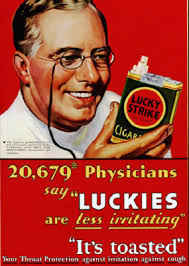
    The primary purpose of advertising is to cause someone to purchase something.  There  is also advertising to get votes for candidates, support a concept, etc.  But most advertising is about selling.  In fact, the world of advertising created the consumer economy that we now experience.  It resulted from a time when there was an over-production of goods. Producers of these products needed to find a way to get consumers to buy things they did not actually need and in some cases, things that are

    Lucky Strikes not actually good for them.  It may not be surprising to realize that the leader in advertising in the 1920s was the Tobacco  Industry.



    Transactional and Brand Advertising

    We can divide advertising into the kind that encourages a consumer to directly take an action that results in a purchase and those that build desire and comfort with a product that will re-enforce a purchase decision at some later time.   I will call the first kind Transactional Advertising and the second kind, Brand Advertising.  My focus in this blog post will be on the first kind.

    Different media (print, radio, TV etc.) are better at one or the other.  Digital Media is particularly suited for Transactional Advertising.  It is far easier to click on a link than to have to call a phone number or drive to a store.  The devastating  effects this has had on traditional media can be witnessed by watching the decline of the Newspaper Industry.

    In 1993, I gave a key note speech at the National Association of Broadcasting in Los Vegas.  During my talk, I declared that the the Killer App for the Internet was Advertising.  The founders of Google were just 20 years old at that time and it would be several more years before the founding of Google.   Now, I am declaring that this phase is over.


    The closer to a purchase the more valuable the Ad

    Obviously, the more an Ad results in a purchase, the more valuable it is.  But it is difficult to know if a specific Ad has that effect.  Digital Media provides the ability to Narrow Cast advertising; that is to target advertising that might be more effective for particular  consumers.  If I know that someone plays golf and is a male, an Ad about golf clubs might be more effective than an Ad  about feminine hygiene products. This makes the Digital Medium superior to traditional linear medium for advertising.   While it might be possible for the traditional cable industry and their content partners to Narrow-Cast advertising, they lack of vision and technical skills has handicapped them in this regard.

    The power of interactive digital media is that an Ad can result in a purchase just a few minutes later.The downside for the site hosting the Ad is that it often results in the consumer leaving their site in order to make the purchase.


    Enough Ads already

    We are saturated in ads. We are exposed to hundreds of Ads per day. Consumers are finding ways to reduce the onslaught of advertising.  In linear media such as TV, we are using DVRs to time shift and skip ads.  We listen to music on sites like  Spotify and are willing to pay a few bucks to avoid ads just as many of us are willing to pay for HBO or Netflix. The pay on demand or subscription model is clearly an alternative to the advertising model.  Sometimes there is a combination which has to be one of the stupid ideas of all time.  Hulu Plus does this, which I find combines the worst of two worlds (Ads and Subscription).

    Web browsers like Chrome and Firefox offer Ad blockers.  I am pretty good at removing the Ad from the sites I visit.  Of course, I understand that these sites have to make money but I am not willing to pay for content with my attention.

    noisy restaurant

    The less effective Ads are, the more Ads are presented.  It is kind of like conversation in a noisy restaurant where everyone keeps talking louder in order to be heard.  I personally avoid these restaurants.


    The Substitute for Transactional Advertising: The First Bank of Amazon

    Sometime in the next five years we will see the collapse of advertising supported media.  Here is how it might play out with respect to the TV industry.


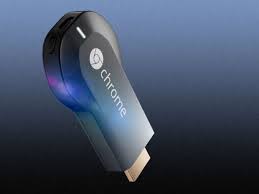
    Chromecast, the Trojan Horse that Will Invade TV Manufacturers

    Google recently created an amazing product, Chromecast  (I don’t think I have ever used the word “amazing product” and Google in the same sentence before).  It is a $35 device that plugs easily into a modern flat panel ChromecastTV via an HDMI port.  It connects to the internet over wifi to the home’s local area network. It is controlled right now by an iPhone or Android product or any computer running Chrome.  There is limited programing but that will change.  Eventually all television programing will move to such devices.  Cable companies will cut the cord with Network programers.  They already make more money from Broadband than they do from TV programing (you can thank me cable industry, for that).  HBO and Showtime and the like, will unbundle their programing from the Cable and Satellite packages (by the way DirecTV and Echostar are totally screwed and I will write about that in the future).

    Netflix with ‘House of Cards’ and ‘Orange is the New Black’ has proven that traditional Hollywood does not have a lock on content.  Google and Amazon are not far behind.  Eventually, individual shows like Mad Man will go ala-cart.

    Google will establish Chromecast as a viable way of getting TV programing. But they are stuck with the idea of traditional advertising.  They will offer their technology to TV manufacturer for no cost and offer to share revenue with them.  This gets the TV manufacturer out of the business of trying to keep up with Internet technology and provides a valuable revenue stream.  Once one or two manufactures go, all the others will be forced to follow.


    Apple Forced to offer a TV

    Apple, is in a bit of a bind.  They do not like to license their technology.  That is why they want to build a TV directly but they have to wait until the content is available.  Consumes will not upgrade their TV’s very quickly so this approach will be very limiting for Apple.

    While Google has an ad centric business model much as do the Network TV companies, Apple will push for “pay per view” and subscription models like they now offer on their current AppleTV product via the iTunes Store.


    Amazon enters and everything changes

    Enter Amazon and the game changes.  Amazon will also have a devices similar to Google’s Chromecast with both an HDMI add-on and embedded technology for TV manufacturers.  TV manufacturers may not have to choose sides but offer Macro Networks from Google, Apple and Amazon.   Amazon’s business model will be different.  There will be no Ads.  Instead, Amazon customers (which is pretty much all of us) will get “points” for buying things on Amazon. These “points” will be deposited in the First Bank of Amazon and  can be used to pay for programing including on line newspapers, social networks etc. Imagine Facebook  or a Facebook competitor without stupid Ads.   As long as you buy enough from Amazon, you can consume media without ads.  Periodically, Amazon will let you know if you need to add to your “account”.

    There will be many ways to do this but one will be the Amazon Shopping Network.  Think of Home Shopping on steroids. It will be an informercial channel which is tailored for the individual.  The informercials will be made and supplied by the companies offering the products.  With today’s technologies even small companies can create compelling video Ads.  Take Kickstarter as an example. Check out this Ad for the Menurkey which was designed by the nine year old son of one of my friends to celebrate the unusual event of having Thanksgiving and Hanukkah on the same day (OMG did I just make an AD?). In addition to knowing the price for every product, there will be an indication of the number of “points”.   And of course, you can always make a direct deposit into the First Bank of Amazon.  Amazon will be paying the content providers something less than you pay them (after all they are a Bank).


     Google and Apple get left in the dust

    Assuming the content is unbundled and available to anyone for distribution at a price, Google and Apple will have a very difficult time duplicating the Amazon strategy.  As I indicated, Amazon Points can be used to purchase content from any medium, even Newspapers like the Washington Post who coincidently just got a new owner. Jeff Bezos.


    First Bank of Amazon is a great investment

    My money is on Amazon (literally.)  Jeff Bezos is one of the few founders of major tech companies left.  He has a vision and the ability to implement his vision an is fortunate to be the King of Transaction.


  • The Resurrection of Wintel Part 1.

    I never imagined I would be writing this post.  I was planing on writing what I thought would be my last post about Intel. It was to deal with the departure of Paul Otellini the former CEO  and a recent article about him published by the Atlantic.  I will do an abbreviated comment on that and then begin to get into the meat  of the Wintel Resurrection.

    Paul Otellini Regrets
    The Atlantic Monthly had a major article on the retirement of Paul Otellini the former CEO of Intel. Frankly, I think the article was very kind to Paul. Paul probably did a very good job of being the caretaker of the strategy that his predecessors Barrett and Grove had established.  We called that, The PC is iT strategy.  But the world changed from the 90s when we realized the power of the PC and Intel did not change.  While  Intel’s business grew significantly, it stock price pretty much stayed flat during Paul’s eight years as CEO.  Wall street evidently felt that Intel was not in a position to take advantage of the growth of the Internet and especially of new devices such as the iPhone and they have been largely correct in that assessment.  Paul showed no leadership in this area which is a bit strange since he served on the board of Google since 2004.  He of course profited from the options he received as a board member.  Too bad he did not influence Google to consider quality control as an important attribute of a successful company.
    I should probably say that for many years, I considered Paul a friend.  We first met up when he was the Technical Assistant to Andy Grove.  This was a very important position in terms of advancement in the company because it provided the opportunity to learn how the CEO actually operated. But most of the work really had to do with creating presentations.  Paul would refer to himself as “Andy’s foil slave” (this was before powerpoint and we used overhead projectors).  Paul and I would often have lunch together.  My personal experience with Paul until I left Intel was very good. He is really a nice person, fair and dedicated. But was not a risk taker at a time when risks were needed.  I still like him and feel bit bad about making a few negative comments about Pau over the years.  I hope now that he has left Intel he will use his skills and significant wealth to make the world a better place.
    So in the article, Paul laments about not getting the design win for the iPhone.  According to the article Intel lost the order because of price.  Frankly, while price may have something to do with it, power requirements may have also played a role.  Paul says that his gut told him that Intel should do what ever it took to get the design win but the data argued the opposite.  Intel believed that  the market for smart phones was about 1/1,000th of its current size.  Had they gotten the “Design Win”, they would have been able to ramp up their manufacturing capability to the point that they could have made money on the chips but maybe not “PC money” which continues to be Intel’s problem in pursuing  new markets.
    I know first hand what Paul is saying. In my early years at Intel, I would get beaten down with “data”.  I learned never to say “my gut tells me we should do this” even though it was my intuition that drove me.  After a while, I would make up data and/or get reports at major newspapers to say what I could not say at Intel and then I could reference their reports.  Paul’s background was in Finance and Sales. My background was more in technology, marketing and science.  During Paul’s tenure, the few intuitive people left or were driven out.  Now they have a CEO who came from manufacturing.  Paul was worked for Intel for 40 years.  The new CEO Brian Krzanich joined Intel in 1982 and worked in manufacturing until he became COO in 2012. His first job at Intel was in Process Control. In that position he was responsible for making sure nothing changed.  How about that for a visionary CEO?  This last remark may not be fair since I never meet Kranich even though he was at the company the whole time I worked there.
    I spoke about the importance of intuition to FastCompany Magazine in 1999.  Here is some of the things I said that might have changed Intel had Paul read and acted on the article.

    “Today, when Intel builds a new factory, it’s investing $2 billion in products it hasn’t yet designed for markets that don’t yet exist. This is hard for American businessmen, and I say “men” because in order to do this, you have to give up control — and giving up control makes guys really miserable. Control is an illusion. I don’t think that it ever existed, but now even the illusion is gone. As a result, we’re experiencing the rebirth of intuition.

    In our society, we often don’t want to admit that we know something if we don’t know why we know it. At Intel, I used to have a horrible problem. I’d go into a meeting, and I’d be very convinced about something, and people would say, “What evidence do you have for it?” And I’d say, “I don’t have any evidence.” They’d expect me to be analytical about it, and I wouldn’t be. Over the years, I learned to make up some bullshit story to convince them, but it had nothing to do with why I thought it would work. I just knew.

    In Hollywood, you’re expected to be intuitive. In the entertainment industry, you have people who have intuition and people who imitate. Nobody there analyzes. But for the most part, in our society, if you know and you don’t know why you know, then obviously whatever you know doesn’t matter — which is stupid. If you have been right about things for 20 years, then you should be able to say, “I don’t know why I know, but I know.” If I’m hiring people, I don’t want to know how they know, I just want to know that they have a good record of being right.

    So I had pretty much written off Intel until yesterday.  Yesterday, I went for a walk with a former colleague at Intel who is both a mentor and friend to me.  We spoke of Intel, Apple, Google and Microsoft.  Out that conversation came the rest of this blog post.

    The resurrection of Wintel
    The death of Wintel
    For over ten years, Intel and Microsoft have been drifting.  While their revenues increase, their stock prices stayed flat.  It seemed that both companies had missed the next generation of the internet.  With the exception of the Xbox, both companies revenues came from the PC industry.  The  Informal”  alliance that Microsoft and Intel had  which the Industry called by the somewhat derisive term, “Wintel”  was no more.  It had become irreverent and especially after Intel embraced  Apple and went from being Microsoft bitch to being Apple’s bitch.  But both companies are still incredibly strong.   Both have significant cash, Microsoft way more than Intel, and technical resources.  What they have been missing is a strategy.
    For Wintel to resurrect, the world of computing has to change once again and in ways that create disadvantages for companies such as Apple and Google and advantages for Intel and Microsoft.  I will explore that next.
    I should also say that I am not impressed with Larry/ Sergy or Mark (does using their first name make me hip?).  Google may be more mediocre than Microsoft ever was.  Facebook is the DOS of social networks.  But these are the guys who got started on the new cycle while the old guys tried to keep the old cycle going (always a losing strategy).  Jeff Bezos is the only one that has made the transition.  I think he is brilliant, but thankfully I never had to work with him.
    Multiple Devices meet Multiple Clouds
    We are going through a major transition in personal computing (I did not say personal computers).  Many of us have multiple devices- a smart phone, a tablet, desktops or notebooks, game machines, and DVRs etc.  We are also begining to see what is called the internet of things which really means special purpose devices like lights, appliances, autos, etc that communicate with us and other systems via the internet  This has necessitated the movement to the cloud which in a way creates a hierarchical architecture.  It is just too hard for each device to communicate directly with each device so rather, we have devices communicating with the cloud and an synchronizing with data that way.  But there is not just one cloud there is a storm.  Apple has one, Google has one, Microsoft has one just to name a few.
    Capabilities are increasing dramatically but so is complexity.   Application development is also increasing in complexity to deal with multiple eco systems.  The power of “The PC is It” was that there was a homogenious environment for developers and users.  It also had it inherent problems. Microsoft tried to develop an operating system that could scale from the smallest device to the largest computer.  It was a very difficult task and they failed at it a number of times.  The only thing that is harder is to try to support multiple operating systems. Apple is struggling with that with OSX and iOS.
    This model of computing has a very limited life span.  In my next blog, I will discuss what I think might be the next generation of computing and why it is even possible that it will be lead by Wintel.
    To be Continued