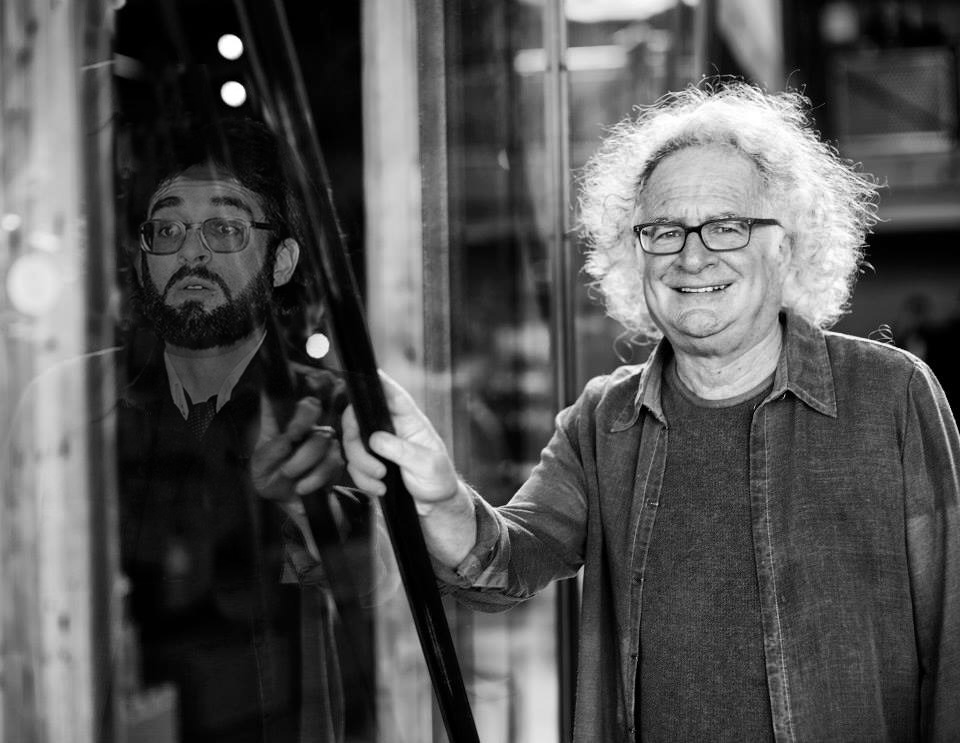
I recently asked ChatGPT a simple question: “Would you describe me as elderly?”
I confess I already knew the answer. I just wanted to start a dialogue with my buddy Chat.
Technically, yes. I am 81 years old, and by most demographic definitions that makes me elderly. But the word does not feel right. “Elderly” suggests someone frail, diminished, dependent, disengaged from the future. That is not how I see myself, and it is not how I see my sister, who is close to my age.
We are certainly old. There is no point in pretending otherwise. I have lived more than eight decades, and my body occasionally reminds me of that fact even when my mind would prefer to ignore it. But old and elderly are not the same thing. One is a count of years. The other is a description of how you live them.
I do not feel that my life’s work is finished. I am still involved with new companies, new technologies, and new ideas. I was recently named a Fellow at the Italian Institute of Technology. I give speeches and sit for interviews with journalists. My wife and I are renovating a palazzo built in 1731 in the historic center of Lecce, in a country still relatively new to me. I am learning Italian. I am playing the piano, writing, traveling, and experimenting with artificial intelligence while trying to think clearly about what it means for the future of humanity. Some of these projects will take years. I undertake them on the assumption that there will be years, and that I will be here to finish them.None of that is what “elderly” describes. The problem is that we do not have a good word for what it is.
“Senior citizen” sounds bureaucratic. It belongs on a discounted train ticket. “Older adult” is accurate but lifeless. “Active senior” sounds like an advertising category invented to sell cruises, retirement communities, and vitamin supplements. “Elder” has more dignity, but it casts you as someone who dispenses wisdom from the sidelines. I am glad to share whatever wisdom I have acquired, as I have been doing my whole life. I am not interested in living on the sidelines. I still want a significant role, including a leadership role, in the things I care about.
We are not short of a name for the period itself.
Gerontologists have used the third age for half a century, and so has the University of the Third Age, which has been running since the 1970s. It is a decent name: neutral, clear, and free of any implication of decline. In the first age we prepare ourselves — learning, experimenting, becoming. In the second we build careers, raise families, accumulate responsibilities, establish a place in the world. The third begins when those obligations loosen their grip, when what we do becomes more a matter of choice than of duty.
Readers of this blog will notice I have been circling the subject for a while. I called it Two Thirds Done because that is roughly where I felt I stood. I was wrong about the arithmetic, but right about the shape. What we lack is not a name for the stage. It is a word for the people living in it, and for the posture they take toward it.
My suggestion is rewired
Retirement assumes that when the duties stop, the doing stops along with them. You are unplugged, honorably, and set down somewhere pleasant. Rewiring assumes the opposite. The current is still on. It has simply been routed somewhere new, and the new circuit is one you get to design yourself which is more than most of us could say about the second age.
The conventional script says the third age is when you finally stop and enjoy yourself. I think we have that sideways. We should keep learning until we no longer can. We should stay productive, to some degree, until we no longer can. And we should enjoy our lives from the day we are born until we no longer can. Enjoyment is not a stage. It is a practice.
For earlier generations, the third age was short. People worked until 65, retired, and often died within ten or fifteen years. Longer lives, better health, greater prosperity, and new technology have changed that. Many of us will now spend twenty or even thirty years here.
That is too long to treat as an epilogue
Rewiring is not a matter of age. One person rewires at 65, another at 75, and some never do. Nor does it require exceptional health. We have illnesses, limitations, and losses; at this point in life, most of us do. What matters is that we remain independent, engaged, curious, and oriented toward the future. This is not about passing the time that remains. It is about still having plans.
I should say plainly that circumstance matters here. Good health, some money, work that still wants me, I did not arrange all of that myself, and I know it. Not everyone gets the same runway. But that is an argument for making the third age more available, not for pretending it does not exist.
The distinction matters because language shapes expectation. If society files everyone past a certain age under “elderly,” it quietly teaches us to expect less of them — and eventually to expect less of ourselves.
None of this denies mortality. If anything, we are more conscious of time than younger people are. We know the runway ahead is shorter than the one behind. That knowledge creates urgency, but it also creates clarity. There is less reason to do things because they are expected of us and more reason to spend our attention on what we find meaningful. I rejoice in this.
The third age may offer something the earlier ones could not: experience without so much obligation, ambition without the same hunger for recognition, and curiosity supported by a lifetime of accumulated knowledge.
My sister and I are not young. We are not middle-aged. Neither of us feels elderly. My wife, Deborah, is 63, which by the common definition puts her close to the same category, an absurdity that tells you most of what you need to know about the category. We still share the kind of love teenagers believe they invented. Every time I see her, I light up.
So if you are of a certain age, do not let them make you feel elderly.
And if you have not yet reached it, do not plan your retirement. Plan your rewirement.

Avram, well said. As a busy retired person I am annoyed at the constant assumption by bureaucracies that all those of many years want is to loaf into death. The volunteer emergency service I am active in is constantly carping about safety and increasing female participation. This is demotivating, especially to men. I would prefer it if they were developing pathways off the front line into less physically demanding tasks. Skilled incident controllers, logistics managers are valuable without picking up chainsaws, tarping a damaged roof, etc.
One Australian potentially dangerous sport organisation has addressed this issue head on with suggestions to clubs to enable older persons to continue participation safely.
All of this requires the person of significant years to behave as you do, activily looking for significant oportunities. IMHO, the rise of beaurucracy means the learned helplessness saturation the remains of western civilisation suggests this is a battle for most.
LikeLike