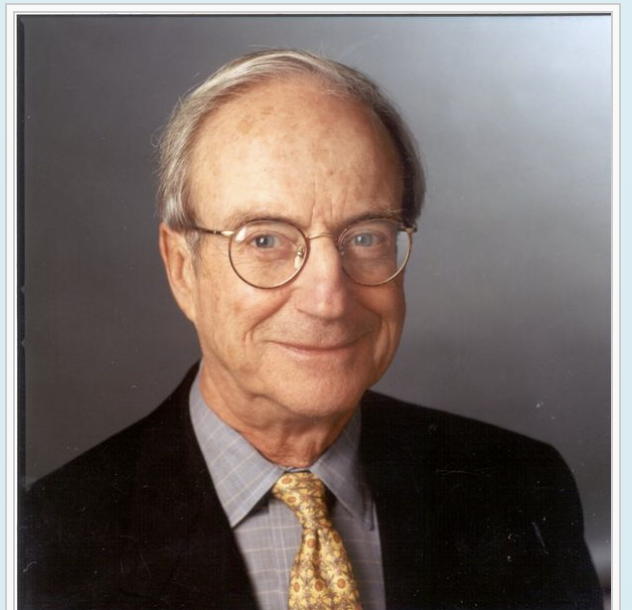
These days, I seem to be saying goodbye to so many old friends who have left us. I guess at 81 I should not be so surprised, but it still makes me sad. Ben made it to 93. I last saw him in 2019. Ben Rosen is best known for being chairman of Compaq Computer, a company he played a substantial role in both creating and running. In my opinion, Compaq had more to do with creating the PC revolution than IBM did.
It was around 1980 that I first met Ben. He was still an analyst at Morgan Stanley. I had recently been put in charge of Digital Equipment’s initial efforts to create a personal computer, the Professional Series. I was asked to give a presentation to a group of financial analysts that included Ben. It was the first time I had ever spoken to such a group. Ben reached out to me after the talk, and we started a conversation that lasted for decades.
In 1982, I attended PC Forum, a conference Ben had started and would soon sell to Esther Dyson. It was at that conference that Ben showed me the first computer from Compaq. It had not yet been announced, so he showed it to me in secret.
I didn’t get it. I found it big, ugly, and heavy. Yes, it was portable, but you certainly wouldn’t have wanted to carry it very far. More importantly, it was compatible with the IBM PC but I did not know how important that would become but Ben did.
IBM had introduced its Personal Computer only a year earlier, and it was not yet clear that the standards around that computer would come to dominate the PC industry. I still thought the computer I was developing at Digital, which was announced the day of PC Forum, had a chance of becoming the leader. What I failed to understand back then was the importance of those two things together: it was portable and compatible with the IBM PC. Compaq understood where the industry was going before most of us did. It helped turn the IBM PC from an IBM product into an industry standard. That is why I believe Compaq ultimately had more to do with creating the PC revolution than IBM itself.
Everything I thought about personal computers was pretty much wrong. But I was not alone. But I learned quickly and by 1984, I was at Intel just as the PC industry was taking off.
Over the years, Ben and I developed a friendship. I loved his smile and his gentle personality. He was a real mensch. He had a good and consequential life. While I am sad at his death, I can’t help but smile at his memory.
Goodbye, Ben.

Lots of good memories of Compaq. Many people did not learn this secret until years later!
“The fact that we licensed our software to Microsoft has remained a secret until now.”
Page 33
Open: How Compaq Ended IBM’s PC Domination and Helped Invent Modern Computing By Rod Canion
LikeLike
FYI – the software was DOS!
LikeLike