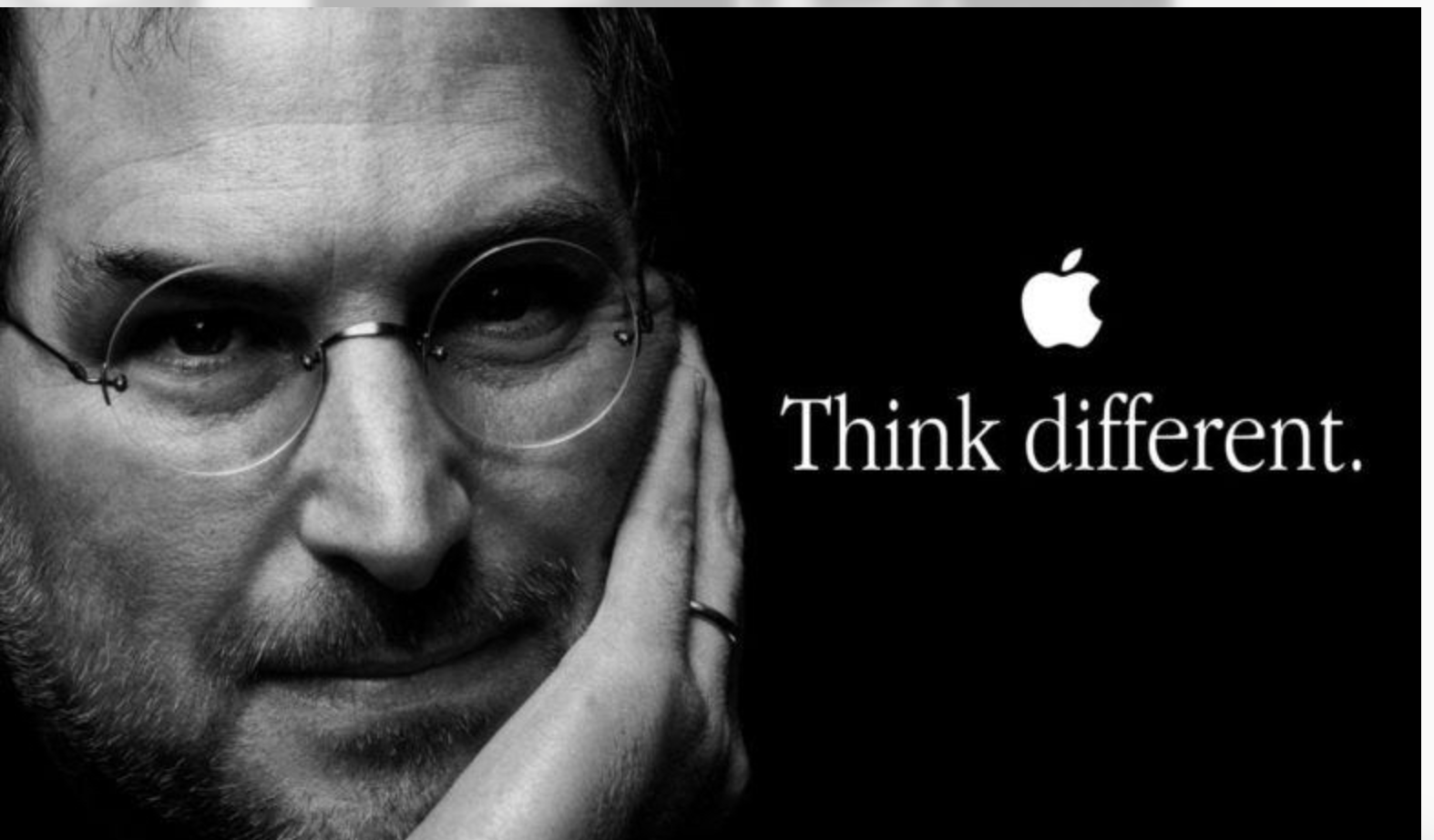
Apple turned out to be the most influential computer company since IBM and it continues. So while we celebrate its 50th year, we need to take amount to recognize the genius of the man who was responsible for that, Steve Jobs.
Steve Jobs entered my life in 1982 and remained a recurring presence—sometimes directly, sometimes at a distance until his death in 2011. Apple’s 50th anniversary prompted me to revisit a post I wrote years ago called “30 Years of Not Being Steve Jobs.” https://twothirdsdone.com/2015/04/11/34-years-of-not-becoming-steve-jobs/
Apple was founded in 1976. Its story has been told many times and doesn’t need repeating here. I became aware of the company after joining Digital Equipment Corporation in 1979, three years after Apple’s founding. Within a year, I was promoted to group manager for professional computer which was our term for what the world was beginning to be call personal computers.
The computers my group was developing were far more sophisticated than Apple’s Apple II. We were building, what we believed, the future of computing would look like but we were wrong at least in the short term. At that time Apple wasn’t my primary concern. IBM, who had just introduced its PC, was.
Palm Springs, 1982
I met Jobs for the first time at the second annual PC Forum in Palm Springs in 1982. I flew in from Boston on a Learjet, fresh off the announcement of Digital’s Professional Series computers, full of confidence and convinced I was about to help reshape the computer industry. I had no idea I was also walking toward one of the more significant failures of my career.
That evening, I attended a dinner that included Bill Gates, whom I had met the year before, and Steve Jobs. They were both 27, 10 years younger than I me.
The next day, during a presentation, Jobs sat down next to me. I already knew his reputation. I remember hoping he wouldn’t try to recruit me. He was known for his charisma, and I didn’t want to be tempted. Digital was the second-largest computer company in the world, and I had been promoted four times in two years. I was, as they say, a rising star who in just a few years would crash. As it turned out, Jobs showed no interest in me.
Franklin Computer
By early 1983, I had decided to leave Digital. It had become clear that we weren’t going to prevail with our vision of the professional workstation. IBM had the momentum, and we didn’t.
I came close to starting what might have been one of the first networking companies. Instead, I was recruited to join Franklin Computer. I saw it as a platform to pursue my own vision of computing; one centered on networks. But I wasn’t ready to go it alone.
Franklin had built a clone of the Apple II, much as Compaq had cloned the IBM PC. Apple had cultivated a distinct market, and Franklin had found an opportunity within it.
Strangely, before accepting Franklin’s offer, I attended a meeting of Digital’s top management, The Operations Committee. Franklin’s name came up. The reaction was contemptuous. The idea that a company would copy another company’s product was seen as both absurd and almost criminal. No one in that room could have imagined that, fifteen years later, one of those “clone” companies, Compaq would acquire Digital.
Apple had sued Franklin the year before for copyright infringement, specifically for copying its firmware. When I joined, Apple had lost its suit at the district court level. The judge had agreed with Franklin’s argument that firmware couldn’t be copyrighted as well as accepting other claims that Franklin made. Apple appealed.
Meanwhile, Franklin was on a tear. We had $80 million in sales in our first year and were preparing to go public. The stock I had been granted when I joined was on track to be worth nearly $50 million.
Once again, I felt like I was on top of the world. Once again I would fall.
Then the appeals court ruled in Apple’s favor and sent the case back to the lower court. Technically, we hadn’t lost—but everyone believed we had, including our banks. Our credit line was called. The company began to unravel.
We entered negotiations with Apple, but it was nearly impossible. Jobs, who was not the CEO, wanted Franklin dead, not defeated but dead. And he eventually got his wish.
In an ironic final twist, Apple ended up licensing our version of the Apple II operating system to protect itself from other potential lawsuits.
Palo Alto, Later
I eventually joined Intel, where I served as Corporate Vice President of Business Development and co-founded what became Intel Capital. It was a consequential role, and I’m proud of what I accomplished there.
But Jobs was not out of my life.After being pushed out of Apple, he founded NeXT and acquired Pixar. He developed a relationship with Andy Grove, who asked me to join him in a meeting with jobs. We had coffee at Jobs’ house on Emerson Street in Palo Alto just a few block from my home. Then Jobs drove Grove and me out to Pixar to meet with the team there. He showed us the early version of Toy Story. The purpose of the meeting was to convince us that computers could be used to create animations for games and movies and to get Ziegler to commit to providing our most powerful processors. We need.
Neither Jobs nor I said a word to each other about Franklin. It wasn’t awkward. It was something else an unspoken acknowledgment of a shared history neither of us chose to revisit.
Jobs’ Cancer
My final connection to Jobs came through my close friend, Dr. David Agus, the oncologist who was involved in treating Jobs’ cancer.
David was consulting both Jobs and me on what to call his first book. I don’t remember the title I suggested. David went with Jobs’ idea: The End of Illness. It became a bestseller. In the book, Agus thanks both Jobs and me. It is probably the only time our names were linked.
Toward the end of Jobs’ life, my friend Larry Brilliant who had been his mentor during his time in India spent a great deal of time caring for him. Larry shared some of those experiences with me as Jobs neared the end. As a cancer surviver myself, it made me sad that the man I disliked but admired with being beaten down by by this disease.
Why I’m Writing This
I disliked Steve Jobs personally particularly the way he treated people, his cruelty, the dismissiveness, the deliberate humiliation was something I found deeply troubling.
But what he built, what he imagined, and then made real is undeniable. The products!The company! The aesthetic standard he imposed on an entire industry. I can’t help but admire it all. More than that, I envied him. I had vision. But vision isn’t enough. Jobs had something rare, the ability to bend reality until it matched his imagination.
So happy birthday Apple. I am sorry Steve could not be there to share this moment with you.
This post was written on a Mac and edited on an iPad.
 Two Thirds Done
Wonderful article, Avram. Thanks for sharing. Bob Werbel
LikeLike