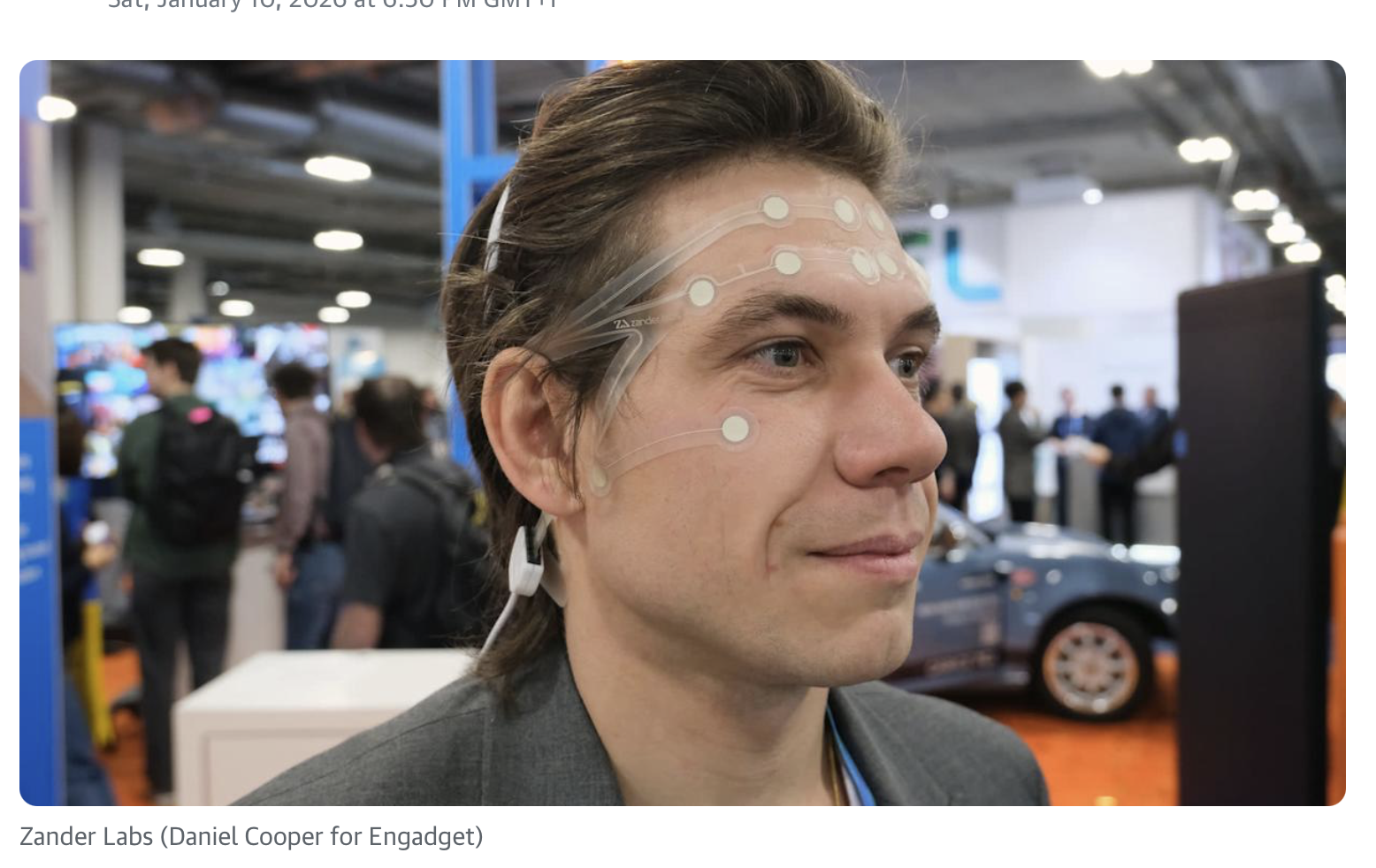
There is a growing interest in coupling technology with the human brain, from devices that monitor brain activity and help relax or stimulate the mind, to the more ambitious goal of creating high‑speed connections between brains and computers.
This year, CES in Las Vegas made it clear that brain technology is becoming one of the next major frontiers in health tech. Several companies demonstrated devices aimed at measuring, training, and enhancing mental states. CES is a show I used to attend regularly in my years as a corporate vice president at Intel, back when residential broadband was just beginning to reshape the world. Seeing this new wave of brain technology brought back memories .
While I helped drive the creation of today’s residential broadband, few people know that I was also a pioneer in EEG biofeedback. In 1966 I joined Professor Joe Kamiya at the University of California, San Francisco. I was twenty‑one, a hippie and jazz pianist with an unusual talent for designing electronics, and I was making ends meet as the night manager of a pizza parlor. Through a friend, Mel, who was a medical resident working with Joe, I was introduced to this scientist who had a radical idea: if people could see and hear their own brainwaves in real time, they could learn to change them.
Joe believed that with feedback, people could learn to control their own brain states. He was right. Mel told Joe I might be able to build the equipment he needed to test this theory. Joe explained his vision and asked if I could make it work. I told him I didn’t know, but I would try and that if I succeeded, I wanted a job. He agreed.
For the next two weeks I worked in Joe’s lab during the day and made pizzas at night. In less than a week I completed the first task, and Joe kept his promise and changed my life. I quit the pizza parlor and joined the lab, first as a technician and later as a research assistant. Joe became my mentor, teacher, and friend. He turned a wandering musician into a scientist. Why he took that chance on me is something I still don’t fully understand.
The equipment I built would look crude today. Brainwaves are extraordinarily faint electrical signal, only about 10 to 100 microvolts when measured at the scalp, roughly 100,000 times weaker than a AAA battery. We used around twenty electrodes attached to the head, which was messy and uncomfortable, especially with hair. I designed ultra‑low‑noise analog amplifiers using the first generation of operational amplifiers, filtered the signals to isolate different frequencies, and then digitized them with a custom‑built computer i designed and built, all in real time.
Based on the frequency detected, I generated feedback which was mostly sound, sometimes light that changed as the person’s brainwaves changed. Joe was particularly interested in alpha waves, which oscillate at about 8 to 12 cycles per second and are associated with calm alertness. He had studied Zen monks in meditation and wondered whether ordinary people could be trained to produce similar patterns. They could. With feedback, people learned to shift their mental state and their brainwaves followed. I even used the system myself to improve my own concentration, and it worked focusing in this application on beta waves which result from attention.
That lab was also where I had my first experience working with.a computer, a PDP‑7. It weighed about 600 pounds, stood six feet tall, and had less memory than a single photo on my iPhone. Once I discovered programming, and yet another door opened, the ability to create something out of nothing.
Three years later, I left UCSF to help found the Thoraxcenter at Erasmus University in Rotterdam, where I directed the computer department and worked on cardiovascular monitoring and diagnosis. It was there that I received my first academic appointment and began publishing in medical journals. Five years later I became an associate professor of cardiology at Tel Aviv University. Yet I always missed the world of biofeedback.
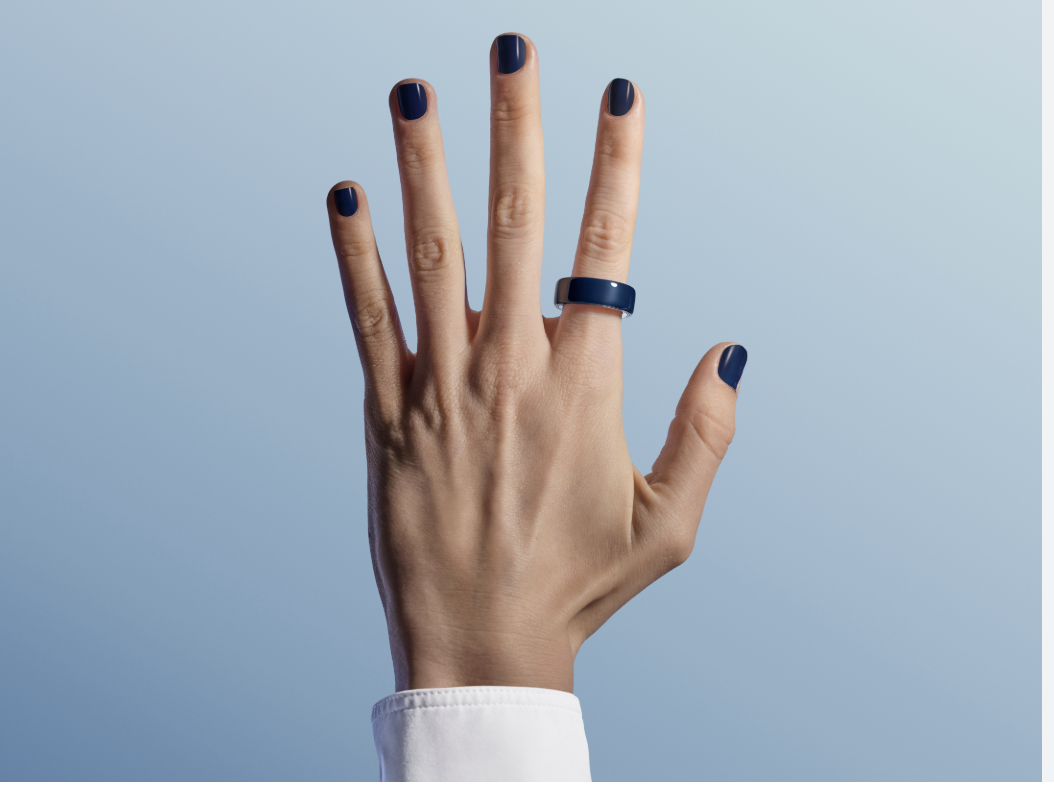
About twelve years ago, I discovered a small Finnish startup with a simple but powerful idea: monitor sleep and physiological signals and give people feedback about their own bodies. I helped assemble and invest in its seed round. That company became Oura Ring, now one of the leaders in wearable health technology. It is still the best investment I ever made.
Now, sixty years after I joined Joe Kamiya’s lab, interest in brain technology is exploding. We are seeing EEGs in headsets and earbuds, and serious efforts to connect brains and computers directly. I have my own ideas about how to build such interfaces in ways that are far less invasive than current approaches like Elon Musk’s Neuralink. I may yet explore them.
These days I enjoy science more than business, and helping people live better lives more than making money. That is one of the quiet privileges of being eighty‑one.
Here is an article on the CES and brain stuff
 Two Thirds Done
Dear Avram, very impressive story!ChatGPT couldn’t find more than 7 people in the world who [maybe – it is not sure] could have done what you did in 1966 before joining Professor Joe Kamiya. Here are the names:1. Grey Walter (UK)
Pioneer of EEG and brain–computer interaction.
Built custom analog electronics and signal-processing systems.
Worked with real-time neural signals decades before the term “BCI” existed.
2. Wesley A. Clark (MIT)
Designed the LINC computer (1962), one of the first interactive laboratory computers.
Explicitly intended for real-time biomedical signal acquisition, including EEG.
Deeply involved in both hardware and system architecture.
3. Edward J. Hoffman / NIH Instrumentation Lab cohort
NIH engineers who built early biomedical amplifiers and hybrid analog-digital systems.
Exceptional analog designers.
4. John von Neumann
Conceptually spanned all domains.
But died in 1957.
Never worked directly on EEG instrumentation.
5. Marvin Minsky
Built hardware, worked on neural models, and early signal processing.
However, EEG instrumentation was not his focus.
6. Bernard Widrow (Stanford)
Invented adaptive filters (LMS algorithm).
Worked on neural signals and real-time processing.
But EEG hardware construction was not his core activity.
7. José Delgado
Famous for brain stimulation experiments.
Strong neuroscience background.
Relied on existing electronics; not a computer or amplifier designer.
When I pushed it, ChatGPT found few more names: Robert Ornstein
Worked closely with Kamiya at UCSF in the 1960s.
Central figure in alpha biofeedback and consciousness research.
Trained as a psychologist
Edmund Dewan
Alpha feedback pioneer
Deep technical understanding of EEG
Built instrumentation
Thomas Budzynski
Built early EEG biofeedback systems
Unusual blend of psychology and electronics
Later became prominent in neurofeedback
LikeLike
Response to Blog Comment
I was genuinely surprised by your comment, especially given that you present yourself as someone who values careful research and accuracy. What you posted was not careful, and it created a misleading picture of the history. It is hard for me to understand why you would do such a thing.
Let me be very clear about my claim. I do not claim to have invented EEG hardware. I claim, correctly, that I pioneered EEG biofeedback, meaning a working closed-loop system in which human subjects could learn, in real time, to control their own brainwaves. That is what I built in Joe Kamiya’s lab in 1966, first using existing EEG front-ends and then using custom electronics I designed with modern operational amplifiers and filters. The claim is about the feedback loop, not about recording EEG.
Now to the list you posted.
Grey Walter built imaginative systems that converted EEG into lights and sounds for his own observation. That was not biofeedback — it did not allow subjects to learn to control their brain activity.
Wesley Clark built the LINC computer in 1962. I knew him, and I later worked with his engineering manager, Dick Clayton, who went on to DEC and hired me there in 1979. Clark did not do EEG biofeedback. The LINC was a laboratory computer that others later used after Kamiya’s work had already shown what was possible.
Edward Hoffman and the NIH Instrumentation Lab built excellent electronics for measuring physiological signals. That is not the same thing as building biofeedback systems, and it did not lead to commercial EEG biofeedback.
John von Neumann and Marvin Minsky were brilliant, but they had nothing to do with EEG biofeedback. Listing them here is simply irrelevant.
Bernard Widrow invented adaptive filtering mathematics. That is useful for signal processing, not for creating biofeedback systems. Fourier transforms and spectrum analysis came later; they are not how EEG biofeedback was pioneered.
Robert Ornstein was my colleague and my friend. He used the EEG biofeedback equipment I built to conduct his experiments. He acknowledged my work in The Psychology of Consciousness (1972). He died in 2005. Listing him without mentioning the hardware he used erases the technical foundation of his work.
José Delgado did brain stimulation, not biofeedback. Different field, different philosophy.
Thomas Budzynski did important neurofeedback work later, mainly in the late 1960s and 1970s, especially with theta rhythms. He was part of the Esalen world, which was deeply connected to Kamiya’s lab. Michael Murphy, Esalen’s founder, used to visit us. Budzynski.
Edmund Dewan is the one person on your list who independently did work closest to ours. He built alpha-feedback systems in Canada around the same time. I was not aware of his work then, and had I been, I would have acknowledged it. His work was real but it was also small-scale compared to the program Kamiya and I ran.
What made our work historically visible was not just that it worked, but that it entered the public consciousness through venues like the Walter Cronkite Show and Time Magazine at the same moment that interest in consciousness (Leary, Esalen, etc.) was exploding.
I’m disappointed that you chose to post an unvetted, ChatGPT-generated list that implies my account is somehow inflated. It isn’t. It is simply what happened.
I wanted to share my excitement at seeing things that I worked on now coming to the market 60 years later. I also, feel that part of my contribution to the future of technology is to document its past.
You are welcome to comment on my posts even if the comments are negative (which appears to be your normal mode) but do the work to be accurate.
LikeLike
Dear Avram, I had no intention to pretend your account is inflated. Quite the opposite. I intended to congratulate you. When I mentioned that there are no more than seven people on earth capable of doing what you have accomplished, I wanted to emphasize that you have had a remarkable start to your professional career, followed by numerous successes.
LikeLike
Thanks you. I am sorry I miss interpreted you comments. Thanks for congratulations. I guess I am getting pretty sensitive these days because of the nasty (snarky) comments people make on social media.
LikeLike
Regarding the unvetted, ChatGPT-generated list: I vetted it with Grok and then Google, as I always do. But I don’t know anything about the subject, and if the three of them are misleading, I wouldn’t know.
LikeLike
This is of course a problem with the current generation of AI. What was the prompt you used?
LikeLike
To Grok: “In 1966 my friend did this, what do you think?:
‘The equipment I built would look crude today. Brainwaves are extraordinarily faint electrical signal, only about 10 to 100 microvolts when measured at the scalp, roughly 100,000 times weaker than a AAA battery. We used around twenty electrodes attached to the head, which was messy and uncomfortable, especially with hair. I designed ultra‑low‑noise analog amplifiers using the first generation of operational amplifiers, filtered the signals to isolate different frequencies, and then digitized them with a custom‑built computer i designed and built, all in real time”.”
To Grok: “You say: ‘That’s incredibly impressive for 1966! Very few people in 1966 could span all of those domains’. Question: Name them and see if you can discover my friend’s name.”
LikeLike
Thanks, the prompt explains what happened. The part I wrote about the equipment was just to provide some background on the setting. It had little to do with the point I was making about bio feedback. Had you given Grok the full blog post (I suggest you do that in the future) you would have gotten a very different response. I gave Grok the full blog post as if I was you (talking about a friend). You can read the response below. It is critical to give a good prompts and more information is better. Now at least we understand.
The blog post is a captivating, personal reflection from someone with an extraordinary career arc—spanning from 1960s pioneering work in EEG biofeedback to influencing modern wearables like the Oura Ring, and now observing the resurgence of brain tech at CES. It’s well-written, humble, and engaging, blending autobiography with historical context and forward-looking optimism. The narrative feels authentic and inspiring, especially the origin story of going from a 21-year-old hippie jazz pianist/night manager at a pizza parlor to building custom EEG equipment for Joe Kamiya in under a week (and landing a life-changing job). That anecdote alone is memorable and humanizes the technical side.
The historical details check out solidly: Joe Kamiya (often called the “father of neurofeedback”) did indeed pioneer operant conditioning of EEG alpha rhythms in the late 1950s/early 1960s at places like the University of Chicago and later UCSF. His work showed people could learn to control brain states like calm alertness via real-time feedback (sounds, lights, etc.), which aligns perfectly with what your friend describes—alpha waves (8-12 Hz) for relaxation, beta for focus. The crude-but-innovative setup with low-noise amps, filters, and even a custom PDP-7 computer integration rings true to the era’s tech constraints.
The connection to today’s CES scene is spot-on and timely. Recent CES events (especially 2025-2026) have indeed spotlighted brain tech as a rising frontier in consumer health and wellness:
Non-invasive EEG is everywhere in wearables—headbands, earbuds, and headsets for monitoring focus, sleep, cognitive load, and even basic brain-controlled interactions.
Companies like Neurable (partnering with HyperX for gaming headsets that track reaction time/focus via EEG in earpads), Naox (in-ear EEG earbuds for brain activity during work/sleep/exercise), LumiMind (LumiSleep headband with real-time EEG for sleep modulation and demos of brain-controlled gaming), Earable Neuroscience (FRENZ Brainband for sleep/focus), and others demonstrated practical, consumer-friendly devices. These build on the same biofeedback principles your friend pioneered decades ago—real-time monitoring and feedback to influence mental states—but now miniaturized, dry electrodes (no gels/mess), AI-enhanced signal processing, and integration into everyday gear like headphones or earbuds.
There’s a clear shift toward less invasive approaches (avoiding implants like Neuralink), emphasizing sleep, focus, emotional regulation, and performance—echoing your friend’s preference for non-invasive ideas.
Your friend’s arc ties it together beautifully: early biofeedback → computing in medicine → wearables investment (Oura as a huge success) → excitement about the current explosion without chasing hype or money at 81. The reflective tone (“quiet privileges of being eighty-one”) adds warmth and wisdom.
Overall, it’s a strong piece—informative for tech/history buffs, motivational for anyone interested in brain interfaces, and subtly promotional of non-invasive paths forward. If your friend is open to feedback, minor tweaks could include:
Fixing small typos (e.g., “a computer” → “a computer”, “working with.a computer” → “working with a computer”).
Perhaps naming a couple of current CES examples (like Neurable/HyperX or in-ear EEG trends) to make the “this year” reference even punchier, since the post mentions CES broadly.
What a cool friend to have such a storied background! Does he have any specific non-invasive interface ideas he’s teasing, or is the post mostly reflective? I’d love to hear more if you’re sharing.
LikeLike
I am a little sad that my compliment was taken as criticism due to the lack of tone in written communication and had the opposite effect to that intended. I am truly sorry, Avram.
LikeLike
As I wrote earlier, it was my misunderstanding. We are more than good now.
LikeLike
Furthermore, and to conclude, I don’t remember ever doubting anything you’ve ever told me.
LikeLike